Huawei's HarmonyOS Aims for Global Market Competition
 10/10 2026
 422
422

A Journey Toward Technological Independence
Image Source | Internet (Please contact for deletion if infringement occurs) Partially AI-generated
At an international media roundtable in late September, Yu Chengdong, Chairman of Huawei's Terminal BG, hinted that the company is contemplating a phased rollout of the HarmonyOS operating system on the global stage.
However, he tempered expectations: 'This is just a preliminary plan. We will proceed cautiously, step by step.'
While this may sound like standard corporate rhetoric, a deeper look into the cutthroat nature of the operating system industry reveals the gravity of this statement.
History is littered with cautionary tales: Microsoft's Windows Phone faltered; Samsung's Bada met a similar fate; Nokia's Symbian, once ruling half the smartphone world, eventually faded into obscurity. The list of failures in this arena far outweighs the successes.
HarmonyOS, however, stands out as the first Chinese product to achieve true, full-stack self-developed operating system capabilities.
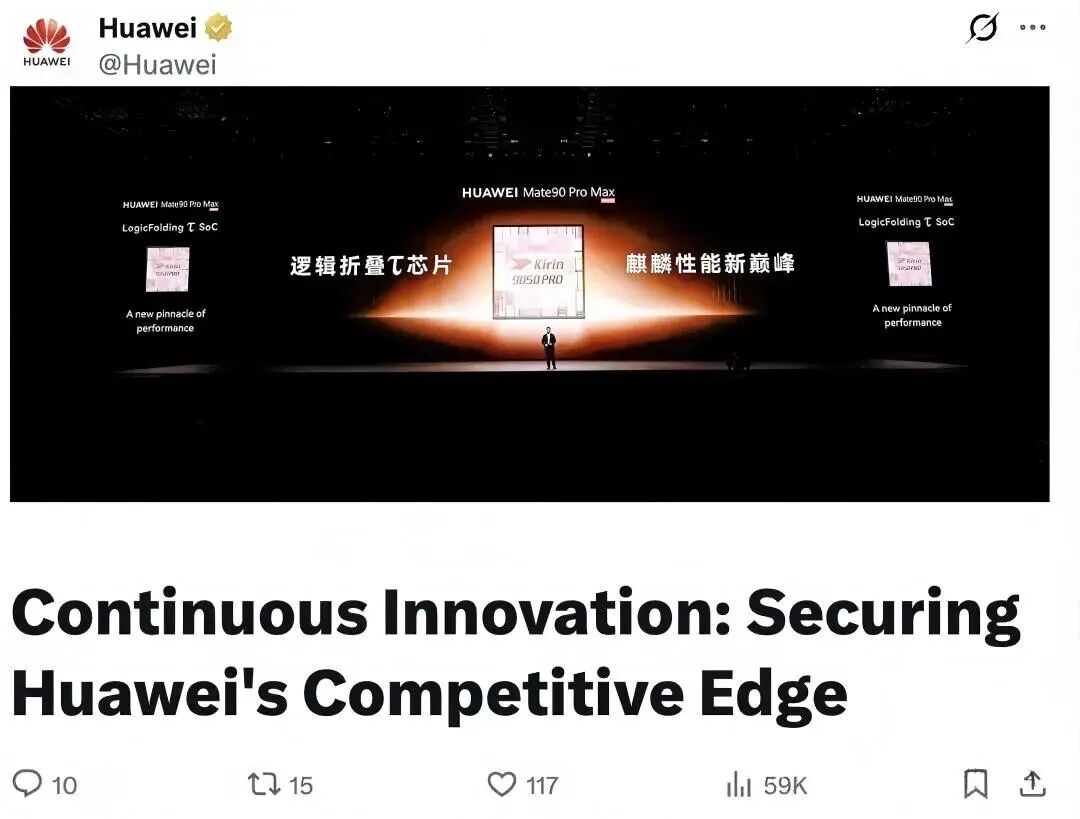

The Path to Technological Independence
The discussion around HarmonyOS's global expansion raises a fundamental question: Is it technically competitive? If its growth relies solely on domestic administrative support, international success would be elusive.
But if its technical foundations are solid, the narrative changes.
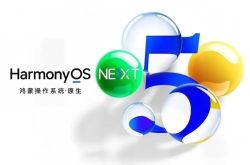
Consider the core innovation: HarmonyOS NEXT has completely shed the Android compatibility layer, with all 110 million lines of code independently developed.
This means it's not just a rebranded version of AOSP but an operating system rebuilt from the ground up, from kernel to framework.
Its distributed soft bus enables seamless system-level collaboration across phones, tablets, in-vehicle systems, and IoT devices, with response speeds improved by 50%. This architectural advantage is something neither Android nor iOS can match.
Why? Android's cross-device collaboration relies on proprietary 'screen mirroring protocols' or 'multi-screen collaboration' solutions developed by individual manufacturers, leading to inconsistent experiences with varying latency and stability.
While iOS excels in ecosystem collaboration, it's confined to Apple's own devices. HarmonyOS, by contrast, integrates 'device virtualization' into its core, abstracting hardware into unified capability modules that can be dynamically invoked—like a single device with multiple 'organs.'
This isn't just a technical difference but a philosophical one.
From a market perspective, Android and iOS remain 'phone-centric' operating systems, with other devices as secondary accessories.
HarmonyOS, from its inception, was designed to be 'scenario-centric.' Any screen or sensor could take center stage in a given context.
Now, consider the ecosystem metrics. As of September 2026, terminal devices running HarmonyOS 6 and HarmonyOS 7 have surpassed 85 million units, with projections to exceed 100 million by year-end.
The ecosystem boasts over 450,000 applications and services, with 11 million globally registered developers and more than 23,000 application innovation partners. Daily application downloads exceed 200 million, with developers making over 300 billion key API calls per day.
The significance of these numbers lies in their growth trajectory. HarmonyOS went from 10 million to 90 million terminal devices in just over a year.
In comparison, Android took several years to reach this scale, and iOS was nowhere near as rapid in its early days. This pace demonstrates that HarmonyOS is no underdog—it has successfully navigated the most perilous 'cold start' phase for operating systems.
Another often-overlooked technical highlight is the Agent architecture introduced in HarmonyOS 7. The system has evolved from 'passively responding to commands' to 'actively understanding intentions,' with complex task processing success rates exceeding 90%.
The system-level intelligent agent, Xiao Yi, sees 3 billion daily activations, can invoke over 2,100 system capabilities, and connects with more than 500 partner-selected Skills and over 2,000 HarmonyOS intelligent agents.
For instance, saying, 'Help me plan a weekend outing with my kids' on your phone would automatically link up strategy guides, ticket bookings, hotel price comparisons, weather forecasts, and other applications and services—all in one go.
This 'intention-as-a-service' interaction paradigm is still in the experimental stage for Android and iOS.
So, returning to the fundamental question: Is HarmonyOS's technical foundation robust enough? The answer is yes. It has proven itself domestically. However, technical robustness is merely a prerequisite for international expansion, not a guarantee.

Overseas Markets: Not a Simple Extension of the Domestic One
Expanding an operating system overseas is never as straightforward as translating it into English. The real challenge lies in building the ecosystem.
Huawei itself acknowledges: 'Developing an operating system is no easy feat. The most daunting task is application development and ecosystem construction.'
While the HarmonyOS ecosystem is thriving domestically, the situation overseas is vastly different.
Overseas users' digital lives revolve around a specific set of applications—social media, search, maps, payments, email, and video. This ecosystem has been deeply entrenched for over a decade, with user habits firmly ingrained.
For HarmonyOS to succeed overseas, it must persuade these application developers to adapt their apps specifically for HarmonyOS.
The cost of adaptation is non-trivial. HarmonyOS NEXT does not support Android applications, meaning overseas developers must either create a separate version for HarmonyOS or rely on compatibility solutions, which often compromise user experience.
Currently, some developers have reported that there is 'no clear timeline' for HarmonyOS NEXT's expansion to mobile devices overseas, with only smartwatch applications supporting global distribution.
In other words, HarmonyOS's globalization is still in its infancy.
However, this does not mean there are no opportunities. The key lies in targeting the right markets.
From the current market landscape, Huawei's strategy is clear: avoid mature markets like Europe and the United States initially and focus on Southeast Asia, the Middle East, Latin America, and parts of Africa.
These markets share common traits: smartphone penetration is still rising, local application ecosystems are not yet solidified, user dependency on specific apps is lower than in Europe and the United States, and entry barriers are relatively low.
A smarter approach is the differentiated strategy of 'Meta Services.' In the HarmonyOS ecosystem, Meta Services allow users to access core functionalities without downloading and installing a complete application.
For markets with weak local application ecosystems, this offers a lightweight solution. Local businesses do not need to develop full applications; a single Meta Service card can cover core scenarios like ordering food, making reservations, and processing payments.
From an industrial cooperation perspective, HarmonyOS is also exploring entry through the B2B sector.
For example, by collaborating with automakers to advance the HarmonyOS ecosystem in intelligent cockpits and in-vehicle systems, this approach cleverly bypasses direct competition in the mobile application ecosystem and opens up new scenarios to establish a foothold.
In essence, HarmonyOS's overseas strategy is not about 'direct confrontation' but 'flanking maneuvers.'
It first takes root in areas where Android and iOS have weak coverage, builds user reputation and developer confidence, and then gradually advances deeper.
While this approach may be slow, it is steady.

The Global Operating System Landscape
After discussing technology and ecosystems, let's examine HarmonyOS's actual position in the global market.
In the second quarter of 2026, HarmonyOS held approximately a 5% share of the global smartphone operating system market, with Android at 75% and iOS at 20%.
In the Chinese market, HarmonyOS reached a 19% share, surpassing iOS to become the country's second-largest smartphone operating system.
A 5% global share may not seem like much, but its significance lies not in the number itself but in its 'existence.' For the first time in over a decade of Android and iOS dominance, a true third player has emerged in the operating system arena.
Third-party analytics firms have begun tracking HarmonyOS as an independent category rather than lumping it into 'Others.'
This 'identity confirmation' is crucial for HarmonyOS's globalization. Being treated as an independent operating system means developers and partners will seriously consider 'whether to support HarmonyOS' in their market decisions, rather than just 'compatibly supporting it on the side.'
Trends in Android's global share also reveal some insights. Android's global market share declined from 80% in 2024 to 73% in the first quarter of 2026, hitting a recent low, partly due to weak performance in the entry-level smartphone market.
Meanwhile, HarmonyOS rose from 3% to 5% during the same period. While its base is small, the growth trend is upward.
Of course, the leap from 5% to 10% is far more challenging than the jump from 0% to 5%.
The operating system market exhibits strong network effects. According to market dynamics, the more users a system has, the more developers are willing to invest; the more developers there are, the better the application experience; and the better the experience, the more users are willing to adopt the system.
This is a virtuous cycle, but initiating it requires tremendous initial energy.
HarmonyOS has already achieved this domestically, but overseas, the cycle must start from scratch.

Differentiation Is the Greatest Asset
If HarmonyOS merely aims to be a 'replacement for Android' overseas, it has little chance of success, as global users have no reason to switch to a 'similar' system.
However, HarmonyOS's true differentiating factor lies in its unique strengths—full-scenario collaboration and AI-nativeness.
The traditional logic of operating system competition is 'whoever has more apps wins.' This logic held true in the mobile internet era, as the phone was the sole entry point.
But in the era of the Internet of Everything, entry points have diversified—phones, tablets, watches, in-vehicle systems, smart screens, and smart home devices, among others, each serving as an entry point.
Users no longer care solely about 'whether an app exists on their phone' but begin to care about 'whether content on their phone can seamlessly flow to their car, TV, or watch.'
HarmonyOS's full-scenario distributed architecture holds a natural advantage in this regard.
Phone navigation automatically flows to the in-vehicle system, document editing on a tablet directly invokes the phone's camera for scanning, and watch data automatically syncs to generate health reports—these experiences are system-level capabilities in HarmonyOS.
In contrast, Android requires each manufacturer to devise its own solutions, while iOS restricts such capabilities to within the Apple ecosystem.
HarmonyOS 6 even breaks down transmission barriers with Apple devices, supporting file transfers to and from iPhones and iPads.
This move carries strong symbolic significance. When an operating system can only interconnect within its 'own devices,' it is essentially building walls. But if it can transcend these walls, it becomes more than just an operating system—it becomes a 'bridge' connecting different ecosystems.
AI-nativeness is another key differentiator. The Agent architecture in HarmonyOS 7 transforms the system from a 'tool' into an 'assistant.' It proactively understands user intentions and executes tasks without requiring active user operation, representing the future direction of operating system evolution.
While Android and iOS are also moving toward AI integration, HarmonyOS, designed from the architectural level for the Agent era, leads in the openness of system-level AI capabilities.

Direction Matters More Than Speed
Having discussed its strengths, we must also acknowledge the real challenges.
The first challenge is overseas smartphone sales. Huawei's smartphone business is primarily concentrated in China, with only a few million units sold annually outside China.
System expansion overseas requires hardware as a precursor. Without strong hardware sales, system promotion lacks a carrier. However, Huawei is gradually returning to overseas markets and exploring re-entry into European operator channels, though this will take time.
The second challenge is compliance and local adaptation in different regions. Applications for banking, transportation, and local services vary greatly across countries and regions, requiring adaptation work to proceed one by one. This is not a technical issue but one of engineering volume and time—it cannot be rushed.
The third hurdle lies in the migration cost associated with user habits. For an overseas user, transitioning from Android or iOS to HarmonyOS entails relearning an entirely new interaction logic and reconfiguring all applications and services. Without a sufficiently compelling incentive to switch, users are unlikely to proactively embrace this change.
Huawei has expressed its intention to adopt a gradual approach. While some may contend that this strategy could allow Android or Apple to establish “defensive barriers” prematurely, impatience represents the most significant pitfall in the realm of operating system development.
Microsoft's Windows Phone did not falter due to technological shortcomings; rather, it failed because it attempted to accomplish too much too quickly. By rushing to scale before the ecosystem was adequately prepared, it delivered a subpar user experience, tarnished its reputation, and ultimately failed to recover.
For HarmonyOS, the optimal strategy may involve initially deepening and solidifying its foothold in the domestic market. This entails ensuring that the ecosystem is genuinely “useful”—rather than merely “usable”—before venturing overseas with a mature and well-rounded solution.
This sense of strategic timing, in fact, holds greater importance than mere speed.
-
![]()
Xpeng Unveils 'Xpeng Youyou': Chinese Automakers Accelerate into Robotaxi Era
-
![]()
Dongchedi Tests Zunjie V800: Brake Pedal Fractures in Three Cars—Is This a Design Flaw?
-
![]()
Huawei's HarmonyOS Aims for Global Market Competition
-
![]()
DeepSeek Reportedly Raises 80 Billion in Latest Funding Round, Preparing for IPO
-
![]()
Global AI Consumption Survey: Only 1% of Super Users Are Supporting the AI Ecosystem
-
![]()
Does Meeting Standards Equal Safety? Is the Baseline the Upper Limit? Does Passing Inspection Mean Peace of Mind?丨When Brakes Fail Even While Speeding
-
![]()
AI Home Appliances Shine During Golden Week
-
![]()
Muse Goes Viral: Who Will Be China's Version of Muse?