Ray Dalio Issues Latest Alert: The AI Bubble Is on the Verge of Popping!
 10/10 2026
 421
421

AI continues to shatter earnings records, but Ray Dalio cautions the market that the bubble may be on the brink of bursting. This pronouncement has sounded the alarm. Over recent years, chips, cloud computing, and large-scale AI models have sequentially captured the attention of investors, with buying into AI becoming almost synonymous with betting on the future. Now, a seasoned researcher of debt cycles is turning his focus to a more pragmatic question: How will all this invested capital ultimately be recouped?

Recently, at the Forbes Global CEO Conference in Singapore, Bridgewater Associates founder Ray Dalio characterized the AI investment craze as a classic bubble. He highlighted that concentrated investments, mounting debt, and the added pressure of rising interest rates could propel the market to a tipping point where the bubble bursts.
According to Forbes, Dalio also pointed out that wealth taxes and the necessity for asset liquidation could serve as triggering factors. This discussion revolves around risk mechanisms and does not imply that these measures have already been fully enacted. Dalio has consistently underscored that the brilliance of technology and the potential for profitable investments are two distinct matters that require separate assessments.
AI possesses the transformative power to reshape the world, yet overpaying and excessive borrowing can still result in investor losses. To grasp this warning, one must first delve into the payment sequence within the AI industry. Data centers must be constructed, equipment must be procured, and electricity costs must be covered, while the amount customers are willing to pay requires gradual validation. The rate at which funds are expended does not naturally align with the rate at which they are earned.
If companies primarily rely on their own cash reserves for investments, they can afford a longer period of trial and error. However, when substantial borrowing is involved, the situation shifts. Interest payments become due periodically, debts must be repaid upon maturity, and a promising future cannot settle today's bills. Rising financing costs exert an additional layer of impact.
When investors assess future profits, they demand higher returns. Even if a company continues to grow, its valuation may decline; if it also needs to refinance, it must grapple with more expensive capital and a lower valuation.
The monetization pressure Dalio mentioned represents the other side of this equation. High share valuations do not translate into equivalent cash in company accounts. When holders sell en masse, the market requires new buyers to absorb the shares, and prices that once appeared stable may become volatile.
The author's analysis and scenario projections do not imply that all the aforementioned risks have already materialized. His logic is explanatory but not precise enough to pinpoint the exact timing of a bubble burst. Factors such as debt scale, maturity, customer payment capacity, and project returns must be examined individually. Not all tech companies share the same financial structure, and a single speech cannot replace the comprehensive balance sheet of an entire industry.
Trillion-Dollar Market: Some Are Already Generating Real Profits. In its latest forecast released on September 16, Gartner predicts that global AI spending will reach approximately $2.7 trillion in 2026, marking a 49.5% year-over-year increase, and further surge to about $3.6 trillion in 2027. This broad spending forecast encompasses multiple categories, including infrastructure, software, and services, and should not be conflated with the revenue of large model companies, let alone realized industry profits.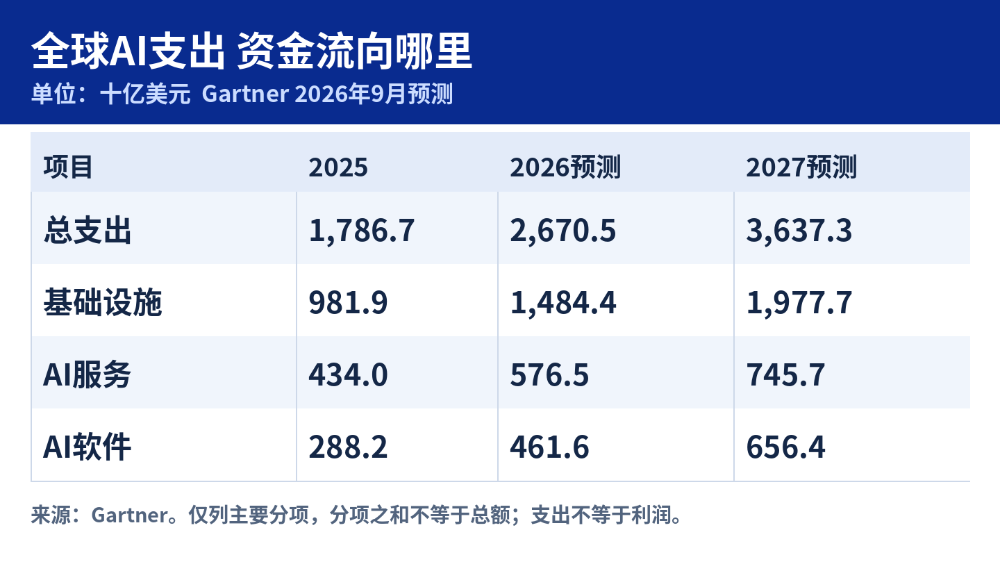
Redrawn based on Gartner's September 2026 forecast, with amounts rounded. Among these, AI infrastructure spending is expected to reach approximately $1.48 trillion in 2026, accounting for roughly 56% of the total. This indicates that substantial funds are still being invested in building capacity to meet future demand. The significant scale of construction also means that returns must be validated through subsequent usage and payments.
However, labeling the entire AI boom as mere paper wealth is not supported by financial reports. For the quarter ending July 26, 2026, NVIDIA reported revenue of $96.221 billion, a 106% year-over-year increase, and GAAP net income of $59.688 billion, a 126% increase. Data center revenue reached $89 billion.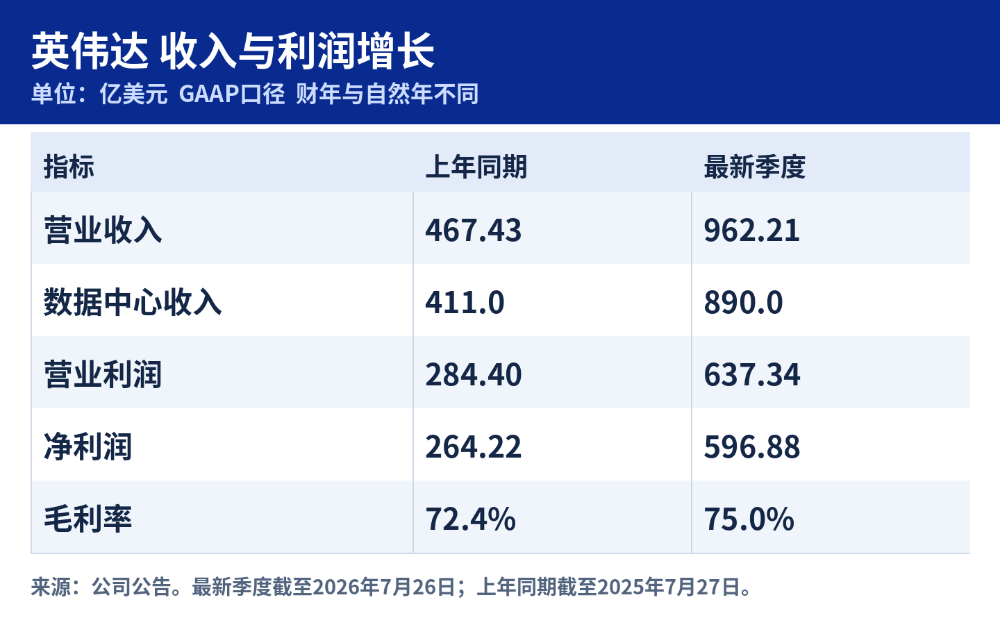
NVIDIA's Q2 FY2027 corresponds to the 2026 calendar year; amounts in billions of USD. For the quarter ending June 30, 2026, Microsoft reported revenue of $90 billion and operating income of $40.6 billion, both up 18% year over year. Annual Azure revenue exceeded $100 billion for the first time, and Microsoft 365 Copilot paid seats surpassed 30 million.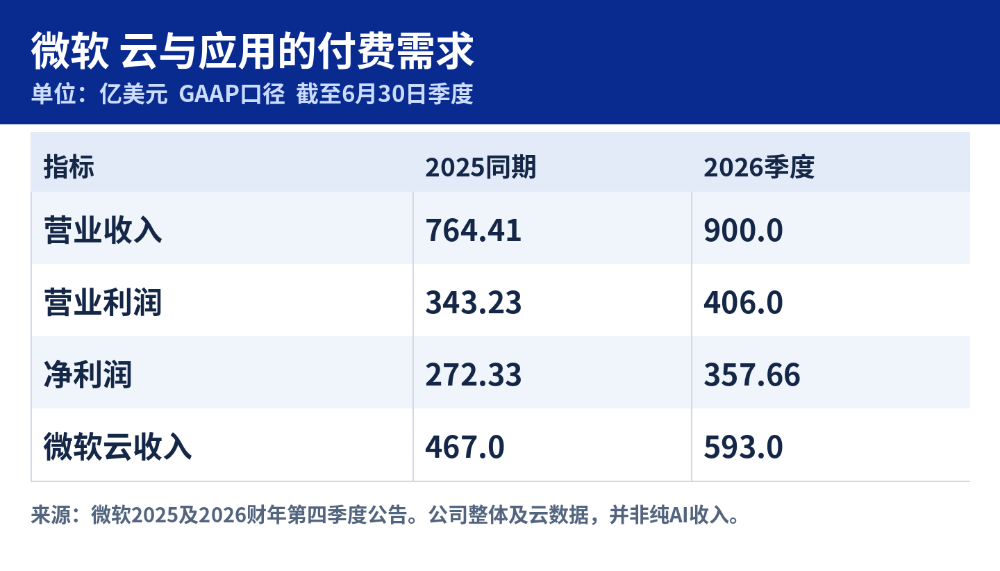
Microsoft's Q4 FY2026; Azure and cloud business include non-AI components and should not be viewed as pure AI revenue. These figures demonstrate real demand for chip purchases, cloud services, and paid applications. However, the profits of these two companies do not prove that the entire supply chain has recouped its investments. Cloud providers buy chips, and chip companies recognize revenue; model companies rent computing power, and cloud providers earn revenue.
At the end of the chain, customers must determine whether the savings and increased business generated by AI are sufficient to cover procurement costs. While transactions may be brisk in the earlier layers, the final layer may not be as generous. Therefore, it is entirely possible for suppliers to experience revenue growth while some customers do not achieve sufficient returns. The debate over the AI bubble often gets stuck here: some use upstream profits to prove the safety of the entire industry, while others use downstream losses to negate the entire technology, both sides overlooking the nuanced middle ground.
The Next Round of Competition. Based on Gartner's latest assessment, vendors are integrating AI agents into existing software, and enterprises are more inclined to enhance efficiency through familiar tools. Specialized models that better align with enterprise tasks and have lower costs are gaining traction. This means that application competition will shift from showcasing capabilities to completing tasks.
Writing an impressive report is just the starting point. Whether an application can be stably integrated into workflows, reduce errors, and retain customers through continuous subscriptions will determine how much revenue is retained. Technological advancements may also make commercial competition more intense. As the same capabilities become cheaper, it benefits users but may compress profits for companies relying on high prices to cover substantial investments.
Price reductions can stimulate more demand, but whether demand can grow fast enough remains to be seen. Looking ahead at financial reports, beyond revenue, attention must also be paid to operating cash flow, capital expenditures, debt maturity schedules, and customer concentration. Particularly crucial is whether orders can be converted into payments and whether customers have the long-term ability to pay. No matter how impressive contract amounts are, someone must ultimately foot the bill.
Technology Will Endure, But Payers May Not. Dalio's reminder is worth heeding, not because of his fame, but because he highlights constraints easily overlooked amid the hype: capital has a cost, debt has a maturity, and valuations must be realized. Currently, the industry continues to witness strong investment and real performance, and "the bubble is about to burst" cannot yet be treated as a certainty. What warrants greater caution is that some projects have overly optimistic growth expectations while leaving themselves little financial flexibility.
If a correction arrives, it may first manifest as difficulty in financing, project delays, and declining valuations, before gradually affecting procurement and operations.
Different companies will vary significantly in their ability to withstand shocks. This is a risk scenario, not a conclusion that has already occurred. While ordinary people enjoy the convenience brought by AI, they do not need to endorse the valuations of every AI company. The faster technology spreads, the fiercer competition may become, and user benefits and shareholder returns may not necessarily align.
Ultimately, this boom will need to answer who can retain sufficient profits at prices customers are willing to pay. The future can be described in grand terms, but bills arrive on time. What are your thoughts on this topic? We welcome your civil and rational insights in the comments section.
Disclaimer: This article is solely for financial hotspot analysis, with data and references sourced from public queries, company announcements, and Huishang IFinD. The views expressed are for reference only and do not constitute any investment or consumption advice.
#FinancialHotspots #InDepthAnalysis #BusinessFinance #InvestmentBanking #ListedCompanies #PrimaryMarket #IPO #AI. Thanks for reading! Feel free to click 'Like' if you enjoyed it.
-
![]()
Out of the Spotlight: Traditional Industries Embrace AI Faster Than Imagined
-
Lei Jun’s 50 Consecutive Extreme Braking Tests: A Visionary Move Now Validated
-
![]()
【Electrical Equipment】Weichai Power and Lingong Heavy Machinery Forge Strategic Partnership
-
![]()
FAW, Toyota, and GAC Group Forge Tripartite Cooperation Pact
-
![]()
Ray Dalio Issues Latest Alert: The AI Bubble Is on the Verge of Popping!
-
![]()
Zunjie Automobile's Latest Move: Far-Reaching Consequences
-
![]()
Did Dongchedi Trigger a Stock Plunge for JAC Motors?
-
![]()
Unattainable Annual Sales Targets: Automakers Brace for the Most Challenging 'Silver October' and a Daunting Final Quarter