Unattainable Annual Sales Targets: Automakers Brace for the Most Challenging 'Silver October' and a Daunting Final Quarter
 10/10 2026
 405
405
Facing a substantial shortfall in their sales objectives, how will automakers navigate through the most demanding three-month period? A comprehensive review of automaker data reveals a contrasting picture: while the golden September was vibrant—with BYD achieving a monthly sales peak of 463,600 units and Leapmotor surpassing 100,000 units for three consecutive months—the retail market experienced a 24% year-on-year decline, and the dealer inventory alert index soared to an annual high. The enthusiasm is reflected in the reports, yet a chill pervades the showrooms. According to the China Passenger Car Association (CPCA), retail sales of narrow passenger cars in September are estimated at approximately 1.69 million units, marking a 9.7% month-on-month increase but a 24.6% year-on-year decrease. Published data indicates that from September 1 to 27, retail sales reached 1.258 million units, down 29% year-on-year, with cumulative retail sales for the year at 12.973 million units, also down 22% year-on-year.
To grasp the September sales rankings, three critical factors must be considered. While automakers' sales data commands attention, the automotive industry's greatest pressure actually rests with dealers. In September, the auto dealer inventory alert index reached 63.2%, up 8.7 percentage points year-on-year and 0.9 percentage points month-on-month, hitting an annual high and significantly surpassing the 50% threshold. The demand sub-index dropped from 30.6% in August to 23.5%, while the inventory sub-index rose from 48.3% to 51.8%. Although September and October are traditionally peak seasons for the auto industry, most dealers believe the seasonal effect is notably weaker than in previous years. The rankings belong to automakers, but the inventory pressure is borne by dealers.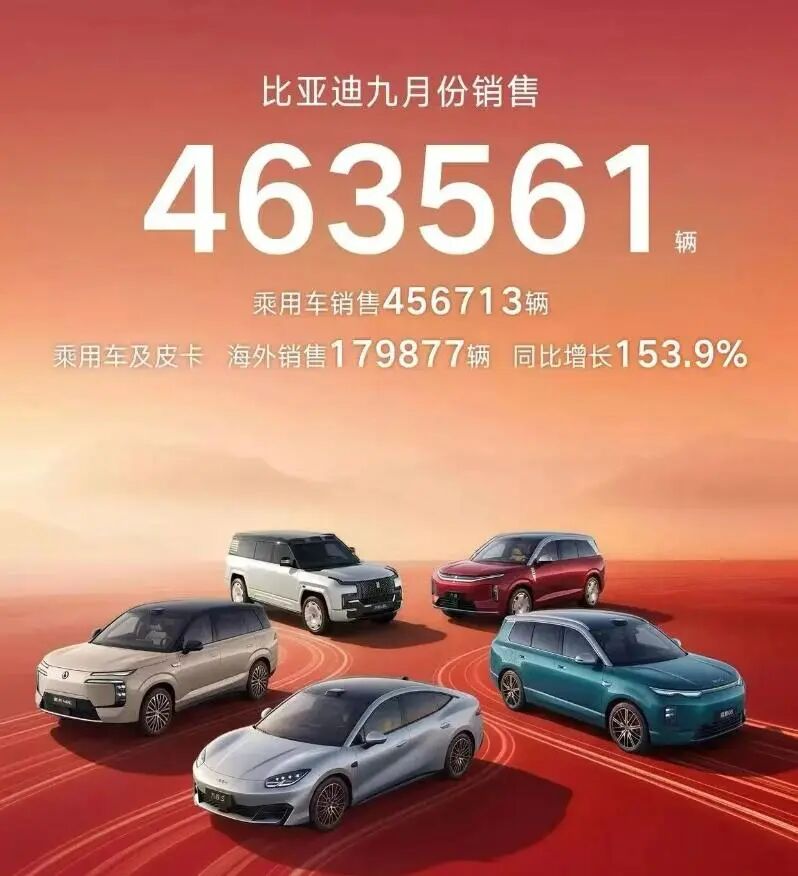
Among automakers, BYD sold 463,561 units in September, up 16.98% year-on-year and 5.28% month-on-month, marking an annual high. SAIC Motor sold 406,000 units. Chery Group sold 292,300 units, up 4.2% year-on-year. Geely sold 292,168 units, up 7% year-on-year and 8% month-on-month, also hitting an annual high and achieving seven consecutive months of year-on-year and month-on-month growth. Changan sold 228,900 units, while Great Wall sold 114,900 units, down 13.99% year-on-year.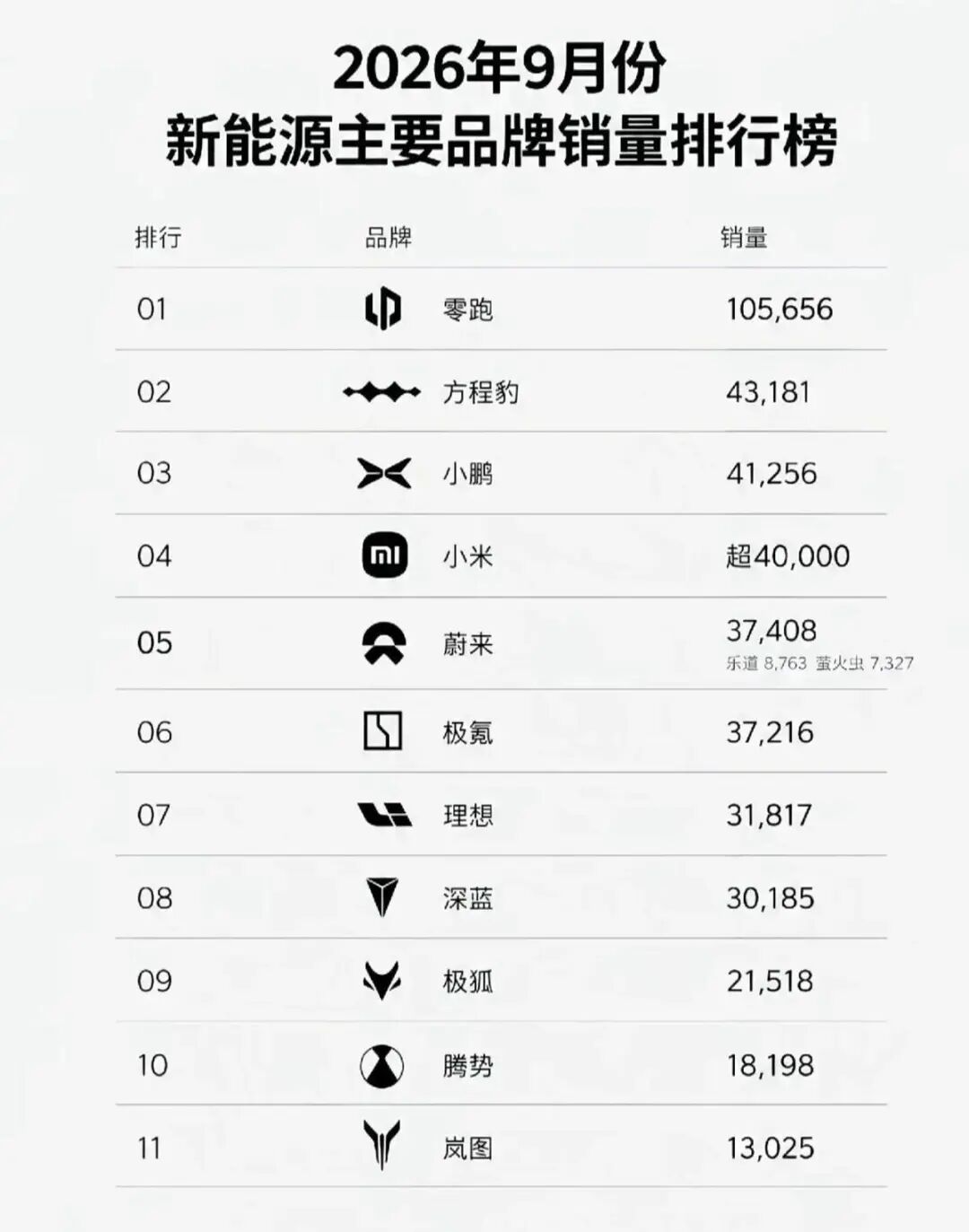
The divergence among new forces is even more pronounced. Leapmotor sold 105,700 units in September, up 59% year-on-year, surpassing 100,000 units for three consecutive months and leading the new force lineup. Xiaomi crossed 40,000 units for the first time, with Pengcheng delivering over 10,000 units in its inaugural month. XPeng sold 41,300 units, slightly down year-on-year. HarmonyOS Intelligent Mobility sold 37,500 units, down 11% month-on-month and 29% year-on-year. NIO sold 37,400 units, up 7.7% year-on-year. Zeekr sold 37,200 units, up 103.85% year-on-year.
Li Auto sold 31,800 units, down 6.29% year-on-year. While automakers can adjust their wholesale rhythms based on production plans, dealers' capital and storage capacities remain fixed. Now, with the inventory alert index consistently above the threshold, the more impressive the September wholesale figures, the greater the terminal digestion pressure in the following months.
When these figures are considered collectively, a problem becomes apparent: much of the growth in the sales rankings stems from channel accumulation rather than terminal digestion. Now, the 'water' is stored with dealers, and the sales data for the coming months will face significant pressure. With only the final quarter remaining, who can achieve their annual sales targets? By the end of September, 2026 is three-quarters over. The overall completion rate for 12 listed automakers ranges from 47% to 67%, with none exceeding 67%.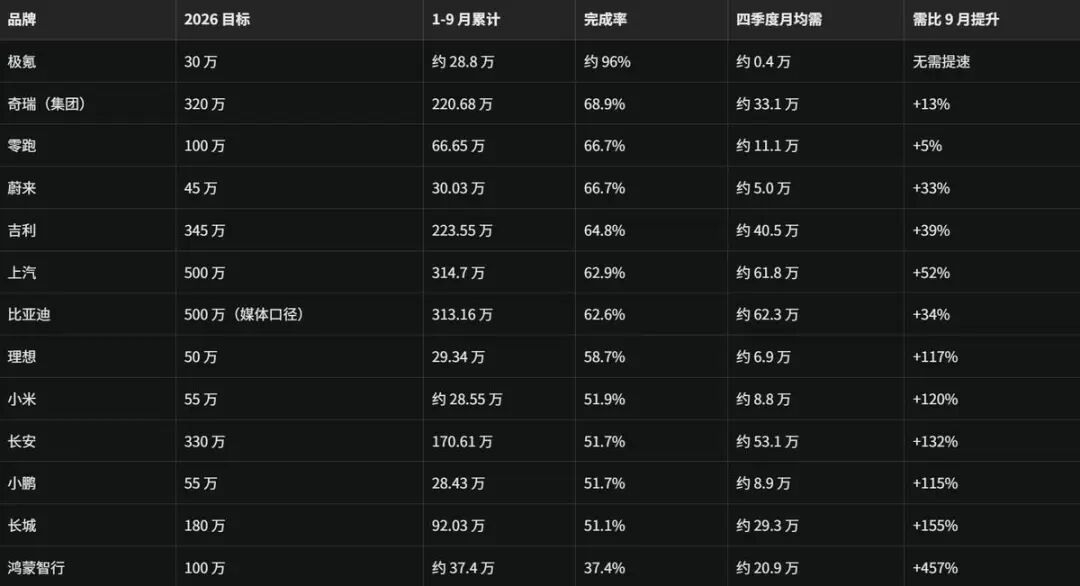
Zeekr is almost certain to meet its target, having sold approximately 288,000 units in the first nine months, achieving about 96% of its annual target of 300,000 units. It needs to sell just over 10,000 units per month for the remaining three months, and with September sales already at 37,000 units, it can basically achieve its annual sales target. The real pressure falls on those in the middle tier, with completion rates in the low to mid-60s. While they seem close to their targets, they need to make up the most significant volume in the fourth quarter. Leapmotor sold 666,500 units in the first nine months, achieving 66.7% of its 1 million unit target, requiring an average of 111,000 units per month in the fourth quarter, a 5% increase from September.
Chery Group has sold 2.2068 million units cumulatively, achieving 68.9% of its 3.2 million unit target, requiring an average of about 331,000 units per month in the fourth quarter, a 13% increase from September's 292,300 units. NIO has sold 300,300 units, achieving 66.7% of its 450,000 unit target, requiring an average of 50,000 units per month in the fourth quarter, a 33% increase from September's 37,400 units. BYD has sold 3.1316 million units cumulatively, achieving 62.6% of the media-estimated 5 million unit target, requiring an average of 623,000 units per month in the fourth quarter, a 34% increase from September's 463,600 units. Geely has sold 2.2355 million units cumulatively, achieving 64.8% of its 3.45 million unit target, requiring an average of 405,000 units per month in the fourth quarter, a 39% increase from September's 292,200 units.
The commonality among these automakers is that they have the highest completion rates and are closest to their targets. However, precisely because of their large scale, the absolute volume they need to make up in the fourth quarter is also the greatest. Chery needs to sell nearly 40,000 more units per month, BYD about 160,000 more, and Geely an additional 110,000. The so-called 'opportunities' refer to these automakers, and the heaviest pressure in the fourth quarter falls on them.
The remaining seven automakers face significant challenges. SAIC and BYD both have 5 million unit targets, with SAIC achieving 62.9% and BYD 62.6%, both stuck in the low 60s. Li Auto is at 58.7%, Xiaomi at 51.9%, Changan at 51.7%, XPeng at 51.7%, and Great Wall at 51.1%, all requiring an average of about twice their current monthly sales in the fourth quarter. HarmonyOS Intelligent Mobility is at 37.4%, needing an average of more than four times its current monthly sales in the fourth quarter.
Why 'Silver October' is the Toughest Month This Year: First, considering year-on-year data, October 2025 saw a surge in purchases before subsidies ended, setting a high base. There is almost no room for year-on-year growth to turn positive. Regarding demand, the national subsidy for trade-ins expires on December 31, and the full annual quota of 250 billion yuan has been allocated, with the fourth batch of 62.5 billion yuan released on September 30. Consumers are increasingly calculating policy benefits, delaying purchases. Some of the demand in October will be drawn forward to December.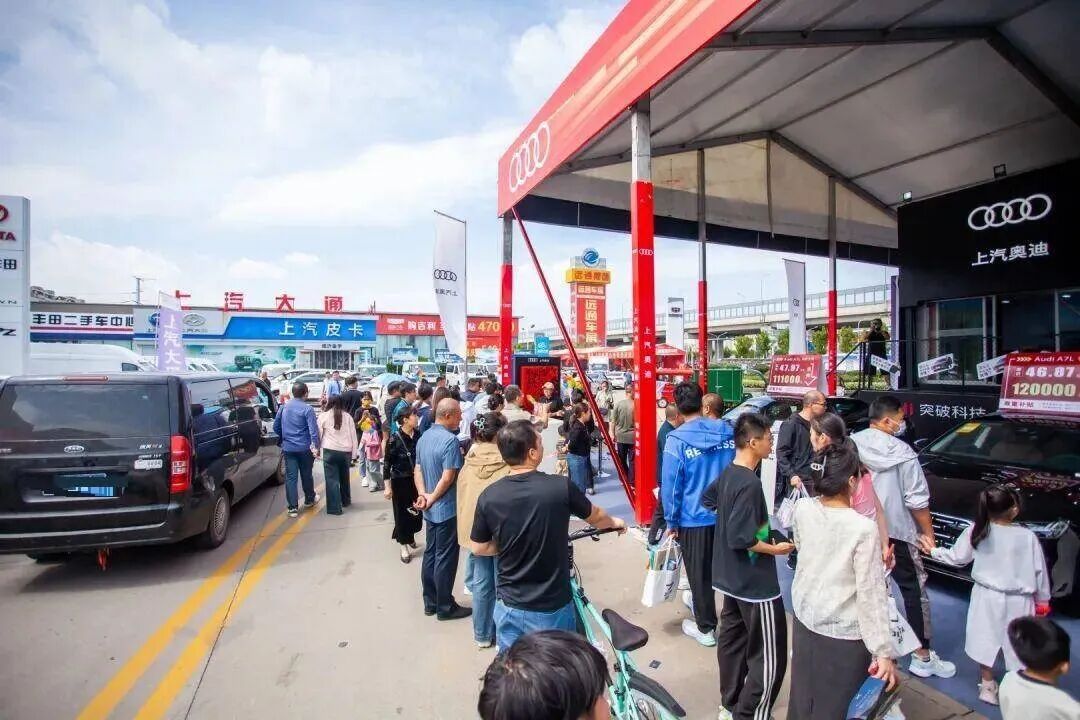
The logic of the 'last subsidy train' played out last year, with demand concentrating in the month before the deadline. This year, with three months remaining until the deadline, consumers have ample time to delay purchases, leaving October and November to bear the brunt. October's customer traffic relies heavily on National Day and local auto shows, with significant post-holiday declines expected.
Automakers have limited choices: either offer discounts in October to boost sales or bet on the last subsidy train in December. So, where will the fourth-quarter growth come from? Exports are the common answer. In September, overseas sales accounted for 71.1% of Chery's sales, 52.2% of Great Wall's, 42% of Changan's, 39% of BYD's, 37% of SAIC's, and 36.5% of Geely's. Chery exported 1.5512 million units in the first three quarters, up 65.6% year-on-year, already surpassing its full-year 2025 total. Geely exported 797,700 units overseas in the first three quarters, up 169% year-on-year, with a full-year overseas target of 1 million units. SAIC exported 1.166 million units overseas in the first three quarters, up 52.4% year-on-year.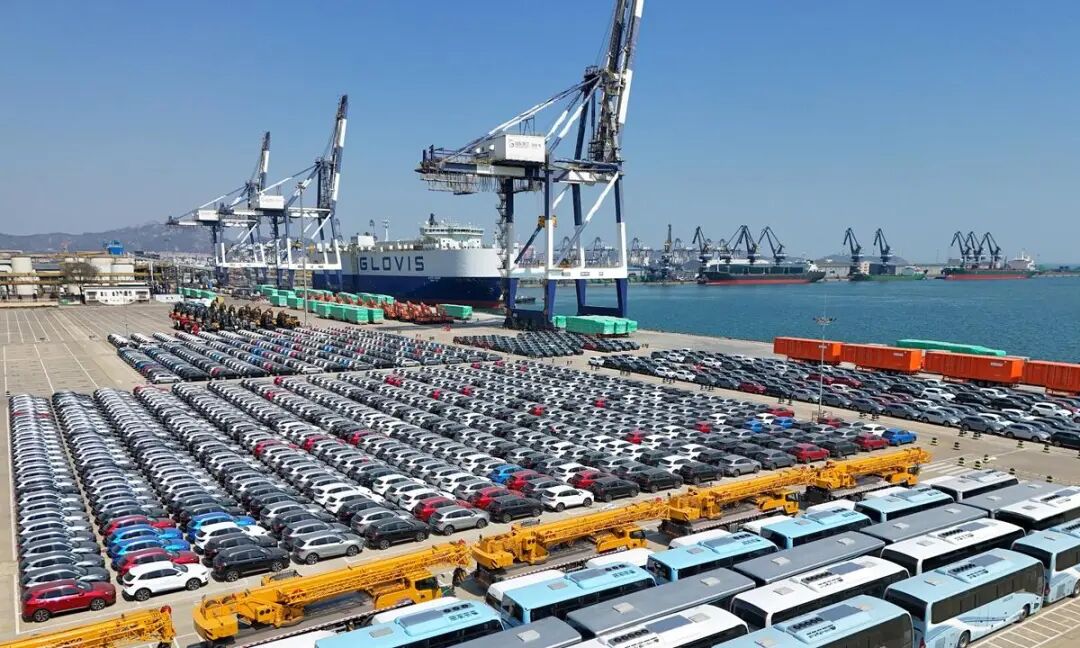
In the domestic market, new models are one of the few variables that can quickly boost sales in the fourth quarter. Xiaomi Pengcheng delivered over 10,000 units in its first month, with a second production line set for trial operation in the fourth quarter. The Xpeng G9L, Li Auto i9 and MEGA, Zeekr 9X Glorious, Fangchengbao Titanium 9, and IM LS6 facelift are all planned for launch in the fourth quarter. However, new models typically offer little to no cash discounts initially, so their impact on sales will lag.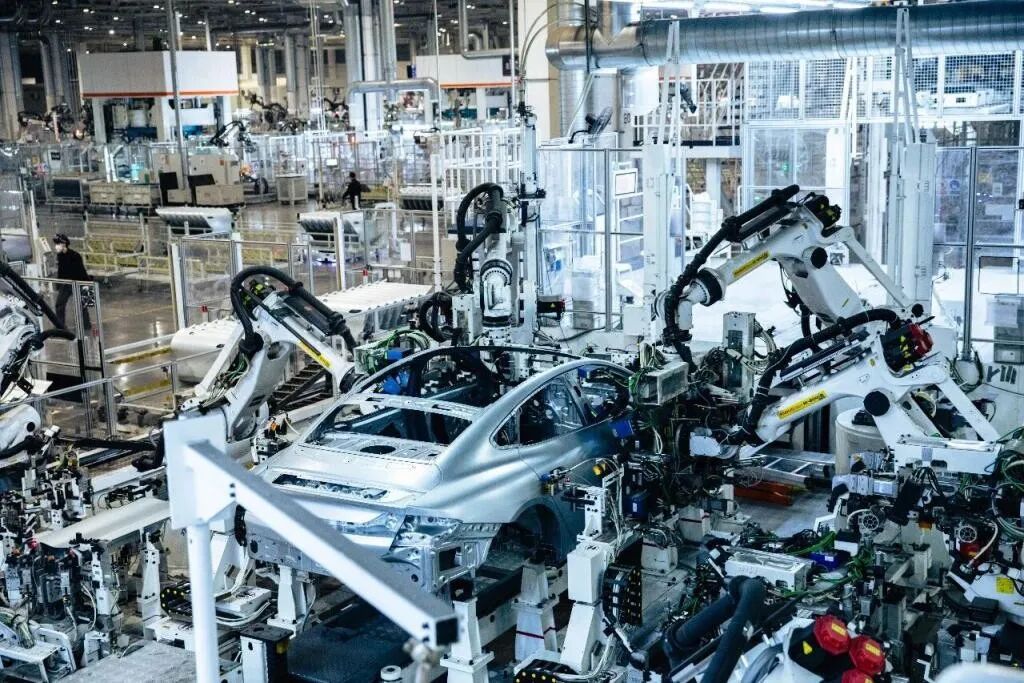
Meanwhile, policies will also push sales into December. Trade-ins drove 5.353 million units in the first eight months, with the national subsidy expiring on December 31. The likelihood of a repeat of last year's pre-subsidy-end purchasing surge in December is high. Exports, new energy vehicles, new models, and policies together can support part of the fourth-quarter volume but cannot fully bridge the gap, especially for those eager to boost sales.
The term 'golden September and silver October' seems more like a stress test for the channel side this year. Automakers have shifted sales pressure to dealers, who are pinning their hopes on the year-end. December may see a wave of purchases, but from another perspective, it risks preemptively depleting next year's demand. What will truly determine next year's landscape is not who sells the most in these three months but who can maintain profit margins amid price wars. Sales can be recovered through volume pushes, but profits and trust cannot.
-
![]()
Out of the Spotlight: Traditional Industries Embrace AI Faster Than Imagined
-
Lei Jun’s 50 Consecutive Extreme Braking Tests: A Visionary Move Now Validated
-
![]()
【Electrical Equipment】Weichai Power and Lingong Heavy Machinery Forge Strategic Partnership
-
![]()
FAW, Toyota, and GAC Group Forge Tripartite Cooperation Pact
-
![]()
Ray Dalio Issues Latest Alert: The AI Bubble Is on the Verge of Popping!
-
![]()
Zunjie Automobile's Latest Move: Far-Reaching Consequences
-
![]()
Did Dongchedi Trigger a Stock Plunge for JAC Motors?
-
![]()
Unattainable Annual Sales Targets: Automakers Brace for the Most Challenging 'Silver October' and a Daunting Final Quarter