Zunjie Automobile's Latest Move: Far-Reaching Consequences
 10/10 2026
 479
479
When a multi-million-yuan car finds itself embroiled in safety controversies, owners aren't initially concerned about who comes out on top. Their primary concern is whether their car will still operate as usual the next day.
The automotive industry was set abuzz right after the National Day holiday.
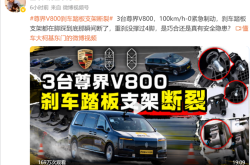
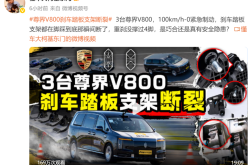
On October 8, Dongchedi released a test video revealing that during emergency braking tests at a speed of 100 km/h, the brake pedal brackets of three Zunjie V800 vehicles successively broke. All three vehicles suffered from bracket failure—the first two were produced in August 2025, and the third came off the September 2025 production line.
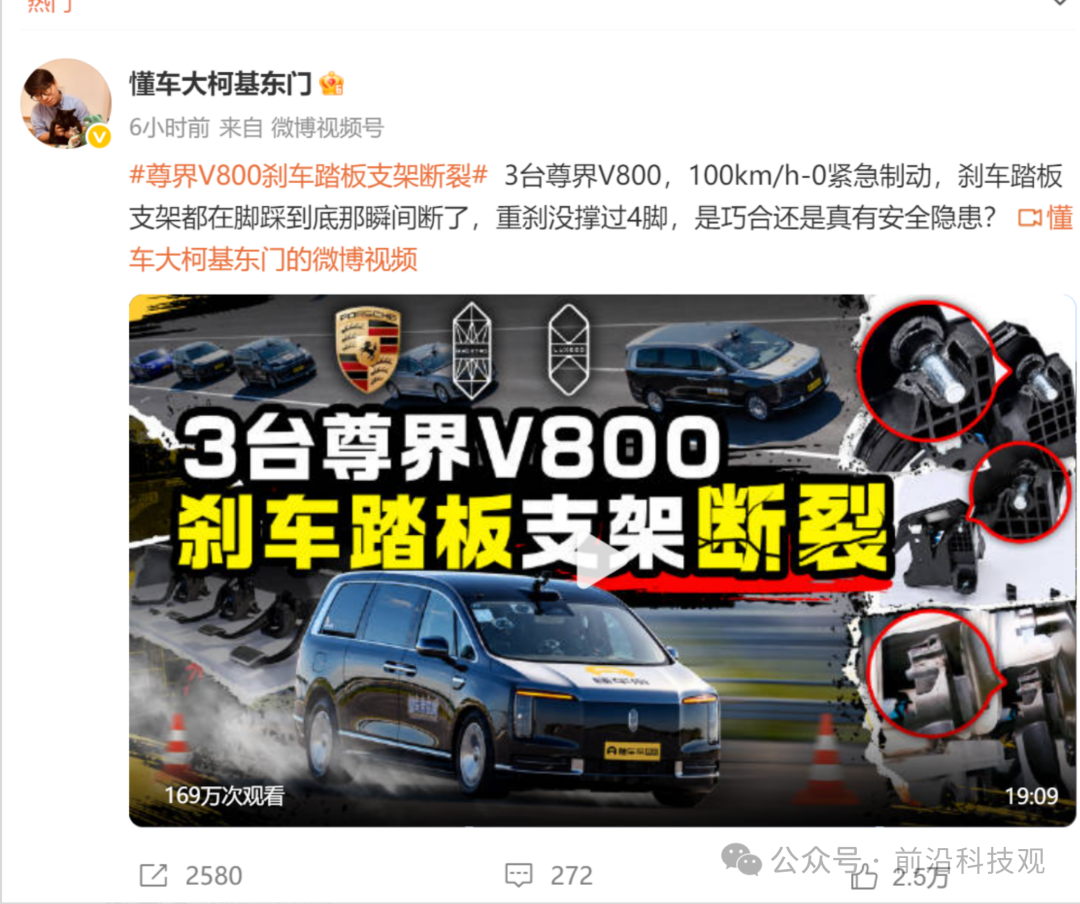
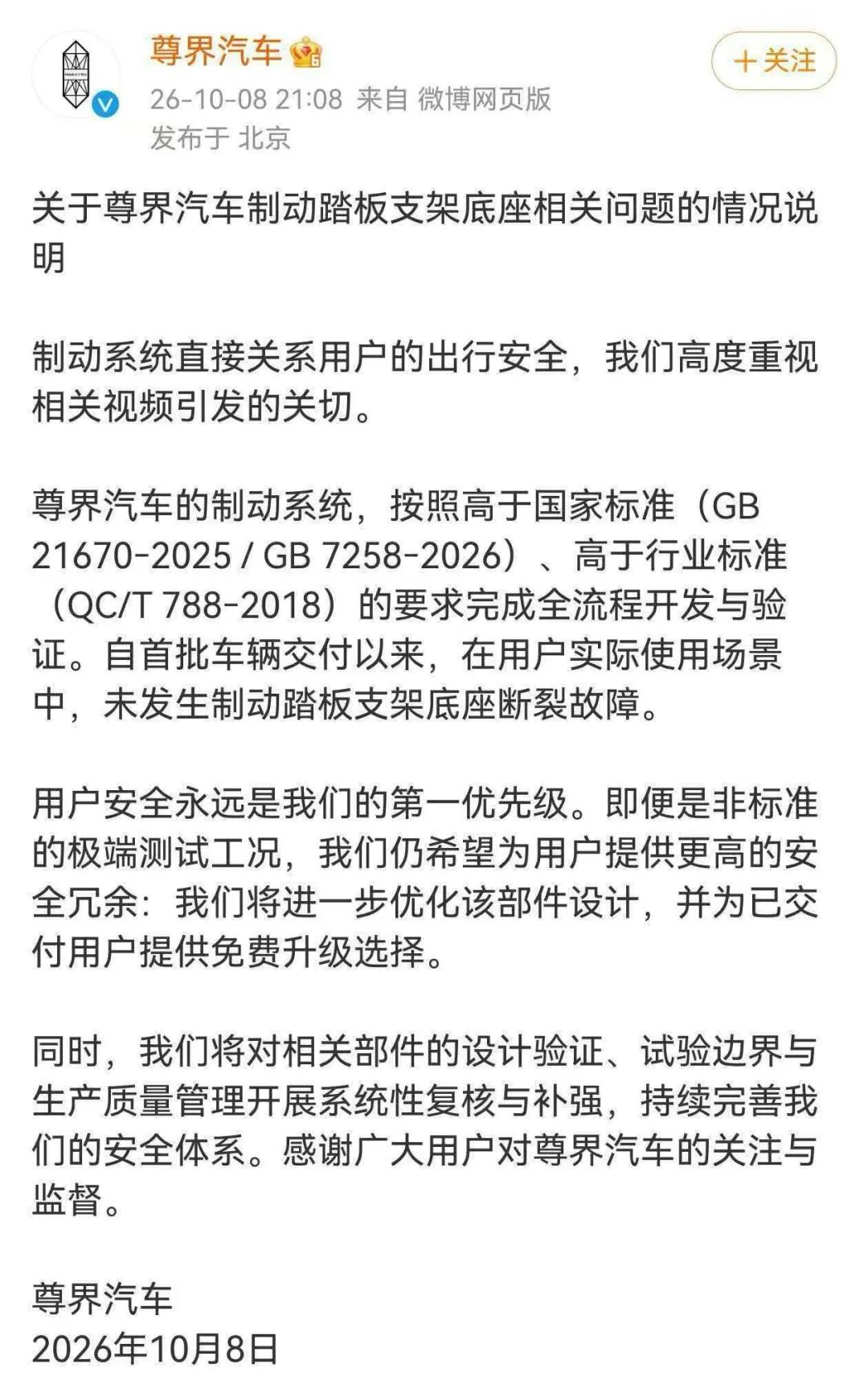
That very evening, Zunjie Automobile promptly issued an official statement.
The statement highlighted three crucial aspects: The braking system was developed and validated to surpass both national and industry standards; no similar failures have been reported in real-world user scenarios; the company pledged to optimize component design and offer free upgrades for vehicles already delivered.
On the same day the video was released, Dongchedi stated that during tests where the vehicles decelerated from 100 km/h to a complete stop, the brake pedal brackets of three Zunjie V800 vehicles successively fractured. The National Business Daily quoted insiders as saying that the first two vehicles were rented, while the third was a newly purchased car.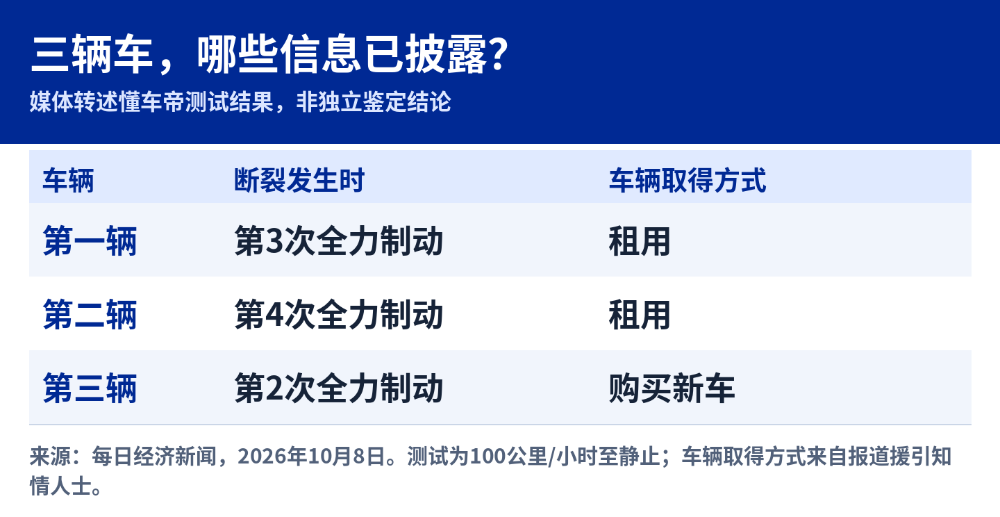
Deciphering Zunjie's Statement: First and foremost, this interpretation represents the author's personal take. Readers with differing opinions are encouraged to continue the discussion in the comments section. Zunjie referred to the tests as being conducted under "non-standard extreme conditions" while proposing "enhanced safety redundancy." Taken together, these points suggest that the company disagrees with using this single test as a basis for judging daily safety but is committed to reinforcing the component.
This response is more constructive than simply engaging in a debate over the validity of the test. However, the statement failed to elucidate how the system "exceeds standards." Owners are unable to assess risks based solely on standard numbers. If the test conditions were indeed unreasonable, the company should explain the issues with the application of force, duration, and the state of the vehicle. Data on the stress tolerance of the new component could demonstrate where resources have been invested.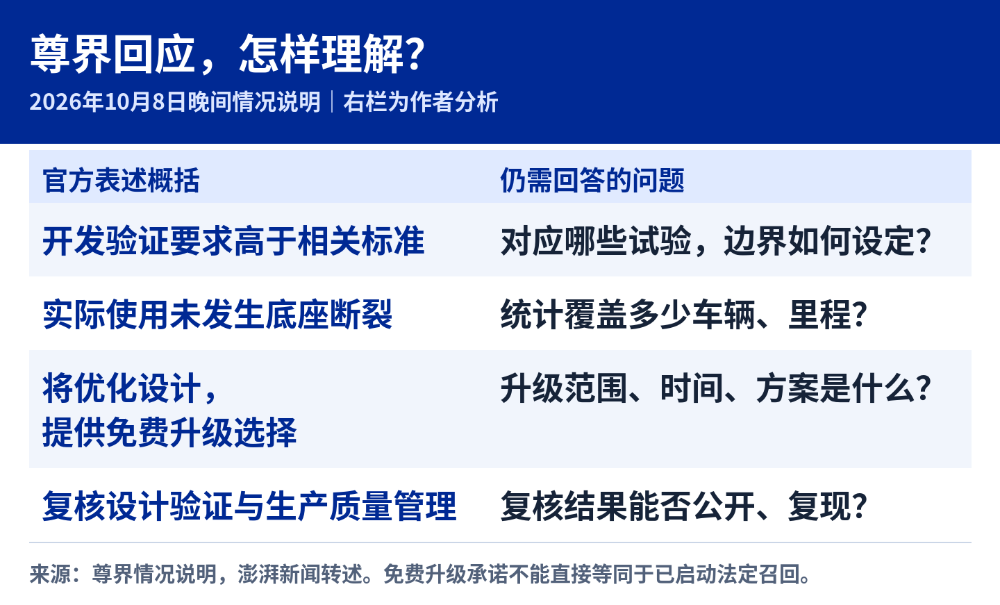
Zunjie's claim that there have been no real-world failures is significant, but its persuasiveness hinges on the sample size and mileage. While three test failures certainly warrant a serious investigation, they cannot accurately predict failure rates across all vehicles. The commitment to providing free upgrades is a positive step, but the implications for a potential recall require regulatory judgment that goes beyond this statement.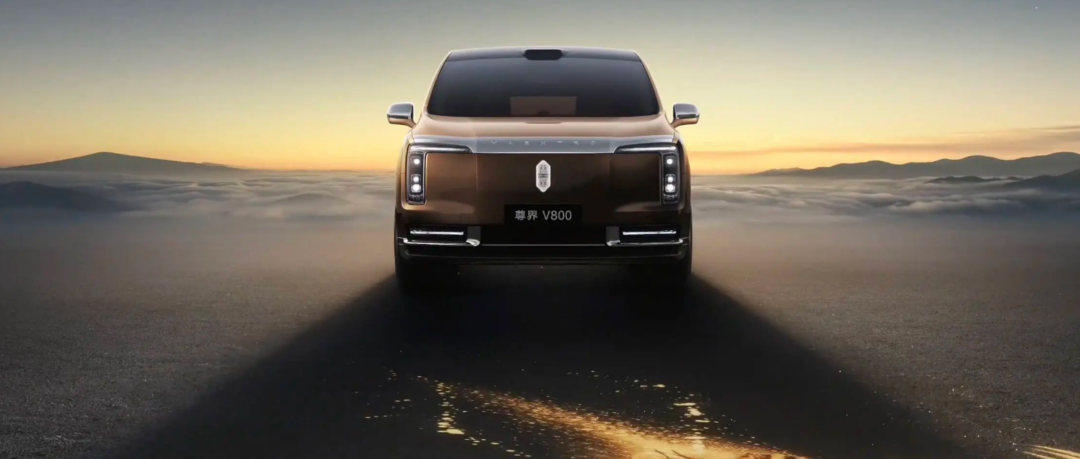
Who is Dongchedi? Dongchedi is far from being an ordinary individual account. Launched as an independent platform in 2017 after originating from Toutiao's auto channel, it covers a wide range of automotive content, transactions, and services. In February, there were reports of its potential Hong Kong IPO resurfacing, but Dongchedi and ByteDance declined to comment when approached by the 21st Century Business Herald. These credentials indicate mature operations but do not imply any external influence over this particular test.
To understand Dongchedi's willingness to publish critical evaluations, one must consider its business model: Users consume content, compare different models, and submit purchase inquiries. Platforms that simply repeat manufacturer claims struggle to stand out from the crowd. Exposing issues helps build trust and industry influence. However, this commercial rationale does not validate the motivations behind the test.
High-profile tests like this demand transparency regarding the vehicle's history and testing protocols. Force curves, sensor calibrations, and full video footage that allows for replication are essential in determining the credibility of the conclusions. JAC Motors Caught Off Guard: JAC Motors' stock price took a nosedive to 24.72 yuan (-10.01%), wiping out over 6 billion yuan in market capitalization with turnover exceeding 3.6 billion yuan.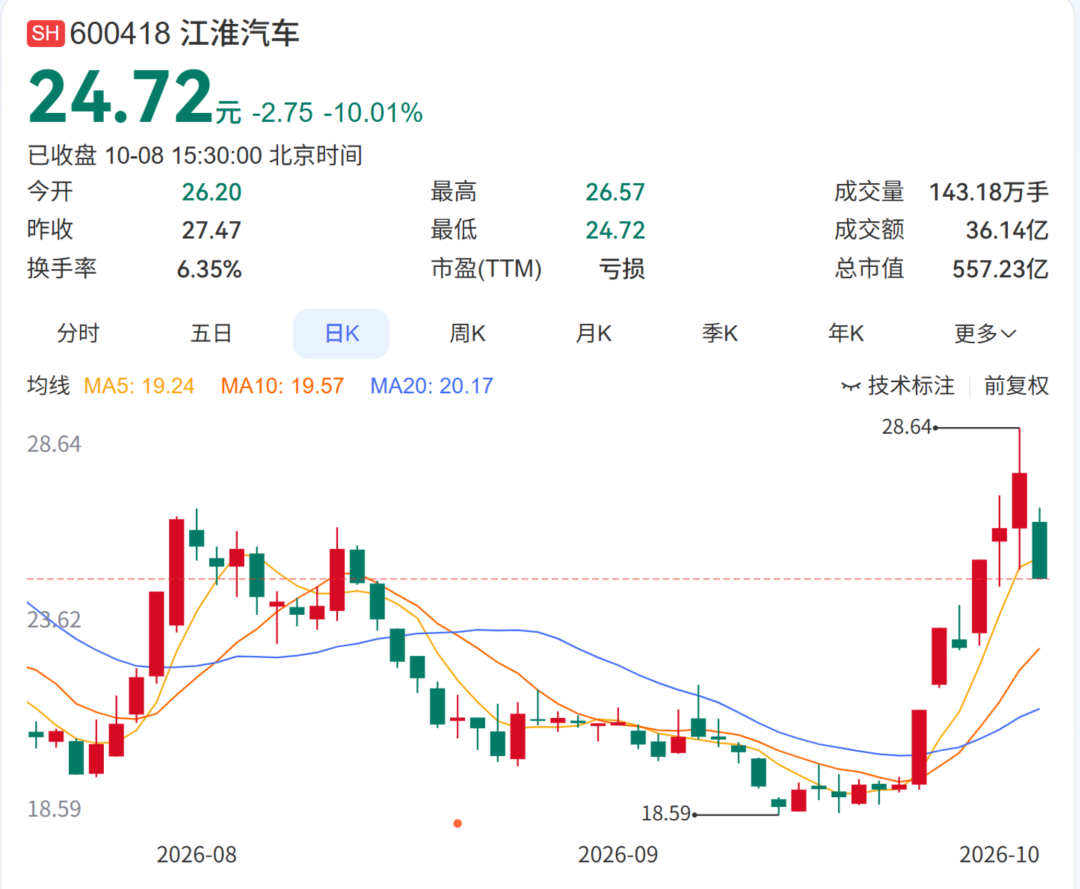
JAC's 2026 interim report revealed that cumulative deliveries of 19,000 Zunjie S800 units had been made by the end of the period; first-half revenue grew by 14.31% year-on-year to 22.13 billion yuan, although the net loss attributable to shareholders widened to 749 million yuan.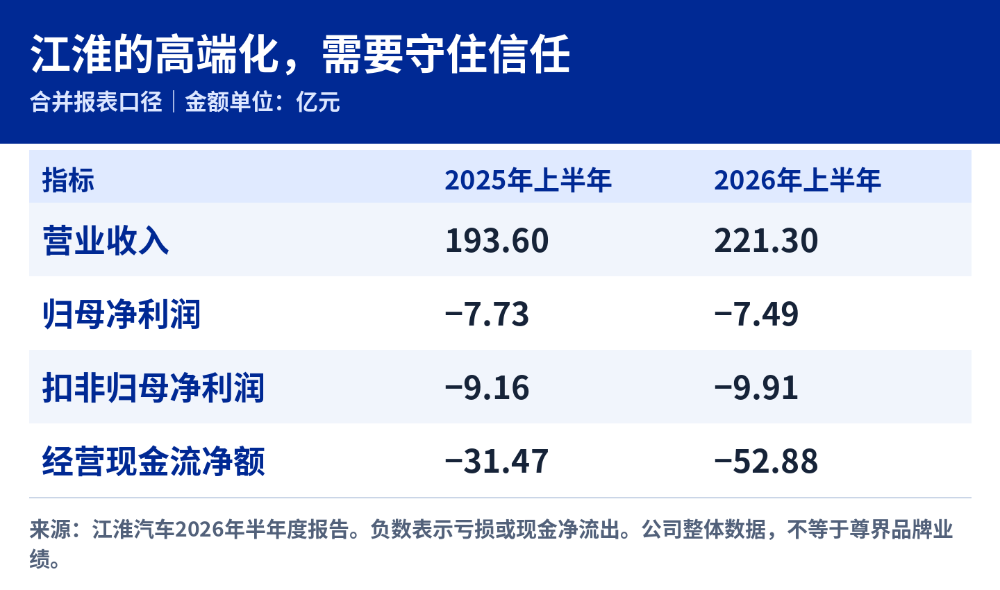
Revenue growth stood in stark contrast to expanding core losses and operating cash outflows. The premium vehicle segment must deliver sustained sales and genuine profitability—reputation damage could have a significant impact on orders and after-sales costs. Data from the CAAM shows that 10.65 million new energy vehicles were sold from January to August (+10.7% year-on-year).
With an ever-growing array of consumer choices, premium brands must justify their price premiums. The author gives top priority to clarity regarding upgrade timelines, the vehicles to which the upgrades apply, and the specific modifications in Zunjie's next announcement. Dongchedi should continue to face scrutiny over the test materials; its courage to publish does not exempt it from verification.
After purchasing a vehicle, owners are unable to cross-check technical standards before every drive. They place their trust in the manufacturer's validation process and consult third-party evaluations. Both parties must honor this trust. The controversy will only be resolved when the upgrades are actually implemented and the test data becomes verifiable. Premature declarations of victory offer little solace to the occupants.
Issuing a statement and committing to free upgrades within 72 hours demonstrated responsive crisis management.
However, the survival of the brand hinges on maintaining this level of transparency and efficiency through future tests, complaints, and media storms.
Building million-yuan luxury cars is a challenging task; sustaining trust for such brands is even more difficult.
This lesson is applicable to all up-and-coming Chinese brands.
What are your thoughts on Zunjie's latest response? Share your civil and rational insights in the comments.
Disclaimer: This analysis is based on publicly available data, company disclosures, and Huitong Financial's IFinD. The views expressed are for reference only and do not constitute investment or purchase advice.
#FinancialHotspots #InDepthAnalysis #BusinessFinance #InvestmentBanking #ListedCompanies #PrimaryMarket #IPO #JACMotors Thanks for reading. Click 'Like' if you found this insightful.
-
![]()
Out of the Spotlight: Traditional Industries Embrace AI Faster Than Imagined
-
Lei Jun’s 50 Consecutive Extreme Braking Tests: A Visionary Move Now Validated
-
![]()
【Electrical Equipment】Weichai Power and Lingong Heavy Machinery Forge Strategic Partnership
-
![]()
FAW, Toyota, and GAC Group Forge Tripartite Cooperation Pact
-
![]()
Ray Dalio Issues Latest Alert: The AI Bubble Is on the Verge of Popping!
-
![]()
Zunjie Automobile's Latest Move: Far-Reaching Consequences
-
![]()
Did Dongchedi Trigger a Stock Plunge for JAC Motors?
-
![]()
Unattainable Annual Sales Targets: Automakers Brace for the Most Challenging 'Silver October' and a Daunting Final Quarter