Out of the Spotlight: Traditional Industries Embrace AI Faster Than Imagined
 10/10 2026
 472
472
Author|Yi Xinyang
Editor|Focus Editor
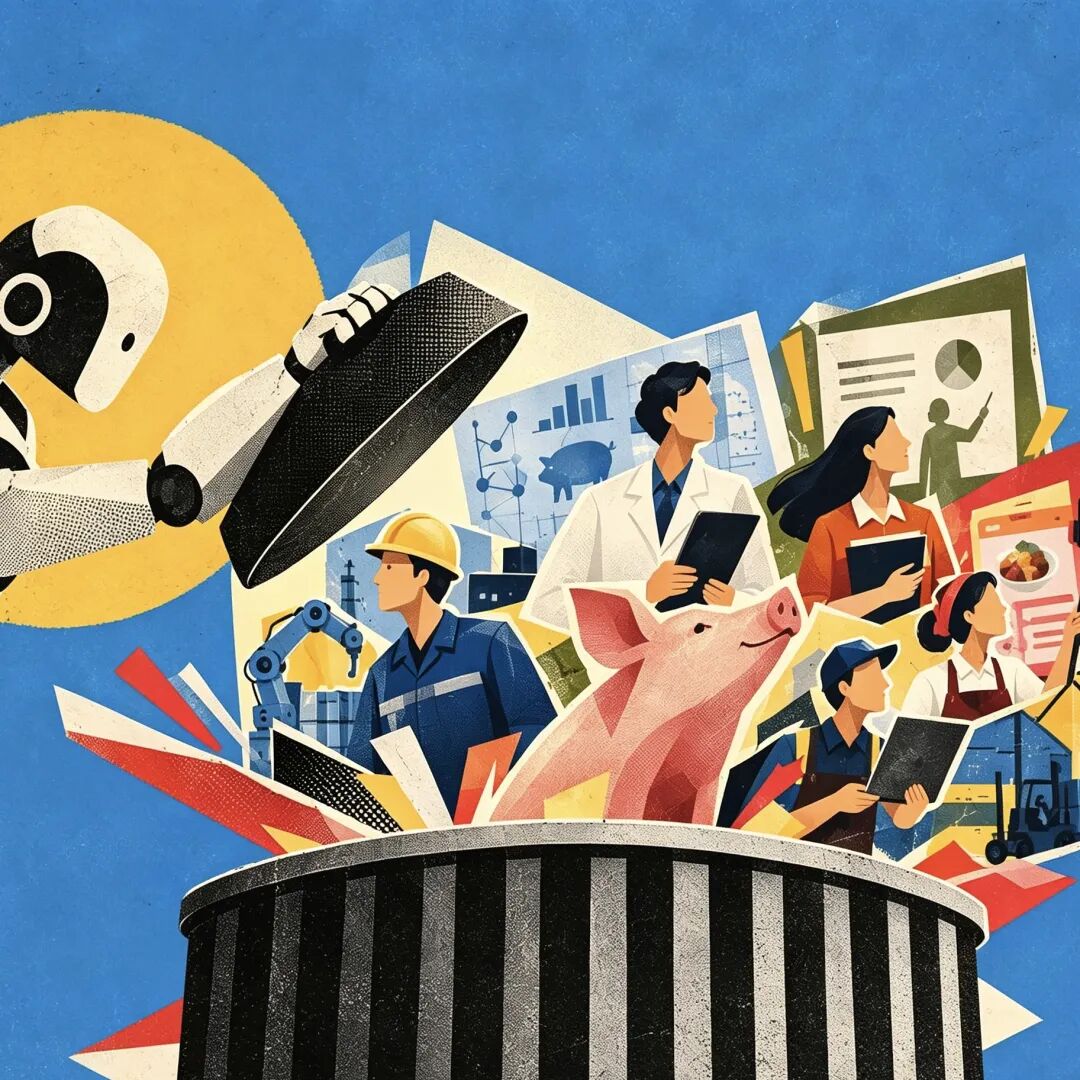
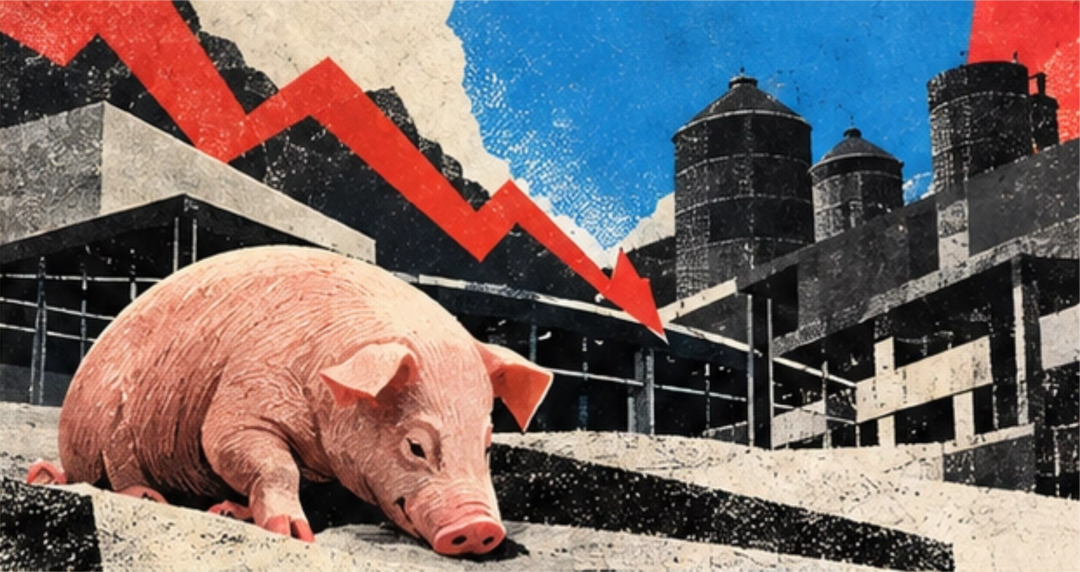
The pig farming sector has faced losses for over 10 consecutive months, with losses per pig exceeding 400 RMB at their peak. Amid this industry downturn, a 50-person pig farming equipment company in Foshan managed to gain customers against the trend. Liu Wen, the owner with no coding background, along with non-technical interns, used AI to rewrite the company's decade-old software.
Not just small businesses, even Muyuan, the world's largest pig breeder, collaborated with Alibaba Cloud to develop a large-scale pig farming model. This system distills the disease diagnosis experience of veteran veterinarians, delivering results in one second and deploying it across over 1,000 pig farms.
Shifting our gaze from the chips, models, and agents of tech giants to traditional industries, we find they are embracing AI far faster than expected.
Recently, we spoke with over a dozen practitioners in traditional industries and documented five real-life stories. Among them are successors of small enterprises in Foshan that have sold pig farming consumables for over a decade, entrepreneurs from Shanghai Jiao Tong University attempting to encode craftsmanship knowledge into code, and a Lanzhou University graduate shortening month-end reconciliation time from days to half a day using AI at a leading manufacturing firm.
Their stories paint a microcosm of how China's traditional industries are embracing AI, revealing that the core barriers to AI adoption are not technological but stem from veteran workers, long-time clients, and outdated practices. The most valuable aspect of AI in industrial adoption lies in extracting human expertise and transforming it into digital assets for enterprises.
The Biggest Resistance Comes from Departmental Silos and Outdated Practices
Whether it's a billion-dollar giant or a small factory with dozens of employees, the foundation for digitalization in traditional industries is often highly inadequate, with data environments far more fragile than imagined.
In 2023, Wang Peng, a sophomore in the Industrial Engineering Department at Shanghai Jiao Tong University, joined a project that took him into a manufacturing enterprise valued at 160 billion RMB. The company's biggest headache was production scheduling, and it was here that Wang witnessed the true data wasteland of China's traditional manufacturing: some data was recorded in MES (Manufacturing Execution Systems), some in ERP (Enterprise Resource Planning Systems), but together they couldn't be directly analyzed. Many core business processes still relied solely on the personal experience of veteran workers, which was the very foundation of their livelihoods.
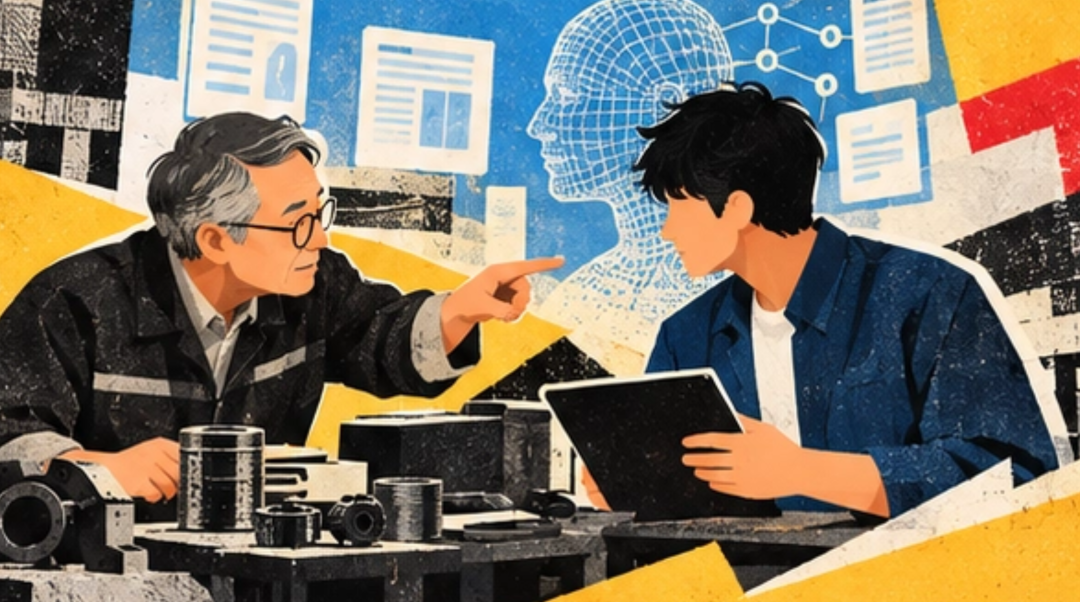
A saying circulated in the factory: "Nothing works without the veteran workers."
After visiting multiple leading manufacturing firms, he reached a disheartening conclusion: the industry's outcome digitization barely passes muster, while process digitization is practically nonexistent.
Large enterprises face fragmented data, while small businesses grapple with even more fragile data. In the summer of 2024, Liu Wen, who had recently taken over the company, logged into the decade-old ERP system only to find it had been hacked. This company, which had operated in Foshan for 22 years selling pig consumables like catheters and B-ultrasound equipment, lost a decade's worth of financial data, accounts, orders, and customer records accumulated over 20 years overnight. After searching with colleagues, all that remained were stacks of printed documents.
Breaking through data silos is even harder than dismantling the organizational walls between departments and roles.

Wang, a graduate in Artificial Intelligence from Lanzhou University, joined a leading manufacturing firm and quickly used large models to overhaul the department's most time-consuming financial reconciliation work. At the end of each month, several people would work overtime for two days, manually comparing tables exported from the system with supplier invoices line by line. He broke down the entire process into standard actions, connected them to a large model, and created an SOP-based intelligent workflow, reducing the same workload to just half a day.
However, when Wang attempted to Promotion (introduce) this highly efficient tool to the neighboring department, the team leader blocked it with a single sentence: changing the process was too risky. Core businesses spanned multiple departments, involving complex performance evaluations, budget allocations, and role responsibilities—all beyond the authority of ordinary employees. Wang realized: no matter how fast an individual works, they can't outpace the organization. The safe approach was to follow the department's pace.
As the China Academy of Information and Communications Technology pointed out in its Data Elements Development Report (2025), 72% of SMEs believe data governance costs outweigh benefits, and 65% lack professional talent.
Liu Wen attended an AI conference in Beijing seeking answers but left even more sobered. "Much of it is flashy but impractical. Most of what people are doing now only improves individual efficiency, not the entire organization," he said.
The true barrier to AI isn't the models themselves. Models are readily available for purchase. The difficult part lies beyond the models: data must be organized manually, clients must be educated one by one, and complex cross-departmental processes require boss-level decisions to mobilize.
Micro-Efficiency Improvements Are More Practical Than Overhauls
After hitting these walls, some began shifting strategies: avoiding complex top-level strategies and focusing on the most painful, specific business pain points to quickly achieve closed-loop results at minimal cost. Pain means effects are easily visible and measurable; low cost means low risk of failure.
Liu Wen's experiment began with customer acquisition at the front end of the business. Previously, this pig consumables company relied heavily on twice-yearly industry trade shows for customer acquisition, with each exhibition costing 300,000 RMB and averaging 1,500 RMB per customer.
In February 2025, just after the Spring Festival, Liu Wen built his first content farm on a collaborative office platform. He set product features and selling points, had AI generate 20 pieces of content in bulk, and ran as many as budget allowed. He then introduced an approval bot to take over the publication process, which previously required three rounds of manual review and ultimately fell on him. Now, he only needed to specify requirements, and the bot could directly revise and publish drafts.
Through this AI-generated content matrix and IP accounts, the company steadily acquired 30 new customers per month, with marginal acquisition costs approaching zero. By March, monthly revenue from this new media business reached 200,000–300,000 RMB, with a positive ROI across all metrics. While competitors quietly cut budgets due to swine fever and other environmental factors, Liu Wen used minimal trial-and-error costs to accelerate expansion while others hit the brakes.
Such micro-efficiency improvements are happening across traditional industries. While the spotlight shines on Silicon Valley's compute centers, the most vivid AI applications are emerging in county-town middle schools, construction machinery rental shops, and street-side diners.

Ms. Zhao, a physics teacher at a county middle school in central China, teaches three classes. Her biggest headache wasn't teaching but lesson preparation. To demonstrate abstract principles, she previously spent hours searching online, piecing together unusable animations into PPTs, and staying up two hours after evening self-study sessions. This year, she started using an AI teaching tool: by simply stating her teaching objectives, the system generates interactive courseware with adjustable parameters, cutting preparation time in half. Similarly, a teacher in Kunming input "Generate a principle animation for a drone flight control system" and received a 3D courseware with five flight modes within minutes. In this transformation, teachers are evolving from repetitive lecturers to designers of teaching applications.
Sun, who runs a 30-million-RMB construction machinery rental business in a county town, handles both sales and scheduling. Pricing a 100,000-RMB order required considering equipment type, operator fees, fuel, distance, and operational discounts. Busy serving major clients, he often lost small orders. As the market cooled, every order mattered. This year, he had an AI pricing system built. Now, when small clients inquire via WeChat, quotes are generated within minutes, and every pending inquiry in his phone receives a response.

Even local life operation agencies have developed unique AI approaches. This company, serving small Catering (dining) businesses across cities, needed to produce 200–300 short video scripts daily during peak periods, but skilled operators were scarce, making people the biggest bottleneck. The engineers didn't force AI into rigid templates but instead broke down the experienced operators' knowledge into fields like "store type, featured dish, promotion, selling point" and fed them into the production process. Owners of small family restaurants don't need to understand AI—their businesses are already steeped in AI-generated content.
Transforming Human Expertise into Organizational Digital Assets
Once local efficiency gains start spinning, the saved time and visible results automatically push AI deeper into core business processes.
Since January this year, Liu Wen has spent less than 6,000 RMB on various AI subscriptions and top-ups. He expanded his AI approach: instead of rushing to fix the old ERP system after the hack, he moved the entire company to the cloud, precipitate (depositing) all data into collaborative platforms. Often struck by ideas halfway through a shower, he'd step out and have Codex verify code, working with equally non-technical interns to more aggressively rewrite the decade-old pig farm management software.
Shanghai Jiao Tong University entrepreneur Wang Peng standardized experience replication into a B2B service. His startup, with a dozen SJTU master's and doctoral students, launched an AI decision-making system for manufacturing. Its core logic compiles expert experience, process mechanisms, and field data into computable industrial states. In his words, the business is like renovating a raw apartment: "Customers think they're buying furniture, but the first thing the construction team does is rewire the electricity and plumbing."
At a shipbuilding client, the system eliminated the chaos of Excel-based management, starting construction without all materials ready, and ultimately zero profit. After implementation, each ship's completion rate improved by 30%, effectively boosting total capacity by that margin. His client base now spans about 50 SMEs. However, Wang admits that while system deployment takes days, true implementation requires three months: "The slow part is all about people."
Currently, many traditional enterprises still have significant misconceptions about AI. Early this year, a pharmaceutical company boss consulted Liu Wen about AI adoption, only for Liu to discover the company had already spent 300,000 RMB on RPA tools and planned to invest hundreds of thousands more on new systems. Liu bluntly called it "absurd," pointing out that a single person could handle the actual business needs. Some peer company bosses even expected AI to be omnipotent, demanding it handle graphic design, writing, video editing, and other promotional tasks directly.
Capital market enthusiasm contrasts sharply with frontline realities. According to an RBC Capital CIO survey, 90% of companies plan to increase AI investment in 2026; a BCG survey shows 82% of CEOs are more optimistic about AI returns than a year ago, with only 6% planning to cut investment without seeing returns.
However, high investment doesn't guarantee high returns. Most companies still substitute crude budgeting for nuanced judgment. An AI service provider for manufacturing revealed that some companies spent 50,000 RMB on an office AI product, only to discontinue it after two weeks because "the boss complained he didn't even hear a peep." AI president classes at prestigious universities can only teach AI knowledge, not the "feel" for implementing it.
In Liu Wen's view, companies should focus on two things: first, avoid blindly spending on systems and control budgets; second, have the boss personally lead a project and identify the most ordinary-looking but most AI-savvy veteran employee to guide the team.
In the information age, where budgets often started in the millions, traditional enterprises often hesitated; in the large model era, average data from tens of thousands of companies surveyed by institutions often mask the dramatic changes happening on the ground.
McKinsey reports that 88% of enterprises now use AI in routine functions, but the MIT NANDA report notes that only about 5% of pilots have brought measurable profit and loss improvements. Behind that 5% are pragmatists like Liu Wen, who, without massive budgets, have blazed trails in AI adoption with a few thousand RMB in subscriptions and their own time.
The traditional industry practitioners we spoke with have already seen results after embracing AI. Wang no longer needs to work overtime for two days at month-end reconciliation; Ms. Zhao has halved her lesson preparation time, with even near-retirement veteran teachers at her school asking the young woman for tool tips; Sun now captures all small orders he previously neglected; and the sharp marketing instincts of veteran operators have been transformed into machine-readable fields.
For decades, industrial and commercial expertise was highly person-dependent—when a veteran worker retired, the craft vanished, like tea growing cold after someone leaves. Today, as AI technology permeates at unprecedented speed, veteran craftsmanship is becoming vectorized data that transcends cycles. For the first time in human commercial history, expertise has truly detached from its physical form, becoming digital assets that sustain organizational operations.
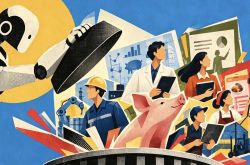
Wang Peng, Liu Wen, and others are pseudonyms. All images were generated by GPT.
-
![]()
Out of the Spotlight: Traditional Industries Embrace AI Faster Than Imagined
-
Lei Jun’s 50 Consecutive Extreme Braking Tests: A Visionary Move Now Validated
-
![]()
【Electrical Equipment】Weichai Power and Lingong Heavy Machinery Forge Strategic Partnership
-
![]()
FAW, Toyota, and GAC Group Forge Tripartite Cooperation Pact
-
![]()
Ray Dalio Issues Latest Alert: The AI Bubble Is on the Verge of Popping!
-
![]()
Zunjie Automobile's Latest Move: Far-Reaching Consequences
-
![]()
Did Dongchedi Trigger a Stock Plunge for JAC Motors?
-
![]()
Unattainable Annual Sales Targets: Automakers Brace for the Most Challenging 'Silver October' and a Daunting Final Quarter