Valuation Soars Past 100 Billion! Kuaishou’s Kling Eyes 2027 IPO – Can BAT Backing Propel Video Generation AI to Commercial Success?
 10/12 2026
 453
453
Has Video Generation AI Achieved Commercial Viability?
Kling Advances Toward Public Listing
Bloomberg recently reported that Kuaishou’s video generation subsidiary, Kling AI, plans to launch its Hong Kong IPO as early as 2027, aiming to raise at least $1 billion. CICC, Goldman Sachs, and UBS have been appointed as underwriters for Kling’s Hong Kong listing.
Rumors of Kling’s spin-off and IPO first surfaced in May this year. By July, Kling officially announced its restructuring and commenced independent financing. This funding round secured up to $3 billion from investors including Tencent, Alibaba Cloud, Baidu, the National Artificial Intelligence Industry Investment Fund, and Chia Tai Robotics.
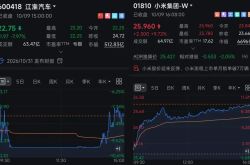
Based on publicly available data from the capital increase and share expansion at the end of August, Kling’s valuation reached approximately 122.8 billion yuan, surpassing its parent company Kuaishou’s current market capitalization of 110.4 billion yuan (as of October 9 market close). It appears the era of AI-powered video generation has truly arrived.
AI Short Dramas Surge, Video Generation Transcends ‘Demo’ Stage
The commercialization path for video generation AI is clear: the C-end market targets consumers, enabling anyone to become a director, screenwriter, or actor through AI tools, while the B-end market serves professional video producers for film, short dramas, and advertising content creation.
However, video generation AI has struggled to gain traction in the C-end market. Most ordinary users lack the technical expertise and patience for repeated debugging and local refinements, leading to low retention rates. Conversely, in the B-end market, AI video generation models have become a key driver of short drama development.
According to the "Micro-Short Drama Creation Guidelines" released by the China Network Audio-Visual Association, approximately 128,000 micro-short dramas were launched industry-wide in the first quarter of this year, with 122,000 being AI-generated, accounting for 95.3%.
Data from the National Radio and Television Administration indicates that around 33,000 micro-short dramas will be released in 2025. This means the number of micro-short dramas launched in the first quarter of this year is nearly four times that of the entire previous year.

(Image Source: AI Generated)
DataEye Research Institute estimates that the average production cost of a high-quality live-action paid micro-short drama is about 1.5 million yuan, while vertical-screen information flow AI-simulated live-action short dramas can be controlled within 200,000 yuan.
Yao Guoli, director of AI animated dramas, revealed in an interview with China Newsweek that the industry is rapidly reducing production costs for AI animated dramas. In the past three months, under mass production mode, the cost of a 60-episode AI animated drama has been compressed to 20,000 yuan. The significant cost difference has prompted many companies to shift from producing live-action micro-short dramas to embracing AI video generation.
Beyond these companies, the entire film and television industry is actively leveraging AI to reduce video production costs. For example, Hollywood blockbusters now commonly use AI for video storyboarding, backgrounds, and special effects drafts. In July this year, District 9 director Neill Blomkamp released a 13-minute sci-fi AI short film, NIGHTBORNE, created using the video generation model Seedance 2.0.
Meanwhile, well-known actors such as You Benchang, Ng Cheuk-hua, Joey Wong, and Qi Wei have licensed their likenesses to AI film, television, and game producers. Ng Cheuk-hua and Joey Wong licensed their likenesses from their younger years, allowing AI to recreate their best-period images on stage.
In NIGHTBORNE, mentioned above, the actors also signed project-specific licensing agreements, granting their personal images solely to this film and television work.
From the surge in AI micro-short dramas to actor likeness licensing, it is clear that the commercialization and standardization of AI video generation are progressing in tandem. Compliant licensing of celebrity likeness rights addresses the long-standing issues of IP and likeness infringement faced by video generation AI, clearing a major obstacle for commercialization.
At the technological level, video generation models have evolved from early text-generated static images, distorted human limbs, and shaky camera movements to supporting long-form video generation, motion control, character image locking, and multi-shot storytelling.
For example, Kling 3.0, launched earlier this year, supports multimodal input and output for text, images, audio, and video, enabling automatic storyboarding, camera motion control, and stable character image rendering, significantly reducing the probability of AI video "blunders." Competitors like ByteDance’s Jimeng AI (Seedance), Shengshu Technology, and PixVerse are also continuously improving, creating a competitive landscape for domestic video generation large models.
However, beneath this thriving scene, crises lurk in the video generation model field.
Financial Strains Persist, 90% of AI Micro-Short Drama Companies Face Elimination
Video generation large models and AI micro-short drama companies share a symbiotic relationship, but both are currently facing challenges.
Kling, despite its valuation exceeding 100 billion yuan, is still incurring losses. According to data disclosed by National Business Daily, from the full year of 2025 to the first quarter of this year, Kling accumulated losses exceeding 2 billion yuan. Jimeng AI also implemented multiple price hikes starting in March this year due to sustained heavy losses.
It's worth noting that Sora, which ignited the video generation large model track, was shut down due to daily costs reaching $15 million, making it unable to bear the enormous expenses.
Kling’s urgency to go public stems from Kuaishou’s inability to wait any longer. In the first half of 2026, Kuaishou’s net profit attributable to shareholders was only 6.049 billion yuan, a sharp year-on-year decline of 32.03%. Although Kling generated 650 million yuan in revenue in the first quarter, it still accounted for less than 1% of the total, unable to cover the high training and inference costs. Without additional funding, Kling’s future is uncertain.
Fortunately, Kling ranks among the global leaders in technological capability, and companies bullish on video generation models are still willing to invest in Kling. Even Tencent, Baidu, and Alibaba (BAT), once regarded as China's top three internet giants, have participated in Kling’s financing.

(Image Source: AI Generated)
Compared to video generation models, AI micro-short drama companies face even tougher challenges. Yao Guoli, director of AI animated dramas, stated that based on hit rate calculations, a single short drama's cost must be controlled within 20,000 yuan to maintain overall profitability.
Therefore, production teams need to output an average of 7 micro-short dramas per group per month. Since script review takes half a day, each micro-short drama's actual production cycle is only two days, leaving no time for script polishing. Despite this, profitability remains a gamble, with profits from a few hits used to offset losses from most works.
Sun Shuche, founder of Yilian Technology, said that over 90% of AI short drama companies have been eliminated. Of the 221,900 AI micro-short dramas released in the first half of this year, only 1,055 surpassed 100 million views, a hit rate of 0.47%. Currently, the break-even point for micro-short drama views is around 50 million, with less than 1.3% of companies recovering their costs.
More critically, while AI micro-short dramas have exploded, the issue of "lacking human touch" has drawn significant criticism. Data from the "Micro-Short Drama Creation Guidelines" shows that during the Spring Festival season, the number of live-action micro-short dramas launched was about 1/50th of AI short dramas, yet their total views were 25 times higher.
Although the acting skills of live-action micro-short drama actors vary, their subtle facial and bodily expressions are difficult for AI to match in the short term. In an interview with China Newsweek, some netizens commented that AI micro-short dramas lack the vibrancy of live actors, with protagonists' faces appearing like templates and themes highly similar, leading to aesthetic fatigue from repeated use of the same formulas.
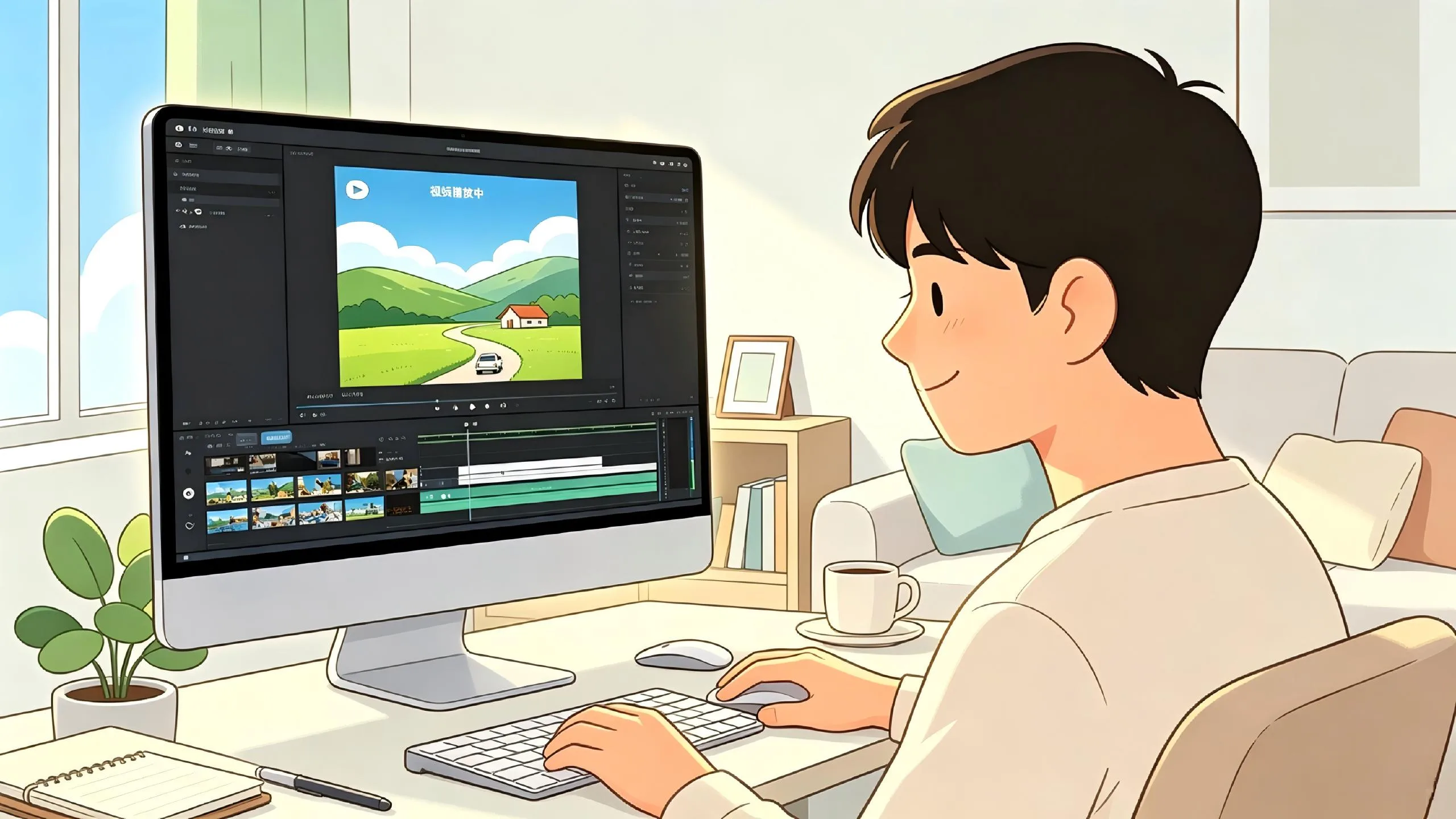
In response, Leitech (ID: Leitech) has noticed that many AI micro-short dramas are increasingly adopting anime-style aesthetics, actively reducing realism to mitigate the impact of "lacking human touch."
(Image Source: AI Generated)
The video generation large model and AI micro-short drama industries are currently in the early pain phase of high investment and high attrition. Short-term losses, low hit rates, and visual quality defects are inevitable costs during the technology implementation and industry integration stages, not indicative of the sector's ceiling. BAT's collective investment in Kling demonstrates the capital market's long-term optimism about video generation's value as the next-generation content infrastructure.
The downstream AI micro-short drama industry is undergoing brutal consolidation, with extremely low hit rates and reliance on a few hits to cover losses from numerous works. Many companies will continue to be eliminated.
Only After the Pain Phase Can True Glory Arrive
AI can only complete image generation and struggles to independently handle complex storytelling and character development. Many practitioners simply use AI as a cost-reduction tool rather than a content upgrade tool, failing to polish scripts and visuals carefully. The result is low-cost, low-value assembly-line content, unlikely to produce enduring, influential works.
In the future, AI will not completely replace human film and television creators but is more likely to move toward a model of human-AI collaboration. In long-form video creation, AI can handle repetitive image generation, editing, and special effects, while humans focus on scriptwriting, character development, aesthetic control, and emotional expression.
The AI short drama sector will also undergo a deep consolidation, with massive low-quality assembly-line works being eliminated. Only teams capable of refining storytelling, character realism, and IP operation will continue to reap traffic benefits. This resembles the new energy vehicle industry, where countless early entrants were whittled down through competition, leaving NIO, Li Auto, XPeng, and Leapmotor with the qualifications to challenge established giants.
For leading video generation large model companies like Kling, IPO funding will provide more capital for computing power investment and model iteration, but the capital market will increasingly prioritize genuine profitability.
Video generation models have evolved from lab demos to industrialized content production tools. AI short dramas have proven their commercial value, but three major challenges—long-form narrative, cross-shot consistency, and physical realism—remain unsolved. Both commercialization and technological iteration must continue to be driven by companies like Kling and Jimeng.
Source: Leitech
Images in this article are from the 123RF licensed image library. Source: Leitech
-
![]()
BYD Takes the Lead, Li Auto Lags Behind: Are Joint Ventures Making a Comeback? September’s New Energy Vehicle Sales Data Reveals Stark Divisions
-
![]()
New Forces Top Annual List, Tesla Holds Three-Year Reign! September's Pure Electric Model Resale Value Rates: A Tale of Contrasts
-
![]()
Lei Jun’s Bold Claim Proven: Xiaomi Tops Resale Value Charts, with NIO and Li Auto Close Behind!
-
![]()
Has Zunjie 'Stumbled', Paving the Way for Xiaomi's Success?
-
![]()
Before Launch: How Does a Chinese Rocket Stand or Lie?
-
![]()
Zunjie V800 Brake Bracket Fracture: With the Same 40% Glass Fiber-Reinforced Plastic, Where Does the Disparity Arise?
-
![]()
Why Does Your Phone Slow Down After Long-Term Use?
-
![]()
The Comprehensive Guide to Tariffs on Chinese Automobile Exports: A Stark Contrast to Japan