Has Zunjie 'Stumbled', Paving the Way for Xiaomi's Success?
 10/12 2026
 514
514
On the same day, two automakers experienced starkly divergent performances on the A-share and Hong Kong stock markets.
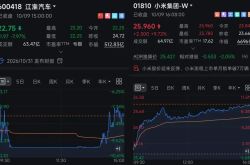
JAC Motors witnessed its stock price plummet for two consecutive days, resulting in a loss of 11.8 billion yuan in market value. This decline was triggered by a brake pedal bracket fracture in the million-yuan Zunjie V800. Conversely, Xiaomi Group's stock in Hong Kong surged by 9.72% in a single day, adding nearly 60 billion Hong Kong dollars to its market value.
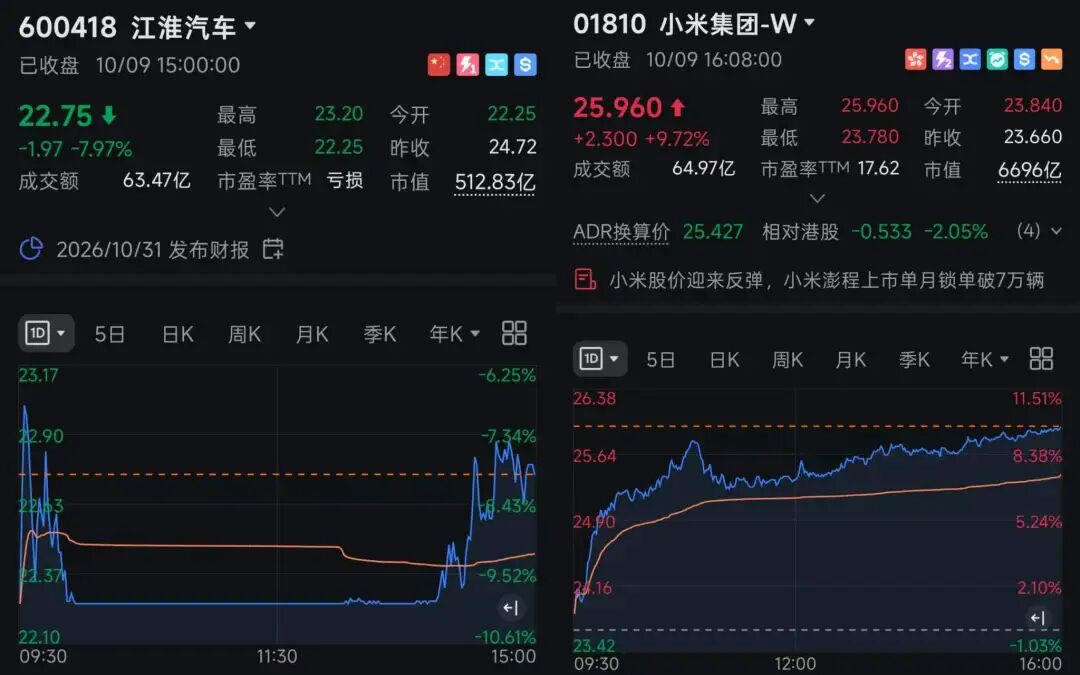 Image Source: Futu APP
The extreme disparity between these two performances led many netizens to quip: 'Zunjie crashed, and Xiaomi won by default; Yu Chengdong missed the mark, and Lei Jun seized the opportunity.'
However, appearances in the market can be deceiving. The two market movements were purely coincidental in timing and bore no causal relationship. JAC's stock plunge was a result of a collapse in trust due to 'product quality' issues, while Xiaomi's surge was driven by the new Pengcheng series exceeding expectations in securing non-refundable deposits within 30 days.
This clash of extremes in the capital market serves as a wake-up call for the new energy vehicle industry: The era of inflating valuations through launch event rhetoric and high-end storytelling has come to an end. The true test for automakers lies in real-world quality and performance under actual driving conditions.
01 A Single Brake Failure Wipes Out Billions in Market Value, Million-Yuan Luxury Car Crashes
The core trigger for JAC's stock collapse was simple yet catastrophic: A brake pedal bracket fracture in the Zunjie V800.
On October 8, a real-world test video by DCD Auto sparked widespread online discussion. Three Zunjie V800 units from different production batches all experienced brake pedal bracket fractures during 100 km/h emergency braking tests, leading to complete brake failure after multiple attempts. This posed significant hazards for high-speed driving. Keep in mind, this is a luxury electric vehicle priced over one million yuan, marketed on Huawei's premium quality control.
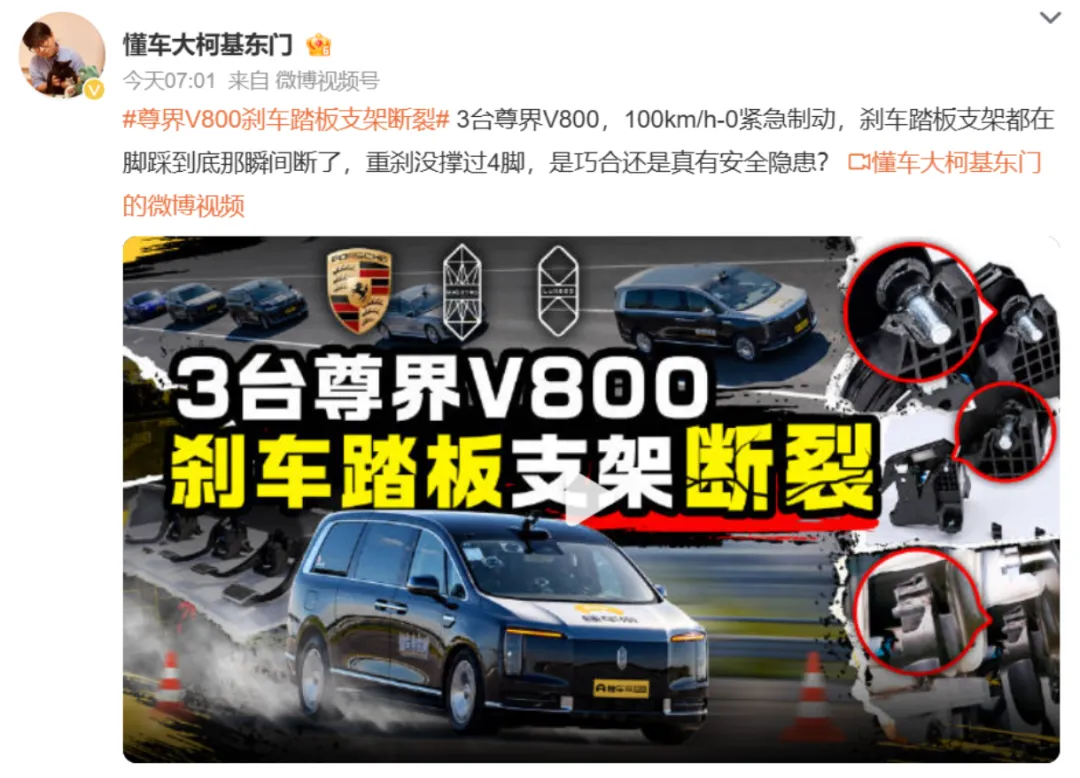
Image Source: Weibo
Addressing controversies over 'violent testing' raised by netizens, DCD Auto swiftly clarified that the rumored 4,589-newton pedal force was a device error, with the actual peak force at 1,612 newtons. This is typical for emergency braking scenarios and does not constitute non-compliant testing.
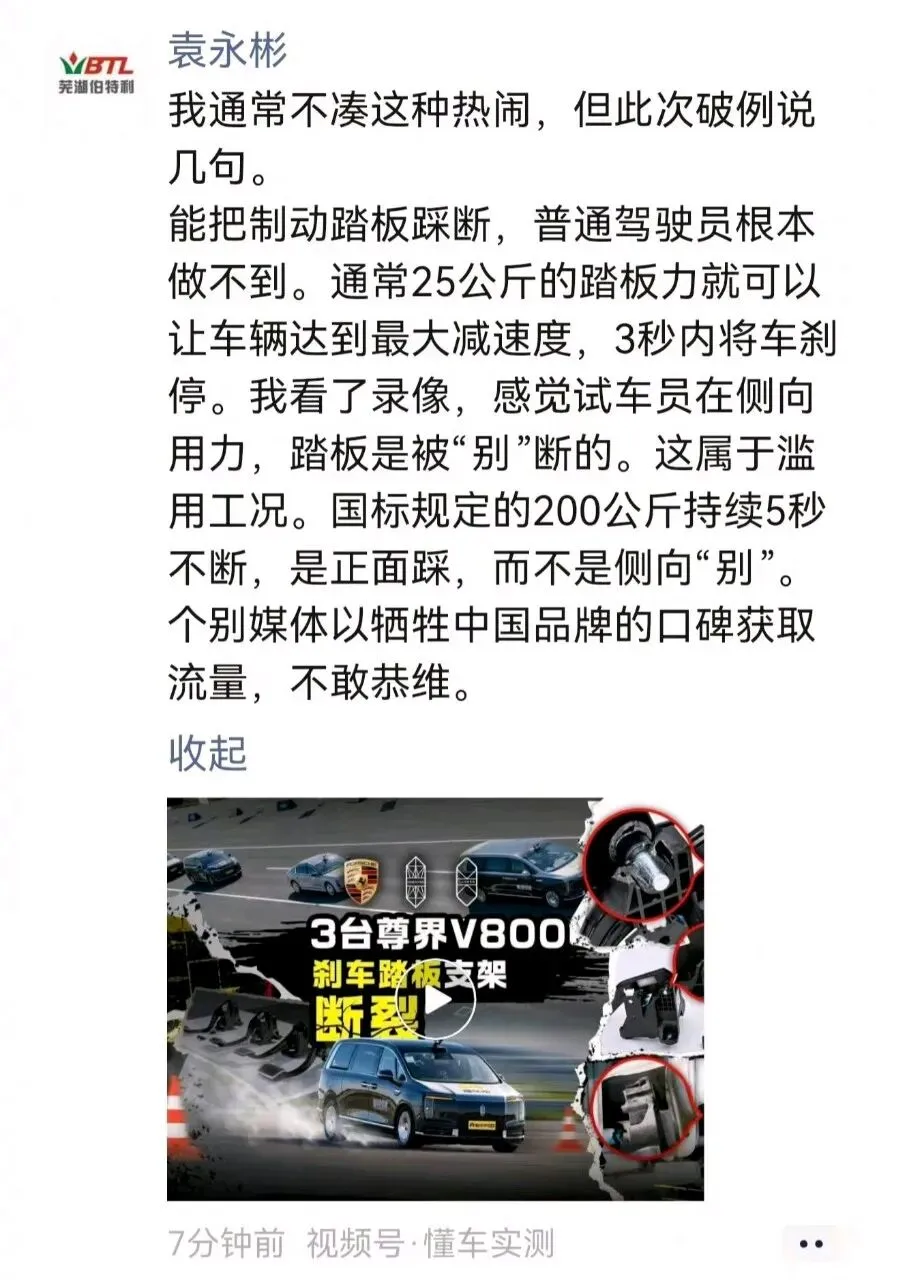
Image Source: WeChat Moments
Zunjie issued an emergency response that night, claiming its vehicle standards exceed national requirements, that no similar failures occurred in mass-produced units, and promising free component upgrades and design reviews. However, this official statement failed to quell public doubts.
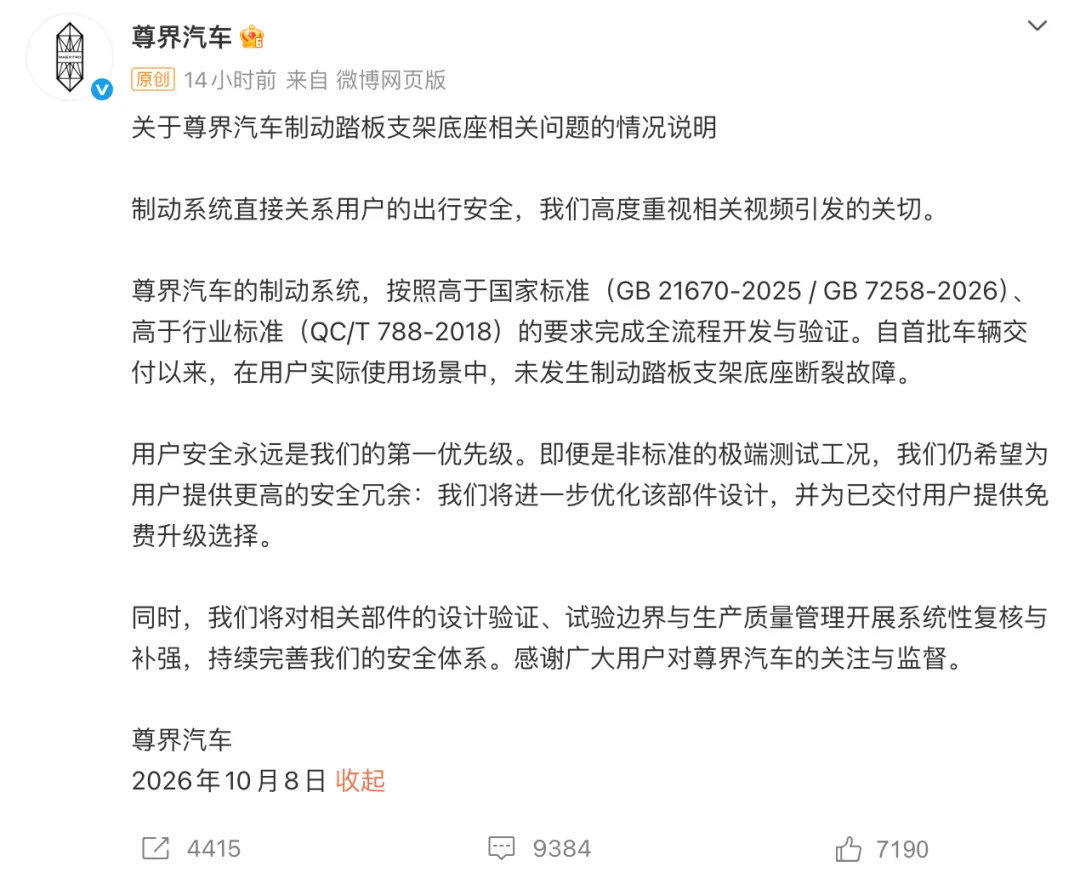 Image Source: Weibo
Many netizens argued: 'We fear automakers who shout 'above national standards, industry-leading' without substance. Ordinary consumers don't understand technical parameters. When automakers self-proclaim quality but third-party tests reveal failures, it becomes a he-said-she-said situation with no verification possible.' The consensus was clear: Regardless of price, a car's brake pedal must never break; this is a safety bottom line.
Capital markets never accept post-crisis remedies. The core panic wasn't the failure itself but the complete collapse of brand trust. Within two days, JAC's market value shrank from 61.9 billion to 50.1 billion yuan, evaporating 11.8 billion yuan. Meanwhile, Huawei's Smart Mobility ecosystem weakened collectively, with Seres dropping over 7%, SAIC, Chery, and BAIC following suit, erasing all previous gains from the high-end EV boom.
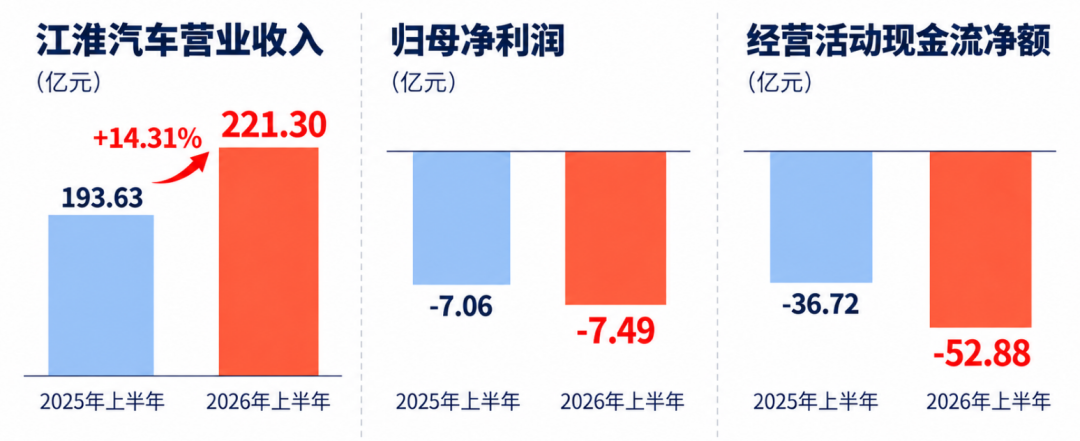 Image Source: Capital Never Sleeps @ WeChat Official Account
Netizens wittily commented: 'The stock market is better at drawing big pictures than automaker launch events.' JAC had surged 41% in the six trading days prior, fueled by market hype over Huawei's endorsement and breakthroughs in million-yuan luxury cars, only to plunge immediately after the scandal. The company hadn't changed; only market sentiment and waves of retail investors had shifted. Some joked: 'In the volatile EV sector, the safest business is always supplying 'shovels'—test equipment and services—to automakers.'
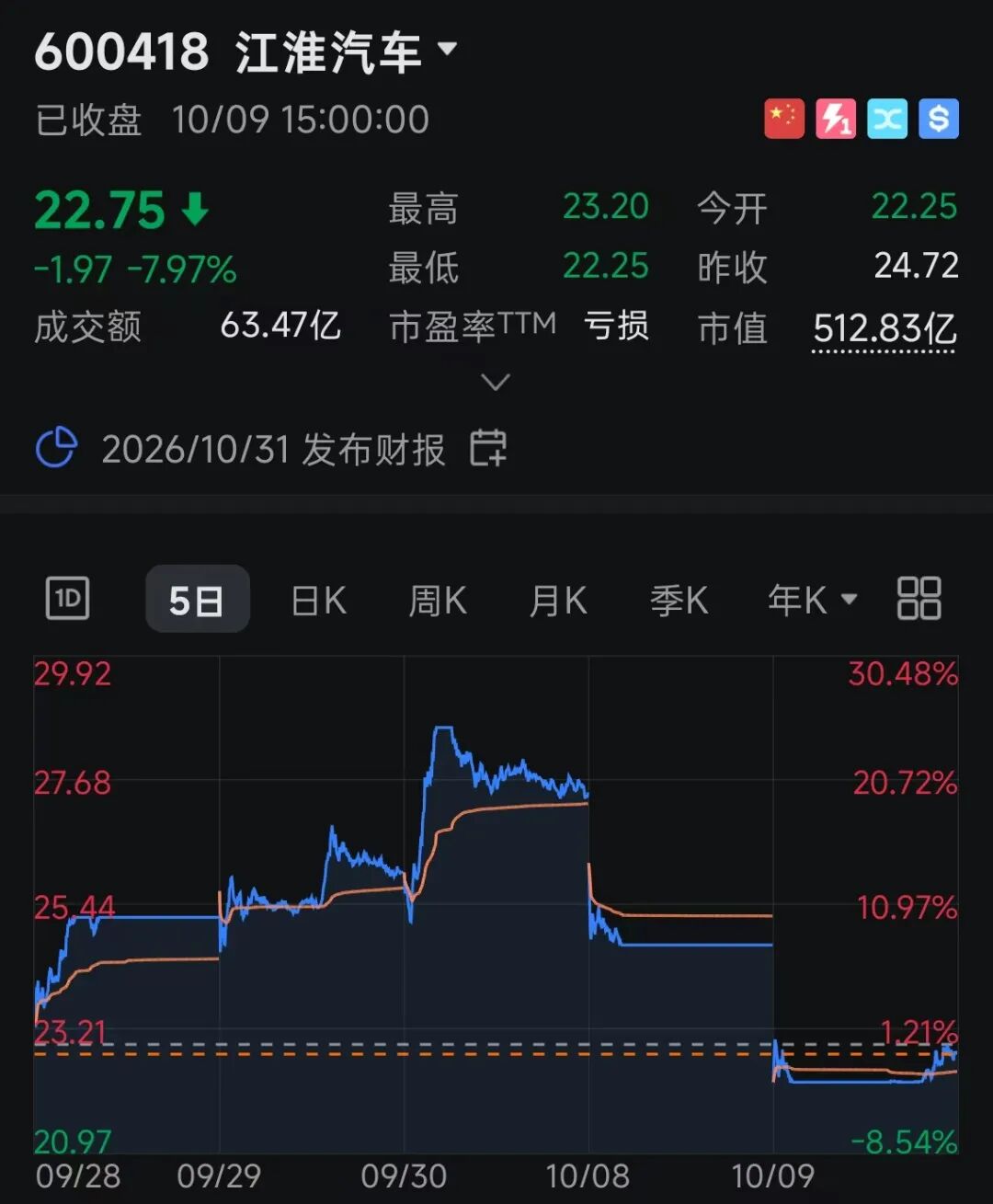 Image Source: Futu APP
Zunjie represents JAC's core bet on the high-end market. Leveraging Huawei's resources, the Zunjie S800 achieved nearly 20,000 deliveries, successfully entering the million-yuan luxury segment and justifying premium pricing. However, this glossy success masked persistent losses: JAC reported a 749 million yuan net loss in H1 2026, with negative operating cash flow. Its high-end valuation was entirely propped up by concepts. This quality scandal burst that bubble: Building million-yuan cars doesn't guarantee million-yuan quality.
The greatest irony? Previously, Yu Chengdong had publicly criticized industry chaos, accusing many automakers of subpar quality control and false advertising, with public opinion widely interpreting it as a jab at Xiaomi.
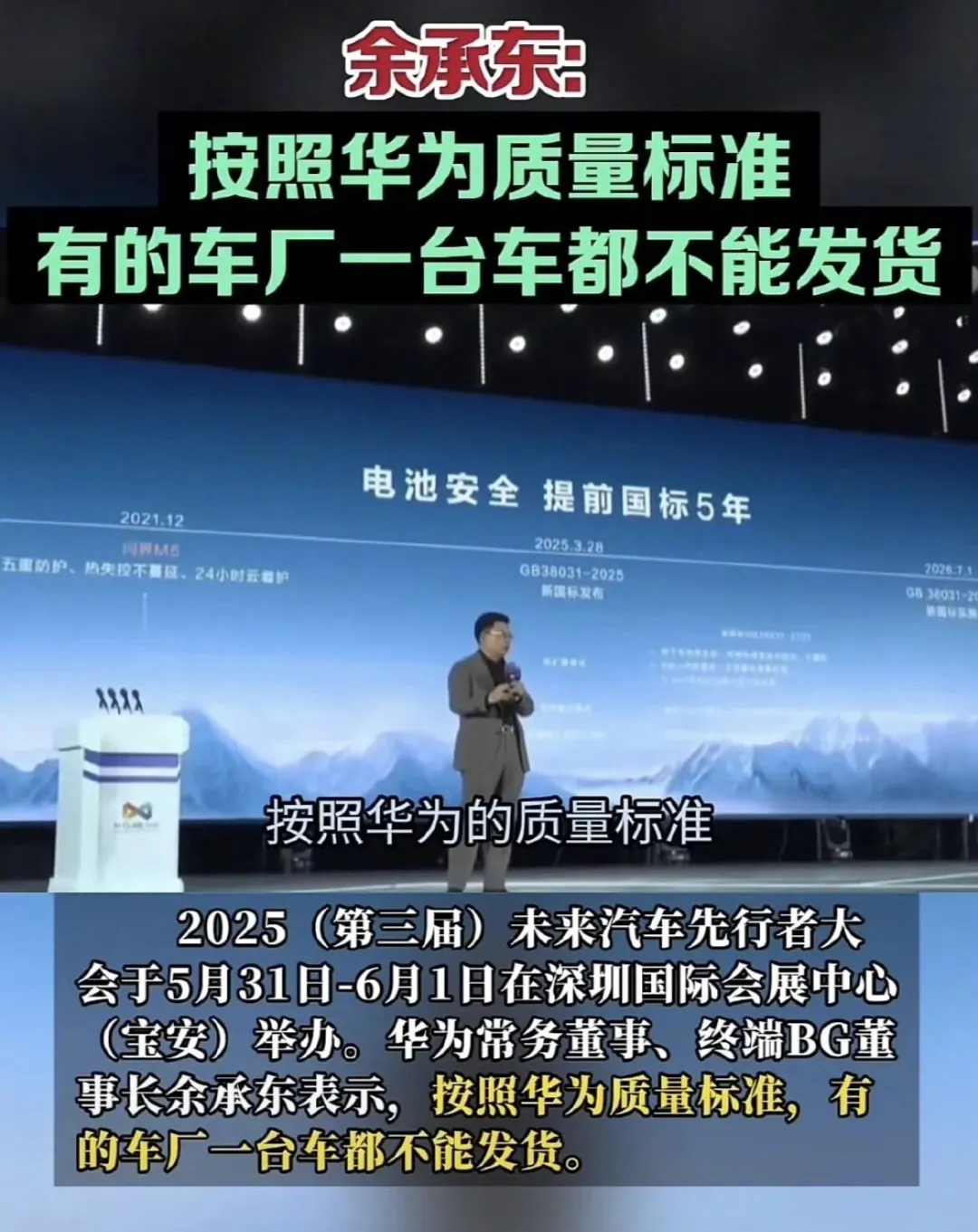 Image Source: Video Account 'Yu's Review of Competitors' via Xiaohongshu. Yu Chengdong once said: 'By Huawei's quality standards, some automakers shouldn't ship a single car.' Now, the boomerang has returned.
Netizens jumped on the meme: 'Suggest Lei Jun and Yu Chengdong cancel launch events and livestream DCD Auto's real-world tests instead—one commentates, one debunks, all genuine and entertaining.'
Most netizens remained rational about domestic brands: 'Brand ascension hitting snags is normal; what's scary is forced whitewashing and refusal to admit faults. Facing problems and iterating will only strengthen automakers.'
02 Xiaomi's Surge Isn't Just Luck—It's Hard-Earned Turnaround
While JAC plummeted, Xiaomi's Hong Kong stock soared 9.72% in a single day, adding 60 billion Hong Kong dollars to its market value. Many interpreted this as 'competitor crashes, Xiaomi benefits,' but the surge had zero connection to Zunjie's scandal. It was purely driven by Xiaomi's sales momentum.
Lei Jun announced the core catalyst: The Pengcheng series secured over 70,000 non-refundable deposits in 30 days after launch. Unlike inflated 'intent-to-buy' orders, these deposits are irrevocable, serving as highly reliable indicators of demand.
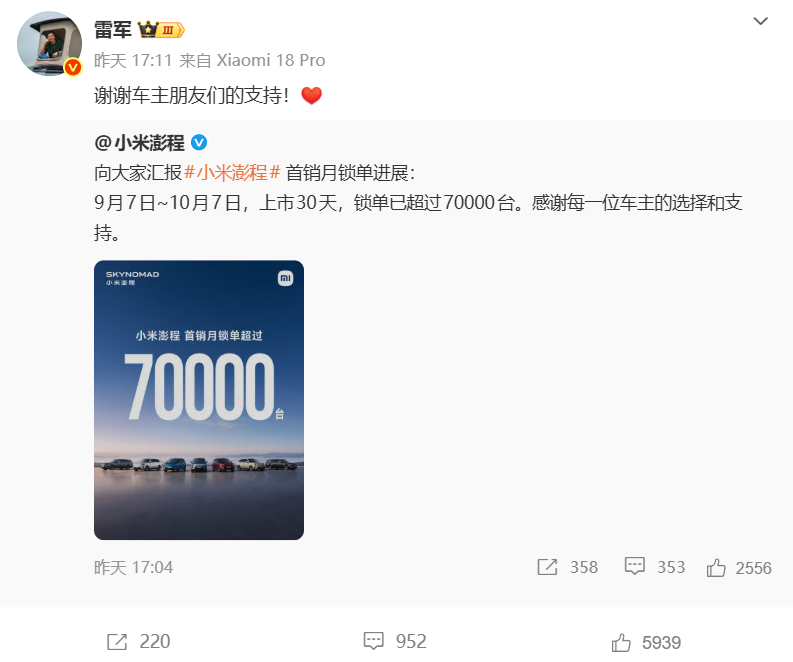
Image Source: Weibo
The auto market is mired in a deep winter: Extended-range EV sales dropped 20% YoY in 2026, with passenger vehicle sales plunging 24.6% in September. The industry faces brutal price wars and bloated inventories. Against this backdrop, the Pengcheng series broke through, stabilizing Xiaomi's monthly deliveries above 40,000 units, filling gaps in the extended-range segment, and securing a foothold in the 200,000–300,000 yuan mainstream family car market. By this metric, the Pengcheng series even surpasses the success of the Xiaomi SU7—a rare feat.
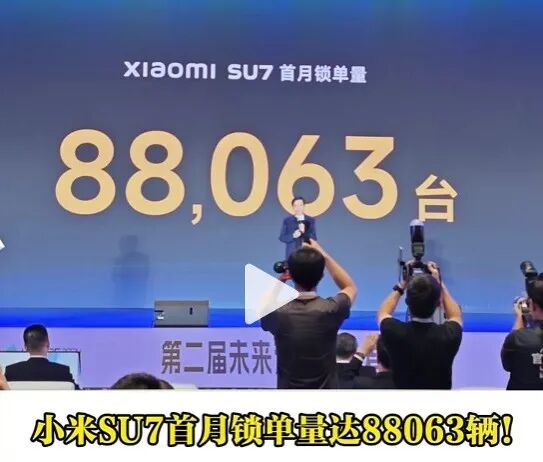
Image Source: Weibo
Just a year ago, Xiaomi languished in public opinion. Controversies over assisted driving, parts promotion failures, and mass recalls of its 100,000-yuan model triggered an 11.7% stock price plunge in a single week—the largest in three and a half years. Lei Jun admitted it was the toughest period of his entrepreneurial journey.
On October 1, Lei Jun announced: Xiaomi Auto's September deliveries exceeded 40,000 units, shattering the brand's monthly record.
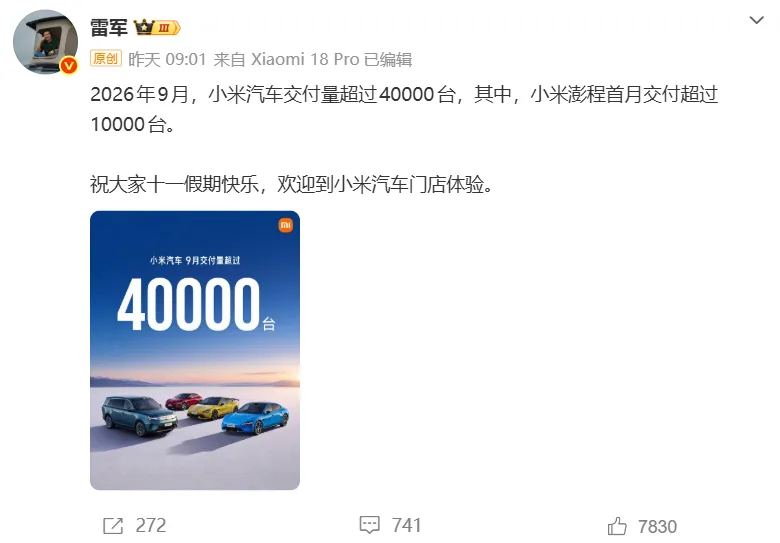 Image Source: Weibo
The newly launched Pengcheng series alone delivered over 10,000 units in its first 18 days, showing aggressive momentum.
Netizens reflected on the industry's cycles: 'A year later, Xiaomi's reputation has completely turned around. The market sees clearly now who's seriously building cars and who's just hyping.'
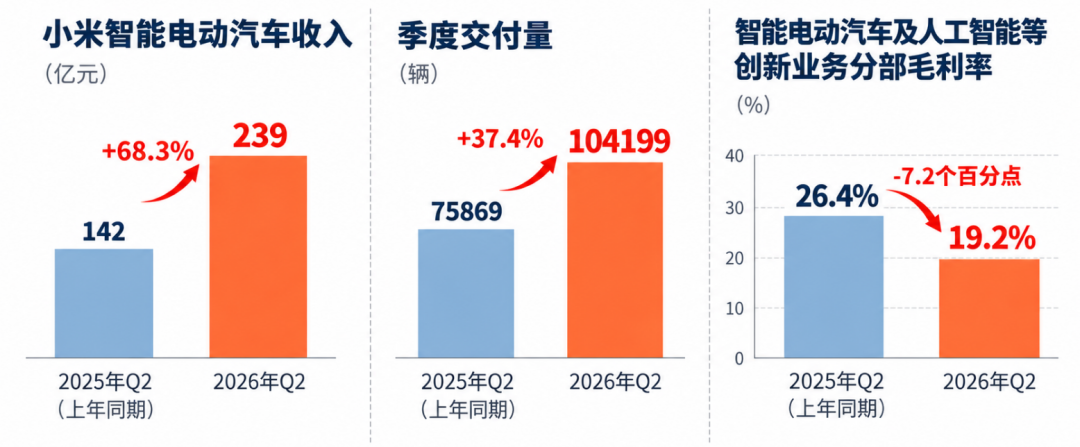 Image Source: Capital Never Sleeps @ WeChat Official Account
Xiaomi's turnaround stems from its attitude toward controversies: Establishing an Auto Safety Committee, voluntarily accepting oversight from users and media, and continuously iterating vehicle safety and assisted driving systems. Its reputation was rebuilt through post-controversy reviews and improvements.
However, Xiaomi's vulnerabilities remain stark: It's now a 'single-product gamble.' Its smartphone business faces pressure from rising memory chip costs, AIoT lacks growth drivers, and AI operations burn cash, leaving group valuation and stock price entirely tied to auto performance.
Financials reveal harsh realities: Auto sales are booming, but gross margins keep sliding, trapping Xiaomi in a 'sell more, earn less' dilemma. The 70,000 deposits mark a strong start, but three hurdles remain: production ramp-up, industry hyper-competition, and profitability.
03 Industry Truth: No Amount of Launch Event Rhetoric Beats Hardcore Quality Control
For years, the duel between Lei Jun and Yu Chengdong's launch events was the auto circle's biggest spectacle. From smartphones to cars, they clashed over everything from technical architectures to windshields, with netizens clipping 'battle highlights'—creating the illusion that the better marketer or rhetorician would dominate the industry.

Image Source: Xiaohongshu 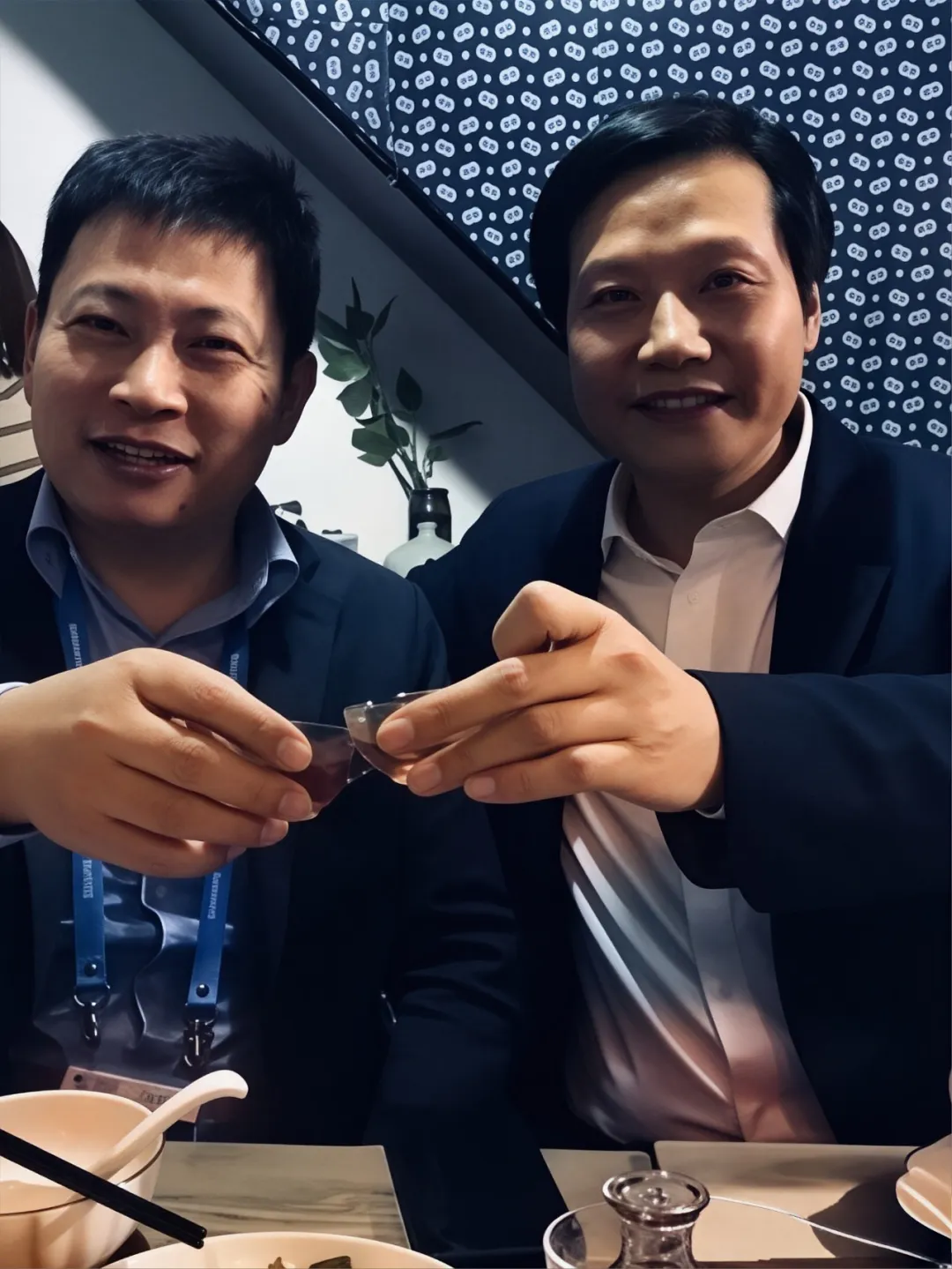 Image Source: Weibo
The Zunjie brake scandal shattered this logic. Consumers no longer blindly trust celebrity endorsements or high-end branding, nor will capital markets pay for empty premiums. Onstage victories are illusory; real-world quality, long-term safety, and genuine user experience define automakers' ultimate fate.
Amid industry hyper-competition, automakers rush new models to market, slash testing cycles, and cut costs, planting safety risks. In 2025, China recalled over 1 million new energy vehicles across 100+ campaigns, with frequent hardware/software failures and autonomous driving defects.
Whether through Huawei's technology-enabled partnerships or Xiaomi's full-stack self-developed approach, the mode doesn't matter; quality control decides survival. Partnerships share costs and tech but never safety liabilities or quality risks.
The market has sobered up: A single brake failure can erase billions in market value; strong sales data can prop up billions more. All premiums must ultimately be validated by product strength.
This market swing also exposes harsh realities: The world operates like a chaotic theater troupe. When walls fall, everyone piles on; when drums break, everyone strikes. In good times, flaws are hidden by halos; in crises, problems explode in magnitude.
Ultimately, Zunjie's plunge stemmed from quality lapses, not defeat by Xiaomi; Xiaomi's rise came from relentless iteration, not scavenging rivals' misfortunes.
Final Thoughts
The auto circle isn't a zero-sum game; one brand's crash doesn't guarantee another's victory. Short-term stock surges/plunges are emotion-driven pulses, not definitions of long-term success.
The Zunjie scandal doesn't spell the end of Huawei's high-end EV ambitions, nor does Xiaomi's sales boom guarantee lasting stability. No launch event glitz or parameter bragging can withstand millions of real-world driving tests.
Marketing can amplify brand awareness, but safety and quality are the ultimate anchors for sustainable growth.
Discussion Topic: Do you think the Zunjie brake pedal scandal will erode trust in the high-end new energy vehicle market? Share your thoughts in the comments.
Disclaimer: This article is for financial commentary only and does not constitute investment advice. All corporate data and regulatory events cited are from public information and for reference only. Refer to official sources for confirmation. Images sourced from the internet; contact us for copyright removal if needed.
-
![]()
"Not Participating in the Paris Auto Show Means No Car Sales"
-
![]()
BYD Takes the Lead, Li Auto Lags Behind: Are Joint Ventures Making a Comeback? September’s New Energy Vehicle Sales Data Reveals Stark Divisions
-
![]()
New Forces Top Annual List, Tesla Holds Three-Year Reign! September's Pure Electric Model Resale Value Rates: A Tale of Contrasts
-
![]()
Lei Jun’s Bold Claim Proven: Xiaomi Tops Resale Value Charts, with NIO and Li Auto Close Behind!
-
![]()
Has Zunjie 'Stumbled', Paving the Way for Xiaomi's Success?
-
![]()
Before Launch: How Does a Chinese Rocket Stand or Lie?
-
![]()
Zunjie V800 Brake Bracket Fracture: With the Same 40% Glass Fiber-Reinforced Plastic, Where Does the Disparity Arise?
-
![]()
Why Does Your Phone Slow Down After Long-Term Use?