Lei Jun’s Bold Claim Proven: Xiaomi Tops Resale Value Charts, with NIO and Li Auto Close Behind!
 10/12 2026
 545
545
In the automotive sector, there’s a universal truth: while marketing can drive sales, a vehicle’s resale value is ultimately determined by the market’s willingness to pay a premium.
Earlier, Lei Jun, Xiaomi’s founder, repeatedly emphasized the quality of Xiaomi Auto, prompting some netizens to jest about 'executive exaggeration.' Yet, the latest authoritative resale value rankings have directly confirmed Xiaomi’s claims, putting an end to the skepticism.
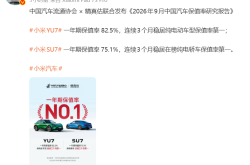
On October 9, Lei Jun publicly shared the 'September 2026 China Automotive Resale Value Research Report,' jointly released by the China Automobile Dealers Association and Jingzhen Gu. The core data is both striking and highly credible:
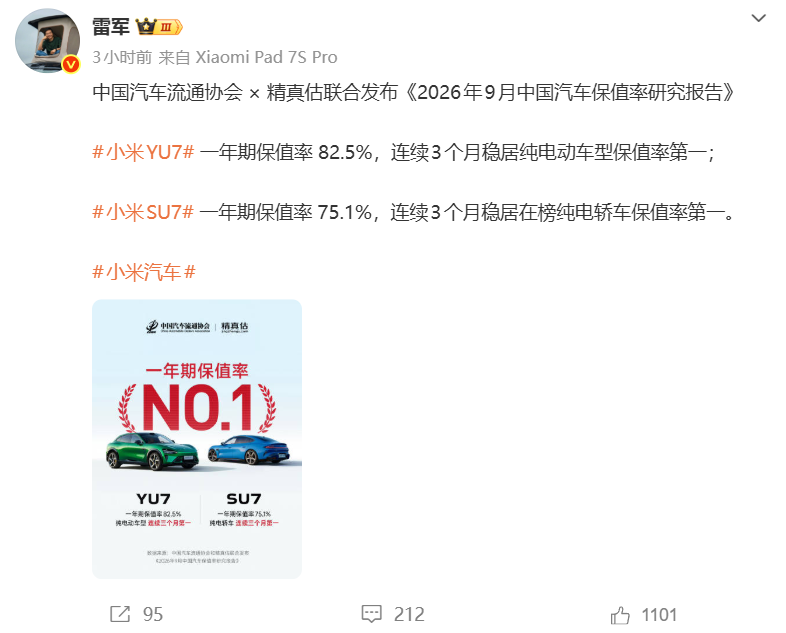 Image Source: Weibo
Xiaomi YU7: 82.5% one-year resale value, securing the top spot for pure electric vehicles for three consecutive months.
Xiaomi SU7: 75.1% one-year resale value, claiming the top spot in the pure electric sedan category for three consecutive months.
While many focus on the word 'first' in the rankings, the magnitude of the gap between these two leaders is often overlooked. Let’s delve deeper—Xiaomi’s achievements are far more impressive than they appear.
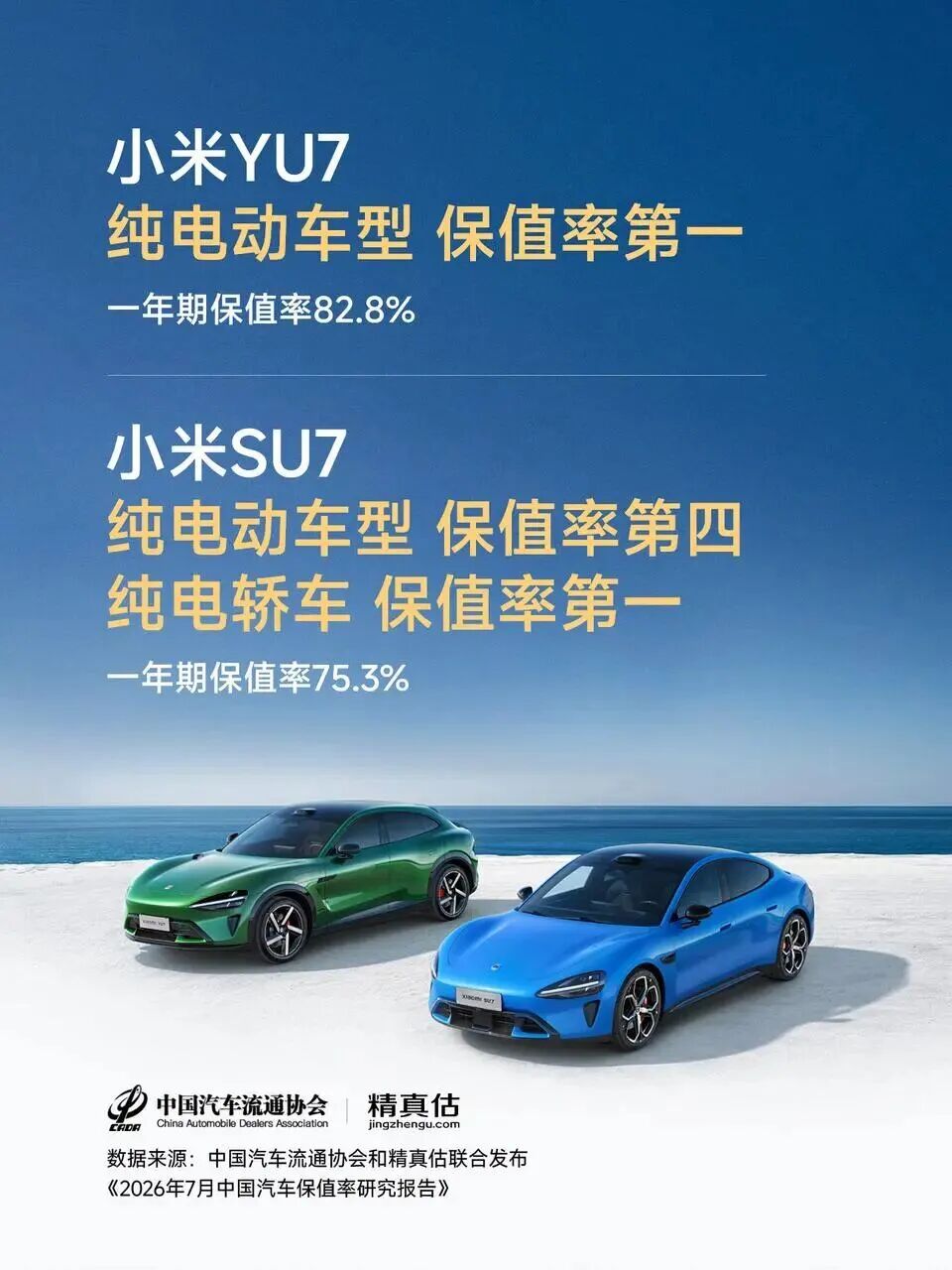 Image Source: Xiaomi Auto @ WeChat Official Account
Two Championships, But Not Created Equal
Key point: these two top rankings are on entirely different levels:
Xiaomi YU7’s victory is a total market dominance!
It covers all pure electric vehicle types on the market, including sedans, SUVs, and hatchbacks. The YU7 leads with an 82.5% resale value, making it the only mainstream pure electric model to consistently maintain a resale value above 80%. In the one-year-old used car market, it’s the undisputed leader.
Xiaomi SU7’s victory is a segment dominance!
It sits firmly at the top among all pure electric sedans, outperforming established popular models for three consecutive months and solidifying its position as the residual value leader in the pure electric sedan category.
In essence, Xiaomi’s success is no fluke. The used car market has already provided the most authentic validation through pricing: consumers recognize Xiaomi’s vehicle quality, pricing strategy, and quality control.
A highly upvoted netizen comment in Lei Jun’s comment section captures it perfectly: 'No flashy marketing, no empty boasts—just real data speaking for itself.'
Chinese Domestic Brands Take the Lead: Top Three Dominated, Tesla Falls Behind
The most notable aspect of this September ranking isn’t Xiaomi’s championship but the fact that Chinese domestic new energy vehicles have completely transformed the resale value landscape.
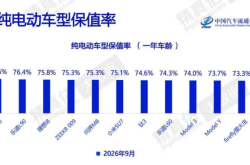
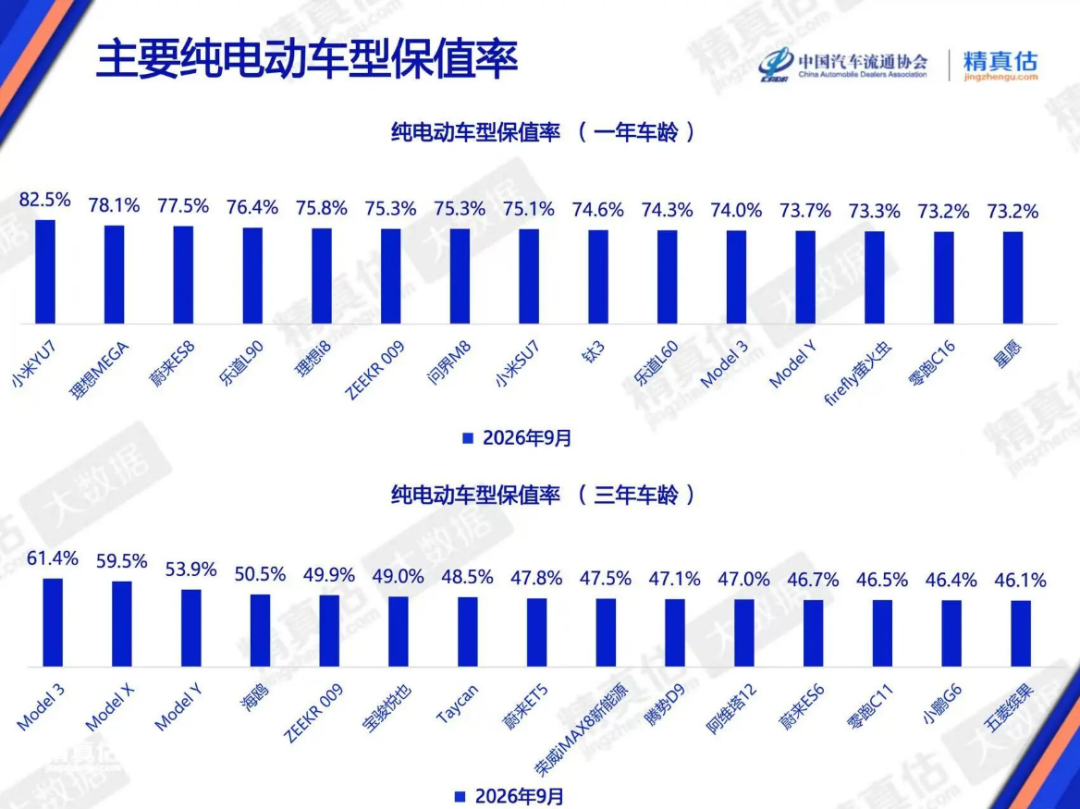 Image Source: Jingzhen Gu
The top three one-year-old pure electric vehicle models by resale value are all Chinese domestic brands, with no foreign models in sight:
Xiaomi YU7: 82.5%
Li Auto MEGA: 78.1%
NIO ES8: 77.5%
In contrast, Tesla, once the benchmark for new energy vehicles, has taken a significant hit.
The Model 3 has a one-year resale value of just 74.0%, while the Model Y is even lower at 73.7%. Both popular models have fallen out of the top ten.
To put it simply, the gap is substantial. Let’s break it down:
The Xiaomi YU7’s resale value is 8.8 percentage points higher than Tesla’s Model Y. For owners who resell their cars after one year, choosing the YU7 means losing nearly 15,000 yuan less.
For ordinary car users, this translates to real savings.
More impressively, the YU7 has achieved a resale value hat-trick: 82.8% in July, 82.6% in August, and 82.5% in September.
Despite minor fluctuations, it has consistently maintained a resale value above 80%. For a newly launched model, this stability is truly remarkable.
Xiaomi Leads in One Year, Tesla in Three Years: The Industry Reality Behind the Numbers
At this point, many car enthusiasts must be wondering: If Xiaomi outperforms Tesla in short-term resale value, why does Tesla still dominate the three-year resale value rankings?
This reflects two core dynamics of new energy vehicles: short-term popularity versus long-term residual value. There’s no clear winner or loser—just different stages of market evolution.
First, Xiaomi lacks three-year data not because it can’t compete but because the time hasn’t come. With a model launch cycle of less than three years, it naturally can’t appear on the long-term rankings. Lei Jun has already responded candidly: 'Take it slow—time will prove everything.'
Xiaomi’s ability to secure the top spot for one-year resale value comes down to two words: supply and demand.
Anyone familiar with the automotive industry knows that Xiaomi Auto has been in high demand since its launch, with backlogged orders and stable delivery schedules. New cars are hard to come by, so the used car market thrives. Dealers actively acquire vehicles, turnover is fast, and prices remain stable.
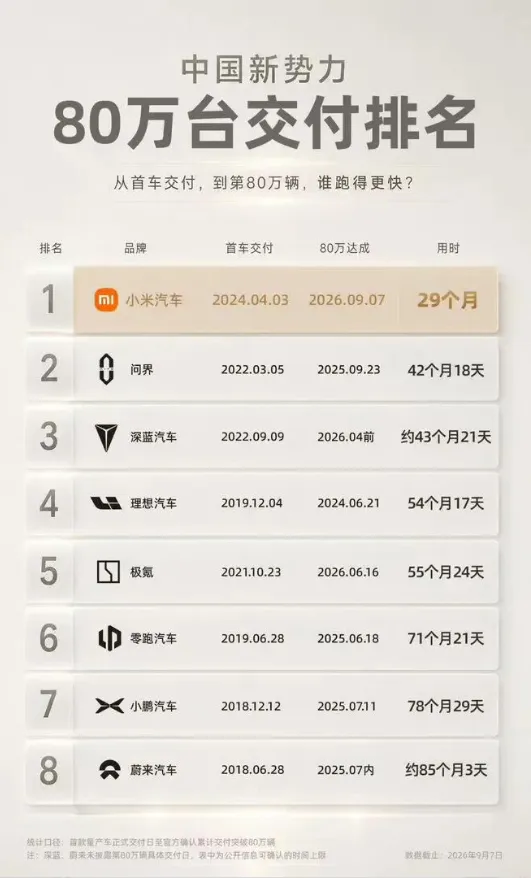 Image Source: Weibo
However, it’s important to note objectively: The current high resale value is driven by market enthusiasm. The real test will come when Xiaomi’s production capacity fully ramps up and supply-demand balance is achieved. Can it maintain this standard then? That remains to be seen.
Now, let’s look at Tesla. Its long-term resale value dominance over Chinese domestic models relies on two unique advantages:
First, slow iteration cycles that don’t betray existing owners. Unlike many automakers that frequently update models and slash prices, hurting existing users, Tesla’s update pace is measured. Older models don’t depreciate rapidly, keeping the pricing system stable.
Second, superior warranty policies. Tesla’s warranty follows the vehicle, not the owner—meaning rights continue after ownership transfer. This is what used car buyers value most. In contrast, most Chinese domestic automakers tie warranties to the owner, not the vehicle, so rights diminish after resale, directly lowering residual value.
Why Are More People Willing to Buy Xiaomi Auto Confidently?
In the new energy vehicle sector, the biggest fear isn’t poor driving experience but buying a car only to see its price drop shortly after, leading to significant financial losses within six months.
Countless car owners have been 'betrayed' by automakers in recent years. New models launch with price cuts and upgraded configurations shortly after their purchase, causing immediate depreciation and mental distress.
 Image Source: Weibo
This is precisely why Xiaomi Auto’s restrained pricing strategy and stable update rhythm are so valuable.
By avoiding blind price wars and frequent model iterations, Xiaomi maximizes protection for existing owners' rights. This no-nonsense approach is a refreshing presence in today’s market.
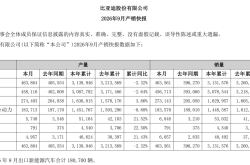
As of now, Xiaomi Auto’s cumulative deliveries have surpassed 700,000 units, with its market presence steadily growing.
The used car market always follows an iron law: High resale value comes from large market presence, stable reputation, and tight supply-demand dynamics.
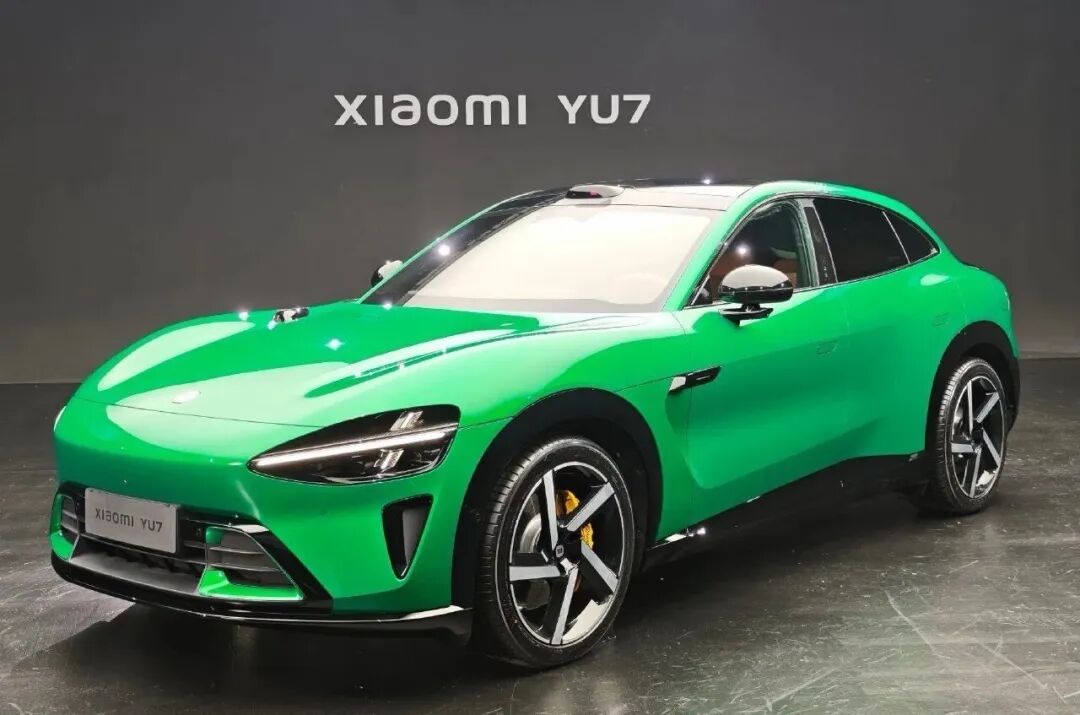
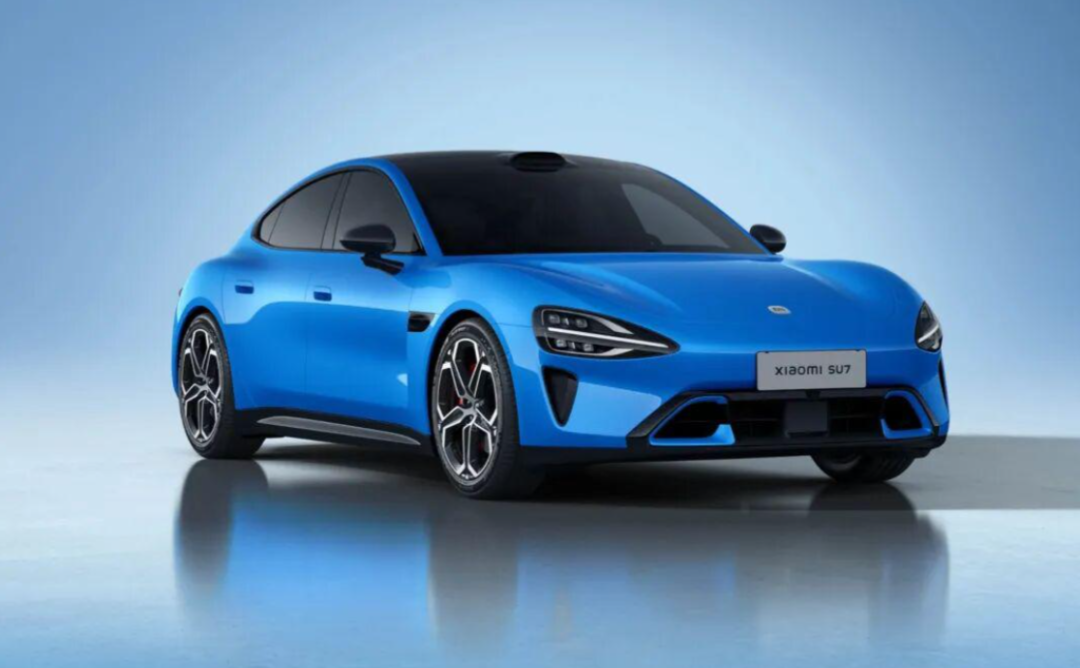 Image Source: Weibo
From the two-and-a-half-year-old SU7 holding steady at eighth place to the YU7 securing the top spot for three consecutive months, Xiaomi Auto’s used car value has firmly established itself among the new energy vehicle leaders.
Rational Perspective: Resale Value Is a Reference, Not the Final Answer
Finally, it’s important to maintain objectivity and avoid blindly deifying ranking data.
The 82.5% resale value is calculated based on vehicles in good condition and standard new car MSRP. Actual used car prices are influenced by factors like mileage, maintenance, condition, regional market trends, and seasonal fluctuations.
In short: Rankings provide industry references but don’t guarantee that every owner will sell at that exact price.
However, this data undeniably shatters all doubts: Xiaomi’s foray into car manufacturing isn’t just a fleeting trend—it’s real strength recognized by the market.
From being mocked as 'crossover car manufacturing bound to fail' to now securing a resale value hat-trick and holding steady in the industry’s top three alongside Li Auto and NIO, Lei Jun has truly delivered on all his promises.
Interactive Topic
When buying a pure electric vehicle, do you prioritize ultra-high resale value or focus more on configuration, experience, and cost-effectiveness?
Do you think Xiaomi’s resale value dominance is well-deserved or driven by hype? Share your thoughts in the comments!
Disclaimer: This article is solely for financial commentary by major companies and does not constitute investment advice. All corporate data and regulatory events mentioned are from public information and are for reference only. Specific details should be based on official releases. Images are sourced from the internet; if copyright issues exist, please contact us for removal.
-
![]()
"Not Participating in the Paris Auto Show Means No Car Sales"
-
![]()
BYD Takes the Lead, Li Auto Lags Behind: Are Joint Ventures Making a Comeback? September’s New Energy Vehicle Sales Data Reveals Stark Divisions
-
![]()
New Forces Top Annual List, Tesla Holds Three-Year Reign! September's Pure Electric Model Resale Value Rates: A Tale of Contrasts
-
![]()
Lei Jun’s Bold Claim Proven: Xiaomi Tops Resale Value Charts, with NIO and Li Auto Close Behind!
-
![]()
Has Zunjie 'Stumbled', Paving the Way for Xiaomi's Success?
-
![]()
Before Launch: How Does a Chinese Rocket Stand or Lie?
-
![]()
Zunjie V800 Brake Bracket Fracture: With the Same 40% Glass Fiber-Reinforced Plastic, Where Does the Disparity Arise?
-
![]()
Why Does Your Phone Slow Down After Long-Term Use?