Li Auto Cuts Workforce by 3,970 in a Year: Insights into Average Monthly Salary and the Dominance of Sales Staff (40%)
 10/20 2026
 408
Compiled by Zhineng Technology
We've crafted a专题 (special topic) centered on comparing salaries and staffing within the automotive sector. Enthusiasts of these major industry players are encouraged to delve into the details.
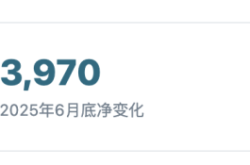
As of late June 2026, Li Auto's employee count stood at 27,048, marking a reduction of 3,970 from the same period the previous year. Before the year's midpoint, the sales and production teams had already become focal points for organizational restructuring. Meanwhile, the company's expenditure on employee compensation and benefits for the first half of the year still amounted to a staggering 6 billion yuan.
So, what does this translate to per employee on average?

While Li Auto is streamlining its sales and production teams, the number of R&D personnel has seen minimal change. Whether the average cost per employee has decreased hinges not only on the total compensation package but also on the workforce size, equity payments, and the efficiency of direct sales channels.
01 A Yearly Reduction of 3,970: Unveiling the Average Salary
At the close of June 2025, Li Auto boasted 31,018 employees; by the same period in 2026, this figure had dwindled to 27,048.
Sales staff decreased by 1,780, and production personnel by 1,654, resulting in a net reduction of 3,434 in these two departments, accounting for 86.5% of the total net reduction.
In contrast, R&D personnel saw a mere decrease of 186, indicating Li Auto's commitment to maintaining its R&D workforce, currently its most stable sector.
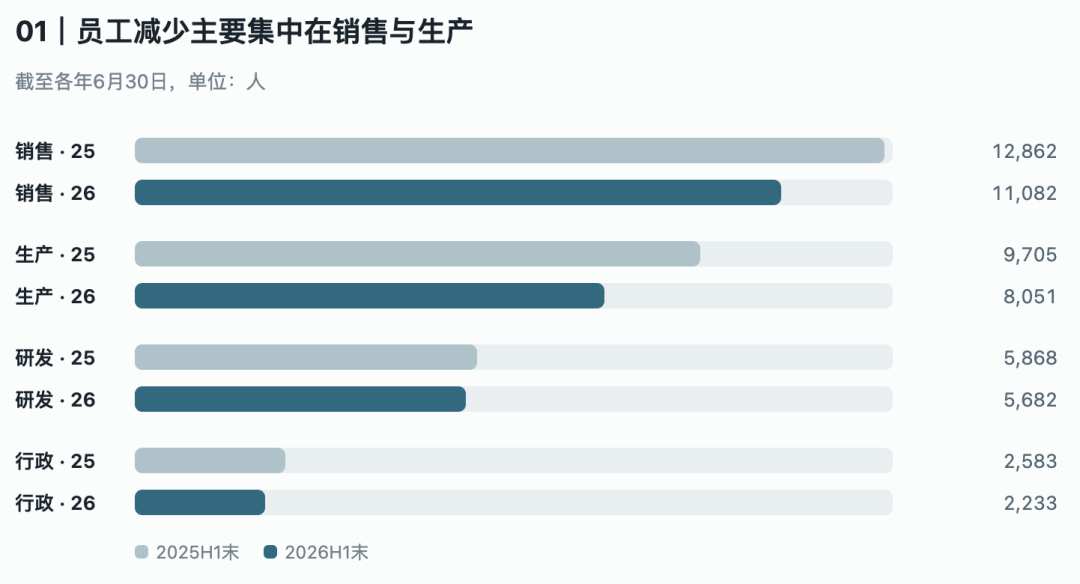
Employee function classification in Li Auto's 2025 and mid-2026 reports:
◎ As of late June 2026, sales personnel numbered 11,082, representing 41.0% of the total workforce;
◎ Production personnel stood at 8,051, accounting for 29.8%;
◎ R&D personnel totaled 5,682, making up 21.0%;
◎ Administrative staff numbered 2,233, comprising 8.3%.
The largest functional group at Li Auto remains sales.
So, what's the average monthly earnings per employee? The semi-annual report sheds light on the company's employee-related costs.
In the first half of 2026, the average monthly compensation and welfare cost per employee was approximately 34,600 yuan. This figure is derived from dividing the total semi-annual expenses of around 6 billion yuan by the simple average of 28,888 employees at the start and end of the period, and then further dividing by 6 months. It encompasses equity payments and company-borne benefits.
Excluding share-based payments, compensation and welfare expenses for the first half of 2026 amounted to approximately 5.625 billion yuan, with share-based payment expenses totaling 375 million yuan, representing 6.2% of the total. The corresponding average monthly costs per person were approximately 32,400 yuan and 2,200 yuan, respectively, including corporate social insurance, housing fund contributions, bonuses, and other benefits.
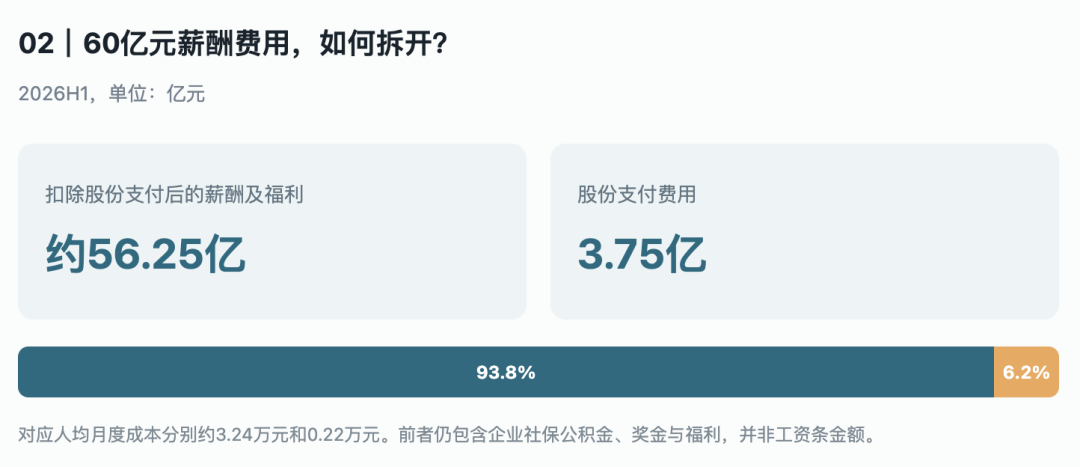
Year-on-year, employee compensation expenses decreased from approximately 6.7 billion yuan in the first half of 2025 to around 6 billion yuan in the first half of 2026, a decline of about 700 million yuan. Share-based payment expenses dropped from 739 million yuan to 375 million yuan, a reduction of about 364 million yuan, contributing to over half of the total expense decrease.
The semi-annual compensation and welfare cost per employee increased from approximately 188,400 yuan in the first half of 2025 to around 194,700 yuan in the first half of 2026, marking a 3.3% rise.
Despite Li Auto's overall compensation expenses decreasing and its workforce shrinking, the average cost per employee, excluding equity payments, has not followed suit.
Li Auto operates under a direct sales model. Retail stores, sales teams, delivery support, and regional management necessitate a significant in-house personnel configuration. Compared to automakers relying on dealer networks for retail, direct sales automakers like Li Auto include more channel personnel directly in their listed company employee statistics.
As of late June 2026, Li Auto operated 495 retail stores, down from 548 at the end of 2025. In the first half of 2026, approximately 193,500 vehicles were delivered, a slight year-on-year decline; however, the number of sales personnel decreased by 13.8% year-on-year.
In the first half of 2025, around 203,900 vehicles were delivered with 12,862 sales personnel; in the first half of 2026, approximately 193,500 vehicles were delivered with 11,082 sales personnel. This includes headquarters, regional, and support positions, so it does not directly reflect the performance of frontline sales consultants.
The sales team is contracting at a faster rate than the decline in delivery volume, indicating an increase in delivery intensity per person. However, store operating efficiency also depends on per-store sales volume, rent, sales commissions, and test drive and delivery costs. Simply dividing the total number of sales personnel by delivery volume does not accurately calculate the true channel labor cost per vehicle.
In the first half of 2026, Li Auto's selling, general, and administrative expenses decreased year-on-year, with reduced employee compensation being a contributing factor. However, the gross margin declined significantly during the same period, resulting in a net loss for the company.
For Li Auto, controlling labor costs for thousands of employees can help alleviate expenses, but vehicle gross margin, product sales, and channel efficiency remain the key determinants of operational improvement potential.
Historically, Li Auto has implemented founder equity incentives tied to performance targets, and in the first half of 2026, it also disclosed arrangements for granting stock options and restricted stock units to certain senior management personnel.
02 Comparing Four New Energy Vehicle Manufacturers
In the first half of 2026, a comparison of Li Auto, Leapmotor, XPeng, and NIO reveals distinct personnel strategies.
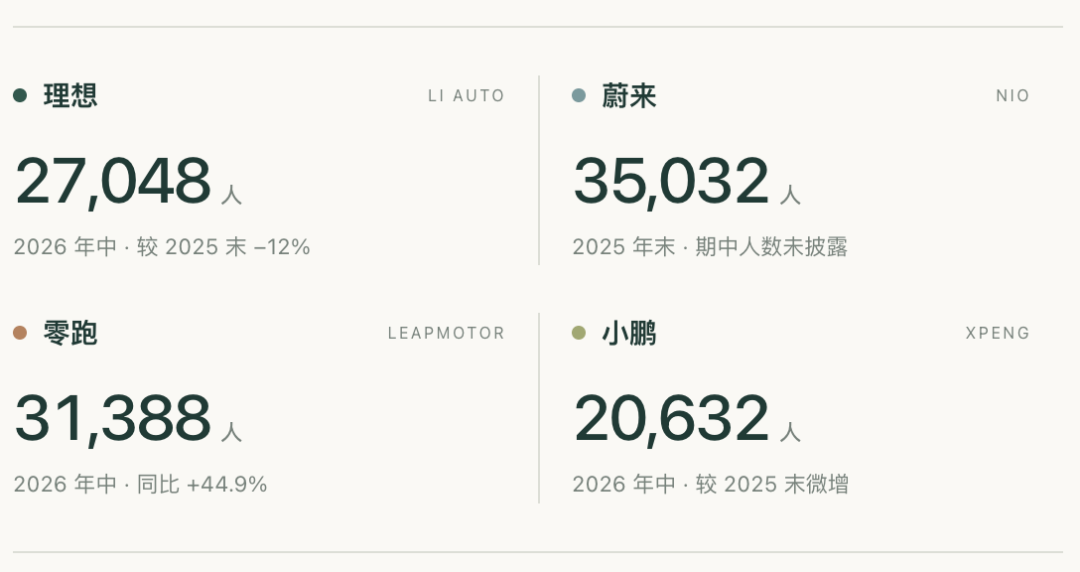
As of late June 2026:
◎ Leapmotor: 31,388 employees,
◎ Li Auto: 27,048 employees,
◎ XPeng: 20,632 employees,
◎ NIO: Disclosed 35,032 employees at the end of 2025 only (mid-2026 figures not reported), currently estimated to still have the largest workforce among the four.
The trend in workforce size has reversed. Leapmotor increased its workforce by 44.9% year-on-year, from 21,656 to 31,388 employees, surpassing Li Auto. Li Auto decreased by about 12.8% year-on-year, with a net reduction of nearly 4,000 employees. XPeng saw a slight increase of 3.8%, essentially maintaining its workforce size.
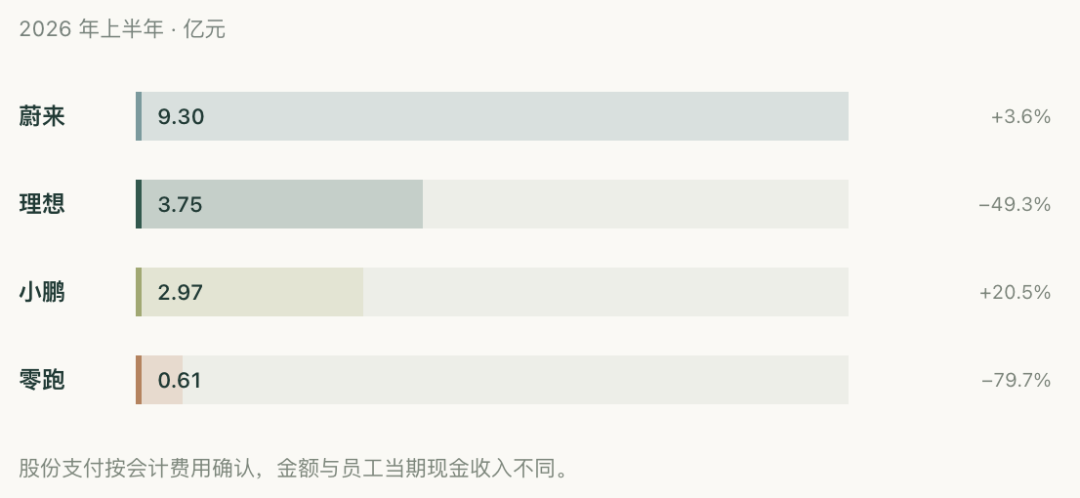
◎ NIO spent 930 million yuan in the first half of the year, the highest among the four, using stock to retain talent.
◎ Li Auto spent 375 million yuan, a year-on-year decrease of half.
◎ XPeng spent 297 million yuan, actually increasing by 20% against the trend.
◎ Leapmotor spent 61 million yuan, nearly negligible.
Some companies have a significant portion tied up in stock that will only materialize in the future, while others rely almost entirely on cash.
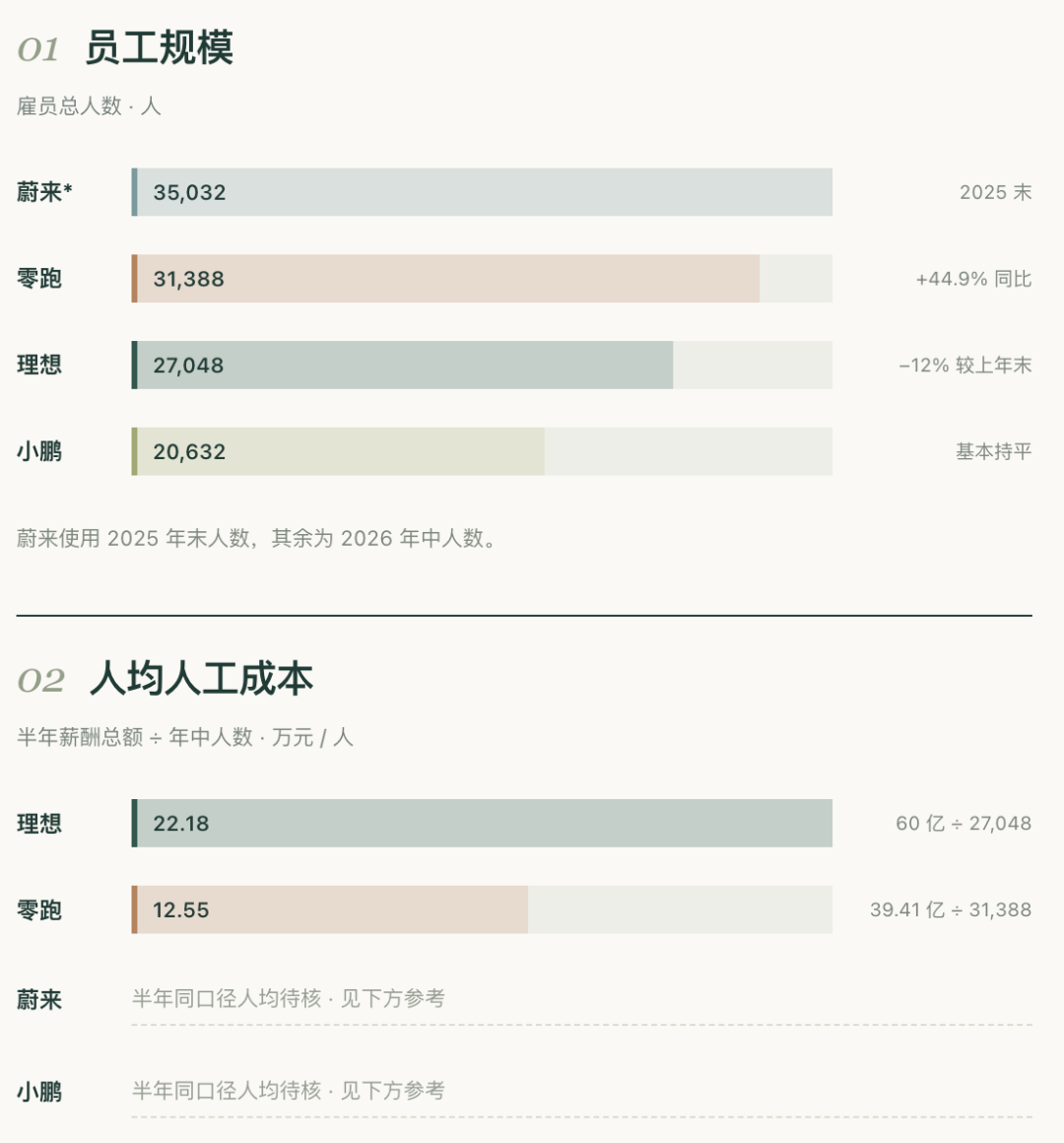
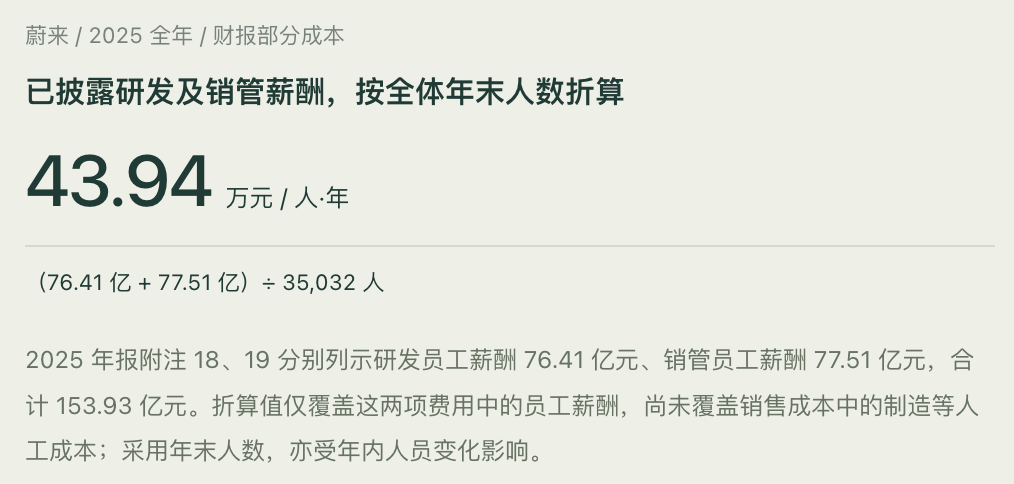
Li Auto's semi-annual average labor cost intensity is about 208,000 yuan, while Leapmotor's is about 125,000 yuan, nearly double for Li Auto. At Li Auto, 40% of employees are in sales and 20% in R&D, whereas Leapmotor's manufacturing system dominates. XPeng has the highest proportion of R&D personnel at 42.3%, while NIO's sales and user services account for nearly half.
Summary
In the first half of 2026, Li Auto maintained a workforce of 27,000 employees, with 40% in sales, 30% in production, and 20% in R&D. Compared to a year ago, sales and production departments saw a combined net reduction of 3,434 employees, while R&D decreased by only 186. Personnel allocation is adjusting in line with operational scale.
Semi-annual compensation and welfare expenses amounted to approximately 6 billion yuan, with an estimated average monthly employee cost of around 34,600 yuan; excluding share-based payments, this was about 32,400 yuan.
-
![]()
Bosch Secures Multi-Million-Unit Orders, Horizon Robotics' Chips Go Global: What Will Mobileye's Next Move Be?
-
![]()
Is Douyin Still Reliant on the 'Little Yang Brother' Phenomenon?
-
![]()
NIO’s Workforce Declines by Over 10,000 in a Year, with RMB 930 Million in Stock-Based Compensation in H1: Implications for 35,000 Employees
-
![]()
Real-World Testing Reveals: Flash Models are Transitioning from 'Lite' to Practical Office Tools
-
![]()
China's Brake-by-Wire Systems Start to Compete with Bosch's Market: Who Will Supply the Core Driver Chips?
-
![]()
Li Auto Cuts Workforce by 3,970 in a Year: Insights into Average Monthly Salary and the Dominance of Sales Staff (40%)
-
![]()
Ignite the Tokens! The Capital Efficiency Test for Cloud Providers in the Agentic Cloud Era
-
![]()
The Data Centers of AI Giants Are Hitting a Wall Harder Than Chips