Is Douyin Still Reliant on the 'Little Yang Brother' Phenomenon?
 10/20 2026
 450

Both Parties Seek to Move Beyond the 'Little Yang Brother' Era
Author: Ding Shan
Editor: Xiaobai
Illustrations: AI-Generated
Produced by: Qiangdiao Next
Little Yang Brother has made a comeback, but Douyin hasn't exactly rolled out the welcome mat.
On the evening of October 16, Douyin released a succinct announcement permitting Little Yang Brother, who had been suspended for two years, to resume activities. Based on the rectification notice from the Hefei Market Supervision Bureau, Douyin agreed to let Sanzhiyang deactivate its original account, register a new one, publish content, and restart operations. The once-dominant 'Crazy Little Yang Brother' account, boasting billions of fans, has been deactivated, and Little Yang Brother has launched a new account named 'Qingyang.'
Around 6:55 PM that evening, Little and Big Yang Brother made an appearance in the 'Xiaoyang Zhenxuan' live streaming room, delivering statements aligned with the announcement before concluding the broadcast shortly after. Little Yang Brother announced a renewed focus on content creation and managing his self-owned brand. Sanzhiyang declared that its official account, 'Sanzhiyang Network,' would be renamed 'Xiaoyang Zhenxuan,' signaling a gradual shift from an MCN company to an e-commerce entity. With the personal account's fan base needing rebuilding and the company's operations continuing, the timing was indeed 'strategic.'
The day prior, Douyin Mall had just kicked off its Double 11 campaign, distributing consumer coupons across multiple platforms, including Doubao, Hongguo Short Drama, and Toutiao. While there's no concrete evidence linking this recall to promotional efforts, Douyin E-commerce is clearly on the hunt for traffic—a stark contrast to two years ago when a handful of super anchors could drive the entire market. During Little Yang Brother's two-year hiatus, Douyin has cultivated merchant self-broadcasting, product shelves, and a cohort of small-to-medium-sized influencers, eliminating the need to rely on a specific individual's live stream for business.
Now that the scale has expanded, Douyin faces new challenges: it seeks shopping traffic from more apps and uses subsidies to drive order settlements. While the attention garnered by super anchors remains valuable, what Douyin currently lacks is shopping traffic—and what Little Yang Brother can primarily offer now is public discourse. With fewer super anchors, growth has decelerated.
The days of Douyin E-commerce's rapid early expansion are over.
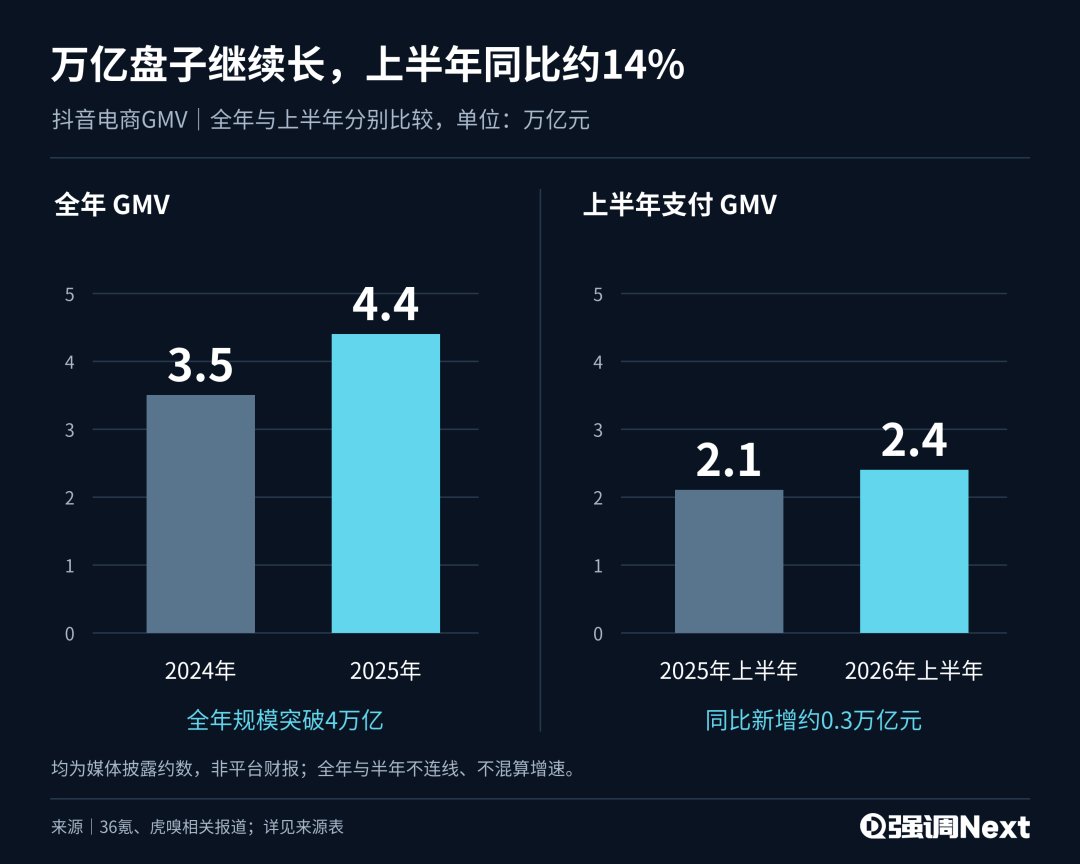
According to multiple media reports, in the first half of 2026, Douyin E-commerce's payment GMV reached approximately 2.4 trillion yuan, up from about 2.1 trillion yuan in the same period last year. Based on these rough figures, year-on-year growth was around 14%. In the second quarter, payment GMV reached approximately 1.24 trillion yuan, with growth slowing to the low double digits.
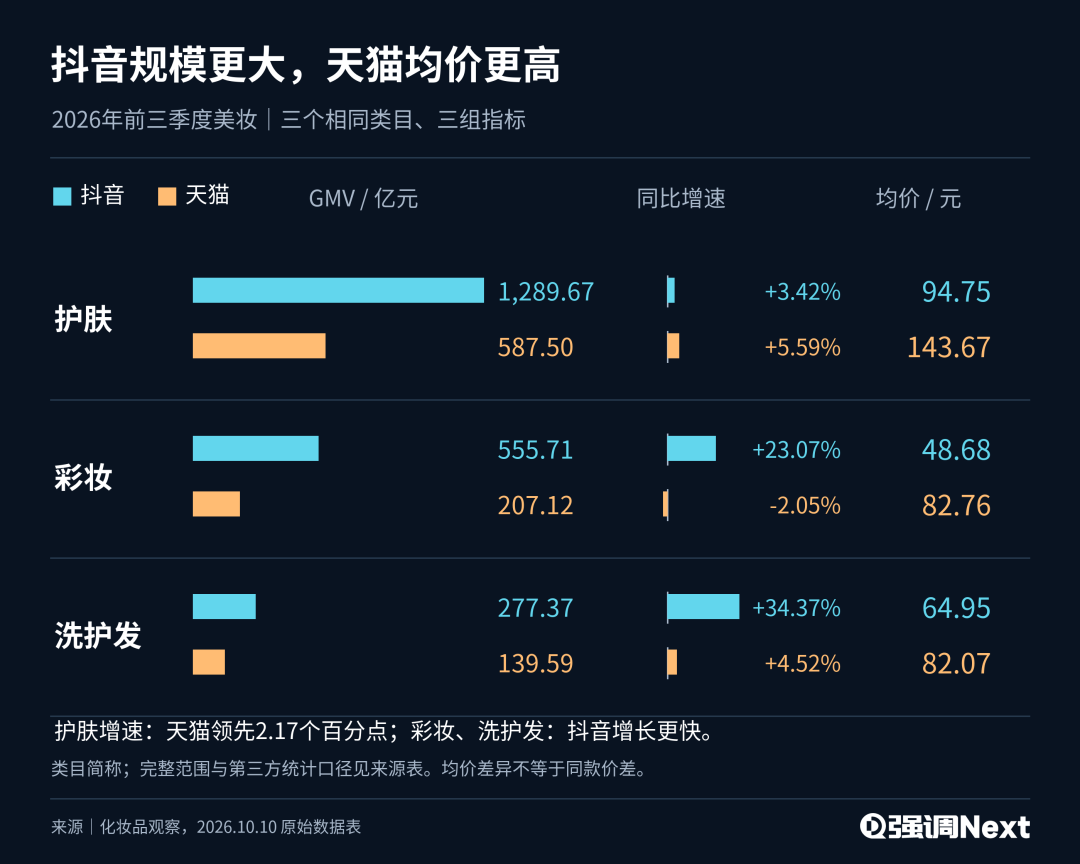
Category data tells a similar story. According to third-party statistics from Cosmetics Observer, in the first three quarters of this year, Douyin's beauty GMV reached approximately 218 billion yuan, up 11.63% year-on-year—lower than the over 20% growth reported last year.
In the largest category of beauty skincare, body care, and essential oils, Douyin grew by 3.42%, while Tmall grew by 5.59%. Although Douyin leads in overall beauty scale, its skincare category's growth lags behind Tmall's. Douyin E-commerce's transactional advantages have not fully extended to every category.
This Double 11, Douyin's strategy has shifted from hosting a few large live streams to distributing consumer coupons across platforms like Doubao, Hongguo, and Toutiao, encouraging users engaged in question-asking, short drama viewing, or news reading to smoothly transition into shopping.
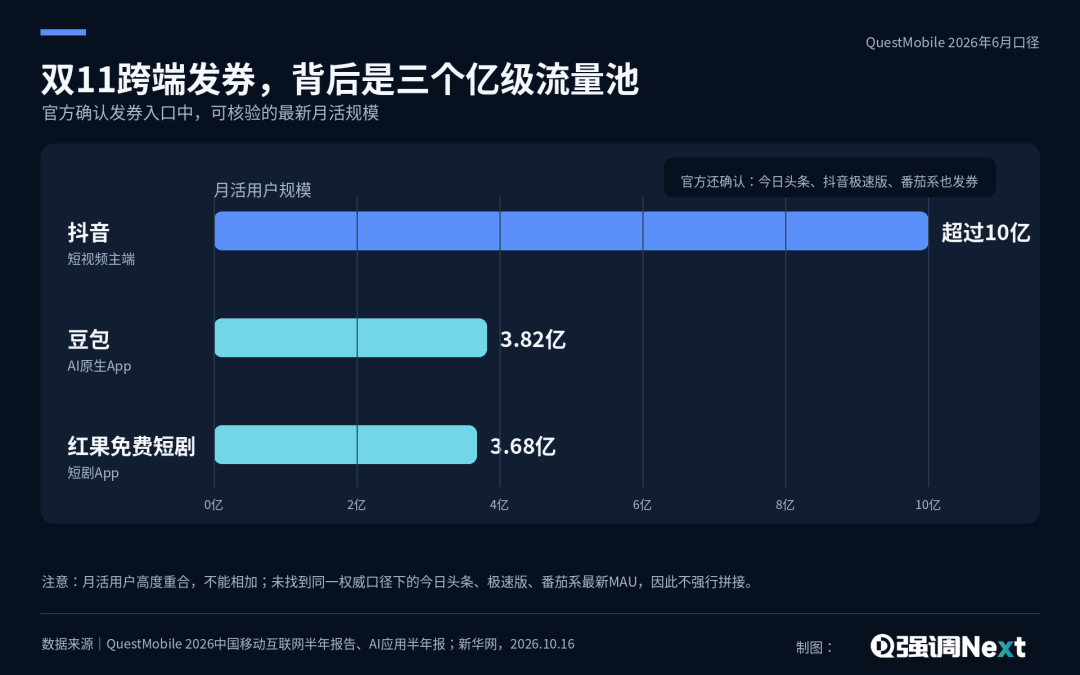
Cross-platform coupon distribution increases the likelihood of triggering purchases. Even if users already frequent Douyin, they may not have made purchases there before, and new entry points still have the potential to attract new buyers.
Compared to continually expanding live streaming supply, this approach better addresses Douyin's current challenges. At the September Authors’ Summit, it was announced that Douyin E-commerce's author base has surpassed 12 million, with over 4.56 million new active authors in the past year. While more people can sell products, consumer spending hasn't expanded accordingly. For Douyin, after increasing the number of sellers, it must ensure these operators receive sufficient orders.
The value of Little Yang Brother's return must be assessed in this context. He provides a ready-made public topic that can reignite user interest in Douyin's live streaming e-commerce. However, public attention does not necessarily translate into business success. On August 2, when former East Buy CEO Sun Dongxu and two anchors launched their new live stream, 'Beautiful Tomorrow,' it topped Douyin's overall live streaming sales chart within half an hour, even surpassing 'Yuhui Tongxing' in popularity. However, third-party estimates placed the five-hour sales volume at just 5 to 10 million yuan.
More fundamentally, the role of super anchors in Douyin's overall market has evolved. Citing the '2025 Live Streaming E-commerce Industry Development White Paper,' Xinhua Net stated that in 2024, top influencers with over one million followers contributed approximately 9% of Douyin E-commerce's total GMV. Douyin's transaction sources have become highly decentralized. While super anchors can still generate significant attention, they struggle to single-handedly drive overall market growth.
What Sanzhiyang truly built back then was a self-sustaining system: leveraging Little Yang Brother's IP to drive traffic, deploying thousands of influencers and clip creators, and monetizing through live streaming and short videos. The system operates, but it belongs to Sanzhiyang, not Douyin's infrastructure.
Over the past two years, Douyin has constructed a different infrastructure: users can directly find products via product cards and searches, while brands can operate continuously through store live streaming without relying solely on a single influencer's live stream for sales.
Thus, Little Yang Brother's return has been reevaluated. While he remains a scarce attention resource, for Douyin to sustain trillion-yuan-scale growth, it must convert more usage scenarios into consumption scenarios. A super anchor can regain attention but not dictate the growth trajectory.
Double 11 Spending Now Focuses on Effective Orders
Subsidies continue, but Douyin is now strategic about where to invest them and what returns to expect.
This year, Douyin's Double 11, like other platforms, de-emphasized pre-sales and focused on spot goods. Product discounts come in two forms: 'immediate discounts' and 'direct price reductions.' Discounts are borne by merchants, while additional platform coupons are funded by Douyin, prioritizing bestsellers, official flagship stores, and goods with sufficient stock.
Merchants first offer competitive products and prices, and Douyin amplifies transaction opportunities through coupons and traffic, concentrating resources on sellable, deliverable goods.
Expanding beyond the promotion period clarifies the intent. According to media reports, in 2026, Douyin E-commerce prioritized settled GMV as a key performance metric, squeezing out the 'water' from refunds and returns. Sales volumes driven by low prices or high-profile live streams are discounted under this framework, and volume-chasing is precisely what top live streaming rooms excel at.
According to policies for small, new, and medium-sized merchants announced on October 12, some live streaming room traffic incentives are based on 'incremental settled GMV' compared to a baseline period. Merchants meeting requirements for actual GMV and settlement rates can receive up to 300,000 yuan in traffic incentives. Similarly, campaigns for new self-broadcasting merchants set thresholds for minimum paid order volume and settlement rates.
In the past, promotions would inflate payment amounts, followed by mass cancellations and returns, leaving merchants with sunk costs for traffic, customer service, and fulfillment. Douyin, too, struggled to convince merchants to reinvest in the next round.
By incorporating incremental and settled metrics into incentive systems, Douyin aims to reduce two types of waste: subsidizing what already exists and subsidizing orders that ultimately don't materialize.
The same logic applies to top influencers. This Double 11, top influencers still have exclusive access to the 'Super Value League' playbook, but rules dictate real-time traffic investment based on settled GMV, with rewards paid out later via Qianchuan: Money is fronted by influencers, with the platform settling based on results. Top influencers' role in Douyin has shifted from traffic-supported figureheads to the platform's largest advertisers. First-day Double 11 data also reveals a shift: The number of merchants exceeding 10 million yuan in store live streaming sales grew 96% year-on-year.
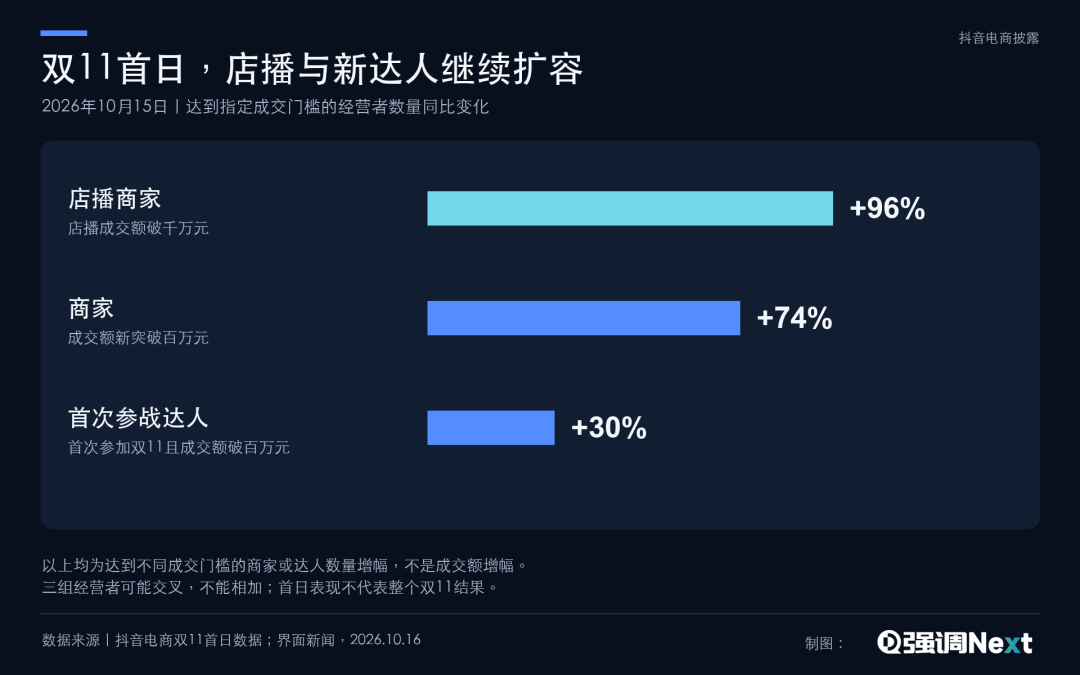
Thus, the expansion of store live streaming and small-to-medium-sized influencers means more than just reducing reliance on super anchors. With sufficient supply, Douyin can selectively support operators better positioned to meet demand.
However, more operators mean more competition. Merchants may save on influencer commissions but redirect spending to live streaming teams and traffic acquisition. For Douyin to grow advertising revenue, merchants must have the funds to keep investing. With slowing growth, questions about who provides subsidies, who earns profits, and how much refunds cost directly determine whether merchants stay.
This year's Double 11 rules offer a glimpse into how Douyin plans to sustain growth: creating shopping opportunities across more entry points and using settlement thresholds to filter orders worth further investment.
Super Anchors Generate Heat, but Douyin Must Cultivate Shopping Habits
Douyin hasn't abandoned influencers. The 'Featured Plan,' launched in September, continues to offer traffic, merchant collaborations, and operational services to high-quality authors, with eligible authors receiving up to 100% of technical service fees. Evaluation criteria include content trustworthiness, consumption decision value, and operational performance.
Yet these changes haven't eliminated the scarcity of super anchors. What's scarce is the individual, not the account. In September 2025, Zui Ge, Qiaomei, and Lao K under Sanzhiyang resumed broadcasting on Douyin before Little and Big Yang Brother, with Zui Ge's live stream attracting over 100,000 viewers at its peak. In contrast, Little Yang Brother's return live stream drew fewer than 2,000 viewers. The system keeps running—sales continue without him. Little Yang Brother's marginal value has been reevaluated during his two-year suspension.
Super anchors concentrate attention, while store live streaming, short videos, and shelves keep products selling after the hype fades. During the 2026 618 event, small-to-medium-sized influencers with fewer than one million followers contributed over 80% of influencer-driven sales, while the number of merchants driving over 10 million yuan in sales via search grew 53% year-on-year. Douyin has amassed sufficient scale for everyday transactions. The remaining question is whether users will keep shopping voluntarily when there are no trends, no top anchors, and no large coupons.
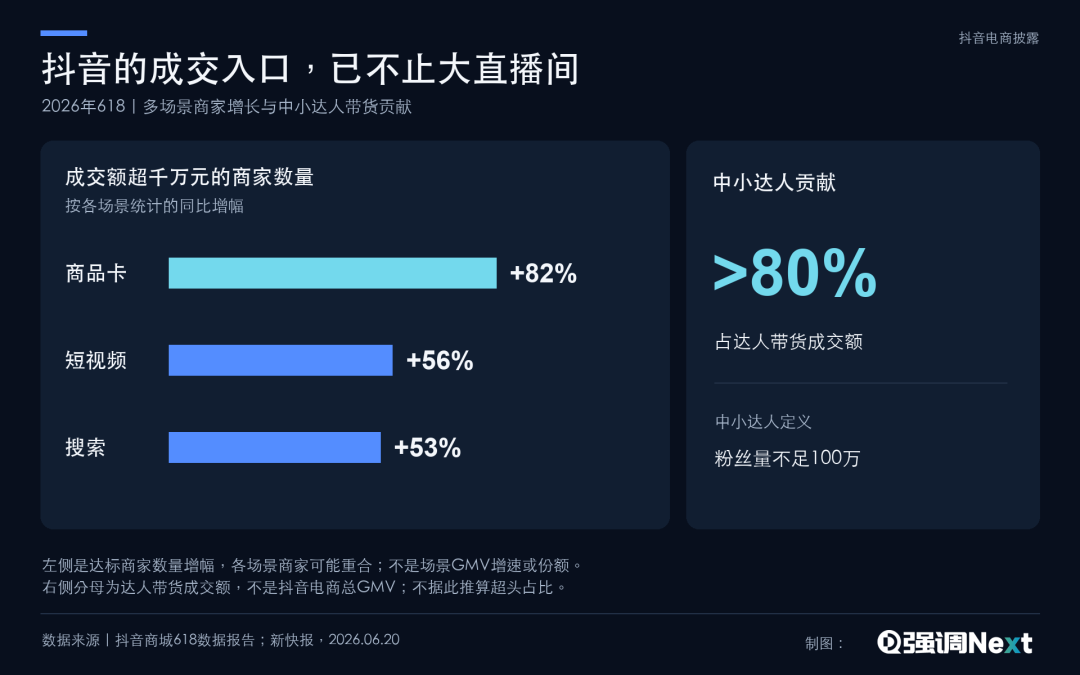
This is critical for Douyin to compete with mature shelf e-commerce platforms. Double 11 can stimulate one-time purchases with discounts, but turning shopping into a habit requires stable products, pricing, fulfillment, and after-sales service.
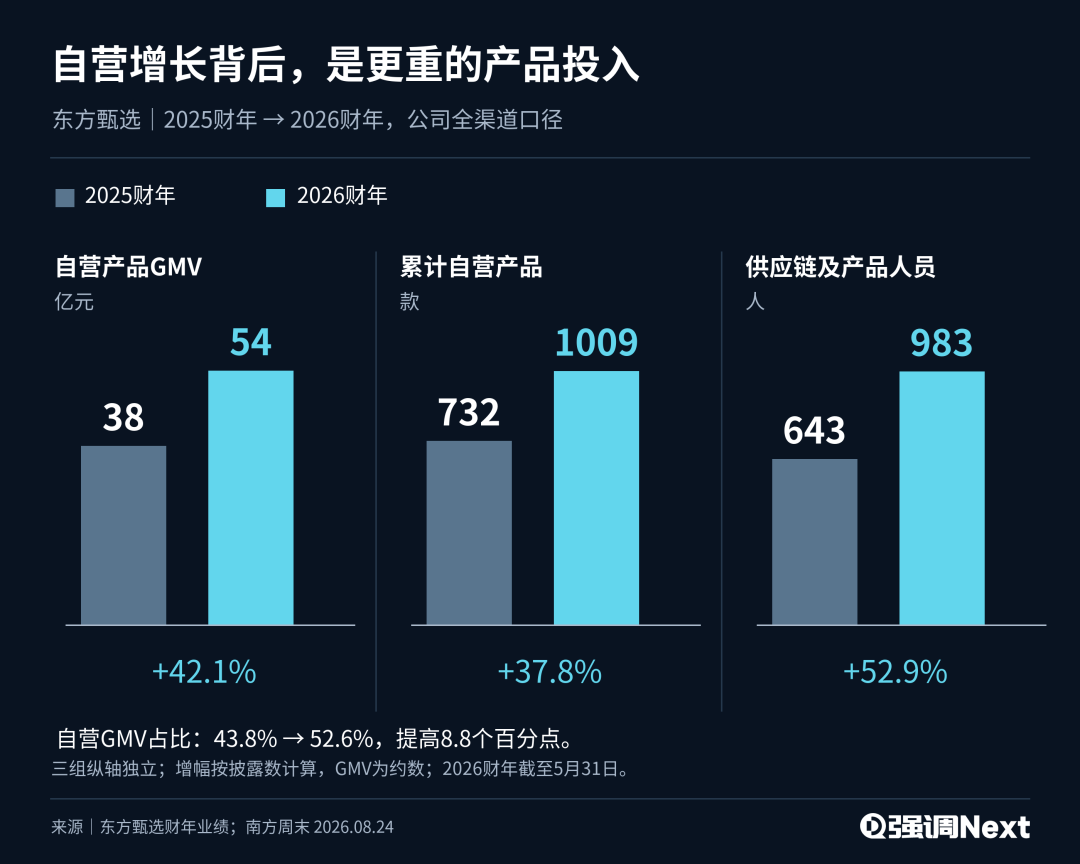
Sanzhiyang's shift to an e-commerce company and self-owned brands reflects an attempt to build operational capabilities beyond personal traffic. In the first half of FY2026 (June–November 2025), East Buy's self-owned product GMV reached 52.8%. Meanwhile, in 2024, 'Jiaogepengyou' stated that revenue from Luo Yonghao's two main accounts fell below 3%, with company revenue now driven primarily by vertical matrix accounts. Both strategies—expanding self-owned products and diversifying account revenue sources—reduce reliance on individual anchors.
Costs must also be controlled. Sanzhiyang's penalties for non-compliant operations included fines of 68.9495 million yuan, plus compensation for affected products, totaling 96.728 million yuan. Attention from a controversial anchor may drive traffic but also spark consumer doubts about products and the platform—costs ultimately borne by the platform.
This Double 11, Douyin distributed coupons via Doubao, Hongguo, and other entry points, while Little Yang Brother's return sparked discussion. After the excitement fades, will users think of Douyin for their next purchase?
Note: All data in this article comes from public sources.
- END -
-
![]()
Bosch Secures Multi-Million-Unit Orders, Horizon Robotics' Chips Go Global: What Will Mobileye's Next Move Be?
-
![]()
Is Douyin Still Reliant on the 'Little Yang Brother' Phenomenon?
-
![]()
NIO’s Workforce Declines by Over 10,000 in a Year, with RMB 930 Million in Stock-Based Compensation in H1: Implications for 35,000 Employees
-
![]()
Real-World Testing Reveals: Flash Models are Transitioning from 'Lite' to Practical Office Tools
-
![]()
China's Brake-by-Wire Systems Start to Compete with Bosch's Market: Who Will Supply the Core Driver Chips?
-
![]()
Li Auto Cuts Workforce by 3,970 in a Year: Insights into Average Monthly Salary and the Dominance of Sales Staff (40%)
-
![]()
Ignite the Tokens! The Capital Efficiency Test for Cloud Providers in the Agentic Cloud Era
-
![]()
The Data Centers of AI Giants Are Hitting a Wall Harder Than Chips