February Rakes In 12 Billion Views! A 54-Year-Old Uncle from Henan Teaches Himself AI and Creates the Hit Short Drama "Armed Into Song"
 11/10 2026
 426
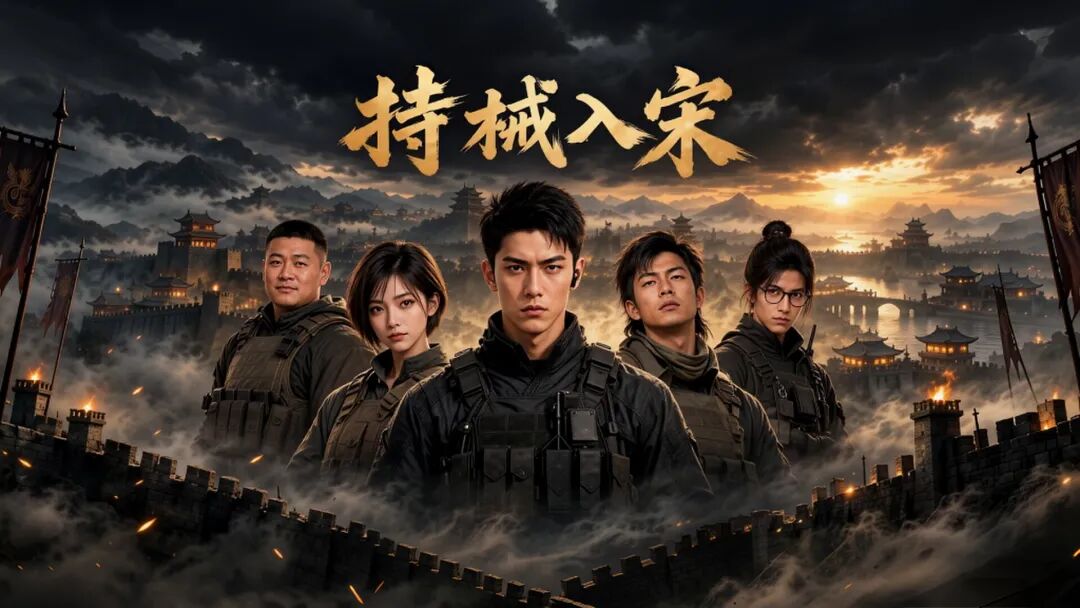
Image source: Hongguo Short Drama
Let's start with some numbers: six full-time staff, no professional background, self-taught in AI, two months, 1.2 billion views. Spread across each day, that's 200 million.
On any platform, these numbers look inflated. Yet it happens to be a short drama—the people who made it have never been on a film set, their office is in an ordinary residential community in Henan, and ninety percent of the visuals are AI-generated.
The drama is called "Armed Into Song."
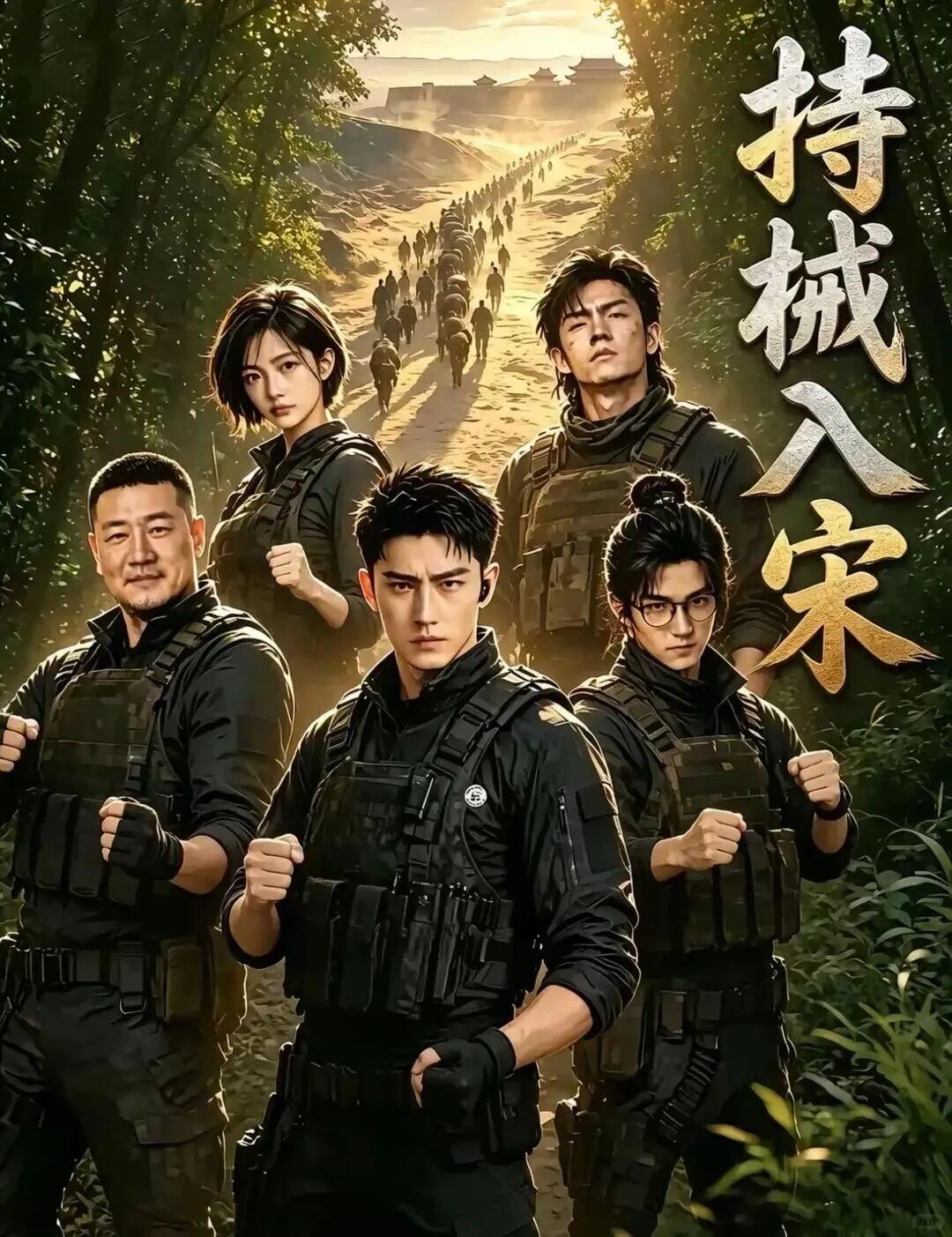
Image source: Hongguo Short Drama
Five modern special operations soldiers open their eyes and, guns in hand, find themselves transported to the late Northern Song Dynasty, five years before the Jingkang Incident.
Its most brutal aspect: every bullet fired is one fewer, and when the gasoline runs out, the vehicles are scrap metal. No system, no infinite supplies. So instead of sweeping across armies, they settle in Qinghe Village, build an arsenal, train local militia, set up medical care, establish intelligence networks, and even sit for the imperial examinations.
The real thrill of this drama isn't the fighting—it's the calculation. Guns jam, food runs out, and the military system, household registration, and human relations all choke you one by one. Put plainly, it turns time travel into management science: eat first, then organize, and only then talk about war.
Calling it a short drama undersells it—I'd rather see it as a "low-budget version of historical simulation." I followed it all the way to season ten and even went to flip through dozens of pages of Song Dynasty history along the way.
Two Thousand Yuan per Episode, Conjuring Up an Entire Bianjing City
It launched on August 21, with no paid promotion and no marketing, releasing ten seasons and over a thousand episodes in one go; on Hongguo it accumulated 11.41 million favorites, a single season peaked at 82.06 million in popularity, and total views across the internet reached 1.2 billion.
I didn't believe it at first either. But when I clicked in, the ancient cities, the battlefields with thousands of troops, and the charges when two armies clashed—the scenes were quite impressive; the camera could even cut to character close-ups, conveying dialogue and emotion clearly. In a traditional film crew, how many extras would have to be organized, how much costume and props prepared, and how much coordination of cinematography, locations, and post-production visual effects would be needed.
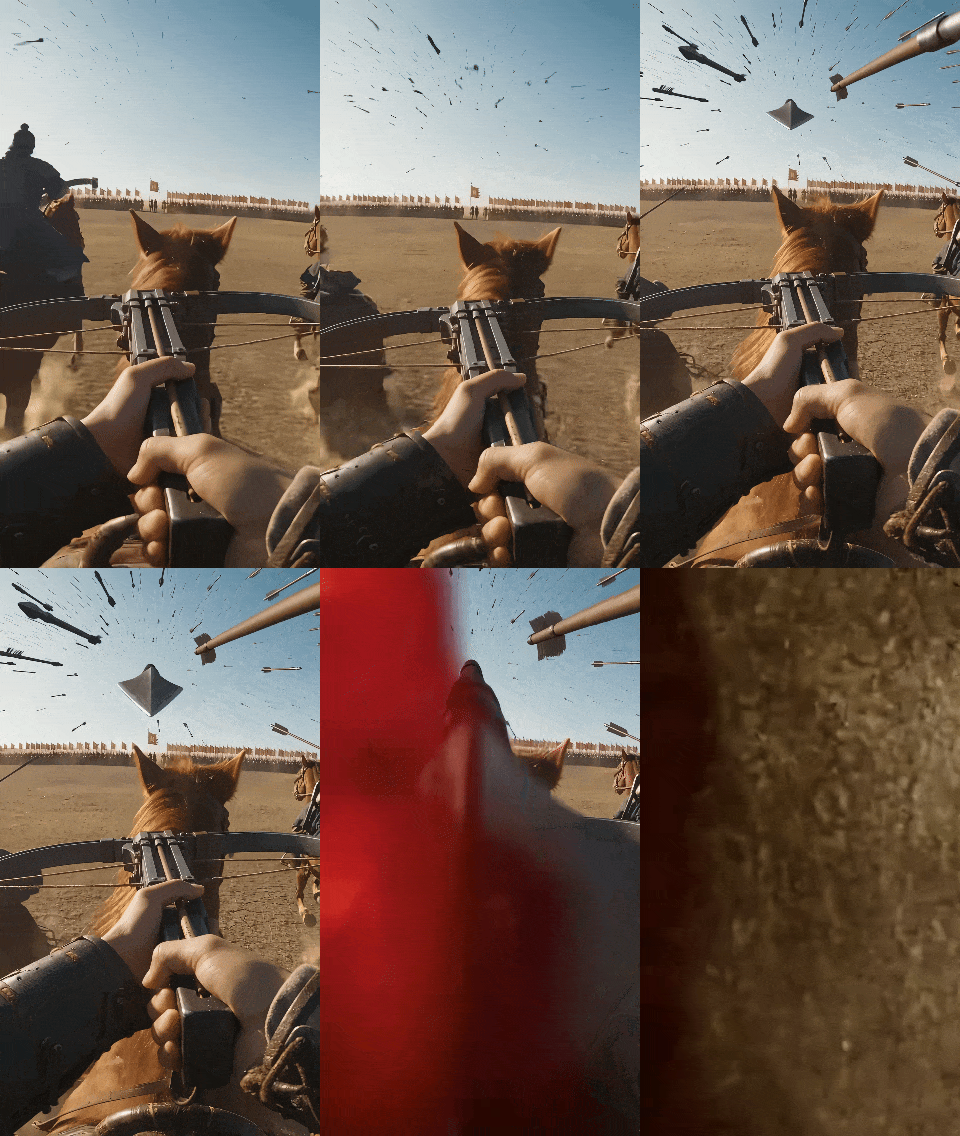
Image source: Screenshot from "Armed Into Song"
Now these scenes are all AI-generated, with per-episode costs pressed down to 1,000 to 2,000 yuan. They turned Song Dynasty villages, cities, and characters into digital assets in advance and reused them repeatedly, pouring all the money back into the script and staging.
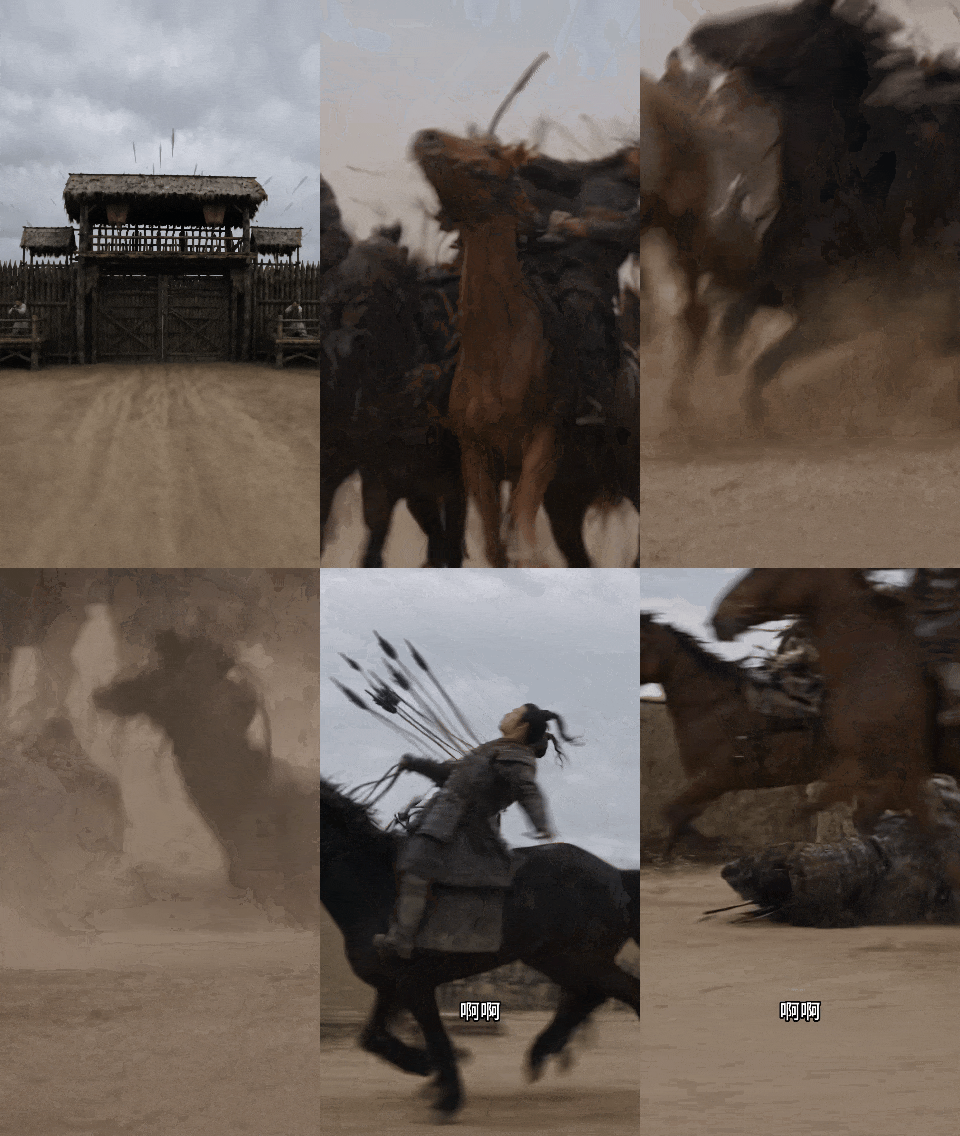


Image source: Screenshot from "Armed Into Song"
Of course, comparing it head-on with blockbusters costing hundreds of millions, there is indeed a gap in production quality. But if you always look at AI through a magnifying glass, it's easy to overlook what it has already achieved.
In the industry, AI-generated shots are called "gacha pulls." Ordinary shots take three pulls, battle scenes start at ten, and twenty-plus is not unusual. Their passing standard is maddening: no continuity errors and normal movement only earns 60 points; clean visuals without emotion are scrapped outright.
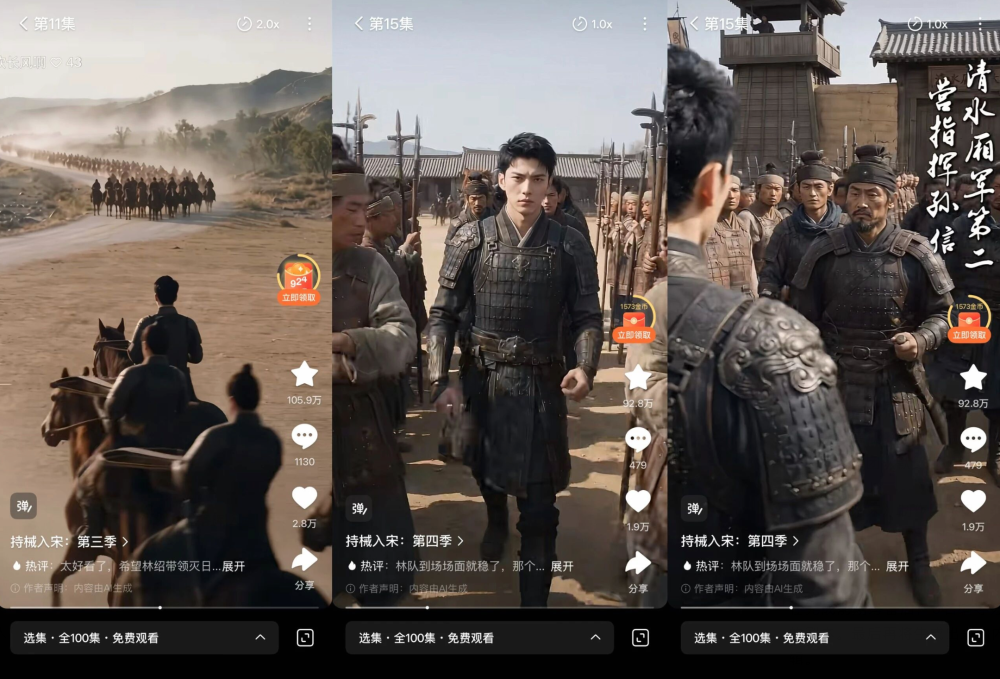
Image source: Screenshot from the short drama "Armed Into Song"
In season six, Qin Hongying dies in battle, and chief director He Xiushan wrote a song for the funeral scene, crying himself while editing. Zhang Hansheng's acceptance method is very primitive: first move yourself. If you yourself don't cry, how can you expect the audience to cry?
There's a detail I remember for a long time: a low-ranking soldier climbs the city wall and, before he can cut anyone down, is stabbed off by a spear. In a power-fantasy drama, he should have taken out three enemies in a row and then shouted a slogan. They refuse—what they want is the realism of people dying on both sides.
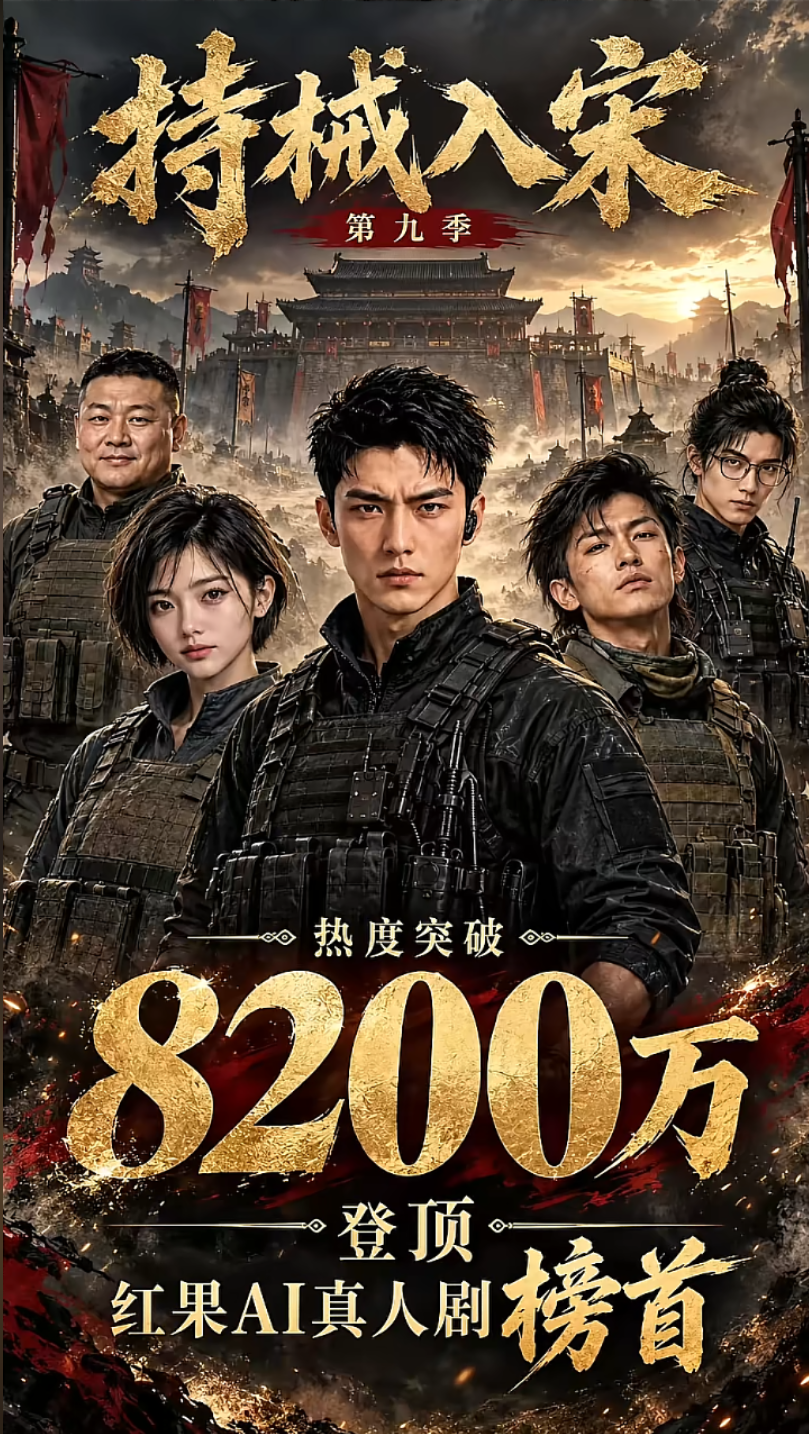
Image source: Hongguo Short Drama
Even Liu Shen Lei Lei posted: nowadays watching short dramas, my knowledge isn't enough—I just watched "Armed Into Song" and realized I don't understand the Song Dynasty military system. Mantou Shuo also recommended it. What this points to is actually the creators' relentless digging—how Song soldiers put on armor, which way city gates faced, checked one by one.
Six People Who Pick Up Their Kids, Making 1.2 Billion
The team behind this hit comes from an ordinary residential community in Xinxiang, Henan.
Not a Hollywood crew, nor a film and television company in Beijing or Shanghai. Of the thirty-plus people, only 6 are full-time; the rest are part-timers recruited online—former ride-hailing drivers, truck delivery workers, full-time moms—who had never touched film and television before.
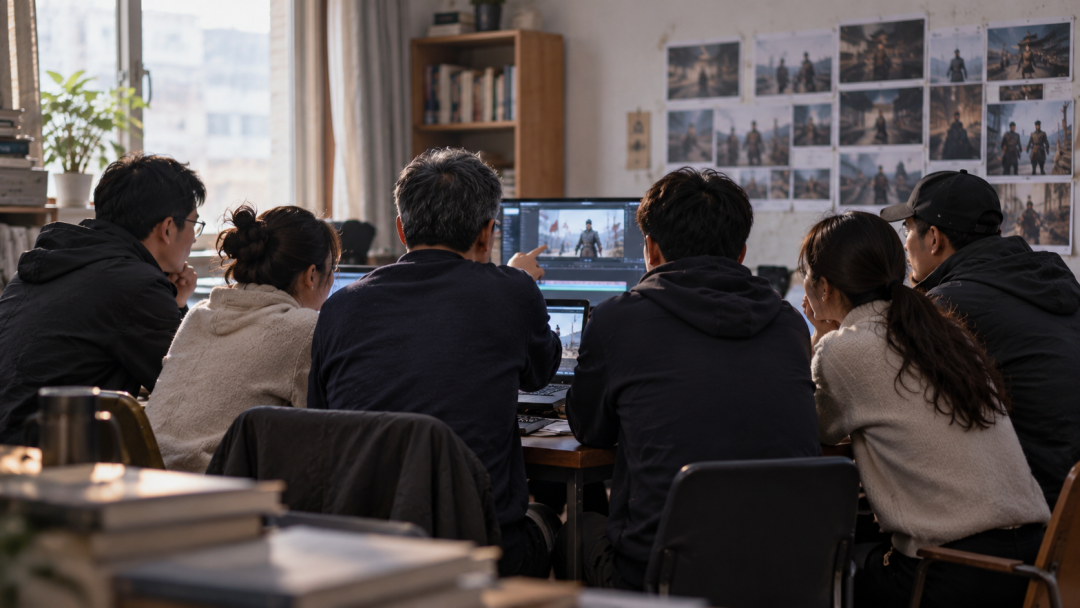 The company's 6 full-time members
Founder Zhang Hansheng is 54 this year, a freelancer (multiple failed startups), with no film or AI background whatsoever. He only started learning AI filmmaking in March 2025, signed up for a one-thousand-yuan online course, and was number 11 in the class, so everyone calls him "Old Eleven."
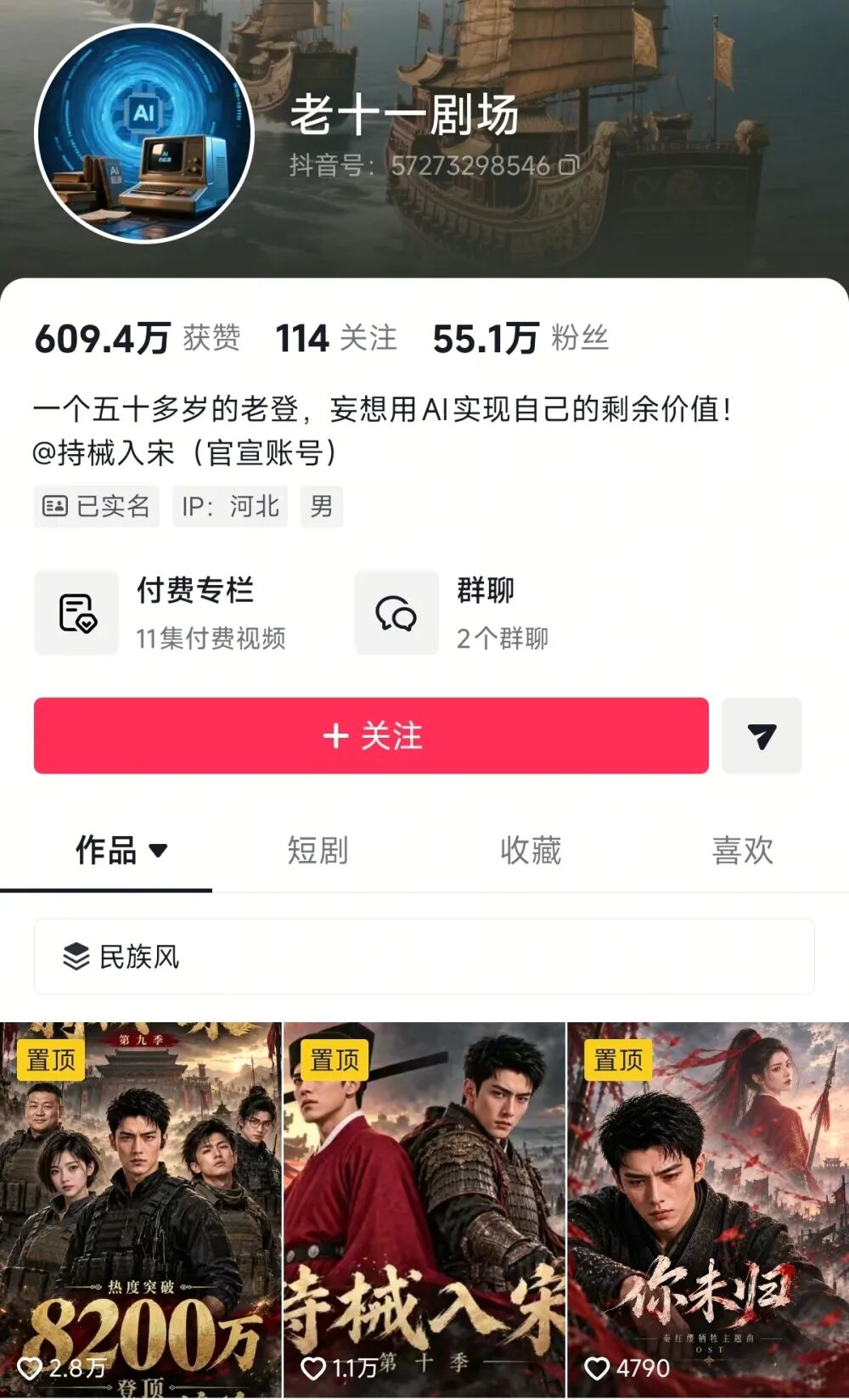
Image source: Zhang Hansheng's Douyin account "Old Eleven Theater"
They are scattered across the country, collaborating via WeChat groups and cloud drives. The core creative team has only six people; some have to pick up their kids on schedule, some only get inspiration at night, and the principle is "no meeting unless necessary." Revenue is split by the effective duration of finished footage; scrapped footage earns nothing. Five groups work in parallel, having produced nearly 40 dramas in total, each one a success. In Zhang Hansheng's words, the priority early on is to make a living, to let the people working with him earn money first.
The speed is indeed absurd: a core group of ten people updates one season—a hundred episodes—per week, with no need to wait for scheduling slots or coordinate locations and lodging for hundreds of people.
What surprised me most is that they don't pay for traffic promotion, and don't know how to. Once a drama is finished, passes review, and is published simultaneously on a few platforms, it goes live.
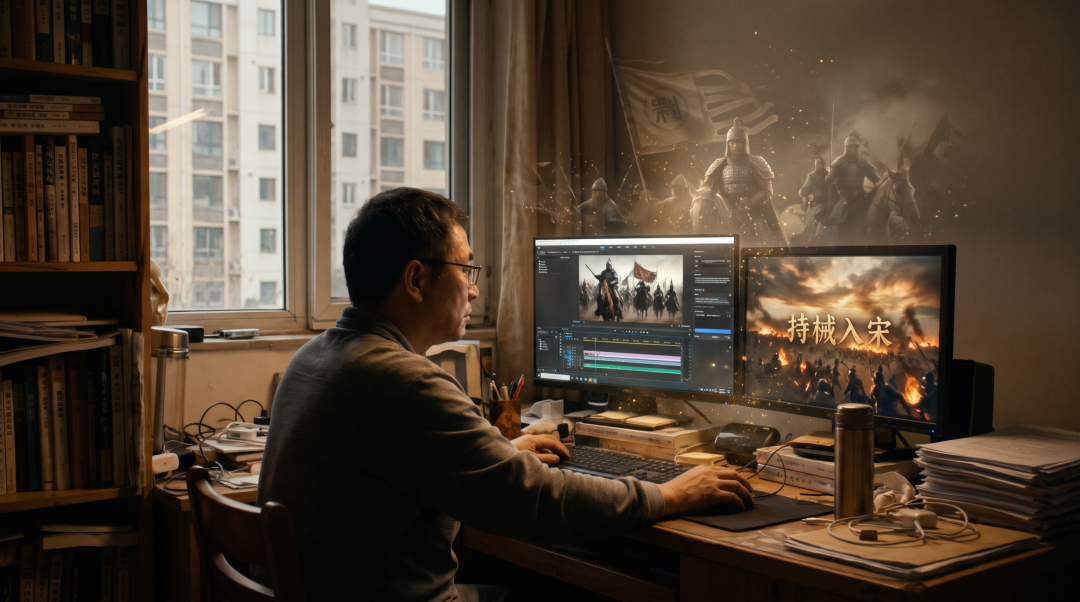
After it went viral, rumors spread online of "one million invested in computing power, over ten million in returns." Zhang Hansheng flatly denied it: money is better than before, but the accounts haven't been settled yet. What he fears more is being treated as a myth—the phrase "if a 54-year-old can do it, so can you" makes him very uneasy.
Of those who studied AI alongside them, plenty gave up halfway; before this drama, they supported the team with assembly-line dramas at 20 per month, and only later voluntarily cut down to single digits. When season one launched, it had only six or seven hundred thousand favorites; it truly took off by season nine. Another trouble brought by the popularity is interviews, one after another, and he can barely stand it: "The team really just wants to make dramas quietly." A gathering at a scenic spot agreed upon months ago still hasn't happened.
Two Months, Covering the Road That Long-Form Dramas Take Half a Year
Look at another layer: just how unreasonable this number is.
According to public statistics on Yunhe's effective main-feature playback surpassing ten billion, "Eternal Love" took 29 days, "The Story of Minglan" 48 days, "The Knockout" 126 days, and "Joy of Life" season one 278 days.
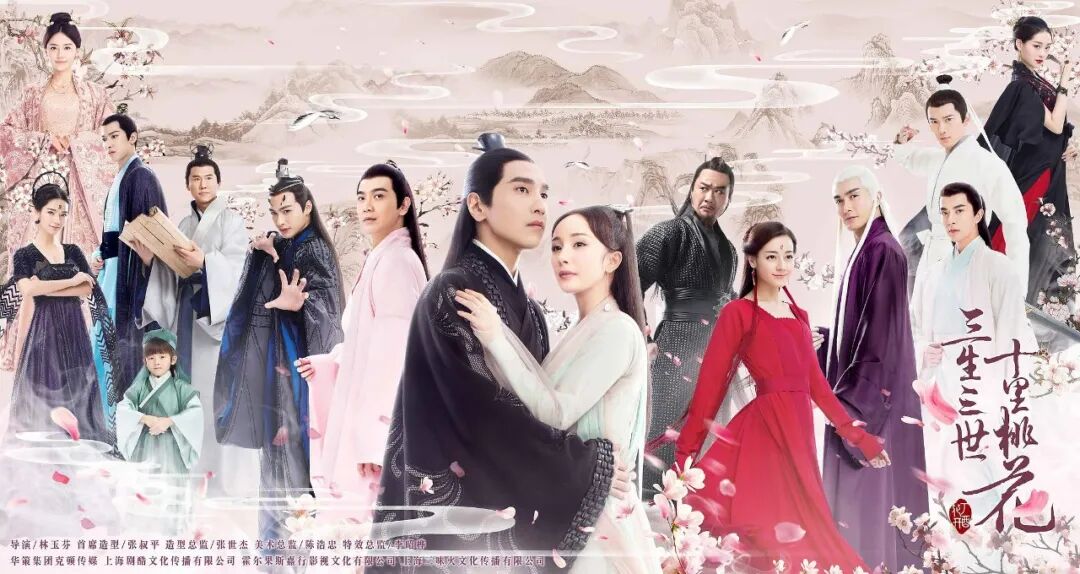
"Eternal Love," the phenomenon-level costume drama of its year, hit ten billion in 29 days of broadcast
"Armed Into Song" went from launch to surpassing 1.2 billion in two months. The road that top long-form dramas take two or three months, or even most of a year, to walk—these people walked it in two months.
To be clear, the metrics aren't the same: short dramas count clicks by short segments, one or two minutes per episode; long dramas run over forty minutes per episode and require deduplication and excluding viewers who swipe away. The numbers can't be directly equated, but the rarity is comparable.
What's more worth pondering is the subject. The ones who pulled this off weren't a film and television company with project approval meetings, producers, and tens of millions in budget—it was six people in a residential building. In the first quarter of this year, active AI short drama producers shrank from 1,216 to 698, and many of those exiting were established players with offices and processes. Large models iterate weekly, and layer upon layer of reporting is a speed bump; a grassroots team thinks of a shot tonight and can gacha-test the effect tomorrow morning.
The First to Cry Out in Pain Aren't the Platforms—It's People, and People Whose Names You Know
At the Golden Rooster Forum, Zhang Yimou Said He Doesn't Know
On November 7, at the Golden Rooster Awards forum in Xiamen, Zhang Yimou was asked about AI. He said AI is a great tool, but "it puts enormous pressure on our entire film industry." He noticed that some AI short videos on phones not only don't charge, "sometimes they even pay you." "Will large numbers of people still go to the cinema?" After a two-second pause, he pushed further: in five or ten years, when what AI makes surpasses us, "what do we do?"—he didn't continue that sentence. "I don't know either."
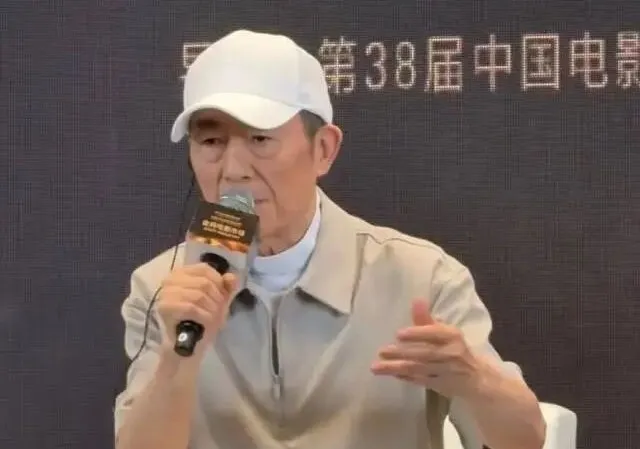
Image source: Weibo
A few days earlier, Shen Teng joked on a variety show: last year he wished to work half the year and rest half the year, and the rest came true, but the work went to zero—he hadn't been on set for over half a year. A film emperor whose starring films have grossed over 40 billion yuan said "really no scripts are looking for him." Of course, it's not that he can't get roles—he'd rather stay idle than take anything casually; but when even he says this, the industry's temperature needs no further explanation.
At Weibo Movie Night in June, Dong Zijian took the stage to accept an award and pivoted: "Let me reintroduce myself—I'm still actor Dong Zijian. I'm very free lately. Thank you, welcome to offer me roles." Liu Haoran at the same event shouted to the audience "find me work," and Cheng Xiao said on the red carpet, "Look at me more, my schedule is wide open."
Mark Chao said in a "People" interview that he received only 10 script offers in the first half of the year; Jia Nailiang, pressed in a livestream about why he keeps doing sales instead of acting, replied in four words: "No drama to shoot"; Liu Tao said: "It's not that I don't act—it's that I really haven't come across a drama that can start filming after just a few conversations."
Directors are struggling too. Lu Chuan, working on a project in Hengdian, watched crews grow fewer and fewer: "It's heartbreaking—this is a matter of livelihood for countless people." iQIYI's Gong Yu put it even more bluntly—in the future, live-action shoots without technical content may become "intangible cultural heritage."
The box office math is even more direct: in the first half of 2026, box office had only reached 16.4 billion yuan by mid-June, compared with 28.2 billion in the same period of 2025. No wonder people ask: how many are still willing to buy a ticket and sit for two hours watching a live-action feature?
These complaints aren't necessarily all correct, but the sentiment is real. Short dramas have sliced audiences' patience into pieces: one hook per minute, no need to set aside a whole evening for a drama. Attention has become the scarcest resource, and cinemas and long-form series are naturally squeezed first.
Once AI pushes costs down further, the impact shifts from "stealing audiences" to "stealing work"—scenes that once required hundreds of people can now be produced by a few people plus a model.
Half the Wall Has Collapsed, and Only Then Do Expensive Things Surface
This is also what I've been saying all along: AI is an equalizing tool.
For the past hundred years, film and television has been a capital-intensive trade: first write a script and knock on doors, then wait for project approval, then raise tens of millions, then go to Hengdian to build sets and hire hundreds of extras.
Now half that wall has collapsed. Creators in Xinxiang and studios in New York tune the same dialogue box, use the same internet—no equipment gap, no regional barrier. People in second-tier cities and people in Silicon Valley spend tens or hundreds of yuan tuning the same batch of models.
So what about those big-budget Hollywood productions that burn money? And the many crews in Hengdian who make a living from traditional shooting? I dare not draw conclusions, but the entire industry's mode of production may really be about to change.
This leveling of the playing field isn't limited to film and television. If you didn't get into a good university or receive professional training, you're often pigeonholed into certain kinds of work, and no matter how brilliant the ideas in your head, you can't get past the gatekeepers. Now, for tens or hundreds of yuan you can fine-tune top-tier models, and one person can do the work of an entire team.
But AI equalization levels the tools first. Anyone can fine-tune a model, but story judgment, character empathy, and shot rhythm—AI can't replace you, nor can it replace that year-plus of empty time. When tools become cheap, the expensive things surface instead: judgment, restraint, and the willingness to feel sad first over the death of a character.
This drama isn't without its critics either. AI faces, a thousand episodes of filler, and whether the Northern Song's policy of "exalting civil and suppressing military" holds up—the controversy never stops.
So he says, don't rush to copy. Luck, effort, and choosing the right script—not one can be missing.
A group of ordinary people, using the cheapest tools, told the story of the Northern Song Dynasty's national integrity and moral character to 1.2 billion viewers. Today they can "enter the Song Dynasty armed," and we can also use AI to do something of our own.
Have you seen this one? If you were given an AI, what would you most want to film? Let's chat in the comments—maybe one day we'll make a short drama together too.
Disclaimer: This article is solely a financial commentary on major companies and does not constitute any investment advice. The corporate data and regulatory events mentioned in this article all come from public information and are for reference only; please refer to official releases for specifics. Image source: the internet. If there is any copyright issue, please contact us for removal.
-
![]()
Real Vehicles Take Center Stage at CIIE — and Finally, a Way Out of Involution
-
![]()
Musk Suddenly Exposes Masayoshi Son's Shocking Secret — SoftBank Stock Plunges 10%
-
The Viral "Big Fat Fish" Reminds Me of the Liveliest Era of the Internet
-
![]()
Lei Jun Takes Personal Charge as Xiaomi Establishes New Department to Storm Porsche's Home Turf
-
![]()
February Rakes In 12 Billion Views! A 54-Year-Old Uncle from Henan Teaches Himself AI and Creates the Hit Short Drama "Armed Into Song"
-
![]()
15 Years, 10 Leaders: Beijing Hyundai Couldn't Hold On to Its First Chinese General Manager
-
![]()
There Are Already Tens of Thousands of Satellites in the Sky—Who Will Stop Them from Colliding?
-
![]()
BMW 330 Bare Car Price Drops to 210,000 Yuan, Volvo EM90 Cut in Half! Car Dealers: Prices Will Fall Another 20% by Year-End