15 Years, 10 Leaders: Beijing Hyundai Couldn't Hold On to Its First Chinese General Manager
 11/10 2026
 548
On the evening of October 30, Beijing Hyundai held an internal farewell party for General Manager Li Fenggang. Two days later, on November 1, he formally stepped down. The three-year contract he had signed did not even last a full year—it fell short by nine days.
As the first Chinese general manager in Beijing Hyundai's 24-year history, Li Fenggang's departure seemed abrupt, but the warning signs had been there for a long time. According to an exclusive report by Yicai, during his year in office, Beijing Hyundai's board of directors did not conduct even a single substantive deliberation.
The general manager's seat was filled by a Chinese national, yet the two shareholders dragged out even the annual sales target until September before reaching an agreement. Hyundai handed Li Fenggang a Chinese business card, but the key to the boardroom remained split evenly between the Chinese and Korean sides.
Rewind to a year ago, when the appointment was first announced—there were actually plenty of reasons for outside observers to be optimistic.
At that time, Hyundai Motor had just welcomed its first non-Korean global CEO in its history, José Muñoz, whose core philosophy was summed up by the media as "running local markets with people who understand those markets best." Twelve days before Li Fenggang took office, Beijing Hyundai grandly unveiled its "Smart Start 2030 Plan," vowing to launch 20 new models within four to five years. And 2025 sales did indeed recover from 154,200 units the previous year to roughly 210,000 units.
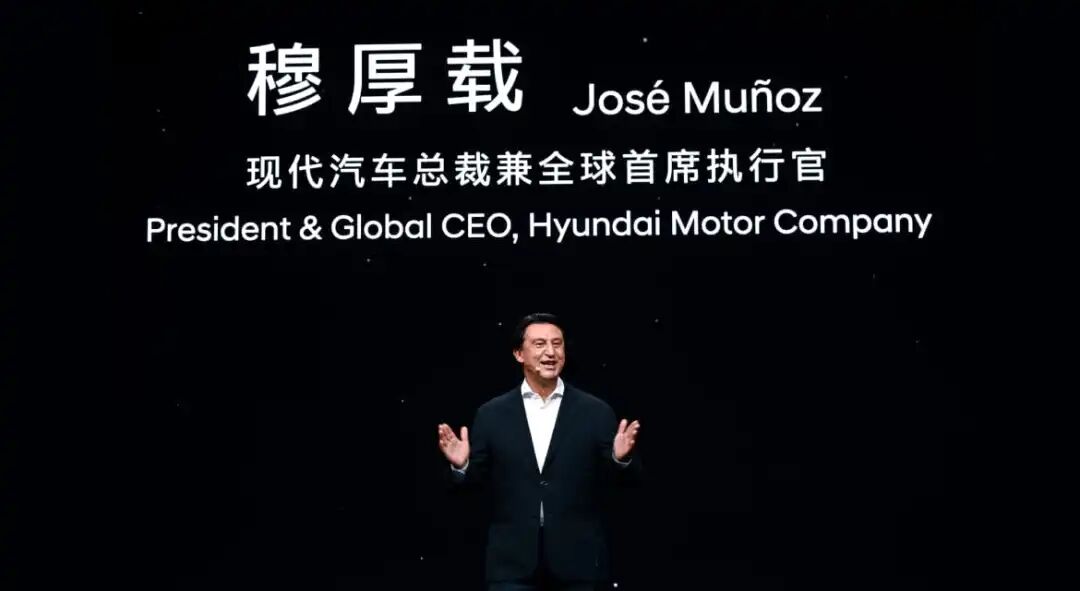
▲ Hyundai Motor Global CEO José Muñoz at the 2026 Beijing Auto Show. Source: Hyundai Motor official news gallery
New leader, new plan, recovering curve—everything seemed to be heading in the right direction.
The problem lay where the new plan couldn't reach. According to Beijing Youth Daily, the 2026 business target was slow to be finalized: BAIC wanted to push for 260,000 units, while Hyundai wanted to hold at 220,000. "One side wants to protect sales volume, the other wants to reduce losses; in the end, they could only go their separate ways."
The 50:50 equity ratio was once the guarantee of cooperation between the two sides. When cars sold well, each side contributed effort and shared the profits. When cars didn't sell, protect sales volume or protect profits? Whose costs to cut? Whose suppliers to use? None of these could bypass the consent of both parties.
Sitting on the Korean side, what needed cutting was the Korean side's own costs.
Under the agreement of 50% ownership each by BAIC and Hyundai, Beijing Hyundai's general manager is appointed by the Korean side, and the executive deputy general manager is appointed by BAIC. This means the chair Li Fenggang sat in was actually placed on the Korean side; across the long table, representing BAIC, was Chairman Wu Zhoutao.
As it happened, Li Fenggang himself was a pure "localist." Born in 1981, he joined FAW-Volkswagen after graduating from Tsinghua University's Department of Mechanical Engineering in 2003. He worked his way up through the FAW system for 22 years, from product engineer to executive deputy general manager of FAW Audi Sales Company, and was once the youngest senior management cadre in FAW Group. In September 2025, FAW transferred him out of FAW Audi ahead of schedule; two months later, he transformed into a representative of the Korean side and parachuted into Beijing Hyundai.
A Chinese person from a FAW background, representing the Korean side to drive localization. The appointment letter was easy to write; every step that followed was difficult.
The one who sent him was the Korean side, whose bottom line this year was to hold 220,000 units, reduce subsidies, and lose less money. But the outside world watched him through the lens of "localization," hoping he could make Beijing Hyundai as agile and cost-effective as Chinese domestic automakers. Yet once localization landed on the balance sheet, the two hardest bones were cost reduction and R&D: cost reduction meant touching the Korean suppliers that accounted for 70-80%; R&D meant begging the Yantai Technical Center, which is directly managed by Hyundai headquarters.
Every step Li Fenggang pushed forward, he ran into "his own people"—the very ones who sent him.
Cost reduction. Beijing Hyundai's existing fuel vehicle business remains deeply tied to Korea's R&D and procurement systems. According to Yicai, 70-80% of its supplier system is Korean. The Chinese shareholder proposed relatively high cost-reduction targets. Although the Korean side verbally agreed to reduce costs, it preferred to preserve the existing supply chain ecosystem. Put plainly, the costs Li Fenggang's knife was meant to cut were precisely the business of the Korean side's own brothers.
If he cut too hard, how would the Korean side that appointed him view him? But if he couldn't cut, the word "localization" could only remain forever in the appointment press release.
R&D. The Yantai Technical Center, which provides R&D support for Beijing Hyundai, is directly managed by Hyundai Motor and operates in parallel with the Shanghai R&D Center. Its direct superior is the Korean headquarters, not Beijing Hyundai. According to Economic Observer, a considerable portion of Li Fenggang's energy went into "taking the Korean R&D team out to dinner." The R&D support the general manager needed had to be obtained through coordination. The appointment letter gave him the title but did not automatically put R&D resources in his hands.
Personnel. Citing informed sources, within the management hierarchy dispatched by the Korean side, progress in supplementing Chinese personnel was extremely limited, and key positions remained mainly held by Korean nationals. The resource allocation power and decision-making authority Li Fenggang actually received were severely mismatched with his title.
The Beijing Auto Show in April this year was probably the most dignified moment for this business card. Hyundai Motor moved its global media roundtable to Beijing, with Global CEO José Muñoz, Beijing Hyundai Chairman Wu Zhoutao, General Manager Li Fenggang, Standing Deputy General Manager Li Shuangshuang, and Hyundai China Chief Technology Officer Heo Jae-ho lined up in a row. On stage, Muñoz reflected that "success makes it easy to become complacent and be overtaken by competitors"; Li Fenggang, meanwhile, spoke at length about design, emphasizing that Beijing Hyundai "chooses to be itself" and reiterating that "safety and quality are always the bottom line of car-making."
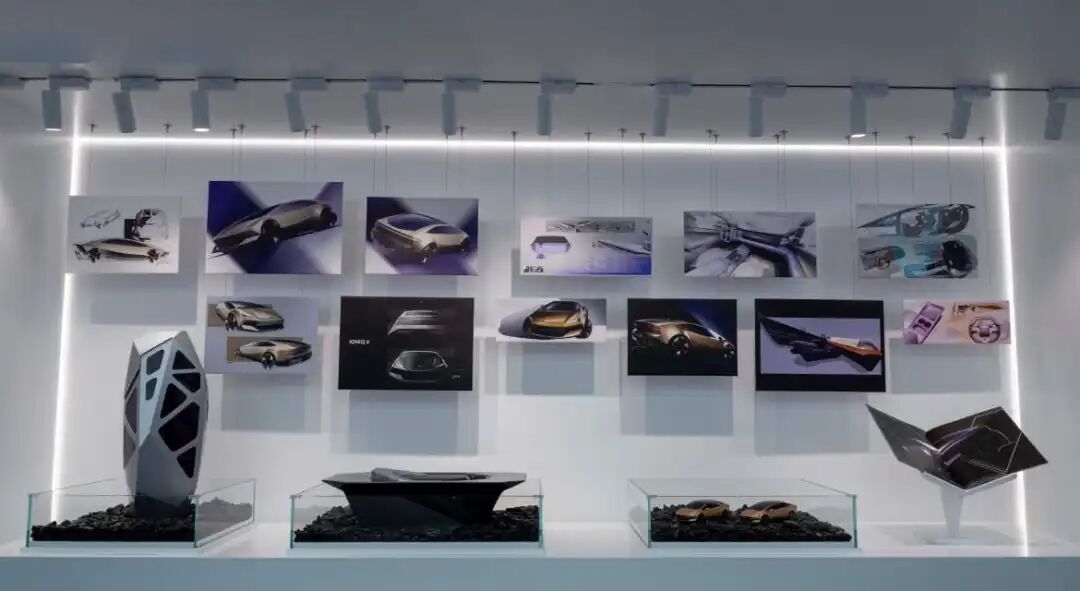
▲ IONIQ V design display at the 2026 Beijing Auto Show. Source: Hyundai Motor official news gallery
Looking up from the audience, Chinese and Korean shareholders, the global headquarters, and the Chinese local team were all neatly arranged—a scene of complete unity.
Three months later, the company couldn't even consistently issue monthly sales targets to dealers.
Two insurance policies became two veto votes.
The chair placed on the Korean side was only Li Fenggang's personal difficulty. Looking one level up, at the board of directors, what got stuck became the entire company.
Beijing Hyundai has never lacked grand long-term goals. At its 20th anniversary in 2022, it released the "2025 Renewal Plan," aiming for sales of over 500,000 units by 2025. Actual sales in 2025 were about 210,000 units, less than half the target. By October 2025, the "Smart Start 2030 Plan" once again wrote down "500,000 units," only with the deadline pushed back to 2030; in March this year, Muñoz reiterated Hyundai's mid-term sales target in China at the shareholders' meeting.
500,000 units stayed in the plan; the deadline for delivering results was moved back.
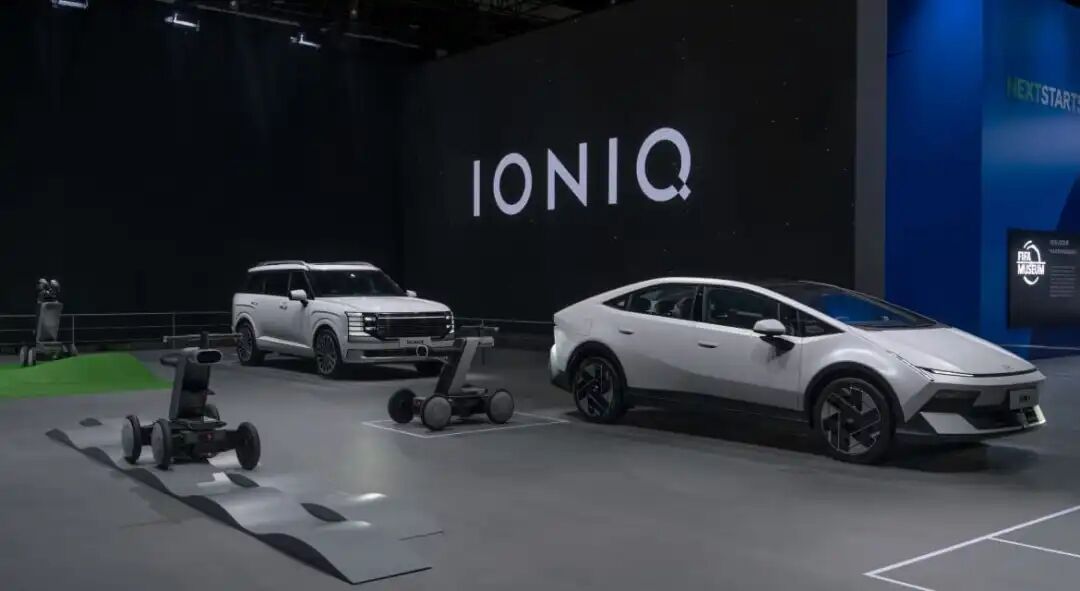
▲ Hyundai Motor booth at the 2026 Beijing Auto Show, with the Palisade and IONIQ V on display. Source: Hyundai Motor official news gallery
What Beijing Hyundai truly lacked was consensus on the year at hand. This year BAIC wanted to push for 260,000 units, advocating large subsidies in exchange for market share; Hyundai only wanted to go with 220,000 units, focusing on fewer subsidies and controlling losses. The two numbers couldn't be reconciled, and the conflict fully erupted in July—the company was once unable to issue sales targets and promotional policies to dealers, and even supplier payments were temporarily suspended.
On the eve of the most important sales season of the year, frontline dealers actually didn't know how many cars they should sell this month or how much discount they could give customers. Before the cars even began selling, the sellers were already waiting on internal company decisions.
This tug-of-war dragged on until September, when the two sides barely squeezed out a consensus: the full-year sales target was set at about 160,000 units, with losses controlled at around 1.9 billion yuan.
This compromise was quite striking: not only was it 50,000 units fewer than the approximately 210,000 units in 2025, it was also lower than BAIC's 260,000 and Hyundai's 220,000. The two shareholders tugged for over half a year and finally settled on a number lower than both sides' original positions. Calculated at 160,000 units, to deliver the 500,000-unit target by 2030, sales would need to more than triple. And this year, they couldn't even resolve the disagreement between 260,000 and 220,000.
For dealers and suppliers, a target downgrade is certainly unpleasant, but not knowing which target to work toward for so long is even worse. The stable expectations the company needs cannot wait until only one quarter of the year remains.
Interestingly, the two shareholders' positions actually underwent a 180-degree reversal over the past three years.
In 2023, Wu Zhoutao, representing BAIC, said something quite pointed in an interview: "In the past, Beijing Hyundai was always over-pursuing sales volume, without improving product competitiveness, and without truly building a brand. So when the market changed, a sales decline was inevitable." Yet three years later, the one eager to use subsidies to boost sales had become BAIC, and the one wanting to protect profits had become Hyundai.
At the auto show in April this year, Wu Zhoutao also publicly stated that in the past, joint ventures had "two-party decision-making," and that over the past year or so, the Korean headquarters had visited China multiple times, and internal decision-making efficiency was "very high," and "our future speed will not be inferior to today's new forces." Less than three months after those words, the company slammed headlong into the July standstill.
Shareholders' positions may change, but the 50:50 equity ratio has not. On matters requiring both parties' consent, neither can make decisions for the other; once the market contracts, decisions often mean someone has to concede.
The market also didn't leave them much time to adjust: Beijing Hyundai's sales fell from a peak of 1.142 million units in 2016 to 154,200 units in 2024, less than one-seventh of that peak.
Facing the same loss, the two shareholders may care about different things. Using subsidies to boost volume can sustain the dealer network, local supply chain, and factory utilization; holding prices and losing less cash affects the group's profit performance. Add the interests of Korean suppliers, and cost reduction is not just a procurement question.
When times are good, disagreements can be deferred; when sales decline, every month of delay comes at a cost. This year's accounting took until September for the two sides to arrive at 160,000 units.
Replacing a general manager takes only a piece of paper.
Compared with adjusting the relationship between the board and shareholders, replacing a general manager is much easier.
Replacing a general manager means the equity ratio, supplier contracts, and board seats all remain untouched. Issue an appointment press release, and the market receives the signal that "we want change"—just as when Li Fenggang took office, the press release said his joining "will play a crucial role in promoting Beijing Hyundai, which is in a critical period of smart electric transformation." And once the turnaround fails, the cost is borne mainly by him personally.
After the departure news spread on October 30, the external line from insiders at Hyundai China consisted of only two sentences: the departure was due to "personal reasons," and "internally, we highly recognize the measures he took during his tenure." Dignified, polite, and watertight—yet it did not answer the question the outside world cared about most: if you recognize his measures, why couldn't you keep him?
In fact, Hyundai Motor has an excellent reference point internally.
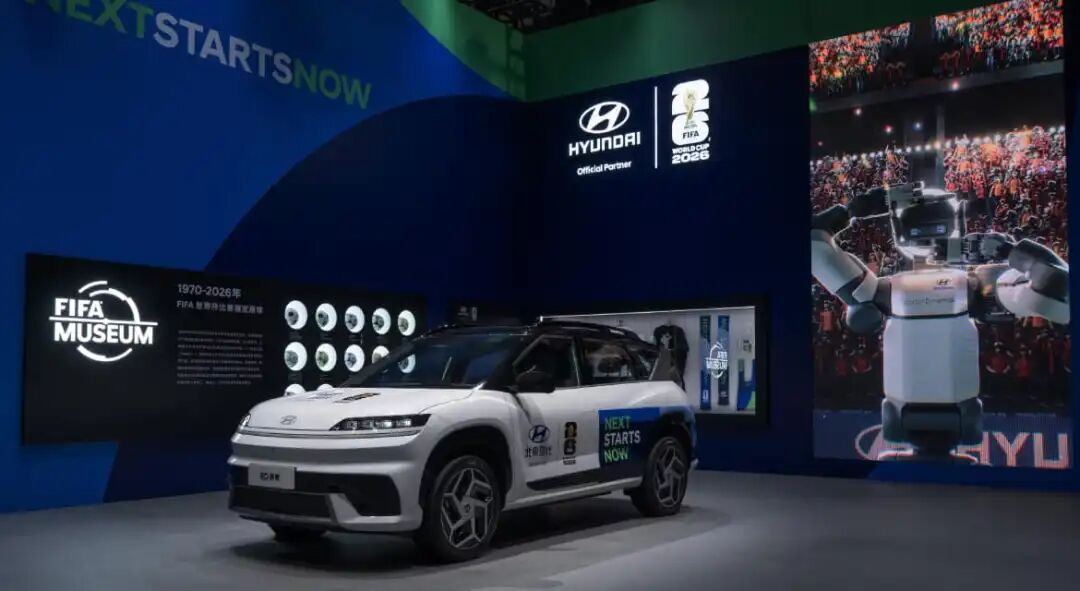
▲ Beijing Hyundai ELEXIO (EO Yi Ou) at the 2026 Beijing Auto Show. Source: Hyundai Motor official news gallery
Just one month before Li Fenggang took office (October 15, 2025), Hyundai Motor India announced that Chief Operating Officer Tarun Garg would be promoted to Managing Director and CEO—the first time in Hyundai's 29 years in India that an Indian local executive would take the helm. Tarun Garg started as a management trainee at Maruti Suzuki, joined Hyundai India in 2019, and when he took over, he also held a 450 billion rupee investment roadmap for India.
The same global CEO José Muñoz, the same "localization" logic. Muñoz's endorsement for the India appointment was: during Tarun Garg's tenure as COO, Hyundai India "achieved record sales and record profits for three consecutive years, and completed India's largest IPO in history in 2024."
Both are "historic first local leaders," but behind the two appointment letters, the companies' foundations are not the same.
At Beijing Hyundai, Li Fenggang arrived from outside, facing two separate dispatch hierarchies—the Korean side and BAIC. Hyundai India, by contrast, is a listed subsidiary controlled by Hyundai Motor; Tarun Garg had worked internally for years and took over a clearer reporting chain. He is also accountable to the board, but he doesn't first have to negotiate annual targets on behalf of two equal shareholders.
How far localization can go depends on how many resources he can mobilize.
Of course, India's market growth, the ebb of China's joint venture market, and the two companies' respective product foundations cannot be left out of the comparison. Holding structure is also no guarantee of success. But the more headwinds Beijing Hyundai faces, the less it can afford repeated waiting on decisions.
Taking a longer view, changing general managers has long been routine at Beijing Hyundai. In September 2017, Hyundai Motor Group Vice Chairman Tan Daohong replaced Zhang Yuanxin, who had served less than a year, as general manager. At the time, Economic Observer calculated that Beijing Hyundai had "changed six general managers in six years," and one of them, Jin Taiyun, said bluntly at the start of his tenure that once the fourth and fifth plants went into production, his mission would be over.
"Beijing Hyundai's Korean executives are largely just mouthpieces for Hyundai Motor headquarters and executors of headquarters' decisions."
Nine years later, the general manager has been replaced by a Chinese person. Between the headquarters and the joint venture, which decisions to hand to the local side remains an unavoidable question.
Li Fenggang did not publicly explain the reason for his departure; performance pressure and personal plans could both be factors. However, the temporary blockage of sales policies and supplier payments has clearly gone beyond a discussion of one general manager's personal ability. After repeated leadership changes, at least one question should be asked: does this position have enough authority to complete the tasks the company assigns to it?
Muñoz can push for the appointment of a Chinese general manager; for that general manager to truly be in charge, BAIC and Hyundai must decide together.
A background rarely mentioned by the outside world: the 50:50 equal equity ratio has long ceased to be a policy-imposed shackle. As early as 2018, China made clear the timetable for opening up foreign equity ratios in the auto industry; since 2022, foreign equity ratio restrictions on passenger vehicle manufacturing have been fully lifted. In February of that year, BMW decisively raised its stake in BMW Brilliance from 50% to 75% and extended the joint venture contract to 2040.
Today, BAIC and Hyundai still each holding half the shares is already a commercial choice of the two companies. Changing the equity ratio is not the only solution, but maintaining it also requires clearly negotiating authorization and dispute-resolution mechanisms. Replacing a general manager takes only a piece of paper; settling these matters requires both shareholders to make real concessions.
He said cars can't be built overnight, yet he himself became an overnight experiment
In all fairness, Li Fenggang was not idle this past year.
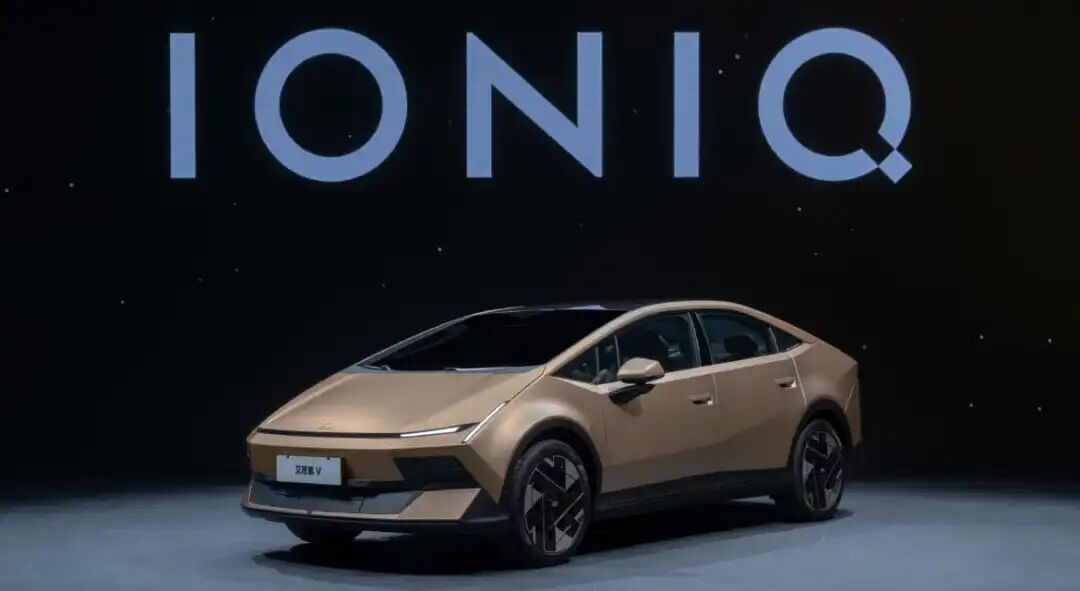
▲ The IONIQ V unveiled at the 2026 Beijing Auto Show. Source: Hyundai Motor official news gallery
He brought the "integrated direct sales" model he had pioneered at FAW Audi to Beijing Hyundai, promoting online vehicle ordering by users and nationwide unified pricing; at the auto show in April this year, the company announced the "Star Ride Plan," declaring 181 new dealerships would be added before 2030; on September 29, its first dedicated pure electric vehicle, the IONIQ V, launched, with a limited-time benefit price pressed down to 99,900 yuan, packed with an 800V platform, CATL battery, Momenta assisted driving, and even a fierce offer of "lifetime whole-vehicle warranty, battery replacement but no repair if degradation exceeds 30%."
But the public opinion arena did not leave room for these moves to breathe. The IONIQ V launched on September 29, and according to Dongchedi statistics, September sales were 28 units. Subsequently, the claim that "only 28 units sold in the first month" spread online, even though its actual effective sales period that month was less than two days. When a company is on a long downhill road, the outside world will ruthlessly magnify any tiny number into yet another piece of evidence of failure.
Looking closely at Li Fenggang's moves this past year—channels, pricing, new car launches—they were mainly oriented toward the market; the board, supply chain, and Yantai R&D center required coordination from shareholders and headquarters. Channel reform and new car performance both need time to be tested. Whether giving him a full three years could pull Beijing Hyundai back, no one knows.
But at least, one cannot evaluate a car by a few days of sales, and then evaluate a transformation by one month of market feedback. The first full sales month for the IONIQ V was October, and just as the calendar turned, Li Fenggang departed on November 1.
In this past year, the line the auto industry remembers most from Li Fenggang came from the China Auto Forum on July 22. At the time he said bluntly: "Some brands, in pursuit of launch speed, have skipped many tests that should have been done, and customers have unfortunately become test subjects." In fact, a year earlier at FAW Audi, he was saying the same thing: "Cars are not fast-moving consumer goods; Audi will never use users as guinea pigs."
He called at the time for the many new energy vehicle users who "have not yet used a complete cycle," saying that judgment of a car's value would only return to rationality after a full cycle is completed.
This reverence for the "complete cycle," he spoke of at FAW Audi, and he was still speaking of it at Beijing Hyundai. Only when it came to his own turn, Beijing Hyundai did not give him a complete cycle.
The next one
As of press time, the candidate for Beijing Hyundai's next general manager has still not been announced.
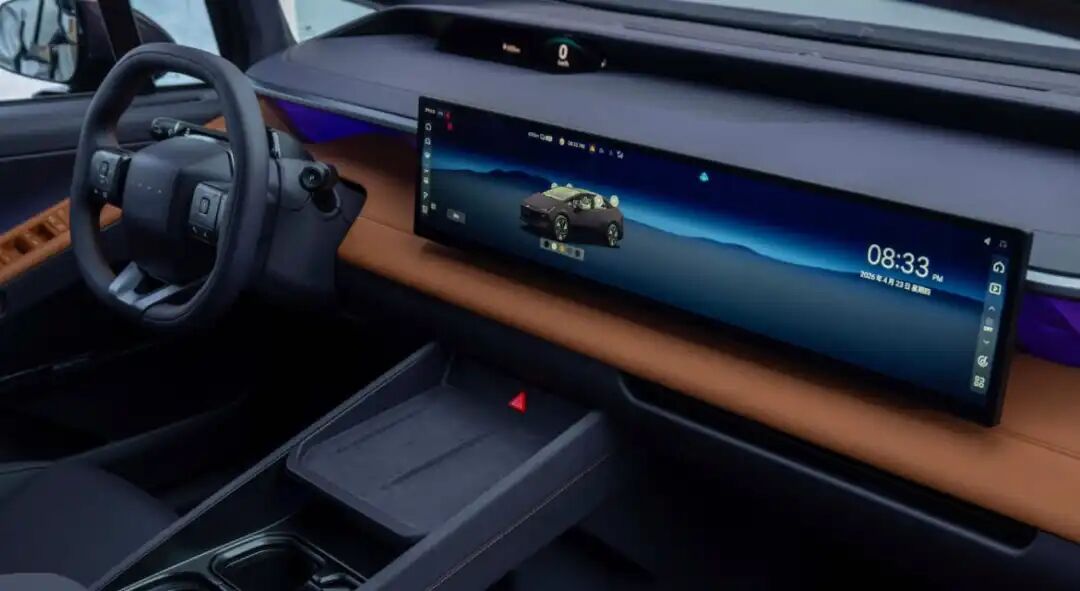
▲ IONIQ V cabin, photographed at the 2026 Beijing Auto Show. Source: Hyundai Motor official news gallery
Will the next person to sit in this chair be Chinese or Korean? Will it be an internal promotion or an outside hire? Undoubtedly this will again become a weather vane for outside interpretation. But judging by the past year's circumstances, what matters more than the choice of person is whether BAIC and Hyundai can actually calculate a common denominator between "defending sales" and "defending profits," whether the knife of cost reduction can truly touch Korean suppliers, and whether the Yantai R&D center can truly heed the general manager's direction.
The time left for the two sides to wrestle is no longer much. The consensus finally squeezed out this year is 160,000 vehicles and a controlled loss of 1.9 billion yuan; who will set next year's target and how, remains unknown to this day. More urgent is that Beijing Hyundai's 30-year joint venture term will come to an end in 2032, and the endpoint of that grand "Smart Start 2030 Plan" is only two years short of the joint venture contract's expiration.
At the end of that industry forum in July, Li Fenggang left a sigh: "Running a business is like being a person—time reveals the heart." Unfortunately, he advocated that things cannot be rushed, yet he himself became a rushed experiment amid shareholder games. Beijing Hyundai, after all, did not give him the "time."
Smart Car Star · Frontline Observations of the Intelligent Vehicle Industry
Follow Smart Car Star to see the real ledger of the intelligent vehicle industry
Hit "Wow" so more peers can see it · See you in the comments
Reference sources
[1] Yicai: "Beijing Hyundai General Manager Li Fenggang to Depart," October 30, 2026.
[2] Economic Observer: "Li Fenggang Departs One Year After Joining, Beijing Hyundai Transformation Hits Another Setback," October 31, 2026.
[3] Beijing Youth Daily: Reports related to Beijing Hyundai General Manager Li Fenggang's departure, November 2026.
[4] Hyundai Motor India: Official announcement of Tarun Garg as General Manager and CEO.
[5] Hyundai Motor: 2026 Beijing Auto Show press release and media image materials, April 24, 2026.
-
![]()
Real Vehicles Take Center Stage at CIIE — and Finally, a Way Out of Involution
-
![]()
Musk Suddenly Exposes Masayoshi Son's Shocking Secret — SoftBank Stock Plunges 10%
-
The Viral "Big Fat Fish" Reminds Me of the Liveliest Era of the Internet
-
![]()
Lei Jun Takes Personal Charge as Xiaomi Establishes New Department to Storm Porsche's Home Turf
-
![]()
February Rakes In 12 Billion Views! A 54-Year-Old Uncle from Henan Teaches Himself AI and Creates the Hit Short Drama "Armed Into Song"
-
![]()
15 Years, 10 Leaders: Beijing Hyundai Couldn't Hold On to Its First Chinese General Manager
-
![]()
There Are Already Tens of Thousands of Satellites in the Sky—Who Will Stop Them from Colliding?
-
![]()
BMW 330 Bare Car Price Drops to 210,000 Yuan, Volvo EM90 Cut in Half! Car Dealers: Prices Will Fall Another 20% by Year-End