Lei Jun Takes Personal Charge as Xiaomi Establishes New Department to Storm Porsche's Home Turf
 11/10 2026
 472
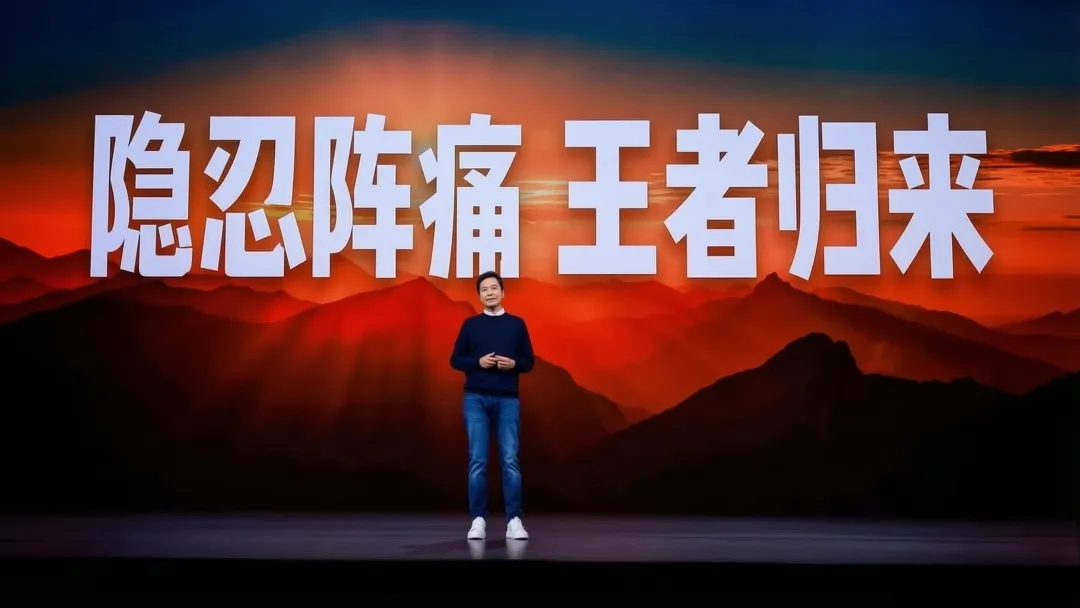 AI-generated image. Source: Weibo
The road from a car's blueprint to the streets of Europe has never been paved by tariffs alone.
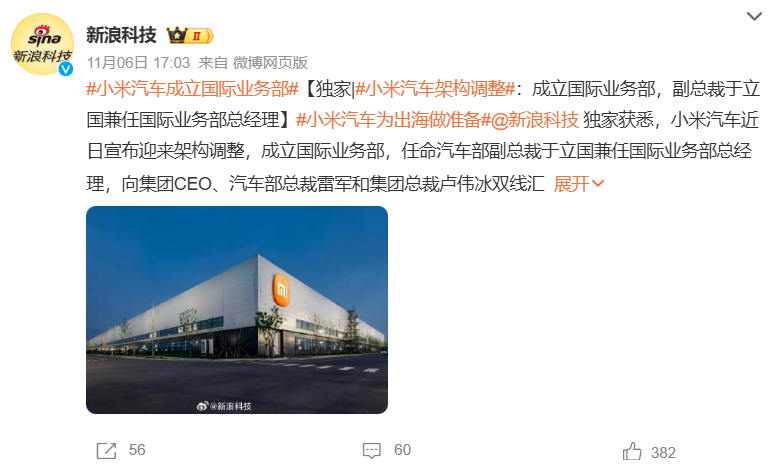
On November 6, Xiaomi Auto quietly redrew its internal org chart. No launch event, no promotional poster—not even a render released to the public.
 Source: Weibo
The details are straightforward enough: a new first-level department, the "International Business Department," has been created, with Yu Liguo, vice president of the Auto Division, serving concurrently as general manager. He reports on two lines—to Lei Jun and to Lu Weibing. Beneath it, eight units were established in one stroke: Automotive International Marketing, GTM, Sales, Network Development, Delivery and Logistics, User Service, General Management, and the overseas regional departments.
That same day, "Xiaomi Auto expected to launch overseas expansion in the second half of 2027" trended on social media.
For the past two years, whenever Xiaomi Auto spoke of Europe, the words were always "plan," "expect," and "will." This time is different. This time it is headcount, budget, and reporting lines—and for any company, those three things matter more than any launch event.
01 From a preparatory team to a first-level department: in between lies an entire budget
Back in May, Xiaomi first set up an "Overseas Business Preparatory Team," also led by Yu Liguo.
Many assumed it was merely a change of name. It was not.
The preparatory team model works like this: staff are borrowed from domestic operations, funding comes through special allocations, and the team disbands once the job is done. It can only conduct research and make recommendations; it cannot sign contracts, nor dare make promises to dealers. A first-level department, by contrast, is a standing organization with headcount and an annual budget. It can set prices, sign contracts, hire people—and must deliver on sales and profit by year-end.
Put plainly, the preparatory team is responsible for proving "this is imaginable," while the first-level department is responsible for proving "this is doable."
One more detail is easy to overlook: this position reports on two lines—one to Lei Jun, one to Lu Weibing. When it needs money, people, or product resources, it does not have to climb one level at a time. The length of the reporting line essentially equals the priority the company assigns to this matter.
The choice of Yu Liguo is telling as well. He came from serving as president of BAIC's Arcfox division, joined Xiaomi in 2021, first oversaw product definition, then intelligent manufacturing and factories; in 2022 he also took on the role of political commissar at the Beijing headquarters managing organization and talent; and in May this year he took over the preparatory team. Product, factory, organization, overseas—he has skipped none of these four steps.
 Source: Weibo
Many are unfamiliar with the term GTM Department. Go-To-Market is not about selling cars; it is about deciding in which country a model makes its debut, with what configuration, at what price, and through whose hands. The very existence of this department shows that Xiaomi is not thinking about "shipping cars over," but about "rebuilding the market from scratch."
02 First stop: Germany—a decidedly aggressive move
The timetable was released long ago: launch globalization in the second half of 2027, with Europe as the first stop and Germany at its core; enter right-hand-drive markets in the first half of 2028.
Choosing Germany as the first stop is like opening a store on day one right downstairs from your competitor's headquarters.
Porsche and Mercedes-Benz are both based in Stuttgart, BMW in Munich, and Volkswagen in Wolfsburg. The densest corridor of the global automotive industry runs through southern Germany; a single highway drive passes four century-old companies.
But Xiaomi is not going in empty-handed.
Last year it set up a European R&D center in Munich, and many engineers on the team came from BMW. The work is highly specific: studying European regulations, road conditions, and charging infrastructure, and handling localization adaptation. Using Europeans to build cars for Europe—many Chinese brands have not taken this step, and Xiaomi has chosen the slowest and most expensive path.
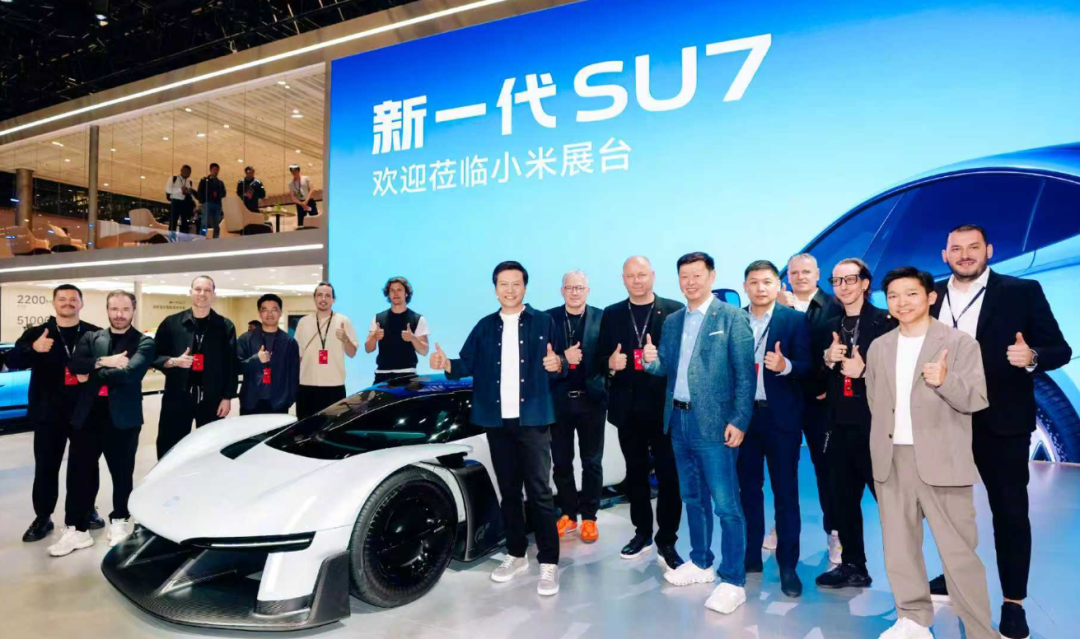
In September this year, at IFA Berlin, Xiaomi Auto signed memoranda of cooperation with the first batch of eight leading German dealer groups. Ernst Dello, Autohaus Dinnebier, and Emil Frey Germany were all on the list—some of them family businesses that have been running for a hundred years.
 Source: Weibo
Eight may not sound like many. But new car sales in Germany go through the authorized dealer system, and signing leading groups is equivalent to securing a ticket into the local retail network.
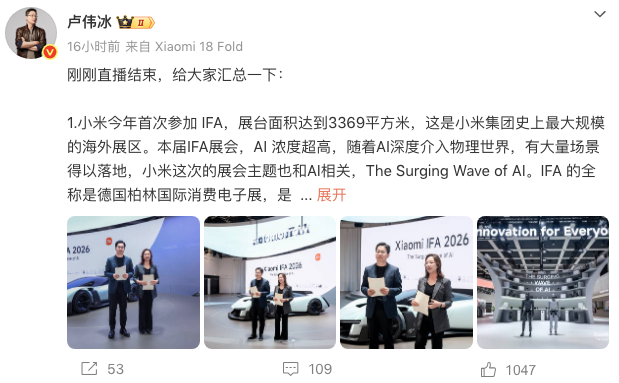
Also disclosed during the same period were testing arrangements: overseas models will be sent to four countries—Sweden, Germany, Spain, and Italy—for high-speed validation and functional testing at venues such as the Arjeplog winter test base and the Nürburgring. On August 26, the overseas official website went live, with a line in English on the homepage: "Officially coming to Europe in 2027."
The products are being pushed forward as well. The right-hand-drive version of the YU7 adapted to overseas regulations has rolled off the line and is undergoing validation, with production and delivery said to begin in early 2027. The overseas official website display area also features the SU7, SU7 Ultra, and the Skynomad aimed at Europe.
 Source: Weibo
Competitors are not standing still either. Tesla's Berlin factory is right there; Volkswagen, Stellantis, and Renault are all rolling out affordable pure electric vehicles; and BYD and MG began building their networks years ago. On this street, those who arrived first have already claimed the parking spaces.
A production line rolls a car off every 76 seconds. To transplant that speed to Germany, orders alone are not enough.
03 Daring to act now is because the domestic leg is strong enough
The confidence still comes from the domestic market. In October this year, Xiaomi Auto's monthly deliveries exceeded 50,000 units, with cumulative deliveries surpassing 800,000. It only began delivering in 2024, and reaching this number in two years is rare even by global standards.
On September 7, the Pengcheng series N70 Pro, N70 Max, and N90 Max went on sale, and the company said locked orders exceeded 10,000 in four minutes. The product line has expanded from a single sedan to sedans, SUVs, and a new series. Add to that Lei Jun's much-talked-about cash reserves, and at least in terms of "whether it can afford to burn money," Xiaomi is more at ease than most new forces.
But making money in China is also getting harder. The 200,000 to 300,000 yuan segment is as crowded this year as a subway at rush hour. The price war has lasted more than a year, and per-vehicle gross margins have been shaved down layer by layer. Moving part of production capacity and attention overseas both diversifies risk and seeks a second leg of growth.
Once in Europe, none of the four hurdles can be avoided.
Tariffs come first. The EU's anti-subsidy tax on Chinese pure electric vehicles directly cuts away a chunk of the price advantage, and pricing has to be recalculated from scratch.
Certification comes second. Whole-vehicle type approval, battery regulations, data compliance, and privacy protection all take time and money, and "sell first, fix later" is simply not accepted.
Channels come third. BBA and Volkswagen have operated in Germany for decades, and users are extremely sensitive to after-sales service, resale value, and response speed. The historical baggage Chinese brands carry here is harder to make up than the product gap.
Pace comes fourth. Sales will not begin until the second half of 2027—nearly two years away. No one can say for sure how European subsidies will be adjusted or where policy will lean. Working backward makes it clearer still: European certification must be completed in 2026, and facelifts, right-hand-drive calibration, and after-sales training all have to be pushed forward. This round of restructuring is not early; if anything, it is somewhat rushed.
So setting up this department is less a charge signal than an early start on the dirtiest and most exhausting part of the work—two years ahead of time.
What really matters is not the day Xiaomi arrives in Europe, but with what price, what service, and what posture it stands its ground after arriving.
Under the trending topic, two sides are arguing enthusiastically.
The optimistic side: domestic sales are already this strong, so why fear going abroad? Lei Jun is going to open a store right at Stuttgart's doorstep. Poaching BMW people in Munich is smarter than cutting prices at home. It will not sell until 2027, yet the department is being set up now—deploying troops two years ahead.
The cautious side: tariffs are right there, so without a price advantage, what will it fight with? Germans trust century-old brands, not spec sheets. If after-sales outlets are not in place, the first batch of owners' word of mouth could collapse. One moment it is right-hand drive first, the next left-hand drive first; even the official line does not match up, which shows the company has not fully thought it through internally.
The two sides are actually not arguing about the same thing. One side is calculating capability; the other is calculating cost.
Watch three points over the next three months: whether those eight memoranda with German dealers turn into formal contracts; how far certification of the European version models has progressed; and how much budget the International Business Department gets in its first year.
Back to the question at the beginning: is this for real this time? From the preparatory team to a first-level department, from eight dealers to the Munich R&D center, from the website's line about 2027 to the right-hand-drive car rolling off the line, the dots have already been connected. Whether it succeeds is another matter, but this is indeed not just sloganeering.
As for whether it can grab a slice of cake in Porsche's home turf, it depends on two things: whether it dares to push prices down, and whether it dares to go heavy on service.
What do you think of Xiaomi Auto's overseas expansion? Let's talk in the comments.
Disclaimer: This article is a financial commentary on major companies and does not constitute any investment advice. The corporate data and regulatory events mentioned are all drawn from public information and are for reference only; the official release shall prevail. Images are from the internet. If there is any copyright issue, please contact us for deletion.
-
![]()
Real Vehicles Take Center Stage at CIIE — and Finally, a Way Out of Involution
-
![]()
Musk Suddenly Exposes Masayoshi Son's Shocking Secret — SoftBank Stock Plunges 10%
-
The Viral "Big Fat Fish" Reminds Me of the Liveliest Era of the Internet
-
![]()
Lei Jun Takes Personal Charge as Xiaomi Establishes New Department to Storm Porsche's Home Turf
-
![]()
February Rakes In 12 Billion Views! A 54-Year-Old Uncle from Henan Teaches Himself AI and Creates the Hit Short Drama "Armed Into Song"
-
![]()
15 Years, 10 Leaders: Beijing Hyundai Couldn't Hold On to Its First Chinese General Manager
-
![]()
There Are Already Tens of Thousands of Satellites in the Sky—Who Will Stop Them from Colliding?
-
![]()
BMW 330 Bare Car Price Drops to 210,000 Yuan, Volvo EM90 Cut in Half! Car Dealers: Prices Will Fall Another 20% by Year-End