Zhang Yiming: ByteDance AI to Catch Up with OpenAI and Anthropic by 2029 at the Earliest
 11/13 2026
 564
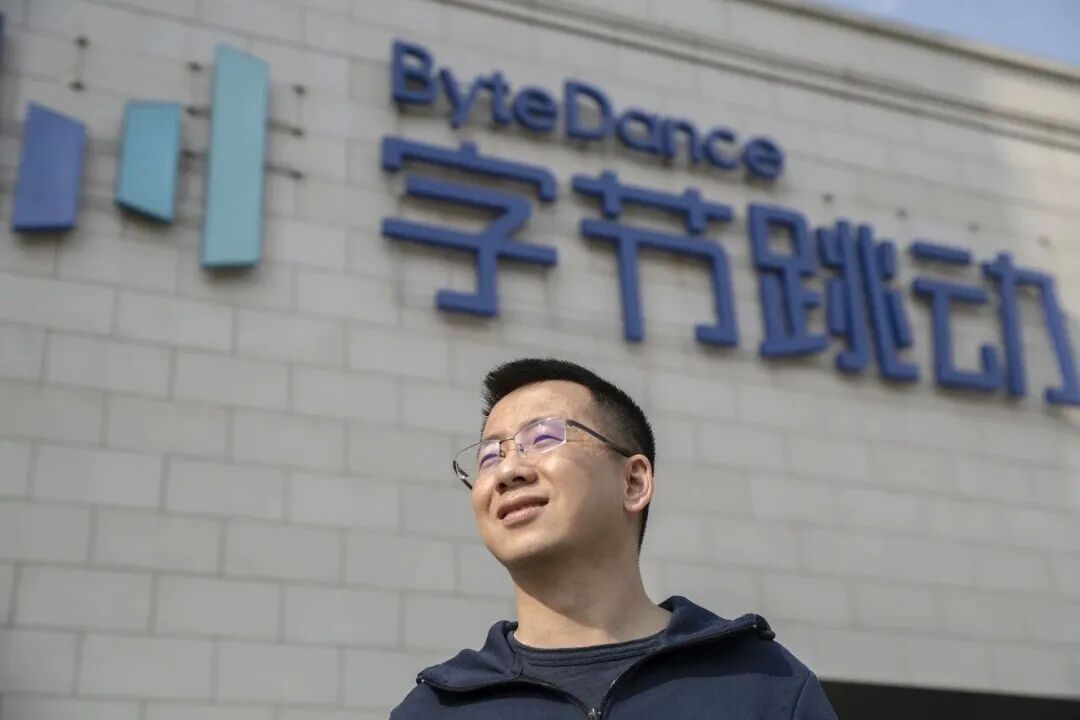

A development roadmap for AI
Image source: Internet (contact us for removal if infringing). Partially AI-generated.
Zhang Yiming has given ByteDance AI a deadline—but the most telling part of that deadline isn't the number "2029" itself.
According to multiple media reports, at a recent all-hands meeting with the AI team, he said ByteDance is capable of competing with OpenAI and Anthropic, but that genuinely catching up with frontier technology will take "until 2029 or 2030 at the earliest."
In the same internal speech, he conceded something far more specific: the pretraining dataset scale of the Seed series models is "orders of magnitude smaller" than that of leading competitors.
Most discussions will fixate on "whether three years is enough." But lay out the true current state of ByteDance AI, and a more fundamental question emerges: what exactly does Zhang Yiming mean by "catch up"?
At the AI application layer, ByteDance's numbers are crushing. Doubao hit 419 million MAU in September 2026—more than double the combined total of Qwen and DeepSeek. Daily average token calls exceeded 180 trillion in June, growing more than 1,500-fold since launch. Volcano Engine's token share of the public cloud MaaS market reached 49.5%, ranking first in China.
If "catch up" meant product scale, user reach, and inference throughput, ByteDance wouldn't need to wait until 2029.
But he explicitly said "frontier technology." And competition in frontier technology is a completely different game from the product competition ByteDance excels at.

An AI battle torn between top and bottom
The most noteworthy feature of ByteDance AI today isn't that it's lagging—it's the severe misalignment between its upper and lower halves.
The upper half is the application layer, and it's blazing hot. Doubao, leveraging a free strategy plus Douyin's traffic funnel, has built a scale advantage in China's consumer market with virtually no rival.
The video generation model Seedance is an even more underappreciated asset: after OpenAI retreated from the AI video field and shut down Sora-related services, Seedance stepped in to fill the gap and capture the market.
Backed by Douyin, ByteDance possesses the world's largest and most freshly updated video corpus—a structural advantage no text-centric company can replicate with capital alone.
According to LatePost, Seedance's annualized revenue has reached the $2 billion level—over 1 billion yuan per month—with the vast majority coming from enterprise customers, basically enough to offset Doubao's compute costs.
The lower half is the underlying foundation models, and it's relatively quiet. The most recent major release of the Seed language flagship model was Seed 2.1 in June 2026.
Among China's leading AI companies, Seed is the only team that has not launched a language model ranked at the very forefront of mainstream global evaluations.
ByteDance CEO Liang Rubo also publicly admitted at the August 2026 mid-year all-hands meeting that the gap between its large language models and leading overseas models "has widened somewhat."
This misalignment is not an accidental product-rhythm issue—it's dictated by ByteDance's organizational DNA.
What this company has always excelled at is "using engineering capability and distribution efficiency to push an already-validated demand to the extreme," rather than "being the first to define the boundaries of next-generation capabilities amid the uncertainty of basic research."
Doubao's success rests largely on ByteDance's exceptionally strong product operations, recommendation algorithms, and user-acquisition budgets—not on a generational advantage of the Seed model over competitors.
The 2029 deadline Zhang Yiming gave is essentially time allotted for a course correction at the genetic level.

The data divide is harder to bridge with money than the compute divide
When discussing the gap between Chinese and overseas large models, compute is always the first variable raised.
ByteDance's compute investment is indeed aggressive: 2026 AI infrastructure capital expenditure was raised to over 200 billion yuan—an increase of at least 25% from the plan at the start of the year—and some reports say it is evaluating pushing capital expenditure as high as $70 billion.
In Nvidia chip procurement, ByteDance is also at the forefront in China, planning to invest about 100 billion yuan in AI chip purchases in 2026, up 17.6% from 2025.
But the problem Zhang Yiming himself identified is harder to solve than compute. He was talking about pretraining datasets being "orders of magnitude smaller."
At a stage when Scaling Laws still dominate the evolution of frontier models, data scale isn't just a matter of "quantity"—it directly determines a model's capability ceiling in long-tail knowledge, multilingual coverage, complex reasoning, and open-ended tasks.
ByteDance has an extremely rich content ecosystem in China, but when it goes global to obtain high-quality, multilingual, high-knowledge-density corpora, it runs into a wall jointly erected by copyright systems, data barriers, and geopolitical realities.
That wall cannot be torn down simply by increasing capital expenditure. You can buy more GPUs, but you cannot buy the legal right to use—and the cleaning pipeline of—a global high-quality corpus that has accumulated over twenty years.
This is also why Zhang Yiming reiterated one discipline in the same speech: no reliance on distillation.
In the realistic context of domestic large models, fine-tuning with GPT or Claude outputs is a well-known efficiency shortcut.
Internally at ByteDance, across the three milestones of DeepSeek-R1's release, Blackwell deployment, and Kimi K3's open sourcing, there were three discussions on whether to enable a distillation plan—and all three were rejected by Zhang Yiming.
His judgment was blunt: distillation can quickly close the gap with competitors, but it only makes you an imitator—true transcendence is exceedingly difficult to achieve.
This is a choice that comes with a cost. Refusing distillation means the Seed language flagship model must endure a period of "not looking good enough" on public leaderboards, during which competitors can use distillation to rapidly boost benchmark scores and win customers and mindshare.
Zhang Yiming is willing to accept this cost, which shows he at least understands one thing: competition in frontier models ultimately rewards those who define the boundaries of capability, not those who fit other people's answers.
But the cruel part of this path is that it offers no guarantee that spending the money and enduring the lag will definitely get you to the finish line.

The organization is "industrializing," but frontier research is not an assembly line
ByteDance's transformation of Seed is another key facet for understanding the company's AI strategy.
After recruiting Wu Yonghui from Google DeepMind in 2025, Seed completed an architectural overhaul in 2026 that outsiders dubbed a "grand troop reorganization," forming first-level departments such as Pretrain Data, Horizon RL, Product Posttrain-Work, and Product Posttrain-Chat, plus a subsequently established safety and alignment section—essentially bringing a highly clear, industrialized division-of-labor system into shape.
The intent behind this architecture is unmistakable: transform large model R&D from a workshop model of "a few geniuses leading a small team" into a manageable, scalable, accountable engineering assembly line.
Pretraining data was consolidated into a unified omni-modal supply; reinforcement learning was singled out as the key lever for widening model gaps; and post-training was clearly split along commercial lines into B-end agentic scenarios and C-end chat scenarios.
From the perspective of organizational design, this is almost the optimal expression of ByteDance's engineering DNA.
But there is a tension here that is easy to overlook. Breakthroughs in frontier models do not entirely follow the logic of an industrial assembly line.
An assembly line excels at scaled optimization under an established paradigm—pushing yield from 80% to 95%. But "catching up with the frontier" requires making correct directional judgments where the paradigm has not yet converged, and identifying amid countless failed training runs which scaling path is worth continuing to bet on.
The latter depends not only on organizational efficiency, but also on research taste, a culture of trial and error, and space that tolerates "smart people exploring in ways that look inefficient."
The departure of Seed evaluation head Huang Wenhao during the architectural adjustment to start his own venture is a subtle footnote: when the R&D process is cut finely enough and standardized enough, the room for generalist researchers accustomed to leading model training from 0 to 1 may instead be compressed inside the giant.
ByteDance spent a year transforming Seed from a "guerrilla force" into a "regular army," and this step had to be taken. But whether the regular army can win the map-less war of frontier research is another matter entirely.

The "catch-up line" of OpenAI and Anthropic is itself moving
When discussing whether ByteDance can catch up by 2029, there is another implicit assumption that needs to be dismantled: will OpenAI and Anthropic stand still and wait for it?
Look at the financial curves and you know the answer. OpenAI's third-quarter 2026 revenue reached $10 billion, up nearly 50% quarter over quarter, with annualized revenue exceeding $40 billion in August. Anthropic's third-quarter revenue was $17 billion, up 1,127% year over year, with an adjusted operating margin of 15%—and it had already turned operating profit positive in the second quarter.
More importantly, Anthropic's revenue structure is highly concentrated in enterprise-grade APIs and coding scenarios. Claude contributed over 90% of the code internally, and trailing-twelve-month revenue per employee exceeded $6.6 million.
This means its revenue isn't stacked up through the scale effect of C-end subscriptions—it's sticky cash flow generated after embedding into enterprise production processes.
In other words, OpenAI and Anthropic aren't just technologically ahead; their commercialization flywheels are already spinning.
Anthropic's turn to profitability means it can use part of its operating cash flow to fund the next round of R&D investment, rather than relying entirely on external financing to fill the compute black hole.
Although OpenAI is still trading revenue for compute commitments and its negative free cash flow is difficult to reverse in the short term, the sheer scale of $10 billion in quarterly revenue has already given it far more trial-and-error ammunition than most competitors.
ByteDance's AI commercialization ledger, however, has a completely different structure from these two.
Doubao has 419 million MAU, but as of the first half of 2026, the Doubao app generated less than 1 million yuan per day in revenue—mainly from e-commerce commissions—with total revenue in the first half of the year below 100 million yuan.
What truly generates scaled revenue for ByteDance AI is Seedance, at an annualized level of $2 billion, coming from enterprise customers' video generation demand.
This is not to say ByteDance's AI commercialization is poor—it's that there is a considerable disconnect between its cash-cow track and the monetization logic of frontier language models.
Video generation and C-end traffic can support the team and dilute compute costs, but they will not automatically translate into the Seed language foundation model's competitiveness in agentic coding, complex reasoning, and the enterprise-grade API market.
And the latter is precisely where OpenAI and Anthropic's deepest moats lie.


If competition in frontier models continues along the current trajectory over the next three years, then data scale will remain the core barrier, Scaling Laws will still reward the largest pretraining investment, enterprise-grade agents and coding capabilities will remain the main battlefield for widening commercial gaps—and the difficulty for ByteDance to catch up with OpenAI and Anthropic by 2029 will not decline linearly because of 200 billion in capital expenditure and the advancement of a 10-trillion-parameter model.
The structural shortcoming in data, the genetic migration of the organization from product-driven to research-driven, and the commercialization disconnect—each is a variable that must be digested in units of years.
Pretraining of the 10-trillion-parameter model is already underway, benchmarked against Anthropic's most high-end model, but it is still in an early stage, and whether it can ultimately translate into deliverable frontier capabilities remains inconclusive.
But ByteDance holds a card that OpenAI and Anthropic do not: it may be the only company in the world that simultaneously possesses a billion-level C-end distribution network, the world's largest short-video corpus, and scaled enterprise-grade video generation revenue.
If the competitive paradigm for frontier models were to shift at some point—for instance, if multimodality and video understanding became core components of agent capabilities, or if the focus of model competition moved from "benchmark scores" to "penetration depth in real product flows and inference cost efficiency"—then ByteDance's asymmetric advantages would be repriced.
Under that paradigm, Seedance's position in video generation and Doubao's engineering experience accumulated in ultra-large-scale inference scenarios would be worth more than they are today.
So catching up by 2029 is better understood not as a deadline ByteDance set for itself, but as Zhang Yiming's implicit judgment about how much longer the current competitive paradigm can last.
What he is betting on is that competition in frontier models will not forever remain at the level of "who has more data, whose foundation model is smarter," but will at some point return to the battlefield ByteDance knows best: who can bring intelligence into the daily lives of hundreds of millions of people at lower cost, with deeper penetration, and through more natural interaction.
Until then, ByteDance needs to endure a period that does not look so good.
The Seed language foundation model continues to hover in the middle of the rankings; Doubao continues to use massive traffic to dilute computing costs; Seedance continues to quietly make money from enterprise customers; and Seed's thousand-person team, within Wu Yonghui's "five-army" system, is little by little making up lessons in data, in pretraining, and in the gene of shifting from product-driven to research-driven.
Whether three years is enough, no one knows.
But at least Zhang Yiming has not packaged "catching up" as a story that is just around the corner. In an industry filled with narratives of "AGI arriving in two years," a founder willing to publicly say "2029 at the earliest" is itself a piece of information.
It means ByteDance's AI strategy is shifting from "cashing in short-term scale with product capabilities" to "betting on a window of paradigm shift with long-term investment."
If the bet is right, 2029 is the starting point; if the bet is wrong, the timetable will move further back.
-
Tencent Isn't Planning to Lay Off 50% of Its Staff—It Wants Half Its Workforce on the AI Battlefield
-
![]()
Sales Plunge 40%, Two Years of BD Bonuses Canceled: What Prescription Will Dong Xiuhui Write for FAW-Volkswagen?
-
![]()
Zhang Yiming: ByteDance AI to Catch Up with OpenAI and Anthropic by 2029 at the Earliest
-
![]()
Can Honda Thrive Without Leaning on China?
-
![]()
After Orders Exceed 10,000, It Suffers a Fierce Paid Poster Attack: Whose Turf Did the Second-Generation Blue Mountain Step On? | Mingjing Pro
-
![]()
Land Rover Loses First Round: Dutch Court Rules BYD Raid Was a "Fishing Expedition," Ti7 Copying Allegations Still Unresolved | Mingjing Pro
-
![]()
In October, AITO Sold 21,115 Units: Between the M6 and M9, Who Is Driving the Brand's Sales?
-
![]()
Changan Automobile's Domestic Terminal Sales Hit 104,000 in October: Qiyuan Begins to Drive Volume, Deepal at 20,000, Avatr at 2,858