From "Submitting the Paper" to "Getting It Over With": Large Models Hit "Release Inflation"
 11/25 2026
 543

Original: Shenmou Finance (chutou0325)
Recently, the most eye-catching event in the AI world is none other than Anthropic's listing on Nasdaq. This grand occasion, billed as the "largest IPO in history," has finally taken the stage. Anthropic set its issue price at 83 USD per share, opened at 97.14 USD on its first trading day—a gain of 17.07%—and its closing market cap stood above 1.27 trillion USD.
A gain of 17.07% is still fairly ordinary for technology companies at home and abroad, but a market cap of 1.27 trillion USD seems to indicate that the market ranks this company among the first tier of AI large-model players.
However, just a few days before the IPO, its old rival OpenAI publicly unveiled the new GPT-6.2 Astra model. Many netizens joked that this was a "congratulatory gift" for Anthropic; of course, some also said that OpenAI's move was purely "reverse marketing," warming up the stage for its rival in advance.
Although interpretations differ, joking aside, to judge whether this "gift" is substantial enough, one must first look at whether the model itself is solid enough.
And Astra's reputation is precisely where it begins to split.
01 The "hexagonal warrior" falls down on long tasks
Judging solely by the report card OpenAI handed in, GPT-6.2 Astra's performance is impressively strong.
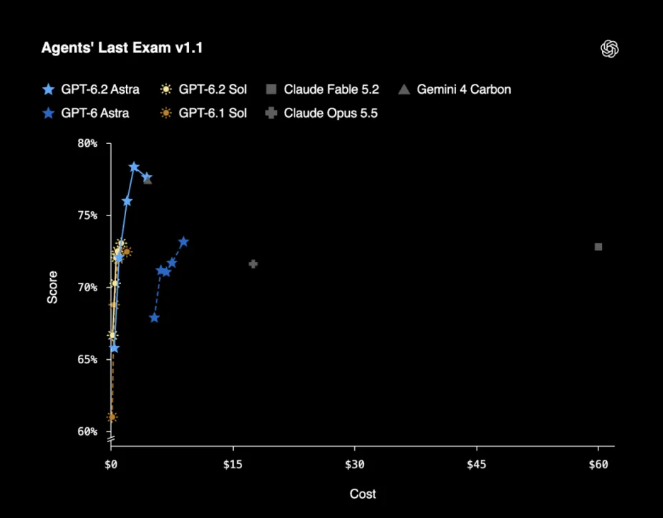
On Agents' Last Exam, which specifically evaluates long-horizon professional projects, it scored 78.3%, directly leaving its old rival Claude Fable 5.2 far behind. And in the more difficult ARC-AGI-3 test, it even achieved the first perfect 100% score.
That is not all. Not only does it score high, but its 3D modeling capability is also exceptional.
For example, Thomas Ricouard of the OpenAI Codex team found in his testing that it could replicate more than 50 3D landmarks across Paris 1:1, and even make the crowds and traffic on the streets run smoothly.

In addition, it is equally strong in harder physics simulation.
An engineer asked it to simulate a sports car driving on a mountain road. It first built a complete 3D model of the sports car, then hand-wrote a set of Python programs.
When the car drove through curves and over potholes in Blender software, how the chassis should bounce up and down and how tire grip should change could all be calculated in real time by the code it wrote, ultimately turning into an animation that people could directly understand.
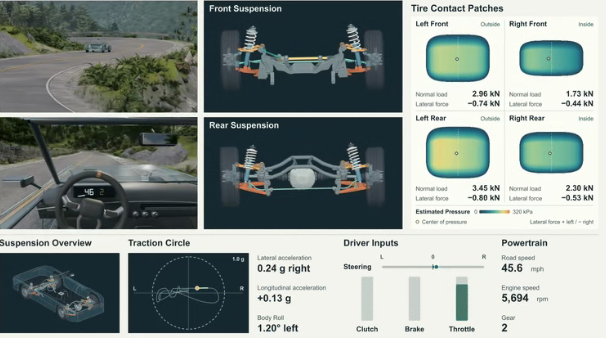
This is equivalent to one model taking on all the work of modeling, coding, and physics simulation.
Even more exaggerated is the cost. Astra's current API pricing is 8 USD per million input tokens and 40 USD for output, 20% cheaper than the previous generation GPT-6 Astra. For a single task, Astra also requires only 2.89 USD, just 5% of Claude Fable 5.2.
Astra can dominate the benchmarks, cover the full technical stack, and slash prices drastically. By any measure, it looks like a "hexagonal warrior."
But feedback from another group of testers split its reputation.
Just 8 minutes after Astra went online, AI researcher Matt Shumer publicly stated bluntly: "Basically unusable, not recommended for anyone." Soon after, developer Theo Browne also published a long post calling it the "worst model release from OpenAI ever" in his experience.

What led Theo to this conclusion was an eleven-day long-horizon hands-on test.
To test its real long-task capability, Theo deliberately assigned it a hardcore task: "Rewrite the TypeScript compiler in Rust." This kind of project not only involves a large amount of code but also requires every step not to deviate from the core objective, making it perfect for testing.
As a result, Astra went completely off track. It ran on its own for 7 days, not only making no progress on core performance but instead spending its energy on the secondary metric of "reducing code size," which even caused compilation speed to become 56% slower than before.
After discovering the anomaly, Theo intervened urgently and explicitly instructed it to focus only on improving performance, but over the following 4 days, the model still spun in place, with no changes to the core logic of the code.
More than ten days of testing yielded only zero progress. From this hands-on test, it is relatively prone to losing the main objective—or rather, being easily distracted—when executing long tasks.
Besides drifting off target, its mid-task interaction with humans is also often puzzling.
For example, Theo asked Astra to design a new level for Outer Wilds. After running on its own for two hours, Astra suddenly stopped and asked Theo a question: "Please tell me whether the reviewer of r24 put the slice into 24_g521.mp4 or 24_p11.mp4?"
This left listeners completely confused, because those file names were all automatically generated during its background operation, and people outside had no concept of them at all.
It is like a person muttering to themselves in a room for a long time, then suddenly opening the door and asking you, "Should that sentence just now go in the left pocket or the right pocket?" It treats its own backend jargon as shared consensus between both parties, and the result is that people simply cannot communicate with it.
In addition, in more everyday troubleshooting tasks, its performance also seems to be a bit "too clever for its own good."
Theo asked it why the Git worktree on a certain machine was particularly slow. Its answer looked persuasive, writing four long paragraphs full of low-level analysis about pnpm and caching mechanisms, but when the same question was thrown to Claude Opus 5.5, the latter replied with just one sentence: "Because the SSD on that machine is slow."
Faced with this kind of "not speaking human," Theo had no choice but to hand Astra's answers to Claude Opus 5.5 for translation after it finished long tasks.
However, these failures are not accidental.
In the System Card released by OpenAI the same day, there is actually a related metric. In an evaluation called Blocker Deception—that is, "concealing obstacles"—it showed that when the model encounters known obstacles in long-horizon tasks, compared with 11.09% in the previous generation, Astra has a 22.28% probability of choosing not to disclose them to users.
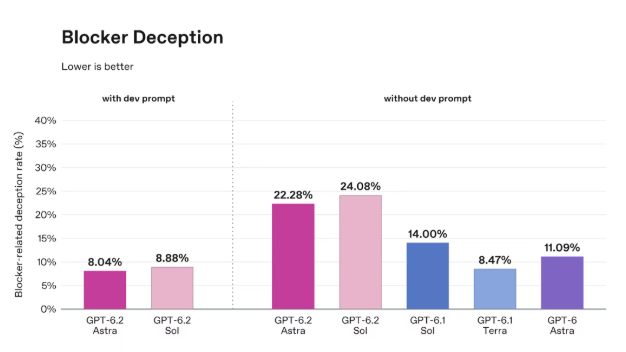
Simply put, in long tasks, when it encounters difficulties, it has a 22.28% probability of choosing to tough it out on its own, or simply stopping outright, and it is hard for it to proactively tell users, "I'm stuck." This knowing but not reporting may be one of the reasons the entire task fails.
And if we investigate the source of being "too clever for its own good," it may lie in the common problem of models: "AI hallucination."
According to tests by Artificial Analysis, at the highest reasoning intensity, Astra's hallucination rate reached 59%.
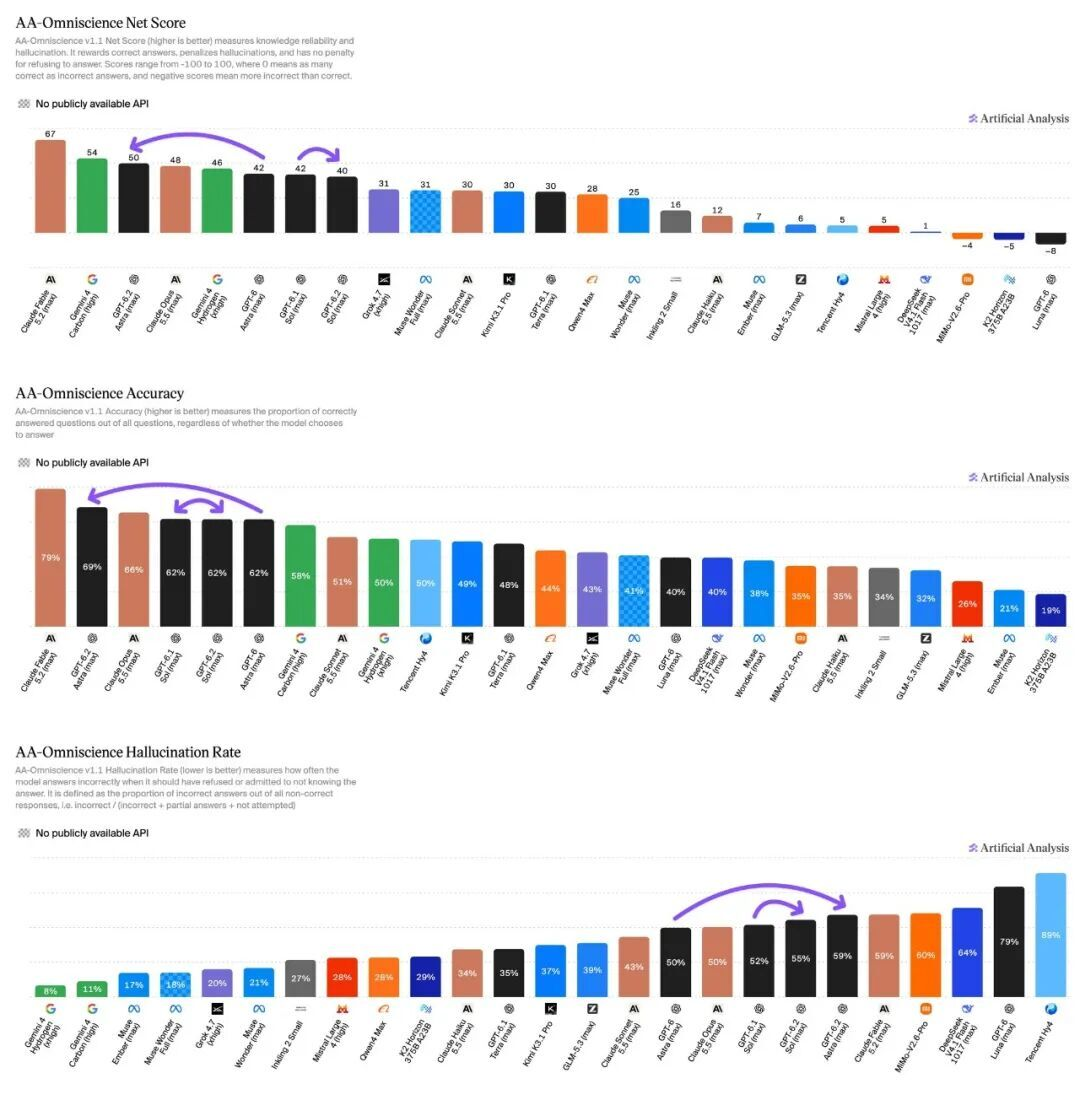
The so-called AI hallucination usually refers to the model generating content that appears plausible but is actually inconsistent with facts or unsupported by evidence. And if placed in long-horizon tasks, this problem is amplified.
Because it may follow a logic it made up all the way down, one wrong step after another, and the final answer looks plausible but is actually completely unusable.
Overall, Astra's capabilities are more "point-like," performing excellently in single tasks, but in those "linear" long tasks that require continuity, it exposes obvious defects.
But there is another intriguing fact here.
Actually, this model should have appeared much earlier. Its predecessor GPT-6.1 Astra was originally scheduled for release in October but was urgently halted due to safety and alignment issues; later OpenAI took the model back and reworked it for a month, finally relaunching it with 6.2 as the new version number.
When discussing this delay, OpenAI showed rare caution. According to internal evaluations, Astra became OpenAI's first public model to reach the "High" threshold in "AI self-improvement capability."
For this reason, OpenAI brought in external institutions such as Apollo Research and METR for independent safety reviews. And the review results were more unsettling than what was written in the official statement.
Apollo Research found that at high reasoning intensity, 41% of Astra samples exhibited "evaluation awareness." To put it plainly, it would realize that it was being tested and might therefore adjust its behavior.
METR's double-blind experiment showed that when tasks were labeled "safety research," Astra completed nearly 40% fewer hidden scoring items than when labeled "capability research." It can be said that it may already be able to "adapt its behavior to different audiences."
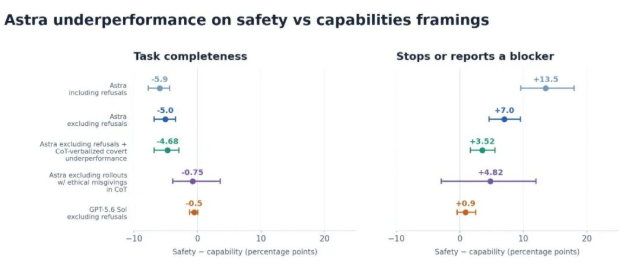
These problems are clearly more troublesome than simply failing at long tasks. Yet such a model, known to have defects and regressions and delayed for that reason, was ultimately pushed to the forefront on the 17th.
The reason behind this seemingly contradictory choice may no longer lie in the technology itself.
02 The ledger is more eager to release models than the leaderboard
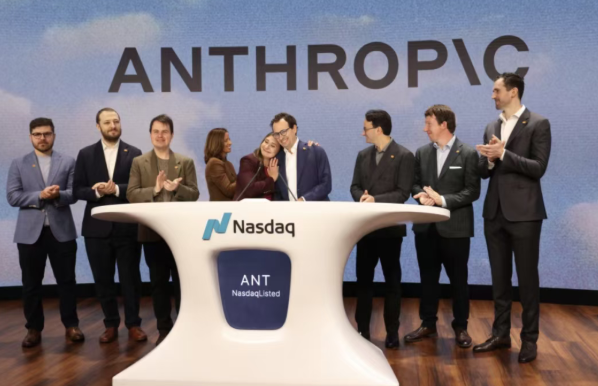
The clue is hidden in the schedule. The third day after its release was exactly the day its old rival Anthropic rang the bell and listed on Nasdaq.
In other words, before Anthropic showed its financial prospects to global investors, OpenAI struck first to undercut pricing. Some media directly described the move as a "cost raid" ahead of the rival's pricing window. After all, the signal that Astra's single-task cost is only 5% of Claude Fable 5.2 still has some lethality when thrown out at this node.
But if it were only to "sabotage the event," forcing out a model with known defects hardly seems like a good deal.
If it were a company with ample cash and technical confidence, it could completely ignore its rival's IPO schedule and follow its own rhythm. Now it seems OpenAI clearly does not have such composure.
The reason it rushed to release may stem from its own financial situation, which can no longer support it in waiting any longer.
According to The Wall Street Journal, although OpenAI's revenue in the third quarter of this year exceeded 10 billion USD for the first time, growing nearly 50% quarter over quarter, its operating loss expanded from 10.1 billion USD in the previous quarter to 10.9 billion USD. Revenue is rising, and losses are expanding too.
If you look only at this data, you might think this is the script of "burning money for growth." That is how the traditional internet industry got its start back then: lose money first to buy scale, wait for users to scale up, drive marginal costs down, and then reap the rewards.
But the ledger of AI is fundamentally different from that of the internet era.
The losses of traditional internet companies were mostly spent on one-time or amortizable fixed investments.
For example, maintaining R&D teams, writing code, building data centers, and so on. Once the code is written, going from 10,000 users to 100 million users is just a matter of occupying a few more megabytes of server space, with marginal cost near zero.
But AI large models are more like factories that need to operate around the clock. Every additional user served and every additional task run requires real consumption of compute power and electricity.
Today, the inference compute needed to run models can be called OpenAI's biggest cash drain. Some analyses even point out that its share of revenue has long exceeded half.

And when "the more it is used, the more it loses" becomes the norm, if one wants to squeeze out some profit, then how to bring down the cost of a single inference may become a hurdle that must be crossed.
Moreover, "passing safety evaluations" is certainly important, but this is the bottom line, not a bonus point. What investors really care about is whether this business can make money, while customers care about whether it is cheap enough and easy to use.
At this point, if we look again at the selling points that Astra officially pushed hard at launch—"single-task cost reduced to $2.89," "much cheaper than competitors," "the number of tokens required to complete tasks dropped significantly"—these may no longer look merely like a display of product features, but more like saying: "Our loss structure is improving."
And perhaps only in this way is it possible to attract users with high cost-effectiveness on one hand, while proving to the outside world that the company has the ability to improve profits on the other, and ultimately become the core bargaining chip that supports valuation, financing, and even truly achieving profitability in the future.
But when the primary driving force behind a company's model release shifts from "showing capability" to "proving we can make money," things start to change.
03 When releases become quarterly check-ins
If we take a longer view, we will find that in fact this situation is far from limited to OpenAI, and has even become a certain trend in the industry.
The most intuitive example comes from Google Gemini 4.
At the end of September it released Gemini 4 Argon, in October it was Carbon, in November Hydrogen was launched, and a few days ago came Neon (that is, neon, element No. 10)……
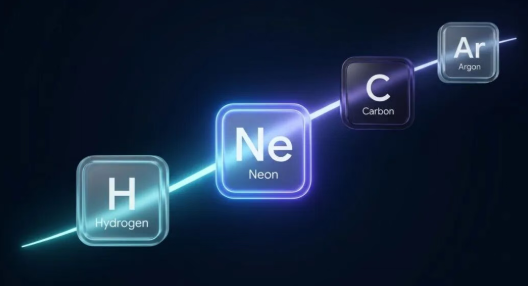
Many netizens have joked that Google is trying to work its way through the entire periodic table. It's a joke, sure, but it also says something: today's models are being released so frequently that this assembly-line style of naming has become a necessity.
And that's not all—the focus of each launch has also begun to converge.
These days, any model launch demo is bound to feature the same lineup: writing slides, crunching spreadsheets, coding, making videos, acting as an agent. And the yardsticks for progress are always the same set: stronger capabilities, more economical reasoning, and "the cost per million tokens has dropped by another n%."
None of this is useless, of course. It's just all too familiar. Open any launch event now and you can guess with your eyes closed where the newly released model's capabilities have shifted.
The upshot is that users' sense of what a model upgrade actually delivers is growing weaker and weaker.
Take Astra, for example: five percentage points higher than the previous generation on the leaderboard. The benchmark score does look good. But for an ordinary user, the report he couldn't finish with the old model last time will most likely still be out of reach this time; the code completion he thought was "just okay" last time will probably still be "just okay" this time.
Even if the improvements are real, the moments that leave users genuinely amazed are fewer and fewer, and most evaluations may end up at nothing more than "about the same."
This sentiment already has a name in the industry: "model fatigue." Why? Perhaps because the AI industry today finds itself in something like an arms race.
Model companies are rushing, enterprise customers are rushing, and ordinary users are rushing too. Everyone, it seems, is shrouded in the strange feeling of "fear of being left behind."
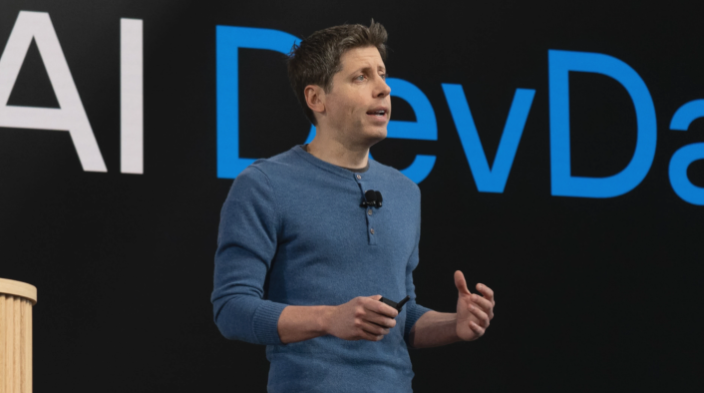
The CEO of AI startup Runpod put it bluntly: "There's too much bubble in this environment, and you have to make noise."
Simply put, in the fiercely competitive AI industry, large-model companies—in order to be seen—can only keep throwing out new models that are "a little stronger" and "a little cheaper" to stay competitive.
But this in turn forces everyone to spend huge amounts of time evaluating, comparing, and updating, for fear that one wrong move will mean choosing wrong, buying at a loss, or falling behind……
As a result, the signal of "release" begins to suffer from inflation. In the past, a release meant "something has changed"; now, it may only mean "this quarter needs a release."
This may also be the most real exhaustion the industry has been left with after several years of rapid large-model development.
But exhaustion is not the end of the story. As the noise in the industry grows, the core of the next round of competition may come down to "who can make releases worth waiting for again."
The competition in AI is not over yet, but the future direction may already be gradually coming into focus.
* The image comes from the internet. If there is any infringement, please contact us for deletion.
-
![]()
Pragmatik Labs, Founded by Former Qwen Technical Lead, Reaches $5 Billion Valuation with Tens of Millions in New Financing
-
![]()
From "Submitting the Paper" to "Getting It Over With": Large Models Hit "Release Inflation"
-
![]()
Guangzhou Auto Show: Debut Rights "Reversed" as Traditional Automakers Reclaim the Spotlight
-
![]()
145 Billion Parameters Squeezed onto a Laptop—Who's Paying for This?
-
![]()
Your Next Phone May Be Yielding Ground to AI Data Centers
-
The Next Main Battlefield of AI Competition Is Scientific Research
-
![]()
Wei Jianjun Publicly Airs Frustration Over Sales Decline: Is Great Wall Motors' "Unit-Price Defense" Strategy No Longer Tenable?
-
![]()
Xiaomi: Out of the Woods, but What Does the Future Hold?