Wei Jianjun Publicly Airs Frustration Over Sales Decline: Is Great Wall Motors' "Unit-Price Defense" Strategy No Longer Tenable?
 11/25 2026
 490
Wei Jianjun poured out his frustrations about Great Wall Motors' sales slump face to face with Yu Donglai, laying his anxiety about the company bare for all to see.
According to media reports, after Pang Dong Lai founder Yu Donglai announced that he would purchase another 310 Tank 700 vehicles for the company's management team, Great Wall Motors Chairman Wei Jianjun traveled to Xuchang on the morning of November 21 to study Pang Dong Lai's operations.
Wei Jianjun livestreamed the entire visit on his personal social media account. During the stream, he took the initiative to open up about his anxiety in recent years. He told Yu Donglai that Great Wall Motors was once the sales champion among China's domestic brands, but has now fallen to ninth place. Pressure from capital, pressure from the media, and sarcasm from competitors have all piled up. "Those who used to be also-rans are now first, and we have gone from first to ninth."

Yu Donglai's response was blunt: "Why do you let their pressure get to you? Just be yourself!"
Wei Jianjun replied: "Great Wall is a bit like Pang Dong Lai. We do not chase volume, but per-vehicle value. Currently, Great Wall's average selling price per vehicle is 180,000 yuan, while most peers average between 100,000 and 110,000 yuan." Wei Jianjun also said that he does care about rankings, but values operating quality more.
The helplessness and reluctance Wei Jianjun showed in front of Yu Donglai precisely reflect Great Wall's most realistic dilemma at present: to stick to per-vehicle value, it must endure shrinking scale; to pursue scale and volume, it must plunge into brutal low-price involution.
01 Domestic Sales Plunge, Stock Price Hits 6-Year Low
Compared with several other traditional domestic automakers, Great Wall Motors' progress is indeed somewhat sluggish.
In terms of sales, Great Wall's full-year sales in 2023 were 1.2307 million vehicles, and 1.2333 million vehicles in 2024, a slight increase. In 2025, sales were 1.324 million vehicles, a year-on-year increase of 7.23%. Entering 2026, total sales in the first three quarters were 920,000 vehicles, actually a slight year-on-year decrease of 0.3%. Among them, domestic sales were 444,000 vehicles, a sharp year-on-year drop of 24%, which was the main reason for the ranking decline.
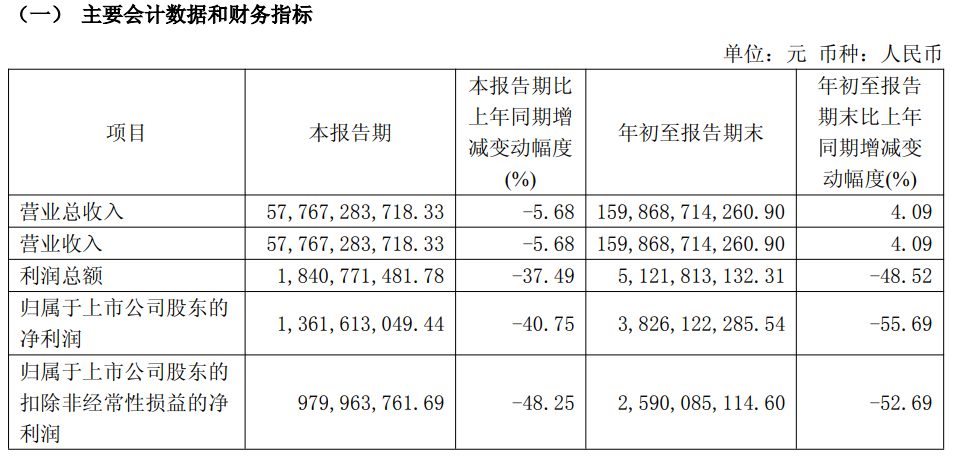
Pressure on the performance side is also significant. In the first three quarters of 2026, revenue was 159.869 billion yuan, a slight year-on-year increase of 4%, but net profit attributable to parent company was 3.826 billion yuan, a sharp year-on-year decline of 55.69%.
As for the stock price, investors have even less to cheer about: as of the close on November 24, Great Wall Motors (601633, SH) fell 1.34% to 12.54 yuan per share, hitting a more than 6-year low, with a total market value of 107.6 billion yuan.
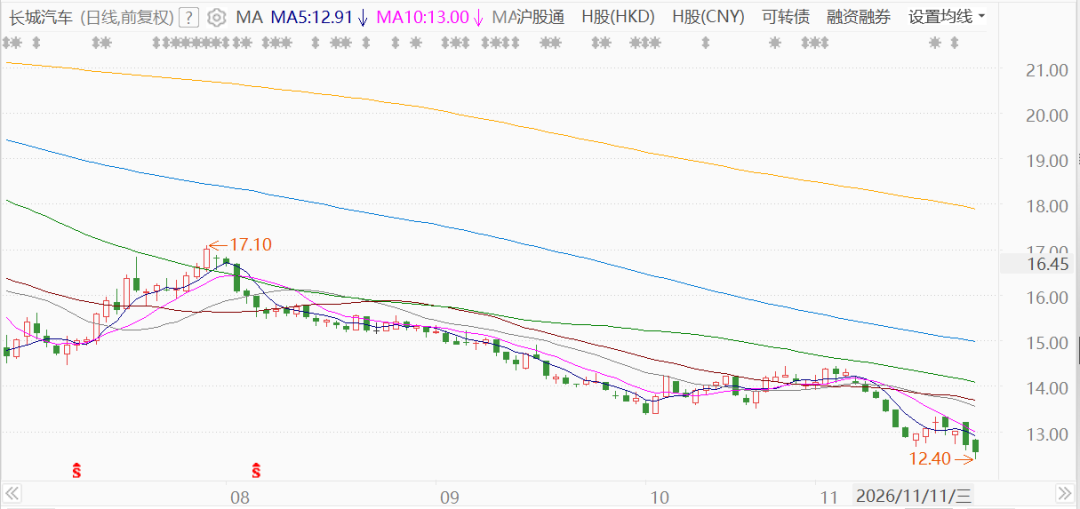
Judging from its performance during the year, Great Wall Motors' stock price has fallen by nearly 44%, and it is difficult to see signs of recovery in the short term. It has shrunk by nearly 80% from the historical high set in October 2021.
All investors - presumably including Wei Jianjun - are asking: What has happened to Great Wall Motors?
02 Facing Three Dilemmas
Overall, Great Wall Motors is facing a contradiction that all asset-heavy automakers cannot avoid: automobile manufacturing naturally requires "scale" to spread costs. When the domestic market continues to shrink, the high-value route can easily become a castle in the air.
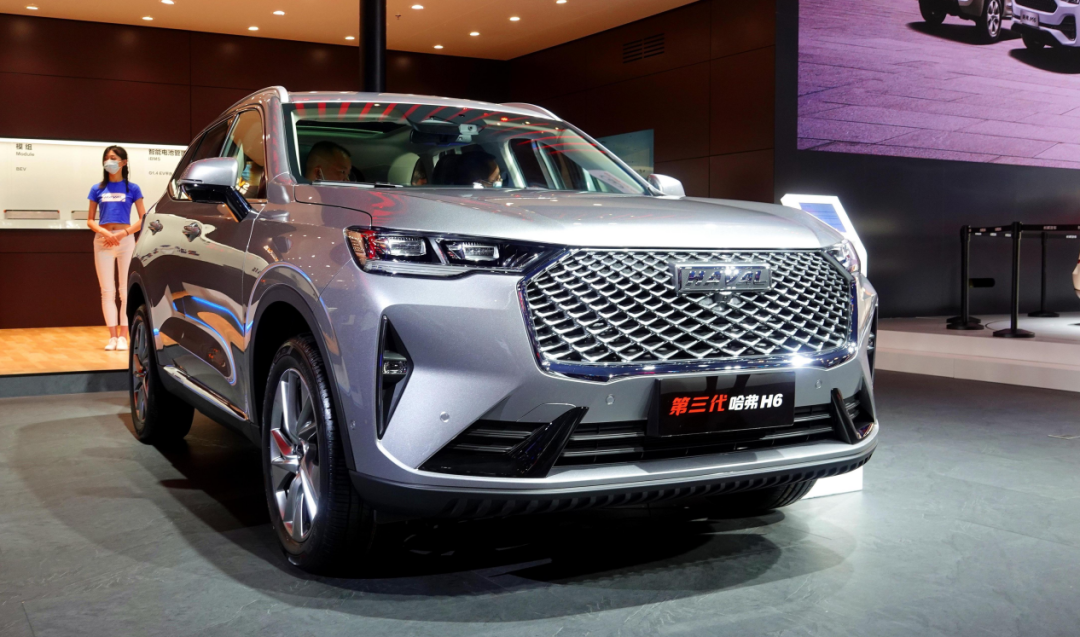
Great Wall's dilemma is first of all the loss of its product base. Haval is the foundation from which Great Wall started. Back then, relying on the hit effect of the Haval H6, it captured the SUV dividend and rose to the top of domestic brand sales. But under the wave of new energy, the mainstream family SUV market has become the most fiercely contested red ocean. Each company's models iterate quickly, pricing is flexible, and intelligent configurations are fully loaded.
However, Haval's transformation pace is relatively slow, and there is a gap in hit models. The halo of the Haval H6 has faded, and it is difficult to carry the overall volume again. In terms of data, Haval's sales in the first three quarters fell year-on-year. The former growth engine is now unable to provide enough volume.
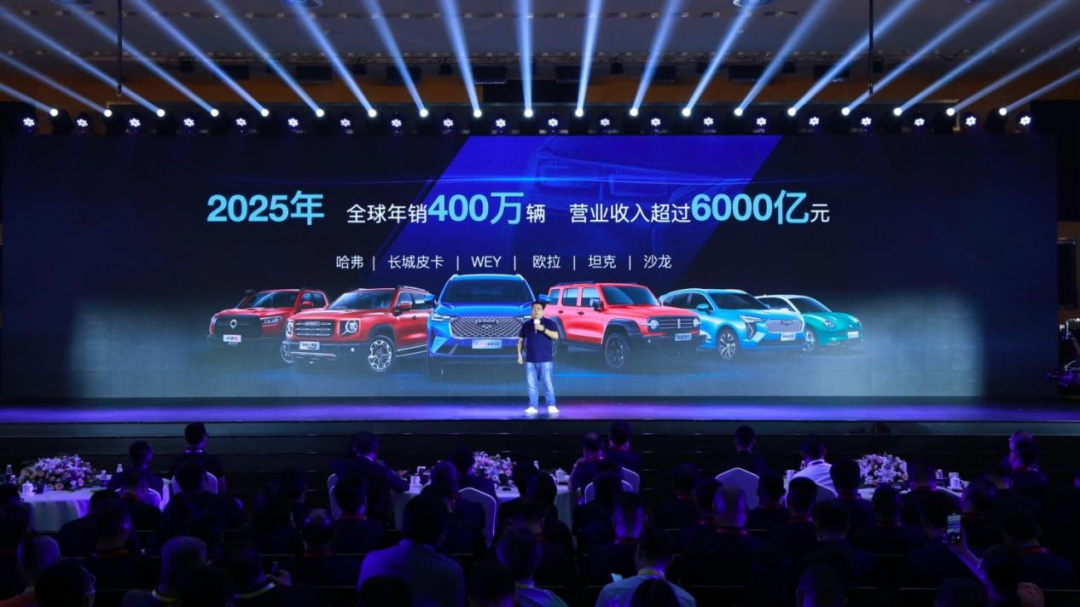
Second is the long-term internal friction of the multi-brand matrix. Great Wall has built five major brands: Haval, Tank, WEY, ORA, and Great Wall Cannon. The original intention was to cover the mass market, high-end off-road, high-end new energy, boutique pure electric, and pickup truck segments in layers. But after years of operation, positioning has wavered, products have overlapped, and naming has been adjusted frequently, consuming a large amount of resources.
At the same time, price differences among models on the same platform and conflicting positioning mean that new models easily cannibalize orders from older ones, and internal competition offsets external growth. Over the years, only Tank has developed an independent IP, but the off-road segment itself has limited capacity. No matter how high the premium of a single brand, it cannot support the volume of the entire group.
Third, the company has sufficient technical reserves, but insufficient conversion into intelligent experience. In terms of four-wheel drive, energy consumption, and off-road capability, Great Wall has hardcore technology recognized by the industry, and Tank's new energy off-road solution has also formed a differentiated barrier.
But when consumers buy new energy vehicles today, their evaluation criteria are no longer just power, chassis, and fuel consumption. Smart cockpits, advanced intelligent driving, smoothness of the in-car system, and OTA iteration speed are all core decision factors. Great Wall has invested heavily in underlying hardware and hybrid architecture, but there is still a gap with leading automakers in intelligent algorithms, user interaction, and continuous iteration capabilities, making it difficult to convert into sustained orders in the mass market.
03 Per-Vehicle Profitability Is Being Squeezed, Eroding Profit Space
At the financial level, the contradiction facing Great Wall Motors is even sharper: revenue can still maintain growth, but profits have contracted significantly.
In the first three quarters of 2026, Great Wall's revenue was 159.869 billion yuan, a year-on-year increase of 4.09%, but net profit attributable to parent company was 3.826 billion yuan, a year-on-year decline of 55.69%.
Revenue rising while profit falling means per-vehicle profitability is being squeezed. Continuous investment in research and development, channels, and marketing, without enough sales to spread it, is constantly eroding profit space.
Wei Jianjun is unwilling to join the price war in order to protect channels and brand premium and avoid falling into the quagmire of selling more and losing more; but the cost is actively giving up mainstream market share.
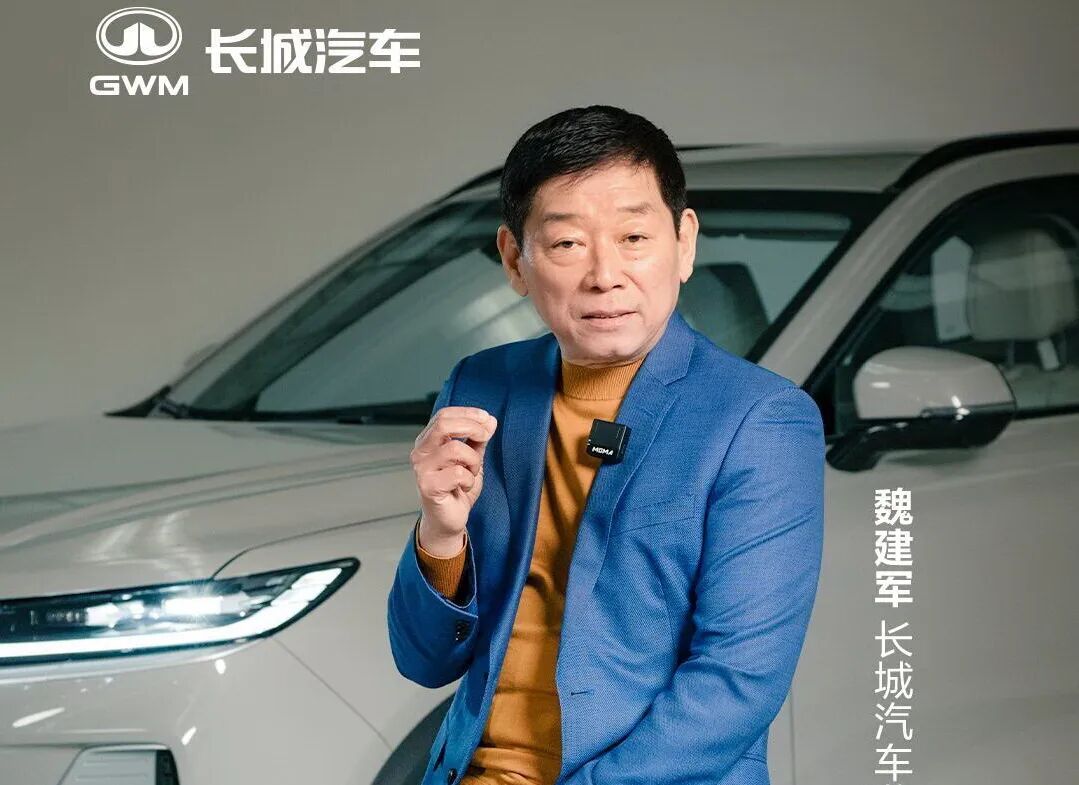
The capital market and public opinion environment have also placed additional pressure on Wei Jianjun's insistence. The secondary market is accustomed to judging automakers' success or failure by sales rankings, and a decline in position directly brings valuation pressure; the media and the public are also accustomed to comparing the former sales champion halo with today's ninth-place ranking.
In fact, it is not entirely apt for Wei Jianjun to compare Great Wall Motors with Pang Dong Lai. Pang Dong Lai is a special case in the retail industry. It can avoid pursuing store expansion and live well by relying on high gross margins per store and high user reputation. Pang Dong Lai's "be yourself" can accept a limited scale.
But Great Wall Motors cannot. As a major vehicle manufacturer, if it completely copies this logic, it will have to bear the cost of continued contraction in domestic share.
How Wei Jianjun will change tactics and reclaim the sales championship that once belonged to him will be the biggest test Great Wall Motors faces in the future.
(Disclaimer: The content of this article comes from the internet and company announcements and does not constitute investment advice)
·END·
-
![]()
Pragmatik Labs, Founded by Former Qwen Technical Lead, Reaches $5 Billion Valuation with Tens of Millions in New Financing
-
![]()
From "Submitting the Paper" to "Getting It Over With": Large Models Hit "Release Inflation"
-
![]()
Guangzhou Auto Show: Debut Rights "Reversed" as Traditional Automakers Reclaim the Spotlight
-
![]()
145 Billion Parameters Squeezed onto a Laptop—Who's Paying for This?
-
![]()
Your Next Phone May Be Yielding Ground to AI Data Centers
-
The Next Main Battlefield of AI Competition Is Scientific Research
-
![]()
Wei Jianjun Publicly Airs Frustration Over Sales Decline: Is Great Wall Motors' "Unit-Price Defense" Strategy No Longer Tenable?
-
![]()
Xiaomi: Out of the Woods, but What Does the Future Hold?