Your Next Phone May Be Yielding Ground to AI Data Centers
 11/25 2026
 495


One is slashing prices. The other is locking down capacity.
Image source: Internet (please contact us for removal if infringing). Partially AI-generated.
Consider two seemingly unrelated scenes.
On one side, iPhone Duo prices are softening: channel prices for the 256GB model have fallen roughly 1,300 yuan below the official price, retailers have units in stock, and official shipping estimates have clearly shortened.
Bear in mind that during the initial launch window, this phone once commanded a premium of thousands of yuan. Since its debut, the current selling price has already dropped by nearly 4,600 yuan.
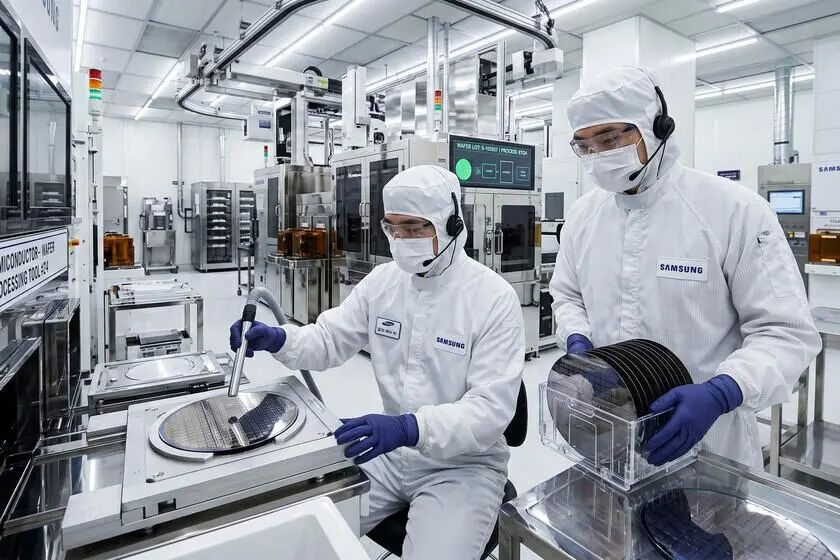
On the other side, Samsung Electronics has reportedly locked in most of its memory manufacturing capacity for 2027 through 2029 in advance through contracts, with some customers even seeking to extend long-term supply agreements through 2031.
Note that this comes from a report by South Korea's Economic Forum citing industry sources—not an official Samsung announcement.
One is cutting prices. The other is locking capacity.
At first glance, these are two stories—one from consumer electronics, the other from the semiconductor supply chain. But put them together, and a deeper thread emerges: pricing power in consumer electronics is shifting from phone makers to the upstream.
In the past, phone makers could drive down the cost of core components through large-scale procurement, advance stockpiling, and supplier bargaining. Now, AI data centers are rewriting that logic.
As the upstream begins allocating capacity through contracts spanning the next several years, downstream phone makers face not only "price increases" but also uncertainty over procurement volume, delivery timing, and capacity priority.
The price movement of the iPhone Duo is simply the most visible manifestation of this supply chain restructuring at the consumer end.

Where did 4,600 yuan go?
Let's start with the iPhone Duo.
During the initial launch period, the market once demanded a premium of thousands of yuan to get one.
Now, channel prices for the 256GB model are already about 1,300 yuan below the official price, retailers have units available for pickup, and official shipping times have been substantially shortened. From the first-launch period, the current selling price has fallen by nearly 4,600 yuan.
A drop of nearly 4,600 yuan, if simply spread over 90 days, averages about 51 yuan of depreciation per day. That calculation is very rough, but intuitive enough: the launch premium is being rapidly absorbed.
Why has it fallen so sharply? Three forces are mainly at work.
First, the launch premium has vanished.
In the early period after a new product launch, price is determined not only by manufacturing cost but also by scarcity and market expectations. Especially for foldables, consumers are buying not just hardware but the differentiated experience of a "new form factor."
Launch markups are essentially the market's advance pricing of scarcity and new-product value.
But this premium has a precondition: the product must be scarce enough.
When supply improves, official shipping moves up, and retailers begin to have stock, the sense of scarcity supporting markups quickly evaporates.
Second, the reputation discount brought by quality issues.
After the iPhone Duo launched, quality complaints occurred frequently. For foldables, the screen, hinge, crease, and body structure jointly determine product value.
Consumers are willing to pay a premium for a new form factor on the premise that the product can deliver a reliable experience over the long term.
Once quality controversies mount, the market will reassess that portion of the premium.
Price is no longer determined solely by new-product buzz; it must also absorb a reputation discount.
Third, cash flow pressure from channel inventory.
Phone makers can hold official pricing and wait for the product life cycle to slowly absorb inventory.
But distributors must consider capital turnover. Expensive phones sitting in warehouses mean tied-up capital; if market prices continue to fall, holding onto them may also cause greater losses.
As a result, channel merchants are more willing to cut prices in exchange for cash flow.
This also explains why official prices have not been substantially adjusted at the same time, while channel prices have already dropped noticeably.

Why does Samsung want to lock capacity in advance?
If falling phone prices reflect the passivity of the end market, then Samsung's long-term capacity contracts reflect the initiative of the upstream market.
Behind this lies an important shift: memory is moving from "cyclical procurement" to "long-term contracting."
Why are buyers willing to lock in supply three years—or even five years—in advance?
Because for AI infrastructure customers, uncertainty in memory supply may be more costly than higher procurement prices.
Data center construction requires advance planning of computing, networking, and storage equipment.
If core memory resources cannot arrive as planned, other equipment may not be able to be put into use as expected even after deployment is completed.
Therefore, large customers are willing to accept certain price concessions in exchange for certainty in supply volume, delivery cycle, and capacity priority.
This is the "certainty premium," and sellers likewise have incentives to sign long-term contracts.
Memory manufacturing is a capital-intensive industry, and capacity expansion requires long-term investment.
If multi-year orders can be secured in advance, investment and production lines can be better arranged, reducing operational risks brought by future demand changes.
Rather than leaving all capacity in the spot market waiting for quotations, it is better to allocate it in advance to long-term customers with stable procurement scale.
Buyers obtain supply guarantees, and sellers obtain stable orders.
But the capacity freely tradable in the market decreases accordingly.
Price increases are only the surface; advance allocation of capacity is the deeper change.
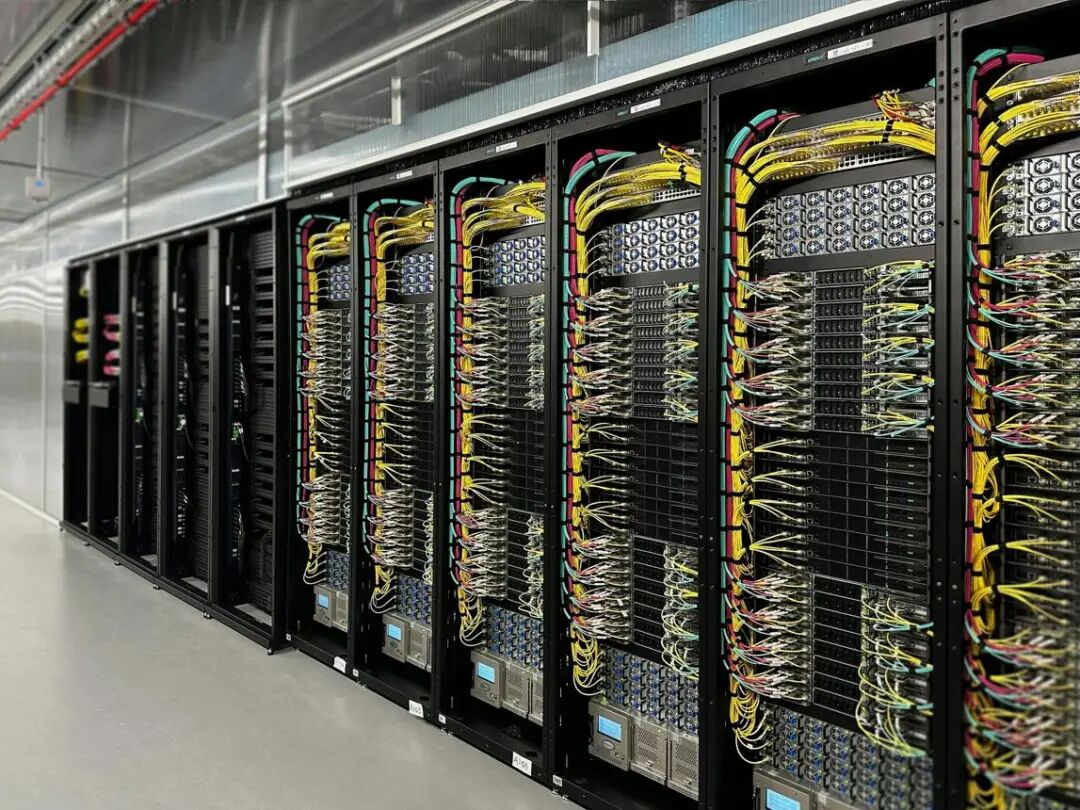
As of the end of September, the country's intelligent computing power scale reached 2,592 EFLOPS, up 146% year on year.
Optical module leaders have already locked in large orders for next year, which also shows that interconnection demand from AI data centers is transmitting upstream. The same is true for memory.
According to previous media reports, memory prices have seen increases of around 386%—a change closer to structural inflation than an ordinary cyclical rebound.
Now, the change has further extended to the contract level.
When the upstream begins selling capacity for the next few years, it will be difficult for phone makers to buy the costs of the past using the procurement methods of the past.

Phone makers are being squeezed from both sides
Why will upstream memory price increases ultimately affect the selling price of a phone?
Because phone makers sit in the middle of the supply chain: upstream costs rise, but downstream consumers are not necessarily willing to accept simultaneous price increases.
We can make a range estimate.
Assume that the memory-related cost of a high-end phone accounts for 12%–18% of the whole-device BOM, memory procurement costs rise 50%, and other component prices remain unchanged. Then the whole-device BOM cost will increase by about 6%–9%.
If the whole-device BOM accounts for about 70% of tax-exclusive sales revenue, this cost increase could erode about 4.2–6.3 percentage points of gross margin.
The above is only a scenario calculation, not actual cost disclosure for any phone. But the direction is clear: once memory rises, phone makers' income statements will tighten first.
For foldables, this pressure is more obvious.
Phone makers cannot simply pass all memory price increases on to consumers. Because what consumers buy is a complete product, not a list of component costs.
If prices rise, they must prove that the product experience improves accordingly; if prices fall, they must bear the profit loss caused by rising costs.
So manufacturers fall into a dilemma: the upstream is unwilling to cut prices, and the downstream is unwilling to accept price increases.
This also explains a counterintuitive phenomenon: the problem with foldables is not just that they are "too expensive," but that they are "too expensive and cannot be solved by price cuts."
When procurement costs have become rigid, proactive price cuts mean compressing profits and may even cause some models to lose profitability.
Therefore, manufacturers can only try to maintain official prices while allowing channel prices to loosen gradually.

Why do foldables fall first?
If pricing power in consumer electronics is shifting upstream, why do foldables show obvious price loosening first?
The answer lies in the BOM structure.
First, foldables usually have higher memory configurations.
High-end models must handle multitasking, large-screen applications, and complex interaction experiences, placing higher demands on memory capacity and performance.
Second, structural component costs are higher.
Foldables need to solve issues such as hinges, screen support, body strength, and repeated bending. They are not simply making an ordinary screen larger, but require a more complex precision manufacturing system.
Finally, there is the yield issue.
Foldables involve more precision structures and assembly steps, and deviation in any step may affect final product quality. The lower the yield, the higher the manufacturing cost that each qualified product must bear.
The combination of these three factors makes foldables more sensitive to upstream cost changes.
More critically, their room for cost reduction is limited.
Ordinary phones can control costs by adjusting memory configurations and replacing some materials. But if foldables cut investment in structural components, it may directly affect hinge life, screen stability, and overall device reliability.
In other words, many cost-reduction methods may harm the product itself.
It is not that foldables have no room for cost reduction, but that the cost of reducing costs is higher than for ordinary phones.
They therefore become the most vulnerable category in this round of supply chain changes.

Of course, some will say: memory is inherently a typical cyclical product. After capacity expansion is in place in 2028, industry supply may become loose again, and prices will naturally fall. The current rise is just a short-cycle fluctuation.
That judgment is not unreasonable.
But this round has one difference that cannot be ignored: long-term contracting.
When most capacity for the next few years has already been locked in advance through contracts, and some customers are still seeking to extend agreements to 2031, the spot market may no longer fully reflect the supply-demand relationship of the entire industry.
Even if future new capacity is released and spot prices fall, it does not mean phone makers can immediately enjoy a price cut of the same magnitude.
Because spot prices and contract prices are not the same thing.
What falls may be the spot price, while what phone makers purchase is at contract prices.
In the past, one of the competitive advantages of phone makers was the cost advantage brought by large-scale procurement. In the future, this advantage may need to be redefined.
Those who can lock in stable supply in advance will have the opportunity to control cost fluctuations; those without long-term supply guarantees may be forced to accept prices when upstream capacity is tight.
A phone can gain great attention at a launch event and can also quickly lose its premium after launch.
A memory chip, however, may have already had its supply ownership for the next few years determined through long-term contracts before the product is even launched.
Consumer electronics are showing a new divergence: products no longer preserve value; only capacity does.
And your next phone may already be making way for someone else's data center before you even place your order.
-
![]()
Pragmatik Labs, Founded by Former Qwen Technical Lead, Reaches $5 Billion Valuation with Tens of Millions in New Financing
-
![]()
From "Submitting the Paper" to "Getting It Over With": Large Models Hit "Release Inflation"
-
![]()
Guangzhou Auto Show: Debut Rights "Reversed" as Traditional Automakers Reclaim the Spotlight
-
![]()
145 Billion Parameters Squeezed onto a Laptop—Who's Paying for This?
-
![]()
Your Next Phone May Be Yielding Ground to AI Data Centers
-
The Next Main Battlefield of AI Competition Is Scientific Research
-
![]()
Wei Jianjun Publicly Airs Frustration Over Sales Decline: Is Great Wall Motors' "Unit-Price Defense" Strategy No Longer Tenable?
-
![]()
Xiaomi: Out of the Woods, but What Does the Future Hold?