PE Giant with Hundreds of Billions Excels in Aviation Investment This Year
 10/10 2026
 354
354
Warburg Pincus Exits $12 Billion in Investments Over 9 Months, Matching 2025 Record

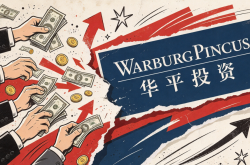
PE Giant Warburg Pincus Completes $12 Billion Investment Exit!
Recently, renowned PE firm Warburg Pincus announced at a Singapore event that it has achieved approximately $12 billion in returns through investment exits this year, matching the exit scale recorded for the entire year of 2025. This comes with a full quarter still remaining in 2026.
The past two years have been tough for the global private equity industry. Stock market volatility, sell-offs in software stocks, narrowing IPO windows—exiting investments has become a looming challenge for every PE firm.
Yet, amidst this market environment, Warburg Pincus has accelerated against the trend. How has this 60-year-old PE firm, managing over $105 billion in assets, achieved this?

15-Year Investment Journey Culminates in Billion-Dollar Acquisition
Recently, Warburg Pincus announced it has achieved approximately $12 billion in returns through investment exits this year, reaching last year's full-year level in just nine months. Against the backdrop of overall exit pressure in the private equity industry, this achievement stands out.
Of Warburg Pincus's $12 billion in exits this year, the largest came from the aerospace sector.
On September 8, GE Aerospace announced its $11.75 billion acquisition of CPP (Consolidated Precision Products), with Warburg Pincus and another private equity firm, Berkshire Partners, as the sellers. The transaction is expected to close in the second half of 2027.
The highlight of this deal is Warburg Pincus's holding period. From acquiring CPP in 2011 to exiting in 2026, Warburg Pincus stayed invested for 15 years.
CPP is one of the world's largest precision casting manufacturers, with approximately 6,600 employees and over 20 production sites globally. GE Aerospace has partnered with CPP for over 15 years, with CPP serving as a Tier 1 supplier for GE's core engine programs.
In 2019, Warburg Pincus brought in Berkshire Partners as a co-shareholder, and the two PE firms have jointly held CPP since then.
This transaction values CPP at approximately 18 times its expected 2027 EBITDA, a substantial valuation multiple.
In today's PE industry, where a "5 to 7-year exit" is commonly pursued, Warburg Pincus held CPP for 15 years. During this period, Warburg Pincus enhanced CPP's production capacity, technology, and quality systems—a "buy-transform-add value-sell" approach that is Warburg Pincus's hallmark growth investment strategy.
Besides this, key exits disclosed by Warburg Pincus this year include selling a stake in healthcare systems management company Ensemble Health Partners to investment firm Thoreau, as well as the earlier sale of industrial pump and compressor manufacturer Sundyne to Honeywell for $2.16 billion.
When these cases are viewed together, it becomes clear that Warburg Pincus's investment exits this year have been more concentrated in tangible sectors like aerospace, industrial manufacturing, and healthcare—precisely helping it avoid the impact of software stock sell-offs.

With $12 Billion in the Bag, What is Warburg Pincus Betting On Next?
For Warburg Pincus, exiting is not the end; the next question is where to deploy new capital. This year, Warburg Pincus's major moves have been concentrated in the financial sector.
In January 2026, Warburg Pincus announced the final closing of its third financial services-focused fund, "Warburg Pincus Financial Services Fund III (WPFS III)," with a locked-in size of $3 billion. This exceeds the initial $2.5 billion target set at launch in 2024 by 20%, making it Warburg Pincus's largest financial services fund to date.
This is not Warburg Pincus's first dedicated financial services fund. The previous two similar funds closed in 2017 and 2021, with sizes of approximately $2.3 billion and $2.5 billion, respectively. The further expansion of the new WPFS III fund indicates Warburg Pincus's continued commitment to the financial services sector.
Globally, Warburg Pincus's representative financial services investments include Avant in India, Bank of California in the U.S., and in China, it has layout (laid out investments) in China Europe International Business School, Hwabao Fund, and Ant Group.
Finance is not Warburg Pincus's largest sector, but it is one of its most cycle-resilient. Financial services firms are typically heavily regulated, with valuations less volatile than tech companies. However, once scale and licensing barriers are established, cash flows become extremely stable.
Beyond fundraising, Warburg Pincus has not slowed its investment pace this year. In June, it announced the acquisition of Network Plus, a leading UK utility and infrastructure services provider. The company achieved £743 million in revenue and £87 million in EBITDA in FY2026.
Warburg Pincus believes that as the UK continues to ramp up infrastructure investment, Network Plus, as a key service provider in water, sewage, gas, and electricity, will see structural growth opportunities.
Additionally, Australian credit data company CreditorWatch and U.S. rare disease pharmacy PANTHERx Rare have entered Warburg Pincus's investment portfolio. Warburg Pincus's investment reach remains diverse, clearly favoring assets with stable cash flows and industrial barriers.
In the Chinese market, Warburg Pincus's notable move this year was partnering with three life insurance firms—AIA Life, Manulife-Sinochem Life, and HSBC Life—in September to jointly establish Jiaxing Yaoying Equity Investment Partnership, with a total size of ¥2.58 billion.
The three insurers collectively subscribed ¥2.322 billion, accounting for over 90% of the fund's total size, with Warburg Pincus-related parties contributing ¥257 million and serving as the fund manager. The fund has already begun investing in multiple projects across Shanghai, Dongguan, and Suzhou, targeting logistics industrial real estate, urban renewal, long-term rental properties, and affordable housing.
Earlier this year, in January, Warburg Pincus prematurely liquidated its first RMB fund in mainland China, the "Warburg Pincus Healthcare Industry Investment (Wuxi Yixing) Partnership," established in August 2023 with a planned fundraising target of ¥3 billion. However, no investment projects were landed before its termination.
Clearing the healthcare fund on one hand and partnering with insurance capital to establish a real estate fund on the other, Warburg Pincus's strategic adjustment in the Chinese market is evident: shifting from trialing single-sector RMB funds to introducing new approaches with local long-term capital.

Born from a European Banking Family, Once Restructured Bausch & Lomb
From global to China, Warburg Pincus's moves this year point in the same direction:
Using a more diversified and localized capital structure to seize opportunities requiring patience and industrial judgment. This aligns with Warburg Pincus's investment style over its 60-year history.
Founded in New York in 1966, Warburg Pincus traces its roots to the renowned Warburg banking family in Europe. Unlike PE giants like Blackstone and KKR, which sweep markets with hundreds of billions in deals, Warburg Pincus has always followed a "growth investment" approach.
Warburg Pincus's style has been described by the industry as "humble merchants." It does not chase mega-mergers but prefers to acquire smaller companies with high growth potential, then deeply intervene (engage in) operations to help them grow and ultimately exit.
The classic case is Bausch & Lomb. In October 2007, Warburg Pincus acquired Bausch & Lomb for $4.5 billion. The timing was disastrous—just before the U.S. stock market peaked, with Bausch & Lomb mired in accounting scandals and customer lawsuits.
Warburg Pincus decisively chose to deeply restructure Bausch & Lomb.
On one hand, it overhauled the management team, retaining only two out of 17 executives; on the other, it refilled Bausch & Lomb's product lineup by acquiring ophthalmic medical device company Eyeonics.
Six years later, Warburg Pincus sold Bausch & Lomb to Canadian pharmaceutical firm Valeant for $8.7 billion, achieving roughly a 100% return on investment. This case remains a classic in the PE industry for "entering during a crisis and deeply restructuring."
While large deals like Bausch & Lomb established Warburg Pincus's global PE standing, what truly distinguishes it from other international PE giants is its deep roots in the Chinese market.
Warburg Pincus entered China in 1994 and is one of the earliest international private equity investment groups in the country. Over 30+ years, it has invested over $17 billion in more than 150 domestic enterprises, covering five major sectors: consumer, financial services, healthcare, real estate, and TMT.
In the Chinese market, Warburg Pincus's investment layout (layout) has spanned multiple era-defining trends. From internet-era companies like 58.com and Liepin.com to consumer brands like Kidsland and Genki Forest. In fintech, investments like OneConnect Financial Technology and Ant Group have also delivered substantial returns.
These cases span different stages of China's economic development and cover multiple investment sectors. Warburg Pincus's investments in China have not bet on a single short-term trend but have long participated in the development of multiple industries.
Currently, Warburg Pincus is 60 years old, managing over $105 billion in assets globally. Charles Kaye, Global CEO of Warburg Pincus, stated at SuperReturn Asia that if a portfolio is concentrated in a single country, investment stage, or industry, it may experience prolonged downturns. Warburg Pincus has layout (deployed) across multiple regions and industries globally, which to some extent diversifies the impact of single-market volatility.
References:
"Private Equity Firm Warburg Pincus Secures $15.4 Billion in Returns from Exits So Far This Year, On Track for Annual Record," Lianhe Zaobao
Warburg Pincus official website, GE transaction announcements, and other publicly available sources.
THE END
Special Disclaimer: This article is for reference only and does not constitute any investment advice. Unauthorized reproduction is prohibited.
-
![]()
Does Meeting Standards Equal Safety? Is the Baseline the Upper Limit? Does Passing Inspection Mean Peace of Mind?丨When Brakes Fail Even While Speeding
-
![]()
AI Home Appliances Shine During Golden Week
-
![]()
Muse Goes Viral: Who Will Be China's Version of Muse?
-
![]()
PE Giant with Hundreds of Billions Excels in Aviation Investment This Year
-
![]()
Brake Pedal Bracket Fractures: Not Isolated Incidents—A Comprehensive Review of Global Recalls by Ford, Porsche, and GM
-
![]()
The 2026 Flagship Imaging Ranking Race Kicks Off: Who Will Be Crowned the National Champion of Imaging Smartphones?
-
![]()
Controversies Surrounding Dongchedi and Harmony Intelligent Auto, Zunjie V800 Pedal Fracture, and Ford Recall
-
![]()
Bentley, Maserati, Rolls-Royce: The Ebb and Flow of Seven Ultra-Luxury Foreign Brands in China, From 21,000 Annual Sales to a Mere 3,000 Now