Controversies Surrounding Dongchedi and Harmony Intelligent Auto, Zunjie V800 Pedal Fracture, and Ford Recall
 10/10 2026
 532
532
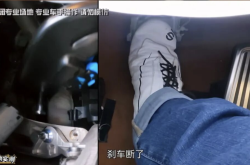
The brake pedal bracket fracture in the Zunjie V800 is not an isolated incident within the automotive industry.
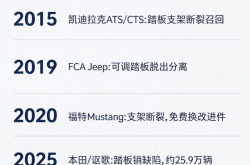
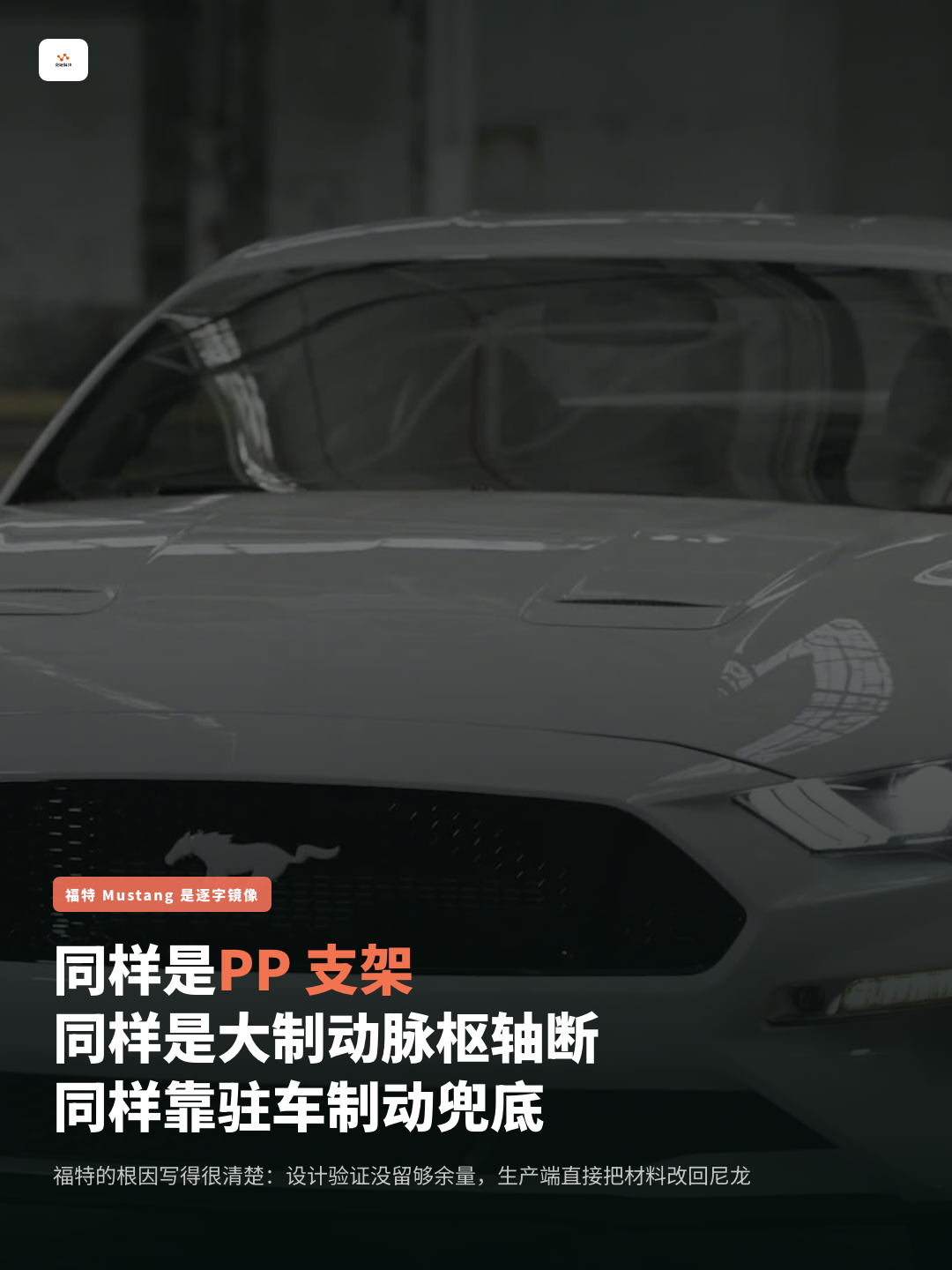
A similar case emerged in 2020 when Ford Mustang altered the bracket material from nylon to polypropylene, leading to a recall due to fractures in the emergency brake pivot shaft.
This incident has gained particular attention because Dongchedi's rigorous testing approach for Huawei-associated vehicle models has long been a contentious issue.
At present, the official entities involved (Zunjie, JAC, Huawei) have not yet issued a definitive conclusion. The final determination will hinge on official statements and regulatory disclosures.
I. Brake Pedal Bracket Fracture: A Persistent Problem in Recalls
The recurrence of such failures is evident: life-critical mechanical connections fail, and the standard remedy is a complimentary replacement with enhanced components. Historically, there have been numerous recall cases where the loss of foot brake functionality due to fractures or separations in the brake pedal bracket or pedal assembly has necessitated a recall:
- The Chinese import version of the Ford Mustang in 2020, involving 2,627 units, experienced emergency brake pivot shaft fractures, leading to braking failure. The root cause was identified as inadequate design allowances in engineering specifications and design verification, with the material change from nylon to polypropylene reducing the peak braking force load-bearing capacity. The production side subsequently reverted to nylon.
- The U.S. version of the Ford Mustang, under NHTSA 20V573 in 2020, involved 38,005 units with the same issue.
- Ford Mustang aftermarket replacement parts, under NHTSA 20S55, were found to fracture under heavy pedaling during track or competitive driving, with explicit instructions to use the parking brake for stopping.
Ford China's recall announcement for the 2,627 imported Mustang units, which had switched the brake pedal bracket material to polypropylene (the V800 is alleged to use PP + GF40, i.e., polypropylene with 40% glass fiber), cited inadequate design allowances and brittle fractures at the pivot position under heavy braking, resulting in the loss of primary braking and reliance on the parking brake for emergency stopping.
Ford's own response acknowledged the root cause as inadequate design allowances considered in engineering specifications and design verification procedures, with the production side directly reverting the material to nylon. In Ford's view, the polypropylene solution was inherently flawed.
Premium luxury brands typically utilize modified PA6, PA66, or PP. Safety is determined by the design allowances incorporated into the structure. The industry generally adheres to strength standards ranging from 2700N to 4500N, with some requiring no failure at 3000N under specific speeds. Such incidents cannot be attributed to excessive user force but rather to design or manufacturing defects in the vehicle itself. The strength of mechanical components for human operation should account for all natural usage scenarios.
While testing conditions may be extreme, life-saving components should be capable of withstanding such extremes.
II. Dongchedi's Testing Controversies with Huawei-Affiliated Models
Dongchedi's rigorous testing of Huawei-associated vehicle models has repeatedly sparked debates.
The 2023 winter test serves as a prime example. Dongchedi conducted a range achievement rate test for hybrid and electric vehicles in Mohe, with the AITO M7 extended-range version ranking last at 31.6%. AITO's official Weibo account refuted the results point by point, citing 71 minutes of pre-test heating, over ten instances of door and window openings during the test, the addition of a driver and four 60kg sandbags, and a starting battery level of only 74.9%, all of which significantly deviated from real-world usage scenarios. Yu Chengdong, CEO of Huawei's Smart Car Solutions BU, criticized the test as misleading and unscientific, emphasizing the need for rigor and scientific methodology. Subsequently, Great Wall Motors held a press conference questioning the winter test standards, and Geely's Yang Xueliang shared backend data to support their stance. Wang Yao, Assistant Secretary-General of the China Association of Automobile Manufacturers, stated that media-designed testing methods lacking certification steps would inevitably face questions about professionalism and universality.
An earlier collision test occurred in 2021 when Dongchedi conducted a dual-car collision test between the BYD Han EV and the Arcfox Alpha S. The Han EV's A-pillar bent, and it spontaneously combusted 48 hours after the test. BYD officially accused the test of employing non-standard measures.
In a 30-car collision test with a truck, all SUVs failed, with the AITO New M7 becoming a focal point. The industry questioned the scientific validity, noting that taller vehicle bodies were less likely to fit under truck protective devices and that the actual overlap was only about 25%, a rare scenario in reality. When comparing the AITO M7 Ultra with the Li Auto L7 Ultra, Dongchedi bluntly stated that the AITO's mechanical quality did not match its intelligence level, assigning it a "conscience price" of 150,000 yuan for handling.
AITO, backed by Huawei, has ceased cooperation with Dongchedi. Currently, Dongchedi's tests on Huawei-associated vehicle models are conducted without brand cooperation, vehicle provision, or data support.
Summary
Dongchedi's rigorous testing has indeed exposed genuine issues multiple times in advance. However, trust between Dongchedi and Huawei-associated brands has eroded. Consequently, any test result indicating a failure of a Huawei-associated vehicle will immediately polarize public opinion into two factions: one that trusts the data and another that questions the motives. The conclusion is left to the readers and the official parties involved.
-
![]()
Does Meeting Standards Equal Safety? Is the Baseline the Upper Limit? Does Passing Inspection Mean Peace of Mind?丨When Brakes Fail Even While Speeding
-
![]()
AI Home Appliances Shine During Golden Week
-
![]()
Muse Goes Viral: Who Will Be China's Version of Muse?
-
![]()
PE Giant with Hundreds of Billions Excels in Aviation Investment This Year
-
![]()
Brake Pedal Bracket Fractures: Not Isolated Incidents—A Comprehensive Review of Global Recalls by Ford, Porsche, and GM
-
![]()
The 2026 Flagship Imaging Ranking Race Kicks Off: Who Will Be Crowned the National Champion of Imaging Smartphones?
-
![]()
Controversies Surrounding Dongchedi and Harmony Intelligent Auto, Zunjie V800 Pedal Fracture, and Ford Recall
-
![]()
Bentley, Maserati, Rolls-Royce: The Ebb and Flow of Seven Ultra-Luxury Foreign Brands in China, From 21,000 Annual Sales to a Mere 3,000 Now