Bentley, Maserati, Rolls-Royce: The Ebb and Flow of Seven Ultra-Luxury Foreign Brands in China, From 21,000 Annual Sales to a Mere 3,000 Now
 10/10 2026
 453
453
Against the backdrop of burgeoning Chinese affluence, global ultra-luxury car brands once soared to unprecedented heights in the domestic market!
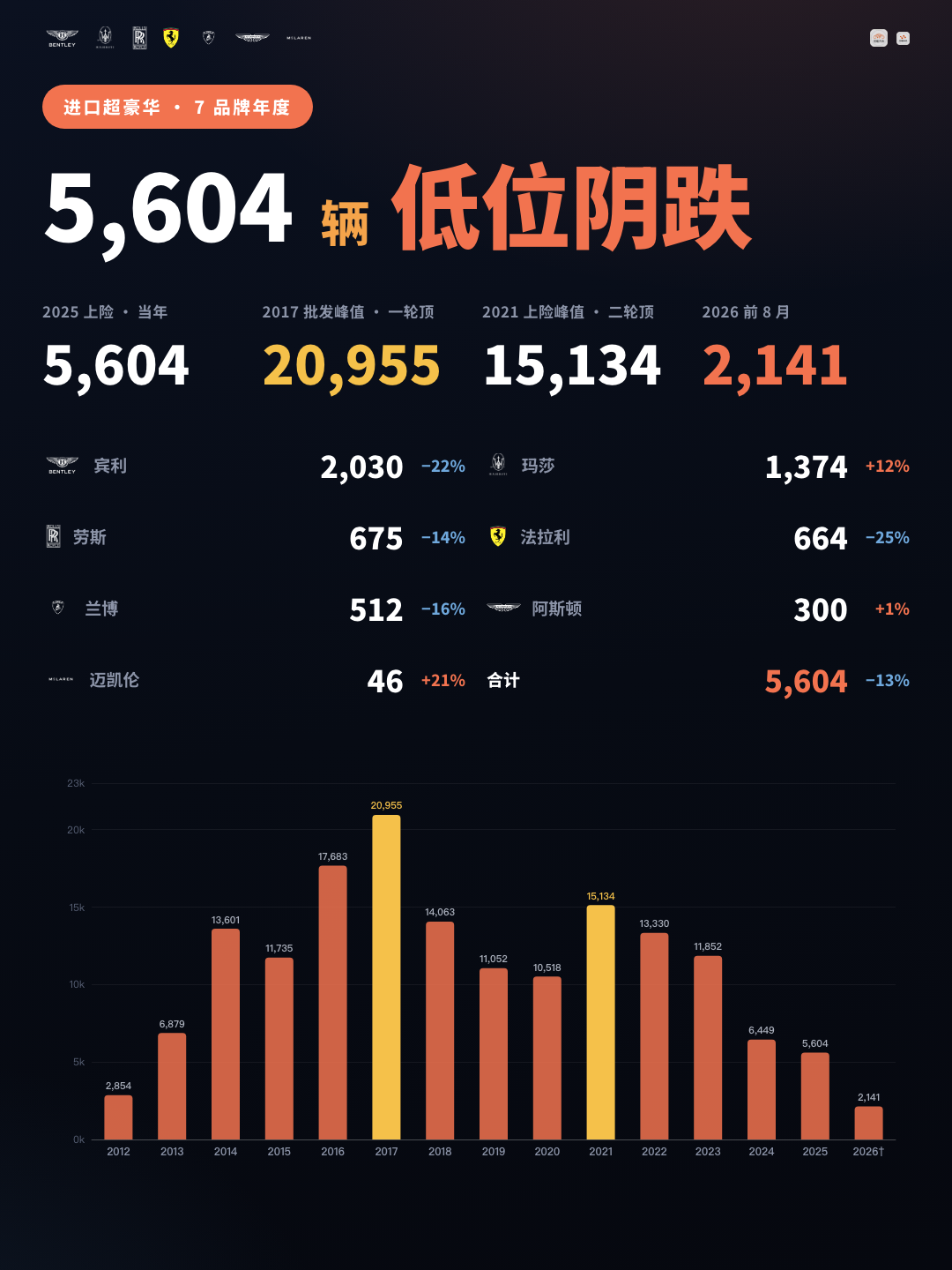
In 2017, the cumulative sales of Bentley, Maserati, Rolls-Royce, Ferrari, Lamborghini, Aston Martin, and McLaren in mainland China soared to approximately 21,000 units. This milestone represented the first absolute zenith for ultra-luxury cars in China.
However, by 2025, this figure had plummeted dramatically to 5,604 units.
From January to August 2026 (utilizing data from the initial eight months of 2026, cross-verified with monthly import data from the China Passenger Car Association), the aggregate sales of these seven brands stood at 2,141 units. Projections indicate that annual sales are likely to fall short of 4,000 units, potentially hovering just above the 3,000-unit mark.
In a mere eight years, total sales have dwindled by nearly three-quarters, signaling a significant industry downturn.
The trajectory of this cycle is unmistakable, unfolding in three distinct phases.
The inaugural phase, spanning from 2012 to 2017, was characterized by an upward trajectory. Commencing from a modest base of 2,854 units in 2012 for the seven brands, the turning point was marked by Maserati. In 2013, the introduction of the Ghibli catapulted Maserati from a niche brand selling a few hundred units annually to 3,800 units. By 2014, sales surpassed 10,000 units, and by 2017, they reached approximately 14,500 units. China momentarily emerged as Maserati's largest global market, with total sales of 20,955 units in 2017, representing an 18.5% year-on-year increase.
The second phase, from 2018 to 2020, witnessed a decline followed by a partial resurgence. The 2015 stock market crash initially dampened enthusiasm, succeeded by trade frictions and a cooling consumption trend in 2018, which saw combined sales plummet from 21,000 units to 14,000 units. Sales further dwindled to 11,000 units in 2019. The tide shifted in 2020, as the pandemic compelled overseas consumption to回流 to China, resulting in 10,500 units sold that year. Sales rebounded to 15,100 units in 2021, forming a second, albeit smaller, peak.
The third phase, from 2021 to 2025, has been marked by a precipitous decline, with the most severe drop occurring during this period. Combined sales plummeted by 45.6% year-on-year in 2024, leaving just 6,449 units sold. Sales continued their downward spiral to 5,604 units in 2025. Maserati's sales tumbled from over 7,000 units to just over 1,000, while McLaren's sales plummeted from over 300 units to just over 40. In essence, ultra-luxury cars in China have been relegated from the spotlight to the periphery.
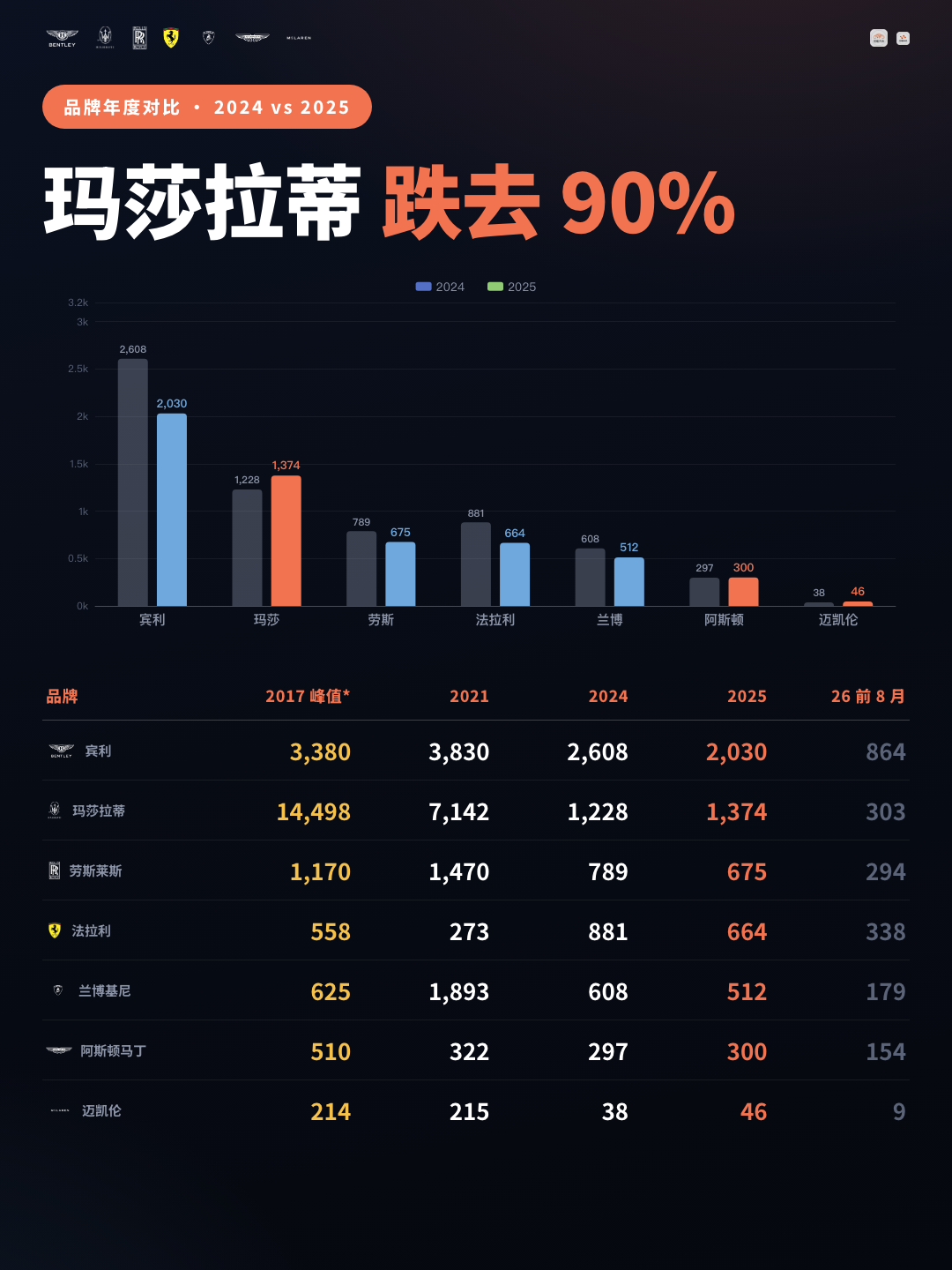
To comprehend these shifts, it's evident that consumption downgrading has dealt a severe blow to non-essential expenditures exceeding the million-yuan threshold. Domestic new energy vehicles have redefined luxury through intelligence, rendering the traditional mechanical superiority of ultra-luxury brands less exclusive. These brands have also grappled with strategic indecision in China and ill-timed product cycles.
With domestic new energy vehicles usurping the right to define luxury, what future awaits traditional ultra-luxury brands?
In conclusion: The golden era of ultra-luxury cars in China has drawn to a close, as reflected in our company's retrospective analysis.
-
![]()
Does Meeting Standards Equal Safety? Is the Baseline the Upper Limit? Does Passing Inspection Mean Peace of Mind?丨When Brakes Fail Even While Speeding
-
![]()
AI Home Appliances Shine During Golden Week
-
![]()
Muse Goes Viral: Who Will Be China's Version of Muse?
-
![]()
PE Giant with Hundreds of Billions Excels in Aviation Investment This Year
-
![]()
Brake Pedal Bracket Fractures: Not Isolated Incidents—A Comprehensive Review of Global Recalls by Ford, Porsche, and GM
-
![]()
The 2026 Flagship Imaging Ranking Race Kicks Off: Who Will Be Crowned the National Champion of Imaging Smartphones?
-
![]()
Controversies Surrounding Dongchedi and Harmony Intelligent Auto, Zunjie V800 Pedal Fracture, and Ford Recall
-
![]()
Bentley, Maserati, Rolls-Royce: The Ebb and Flow of Seven Ultra-Luxury Foreign Brands in China, From 21,000 Annual Sales to a Mere 3,000 Now