Energy Storage Revenue Surges 8470%, A 60 Billion Giant Emerges with a New Gamble
 10/12 2026
 558
558
Mobile Growth Peaks, Energy Storage Not Yet Profitable: The 'King of Africa' Urgently Seeks a New Story.
Image Source|Transsion
Source|Terawatt Energy Storage
In October 2026, Transsion Holdings stands at a new crossroads in capital markets.
According to the latest announcement, the company plans to issue 86.6483 million H-shares at a maximum offering price of HK$38.80 per share, with an expected listing on the Hong Kong Stock Exchange on October 15. Based on the median offering price, the net proceeds from the fundraising are estimated to be approximately HK$3.118 billion.
Transsion, which broke through in Africa's feature phone market, is attempting to use the 'A+H' capital platform to tell a new story: future Transsion will not only sell mobile phones but also become the gateway to 'Smart Life + Green Energy' in emerging markets.
Energy storage is the most prominent growth area in this story. In the first four months of 2026, Transsion's energy storage business achieved revenue of RMB 455 million, surpassing the full-year revenue of RMB 358 million in 2025, representing a year-on-year increase of approximately 241%; sales volume reached 416,000 units, a year-on-year increase of approximately 378%.
Two years ago, the annual revenue of this business was only RMB 66.07 million, accounting for just 0.1% of Transsion's total revenue. Today, its revenue share has risen to about 2%, making it one of the company's fastest-growing businesses.
Admittedly, for Transsion, with annual revenue exceeding RMB 60 billion, energy storage is not yet strong enough to serve as a 'second main business.'
However, as the low-cost dividends of mobile phones gradually fade, this 'King of African Mobile Phones' is attempting to replicate its brand recognition, channel network, and localized service capabilities accumulated over the past 20 years into a more fundamental need—electricity.
01
Mobile Phone Business Under Pressure
Transsion's African story began with Zhu Zhaojiang.
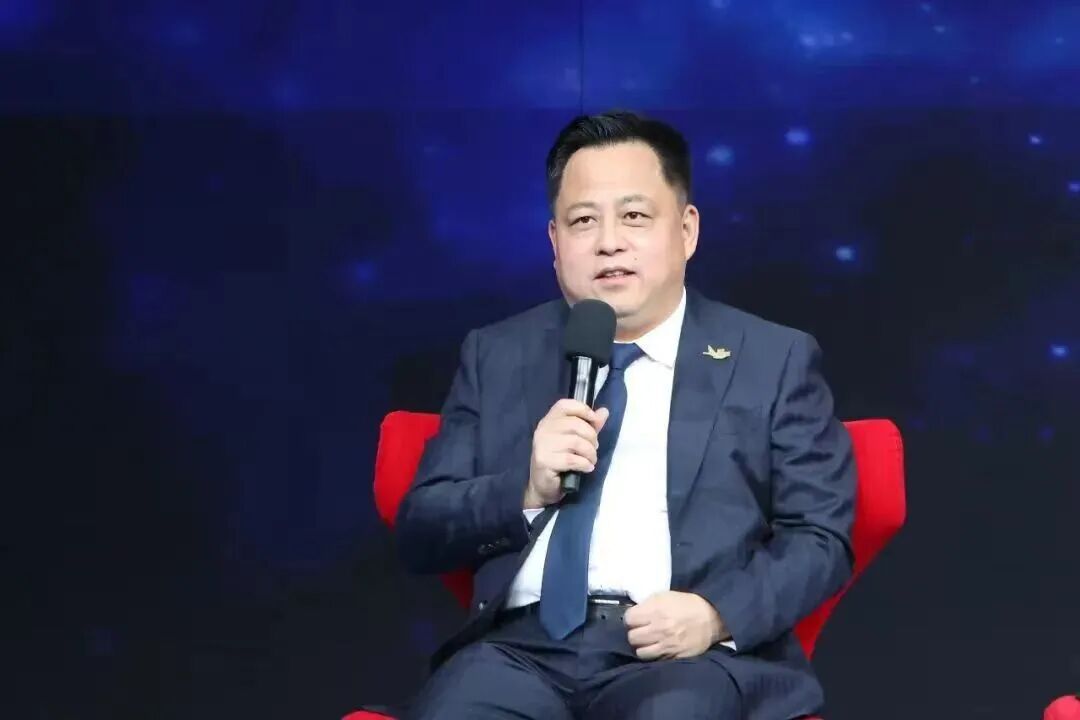
In 1996, Zhu Zhaojiang, 23, joined Bird after graduating from university, rising from a sales position to General Manager of the Mobile Phone Division and Overseas Business Division. His extensive experience in overseas markets made him realize that African consumers were not without demand but lacked products truly designed for local usage scenarios.
After leaving Bird in 2006, Zhu Zhaojiang started his own business and targeted Africa as Transsion's main battlefield.
Features like multi-SIM card support, loud volume, long battery life, and a camera algorithm optimized for dark-skinned users, combined with a distribution network reaching county towns and the Carlcare after-sales system, allowed Transsion to gradually roll out its three major brands—TECNO, Infinix, and itel—across Africa.
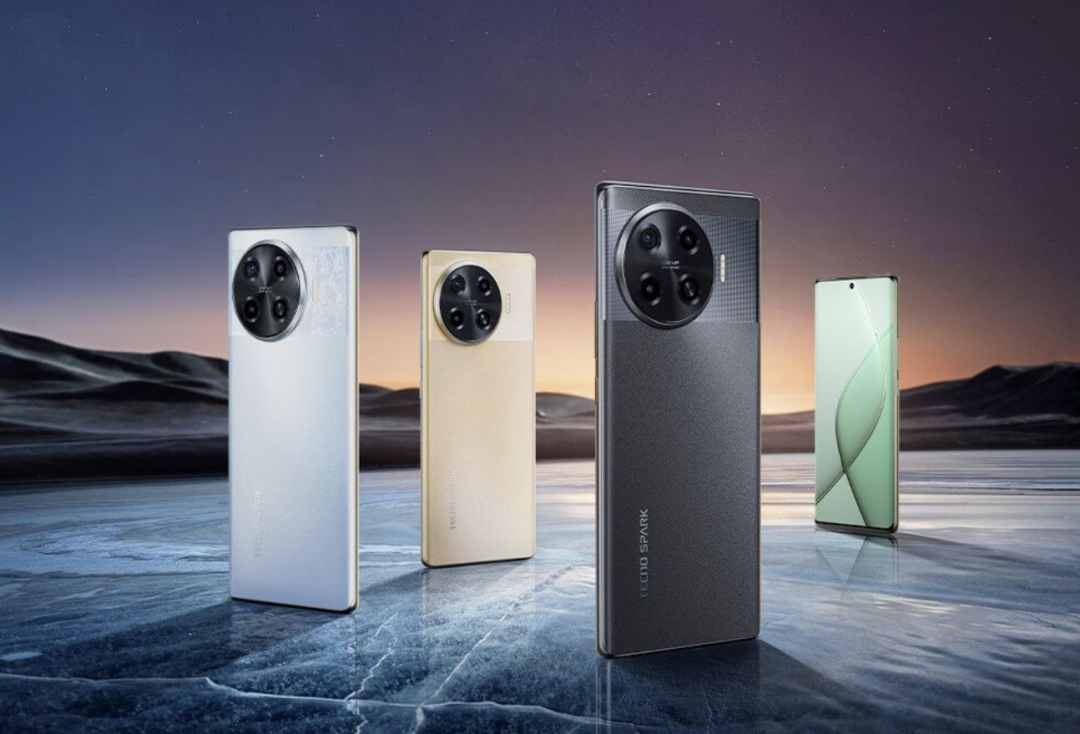
This strategy remains effective to this day. Omdia data shows that in the first quarter of 2026, Transsion Group held about a 47% share of Africa's smartphone market, continuing to rank first.
In 2025, Transsion shipped approximately 169 million mobile phones. IDC data shows that the company held a 12.3% share of the global mobile phone market, ranking third; its smartphone market share was 7.9%, ranking sixth globally. In regional markets, Transsion maintained its lead, ranking first in smartphone shipments in Africa, Pakistan, Bangladesh, and the Philippines.
However, the competitive landscape is changing.
In the second quarter of 2026, smartphone shipments in Africa declined by 7% year-on-year, with Transsion's shipments falling by 14%, while Samsung's grew by 15%. Transsion's strongest segment, the sub-$100 market, was hit by both rising memory chip prices and declining consumer purchasing power; Samsung, relying on its Galaxy A series and a more complete price range, counterattacked downward from the $150-$299 market.
Xiaomi entered North Africa with cost-effectiveness, OPPO bet on young users in Egypt and East Africa, and Honor targeted the mid-to-high-end market in South Africa through operator channels like Vodacom and MTN. Together, they are squeezing the room for TECNO and Infinix to upgrade.
Financial data already reflects this pressure. In 2025, Transsion's revenue declined by 4.55% to RMB 65.591 billion, and net profit attributable to the parent company fell by 53.49% to RMB 2.581 billion. Among these, mobile phone business revenue declined by 7.5%, with smartphone and feature phone sales falling by 9.1% and 23.9%, respectively; smartphone gross margin also dropped from 19.6% in 2024 to 17.7%.
In the first half of 2026, Transsion's revenue increased by 21.9% year-on-year to RMB 35.431 billion, and net profit attributable to the parent company grew by 46.22% to RMB 1.773 billion, showing some recovery. However, this growth was driven more by price increases and product mix upgrades than by sales expansion.
In the first four months of this year, Transsion's smartphone sales volume declined by approximately 2.7% year-on-year, but the average selling price rose from RMB 538.8 to RMB 705.5, driving a 27.4% increase in smartphone revenue.
Transsion is shifting from 'selling more' to 'selling more expensive,' but in Africa's highly price-sensitive market, this upgrade path is not easy.
02
Energy Storage Boom
Beyond mobile phones, energy storage is becoming Transsion's most prominent new growth area.
Transsion currently has two energy brand lines: itel Energy targets mass-market households and small businesses, while DYQUE Energy positions itself for high-end households and commercial clients, with products covering hybrid inverters, lithium battery modules, portable energy storage systems, and photovoltaic components.
Transsion's energy storage business is primarily conducted through its holding company, Taiku Energy. In terms of equity, Transsion indirectly holds about 66.67% of Taiku Energy's shares through Zhanxiang Information, maintaining control. Taiku Energy's legal representative, Yan Meng, aged 45, joined Transsion in 2013 and currently serves as the company's executive director, fully responsible for the group's energy storage business.
At the capital level, Transsion has successively increased its investment in Taiku, continuing to double down on energy storage. In May 2025, Taiku completed its first round of RMB 100 million in funding, with Transsion's wholly-owned subsidiary Zhanxiang Information and Xinju Huineng, controlled by Yan Meng, investing RMB 70 million and RMB 30 million, respectively. In March 2026, both parties increased their investment in Taiku by another RMB 100 million, contributing RMB 60 million and RMB 40 million, respectively.
Business-wise, Taiku primarily sells inverters, energy storage batteries, all-in-one energy storage systems, and photovoltaic components, leveraging Transsion's channel network in Dubai and African markets to expand overseas. Current key markets include Pakistan, Nigeria, Mali, and Burkina Faso, with plans to enter Kenya, Bangladesh, the Democratic Republic of the Congo, Guinea, Cameroon, and the Philippines next.
In 2024, Taiku achieved its first commercialization, with revenue exceeding RMB 54 million and a loss of RMB 19.5047 million for the year; in 2025, revenue reached RMB 361 million, a year-on-year increase of approximately 6.7 times. Despite a significant narrowing of the loss rate, it still recorded a net loss of RMB 30.67 million, and the asset-liability ratio rose from about 24% to about 47%.
In the first eight months of 2026, products sold through Dubai channels accounted for more than half of Taiku's energy storage sales volume. During the same period, the amount of related procurement between Transsion and Taiku also rose rapidly: RMB 354 million in the first four months and RMB 620 million in the first eight months.
On the flip side of rapid expansion, Taiku still relies heavily on Transsion's internal distribution channels and external manufacturing systems, with its independent customer acquisition capability, gross margin level, and long-term after-sales capability yet to be tested.
From a revenue curve perspective, Transsion's energy storage has entered a phase of exponential growth. From 2023 to 2025, its energy storage revenue grew from RMB 4.178 million to RMB 358 million, expanding 85.7 times over two years, with a compound annual growth rate of approximately 826%.
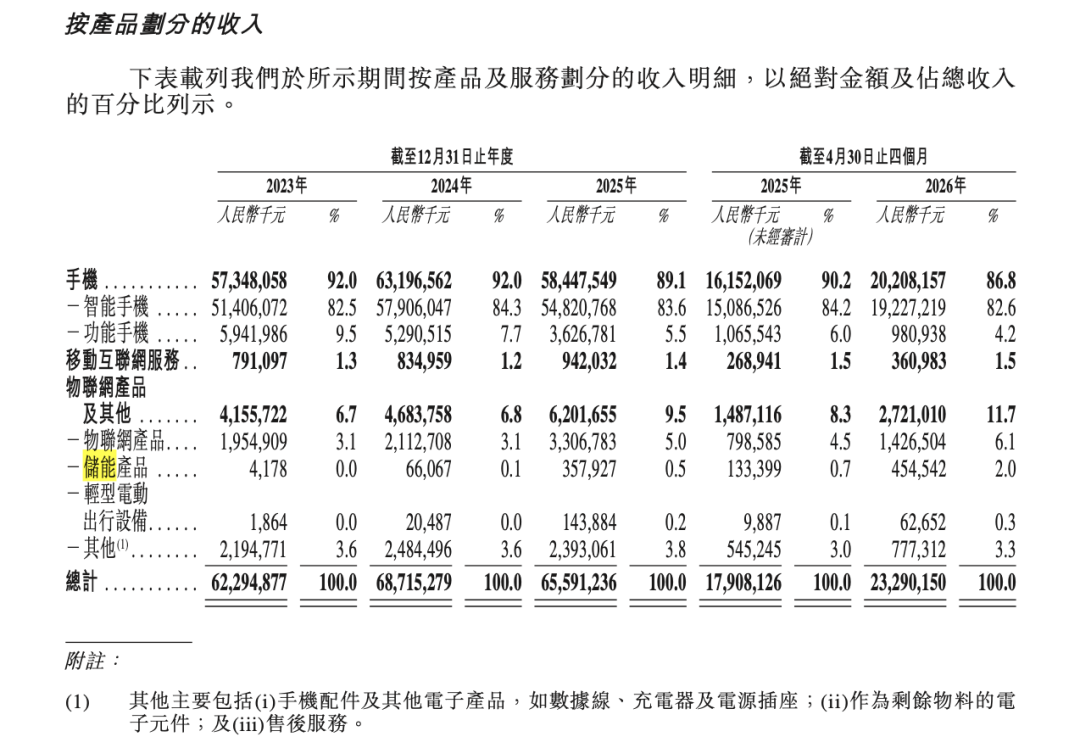
In the first four months of 2026, energy storage revenue accounted for 16.7% of the revenue from 'IoT products and others,' up from about 1.4% in 2024.
Notably, while sales volume grew rapidly, the average selling price of Transsion's energy storage products continued to decline: from RMB 8,441 in 2023 to RMB 1,407 in 2025, and further to RMB 1,093.7 in the first four months of 2026.
Transsion explained that early energy storage sales were dominated by higher-priced inverters, but as the proportion of lower-priced products like battery packs, solar panels, and portable energy storage systems increased, the average selling price declined.
The key to Transsion's rapid energy storage growth lies not just in products but in channels.
Currently, Transsion's business covers more than 100 countries and regions globally, connecting with approximately 3,000 distributors. Mobile phones, home appliances, and energy storage products can share some channels and customer resources, keeping its customer acquisition cost significantly lower than that of professional energy storage manufacturers entering emerging markets from scratch.
03
Three-Pronged Competition
However, energy storage is not another mobile phone market, and Transsion faces three powerful competitive forces:
The first type of competitor comes from the portable energy storage and small home backup power markets.
Companies like EcoFlow, Bluetti, and Geneverse have already entered the Nigerian and South African markets, offering products for household power outages, outdoor electricity use, and small business backup power. They hold first-mover advantages in fast charging, product design, App management, and brand recognition.
At the same time, cheaper local UPS systems, lead-acid batteries, and traditional diesel and gasoline generators are also alternatives that Transsion cannot ignore.
The second type of competitor is in residential solar and home energy storage.
This field includes leading companies like Huawei, Sungrow, and SolaX, as well as professional manufacturers like Growatt, Ginlong Technologies, GoodWe, Daqin Digital Energy, and Pylontech. Compared to pure terminal sales, the residential energy storage market places greater emphasis on inverter technology, installer networks, and long-term operation and maintenance capabilities.
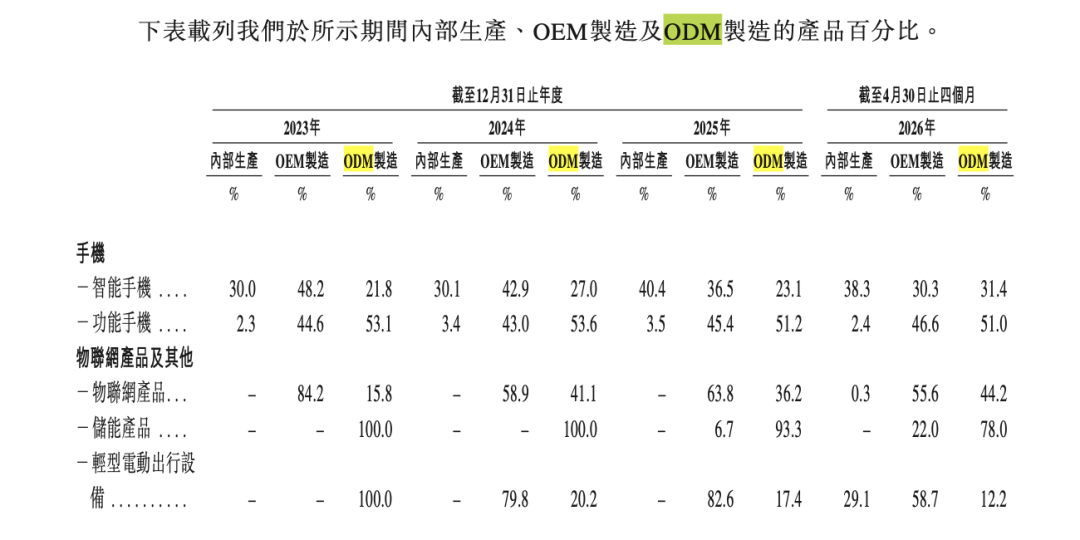
While Transsion can deliver devices to consumers, it struggles to independently complete roof design and decade-long warranties. Additionally, nearly 80% of its energy storage products currently rely on contract manufacturing, exposing it to quality control and supply chain risks in its asset-light model.
The third type of competitor is the off-grid solar and PAYGo (pay-as-you-go) energy service providers that have deep roots in Africa.
Companies like Sun King, d.light, M-KOPA, Bboxx, Lumos, and ENGIE Energy Access have already established operations in Kenya, Nigeria, and other sub-Saharan markets.
They do not simply sell solar panels and batteries but combine hardware, mobile payments, installment loans, remote device management, and collection systems. Consumers can make daily or weekly payments to gradually gain ownership of the devices.
While Transsion has experience with mobile phone installment plans, it will take time to build a professional energy finance and long-term repayment system.
Moreover, in the commercial and industrial energy storage sector, where system safety, financing capabilities, and grid-connection qualifications are highly valued, Huawei, Sungrow, SolaX, and local EPC firms clearly hold the advantage, making Transsion's DYQUE Energy more of an outsider in the short term.
04
Energy Storage Remains an 'Option'
At this stage, Transsion's strengths and weaknesses in energy storage are clear.
Its greatest strength lies in consumer electronics-izing complex products: using multiple brands to cover different customer segments, rapidly distributing through distributors, and building trust through after-sales systems. This gives Transsion the opportunity to quickly scale in markets like portable energy storage and small home backup power.
While a faulty mobile phone can be repaired or replaced, a malfunctioning energy storage system can cause personal and property damage, damaging the brand. Mobile phone after-sales outlets cannot directly replace professional electricians and solar installers.
To date, Transsion has not separately disclosed the gross margin, net profit, or regional revenue distribution of its energy storage business. In this Hong Kong stock fundraising plan, about 40% of the funds will be used for AI R&D, 30% for marketing and brand building, 20% for mobile internet and IoT, with energy storage not listed as a separate focus area.
This indicates that while energy storage is growing rapidly, it remains an unproven option within Transsion and has not yet become an independent strategic pillar.
Twenty years ago, Zhu Zhaojiang bet that 'neglected people also need mobile phones'; today, Transsion is betting that 'digital life must be built on stable electricity.'
But this time, Transsion must bridge not only the product gap with companies like Sungrow and Huawei but also the technology and installation systems mastered by professional energy storage firms, the financial networks established by PAYGo companies, and the long-standing habits of consumers using diesel generators.
Only by upgrading its mobile-era retail network into a 'sales, installation, financing, and operation' network can Transsion potentially create a new growth story in Africa.
· END·
-
![]()
Can JAC Motors Withstand Further Challenges?
-
![]()
NIO Achieves Three Consecutive Quarters of Profitability: Is Li Bin Walking on Air?
-
![]()
FAW Toyota and GAC Toyota Merge: FAW Leads the Exit! What’s the Real Value Behind the FAW-GAC Alliance?
-
![]()
Luxury Electric Cars Falter: Those Who Spent 1 Million Yuan Reconsider the Allure of Fuel Cars
-
![]()
Farewell to 'Bragging in the Name of Technology'
-
![]()
Is Li Auto's L Series Poised to Embrace Pure Electric? Is Range Extension on Its Way Out?
-
![]()
The Price is 30,000 Yuan Lower Than the Pre-sale Price: Who is the Galaxy Warship 700 Targeting?
-
![]()
Energy Storage Revenue Surges 8470%, A 60 Billion Giant Emerges with a New Gamble