The Price is 30,000 Yuan Lower Than the Pre-sale Price: Who is the Galaxy Warship 700 Targeting?
 10/12 2026
 368
368
Introduction
Introduction
The Titan 7 stands out in the boxy SUV market, with the Great Wall H10 selling over 10,000 units upon launch. Geely, a leading automaker, cannot afford to miss out.
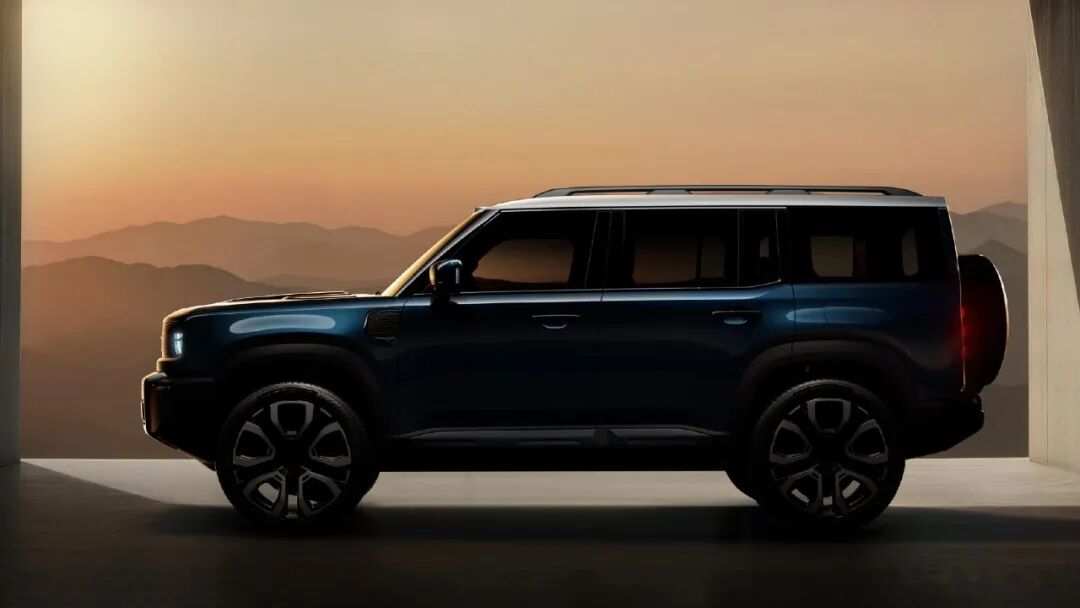
Last night (October 10), the Galaxy Warship 700 was officially launched, featuring Nicholas Tse as its spokesperson. This marks Tse's first endorsement of a Chinese automotive brand in his 29-year career, despite previous collaborations with Audi and Jeep in the automotive sector. His decision to endorse the Galaxy Warship 700 has indeed sparked widespread discussion and attention.
Celebrity influence may help promote the vehicle's name, but in my opinion, the success of a car in the market and its ability to form significant influence depend on its actual product strength and pricing.
Recalling the pre-sale a month ago, the initial pre-sale price range was set at 199,800 to 239,800 yuan, with the off-road version priced at 389,800 yuan. Upon official launch, after accounting for benefits and trade-ins, the actual limited-time price dropped by 30,000 yuan, ranging from 169,800 to 239,800 yuan, with the off-road version at 359,800 yuan.

For SUVs priced under 200,000 yuan, a direct price reduction of 30,000 yuan compared to the pre-sale price is uncommon, both in terms of industry history and Geely's past product strategies.
After the price announcement, two opposing views emerged in the market. Some believe it was a typical pre-sale pricing tactic to set high expectations and create a perception of value for money. Others see it as a pricing strategy forced by market competition.
Before the Warship 700's launch, the segment was already fiercely competitive, with brands like Fangchengbao, Tank, Jetour, and Beijing Off-road deeply rooted in the boxy SUV market. Additionally, the recently launched Trumchi E7, priced similarly to the Warship 700 at just over 160,000 yuan, poses a threat, along with upcoming models like the Mengshi M700 and Beijing Off-road Tantalum 5X.
During a post-launch interview, I directly asked Fan Junyi, Executive Deputy General Manager of Geely Sales Company, a question: Geely's models have always been known for their cost-effectiveness, offering slightly higher configurations and larger sizes at lower prices than competitors. Does this mean Geely is once again leading the price war?
Fan Junyi responded that Geely is not engaging in a price war but a value war. The focus is not solely on lowering prices but on ensuring users perceive the vehicle as worth its cost within a controllable cost framework.
Fan Junyi also openly discussed the Warship 700's goal. The launch theme, "Meet at the Peak," is not just a slogan but aims to propel the vehicle into the top tier of its segment, even reaching the pinnacle as the launch slogan suggests.
As Geely's first foray into the rugged off-road boxy SUV market, can Geely Galaxy secure a foothold and even become a new leader?
01 Consumers Want It All, and So Does Geely
When this vehicle was unveiled two years ago, combined with recent marketing trends, many believed it would be positioned at a premium level. For instance, with a hidden chassis beam, a 5-meter mid-to-large SUV size, and emergency buoyancy capabilities, it was expected to compete directly with models like the Fangchengbao 5, Tank 300 New Energy , and Beijing Off-road BJ60, all priced around the 300,000 yuan mark.

The emergency buoyancy feature was previously available on only two vehicles: the Yangwang U8, priced in the millions, and the Zongheng G700, priced at 400,000 yuan.
Additionally, seeing the vehicle equipped with a nearly 50-degree battery pack, offering over 300 kilometers of pure electric range, a 2.0T powertrain, and three differential locks, many anticipated a price around 300,000 yuan.
Ultimately, the starting price was set below 170,000 yuan, with a fully-loaded configuration, causing quite a stir and showcasing Geely's capabilities and vision in its first rugged off-road vehicle.
Many rugged SUVs tend to lean towards extremes, either fully embracing hardcore off-road capabilities at the expense of city driving comfort and fuel efficiency, or offering only a boxy exterior with minimal off-road prowess. Geely's approach with the Warship 700 aligns with user needs, as 80-90% of owners will use it for city commuting, only venturing off-road on weekends and holidays.
Users truly want it all: a comfortable and easy-to-drive city vehicle that can also handle rugged off-road adventures. The Warship 700 adopts a hidden integrated chassis beam structure, attempting to combine city and off-road demands into one vehicle.
In terms of product configuration, the vehicle offers a robust package, with four-wheel drive versions available under 200,000 yuan, featuring CDC dampers, advanced intelligent driving systems, a super EVA cockpit model, spacious dimensions, a 47-degree large battery, and over 300 kilometers of pure electric range.
In contrast, many competing boxy models are either converted from fuel vehicles or offer only around 100-200 kilometers of pure electric range. With pure electric driving becoming increasingly popular for home use, the Warship 700's ability to function as a fully electric vehicle in the city, coupled with its 6C ultra-fast charging capability (fully charged in under 10 minutes), alleviates range anxiety for long-distance and off-road trips, addressing a key pain point for users.
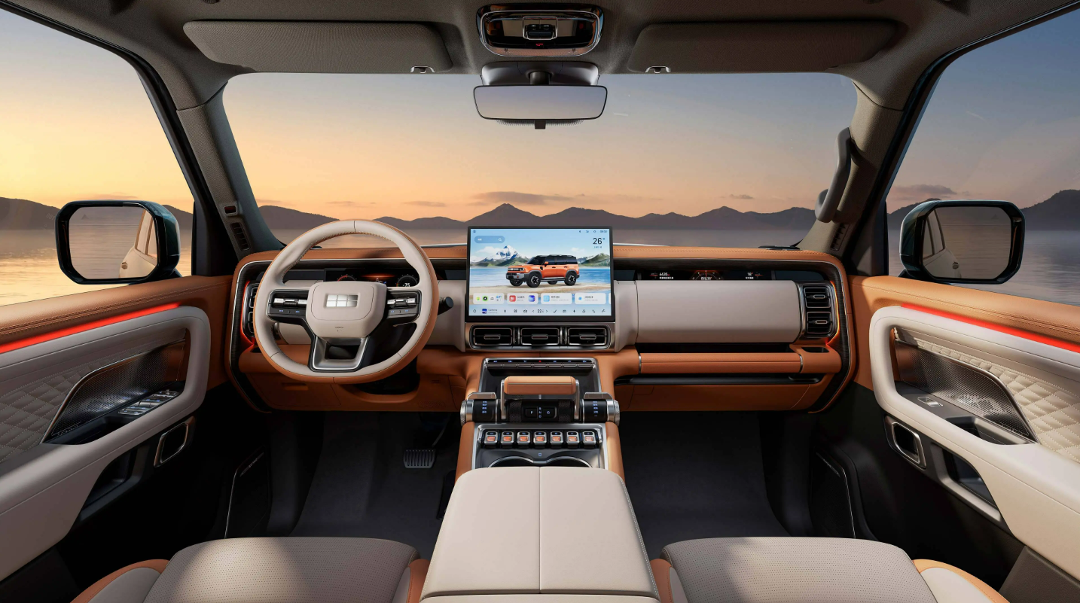
Consumers have high expectations, and so does Geely.
Geely aims to attract both city commuters who appreciate boxy designs and off-road enthusiasts seeking emergency buoyancy and other hardcore capabilities, even those challenging extreme scenarios like 45-degree inclines.
Consequently, the Warship 700's price range is exceptionally wide, spanning from just over 160,000 yuan to over 350,000 yuan. The limited off-road edition showcases Geely's technological prowess, offering a million-yuan-level experience at just over 300,000 yuan. Geely clearly aims to capture a significant market share, catering to users with diverse needs.
However, this market is no longer a blue ocean. While annual sales exceed one million units, competition is fierce, with over 50 models available or set to launch.
Previously, rugged boxy SUVs were concentrated in the 400,000 and 300,000 yuan price ranges. Now, with models like the Trumchi E7 and Warship 700, prices are dipping below 200,000 yuan, directly competing with mainstream home SUVs. Geely's ability to carve out a share remains to be seen.
02 No More Dominance for Fangchengbao Titan 7
From the Warship 700's SKUs, it's clear that its core sales versions are concentrated below 200,000 yuan. While it faces numerous competitors vying for market share, the Warship 700 has its key rivals.
BYD is a competitor Geely cannot overlook. Initially, the Warship 700 was seen as targeting the Fangchengbao 5, but given the 5's limited market performance, BYD's current boxy SUV star is the Titan 7, consistently selling 20,000 to 30,000 units monthly, far ahead in the boxy SUV market, with stable sales in both plug-in hybrid and pure electric segments.
In terms of price range, the Warship 700 and Titan 7 are highly aligned, with similar hardware configurations and comparable product strength. Both offer around 300 kilometers of pure electric range, similar 5-meter body lengths, and the Titan 7's best-selling versions are also two-wheel drive, positioning these two models in direct competition.
Next is the Great Wall H10, a 5-meter, 3-meter axle mid-to-large SUV that sold over 10,000 units in its first month, firmly establishing itself in the 200,000-230,000 yuan range, becoming one of the hottest new products in the market.
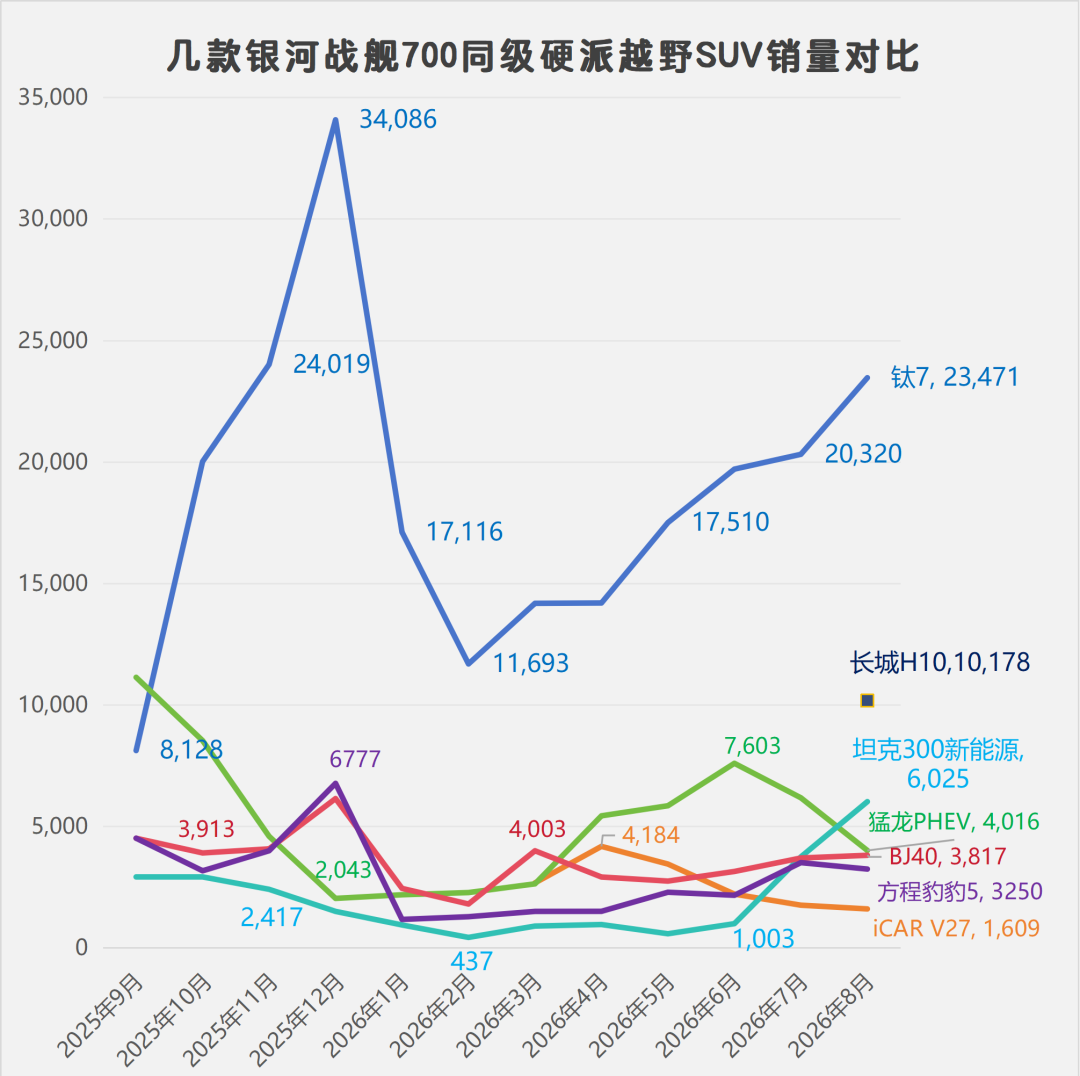
While the Warship 700 is slightly smaller than the Great Wall H10, its configuration in the 200,000-230,000 yuan range is significantly higher. For instance, at 230,000 yuan, the Warship 700 offers a 2.0T powertrain and air suspension, features only available on the top-spec Great Wall H10 at 230,000 yuan, while the Warship 700 includes them at just under 210,000 yuan.
Moving up, it competes directly with the Tank 300 New Energy , and near the 300,000 yuan mark, with established rugged models like the Fangchengbao 5 and Tank 400. It also aims to attract users of traditional professional off-road vehicles like the Beijing BJ40 and BJ60, as well as fuel and high-end rugged models like the Prado and Mengshi priced between 250,000 and 400,000 yuan.
Initial market feedback indicates high enthusiasm for the Warship 700. Pre-sales orders exceeded 50,000 units, and launch orders surpassed 10,000 units in just 12 minutes, reflecting strong consumer curiosity about Geely's first rugged boxy SUV.
On paper, the Warship 700 holds its own against competitors. However, enthusiasm does not guarantee sustained sales, raising two key questions.
Firstly, while Geely is experienced in home SUVs, this is its first true rugged off-road vehicle. The rugged off-road community values reputation, and market recognition of off-road capabilities is not achieved overnight by simply adding a chassis beam and differential locks. Sales stability depends on the real-world driving experiences of early adopters, their off-road performance, and subsequent word-of-mouth.
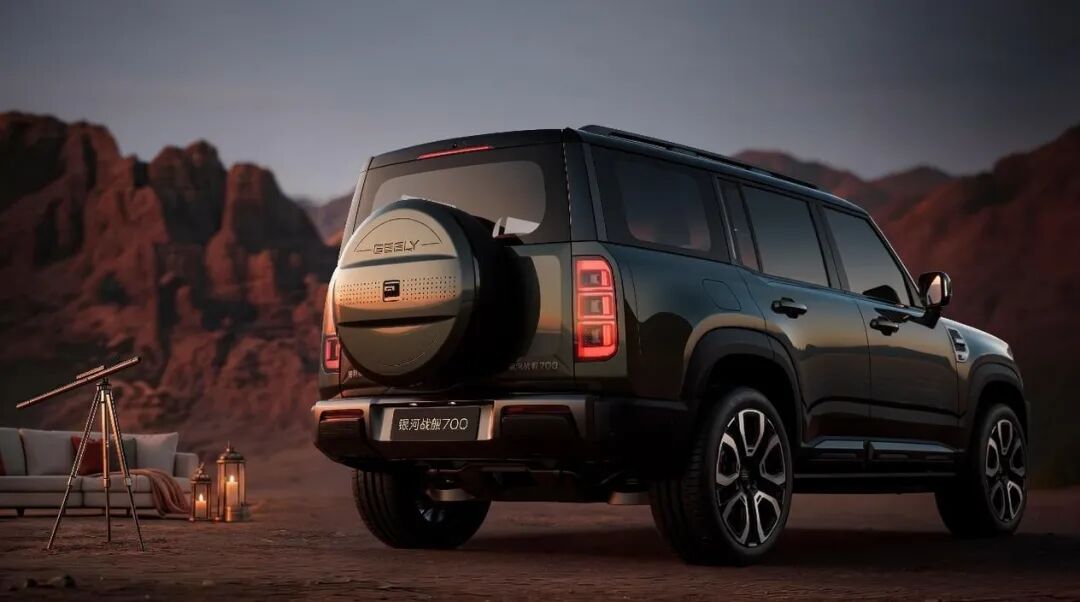
Secondly, can the Galaxy brand logo support the 170,000-230,000 yuan price range? Previously, the Galaxy M9 attempted to break into this segment but ultimately saw a decline after an initial surge. The core issue lies not solely in fierce market competition but also in whether the brand's value can uphold this pricing structure.
In contrast, competitors like the Fangchengbao Titan 7 use an independent logo, while the Great Wall H10, though bearing the Haval logo, adds the parent brand name "Great Wall," highlighting the reality of brand positioning. Consumer perception of brand value directly impacts a product's potential.
The Warship 700 represents Galaxy's renewed attempt to break into this price range. Whether it can shatter Geely Galaxy's 150,000 yuan ceiling and achieve brand elevation remains to be seen.",
-
![]()
Can JAC Motors Withstand Further Challenges?
-
![]()
NIO Achieves Three Consecutive Quarters of Profitability: Is Li Bin Walking on Air?
-
![]()
FAW Toyota and GAC Toyota Merge: FAW Leads the Exit! What’s the Real Value Behind the FAW-GAC Alliance?
-
![]()
Luxury Electric Cars Falter: Those Who Spent 1 Million Yuan Reconsider the Allure of Fuel Cars
-
![]()
Farewell to 'Bragging in the Name of Technology'
-
![]()
Is Li Auto's L Series Poised to Embrace Pure Electric? Is Range Extension on Its Way Out?
-
![]()
The Price is 30,000 Yuan Lower Than the Pre-sale Price: Who is the Galaxy Warship 700 Targeting?
-
![]()
Energy Storage Revenue Surges 8470%, A 60 Billion Giant Emerges with a New Gamble