Lei Jun Faces Immense Pressure as Xiaomi Phones Witness Largest Sales Decline for Three Straight Quarters!
 10/14 2026
 546
546
In the first quarter of 2026, global smartphone sales hit 298.5 million units, showing a year-on-year increase of 1%. At first glance, this figure may seem promising.
However, the reality is a tale of two extremes. Among the top five smartphone brands, Samsung and Apple saw growth, with increases of 8% and 10% respectively. In stark contrast, Xiaomi, OPPO, and VIVO experienced declines, with Xiaomi suffering the most significant drop at 19%.
The second quarter of 2026 painted a similar picture. Global smartphone sales reached 277.5 million units, marking a year-on-year decrease of 6.7%. The trend of divergence persisted, with Samsung and Apple continuing to grow, while Xiaomi, OPPO, and VIVO faced declines.
Samsung and Apple's growth rates were 8.1% and 15.3% respectively, whereas Xiaomi's sales plummeted by 26.3%, remaining the worst performer among the group. OPPO and VIVO, on the other hand, saw relatively smaller declines.
Recently, data for the third quarter of 2026 was unveiled, revealing a staggering 20% drop in sales. This marks the worst performance since 2012 and the lowest point in 14 years.
In terms of market share, Samsung and Apple continued to expand their foothold, with their shares surpassing those of the previous year. Conversely, Xiaomi, OPPO, and VIVO saw their market shares dwindle.
When it comes to sales figures, agencies reported that Xiaomi's sales plummeted by over 30%, while OPPO and VIVO experienced declines exceeding 20%. Once again, Xiaomi emerged as the worst performer.
Analyzing the performance over these three quarters, it becomes clear that Samsung and Apple have consistently grown in almost every quarter. In contrast, domestic smartphone brands, including Xiaomi, OPPO, and VIVO, have generally witnessed declines. Among them, Xiaomi has consistently fared the worst throughout the three-quarter period.
What's behind this trend? The answer lies in the surge in memory chip prices, which has triggered a structural reconfiguration of the entire smartphone industry and led to a major market reshuffle.
In the past, when smartphone sales declined, low-end and budget models often served as a lifeline, as there was always a steady demand for these devices.
However, this time around, the significant increase in memory chip prices has made memory the most expensive component in smartphones. Consequently, low-end smartphones have been forced to raise their prices due to higher memory costs. Yet, buyers of low-end models are highly price-sensitive, and these price hikes have deterred them. As a result, manufacturers like Xiaomi have significantly scaled back the release of many low-end models.
On the flip side, high-end smartphone users are less price-sensitive, so high-end models have been relatively unaffected. In contrast, low-end models have borne the brunt of the impact.
Among the top five brands, Xiaomi has traditionally offered the lowest prices, with an average price of just over 1,000 yuan in the past. Therefore, it has naturally been the most vulnerable to these market changes. OPPO and VIVO, which also have a significant presence in the low-end segment, have been less severely affected.
Conversely, Samsung and Apple have capitalized on their brand strengths to capture more sales in the high-end market, leading to year-on-year growth.
-
![]()
Alibaba, ByteDance, and META Are Fully Committed! Personal Agents Are on the Rise, and Only Those with Robust Models Can Compete
-
![]()
Memory Price Hike Triggers Aftershocks: Ultra Models Axed One by One, Making Flagship Phones a Tougher Sell
-
![]()
Yiwu: Emerging as the Shenzhen of Yesteryears
-
![]()
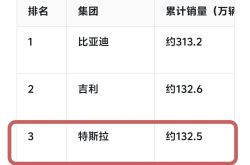
China Scales Back Support: Chinese Automakers Embark on Global Journey, Tesla Feels the Heat
-
![]()
Qianwen GO: Beyond Just Being Alibaba’s Shopping Assistant
-
Lei Jun Faces Immense Pressure as Xiaomi Phones Witness Largest Sales Decline for Three Straight Quarters!
-
![]()
September Sales Rankings for Boxy Cars: Warship 700 Secures Tens of Thousands of Pre-orders! Shenlan G318 at 99 Units, Xiangjie G9 at 234 Units? | Mingjing Pro
-
![]()
XPENG Motors had 33,752 vehicles insured in September, with Mona L03 surpassing 12,700 and Mona M03 exceeding 7,000!