China Scales Back Support: Chinese Automakers Embark on Global Journey, Tesla Feels the Heat
 10/14 2026
 379
379
When venturing into overseas markets with your cars, the government reduces your tax rebate by 4 percentage points. Meanwhile, Chinese automotive brands are making a splash at the Paris Motor Show, while Tesla grapples with a 13-month sales slump, having been overtaken by BYD in sales figures. 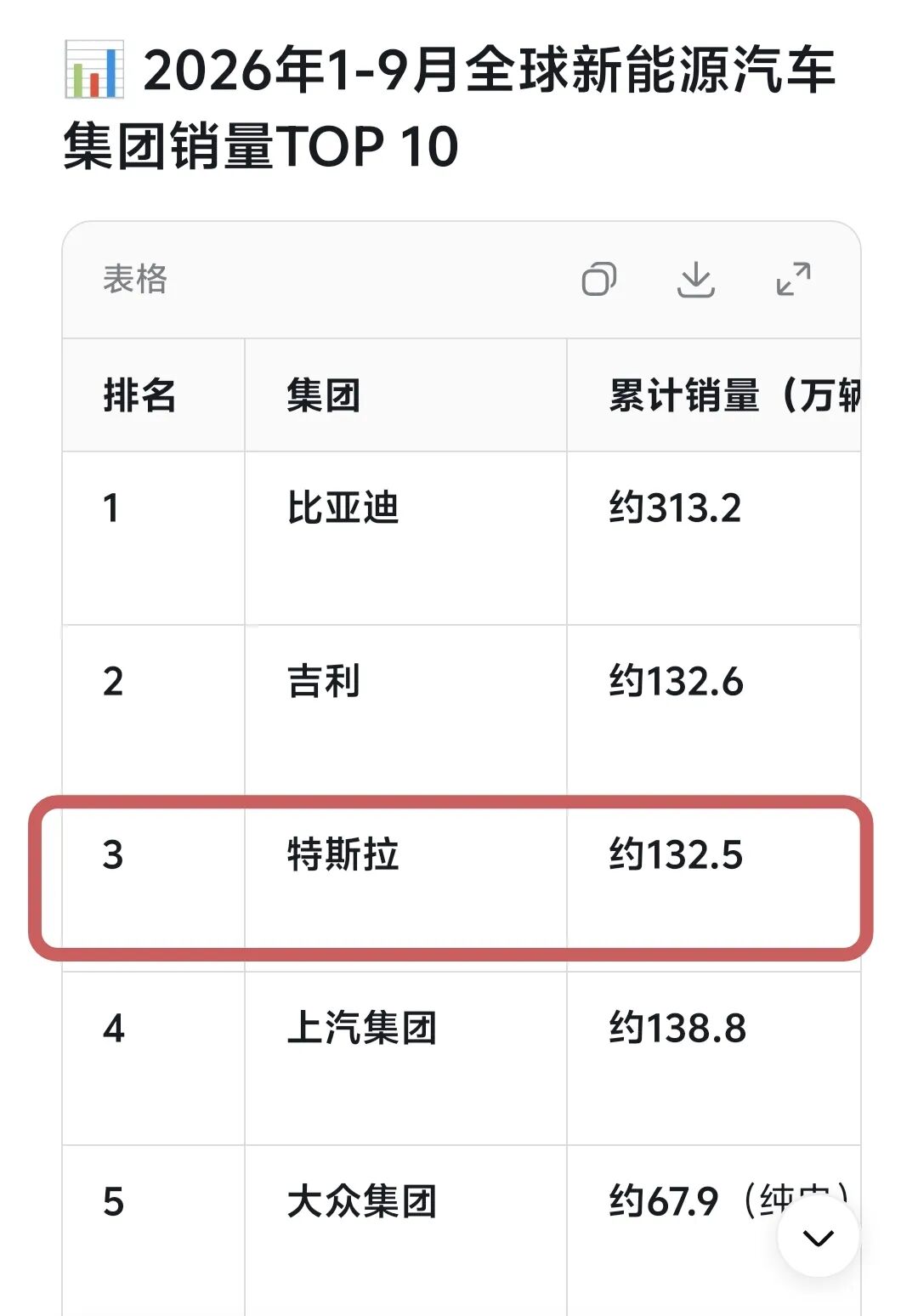
China is scaling back its support, and Chinese automakers are taking on the world. The one feeling the most heat? Tesla. On October 12, the Ministry of Finance and the State Taxation Administration announced that starting from April 1, 2027, the VAT export tax rebate rate for new energy vehicles will be slashed from 13% to 9%. This means for every 1 million yuan worth of cars exported, automakers will receive 40,000 yuan less in rebates. BYD, which exported 175,000 vehicles in September alone, saw a reduction of over 1.4 billion yuan in rebates for that month.
Yet, on the very same day, Chinese automakers were stealing the show at the Paris Motor Show.
The 91st Paris Motor Show kicked off on October 12, with 16 Chinese automakers showcasing 25 brands, making up roughly one-third of the total exhibitors and doubling their presence from the previous edition. BYD's booth stood next to Renault's, GAC Group was positioned beside Li Auto, and Geely was adjacent to Changan. Chinese brands' press conferences were consistently packed to the brim.
French President Emmanuel Macron stressed the need to "accelerate Europe's reindustrialization" at the opening ceremony. However, in the exhibition hall where he stood, one out of every three brands hailed from China. This visual representation carried more weight than any statistic. 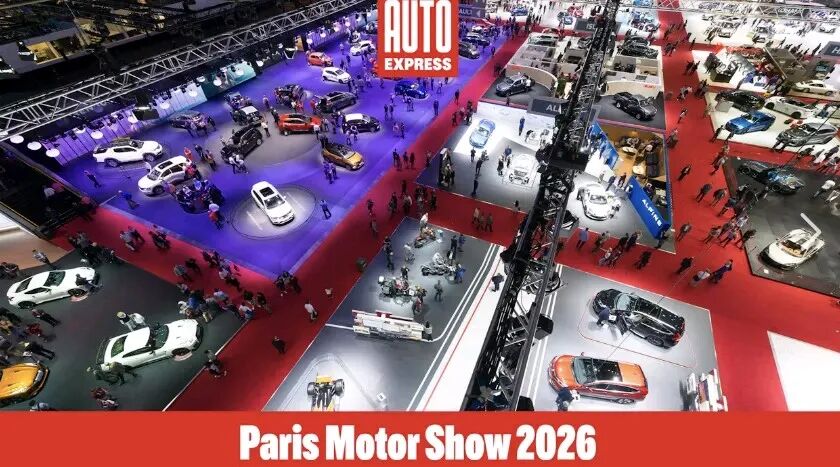
The message is crystal clear: The government is no longer providing export subsidies, compelling automakers to venture abroad and establish a foothold independently. And among those caught in this wave of global expansion, Tesla is the most jittery.
First, let's examine BYD's strategy. At the Paris Motor Show, BYD Executive Vice President Li Ke unveiled plans for a massive hiring spree in Europe, aiming to employ over 40,000 locals by 2030, with the potential to build two more factories in France or Spain in the future.
Now, consider Chery. The overseas country director position offers a salary of 30-50k with 15 months' pay, while the overseas regional deputy general manager position offers 40-70k with 15 months' pay. These roles are not for mere translators but for individuals capable of being stationed overseas and establishing local systems. 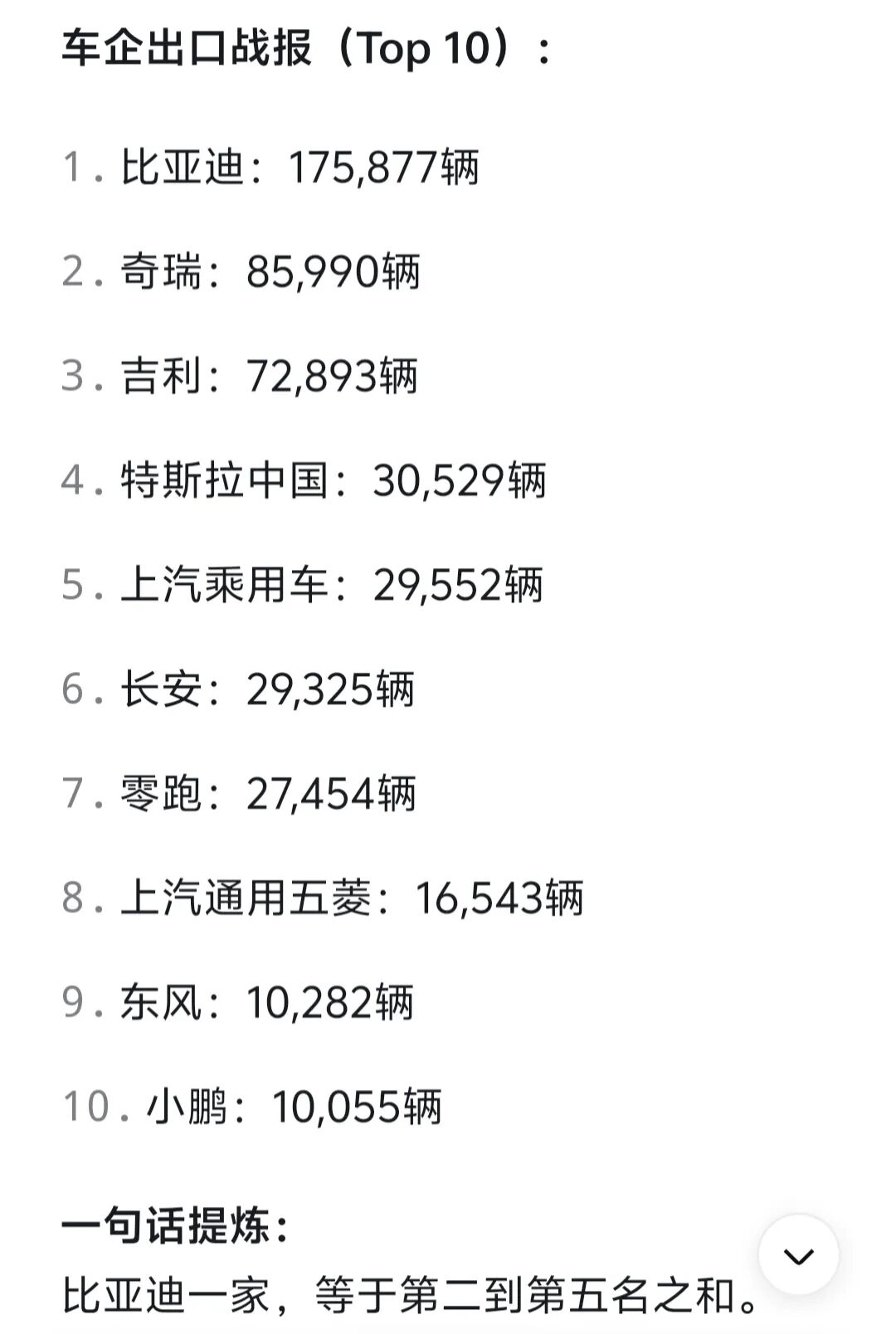
From "exporting complete vehicles" to "exporting ecosystems," Chinese automakers are setting up factories, deploying personnel, and establishing systems overseas. BYD's Thailand factory has commenced production, its Brazil factory has begun mass production, and its Hungary factory is set to launch in the second quarter of 2026. Chery has established a joint venture factory in Spain and a KD assembly base in Malaysia. Leapmotor has launched its B10 model through Stellantis' Spain factory. XPENG's first batch of G6 models has rolled off the production line at its Malacca factory in Malaysia.
Meanwhile, Tesla is being pushed to the sidelines.
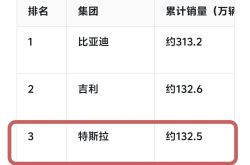
In January 2026, Tesla's registrations in Europe plummeted by 17%, with a market share of only 0.8%, marking a 13-month consecutive decline. During the same period, BYD's sales were 2.26 times that of Tesla. In the first four months of this year, Chery exported 147,771 vehicles to Europe, SAIC exported 134,229, BYD exported 98,315, while Tesla only exported 49,850, directly being pushed out of the top three.
While Chinese automakers are "updating models every six months," Tesla's Model 3/Y, which have been in service for over seven years, are facing unprecedented competition. The Model 3 made its debut in 2016, and the Model Y in 2019, with only minor updates since. Faced with the rapid iteration speed of Chinese automakers, Tesla's product aging issue has become glaringly apparent.
A research report by CITIC Securities points out that leading automakers can offset profit impacts through terminal price hikes, dealer sharing, and overseas factory construction. It also notes that tax policies do not affect the global competitiveness of high-quality independent automakers in the long run. Fu Yifu, a researcher at Susong Bank, believes that the policy uses tax rebates as a lever to shift the competitive logic from "price competition" to "capability competition."
To put it bluntly: The government is no longer subsidizing your exports with tax rebates; you have to venture abroad and establish a foothold independently.
Before 2027, automakers with overseas factories can weather the storm; those relying solely on complete vehicle exports will see their profits eroded. And when automakers' profits are squeezed to the limit by policies, salary cuts, layoffs, and cost-cutting measures will inevitably ripple through the entire industry chain.
Tesla's anxiety is just the first domino in this major reshuffle.
How long do you think Tesla can hold on in Europe? Which Chinese automaker will be the first to succeed in going global? Share your thoughts in the comments section.
#Mao Qiying's AI Circle #Export Tax Rebate Reduction #Paris Motor Show #Tesla #BYD #New Energy Vehicle Global Expansion
---
Data and image sources: Ministry of Finance, China Automotive News, Xinhua News Agency, Securities Times.
-
![]()
Alibaba, ByteDance, and META Are Fully Committed! Personal Agents Are on the Rise, and Only Those with Robust Models Can Compete
-
![]()
Memory Price Hike Triggers Aftershocks: Ultra Models Axed One by One, Making Flagship Phones a Tougher Sell
-
![]()
Yiwu: Emerging as the Shenzhen of Yesteryears
-
![]()
China Scales Back Support: Chinese Automakers Embark on Global Journey, Tesla Feels the Heat
-
![]()
Qianwen GO: Beyond Just Being Alibaba’s Shopping Assistant
-
Lei Jun Faces Immense Pressure as Xiaomi Phones Witness Largest Sales Decline for Three Straight Quarters!
-
![]()
September Sales Rankings for Boxy Cars: Warship 700 Secures Tens of Thousands of Pre-orders! Shenlan G318 at 99 Units, Xiangjie G9 at 234 Units? | Mingjing Pro
-
![]()
XPENG Motors had 33,752 vehicles insured in September, with Mona L03 surpassing 12,700 and Mona M03 exceeding 7,000!