Memory Price Hike Triggers Aftershocks: Ultra Models Axed One by One, Making Flagship Phones a Tougher Sell
 10/14 2026
 549
549
Would you be willing to splash out on an Ultra model priced at 10,000 yuan?
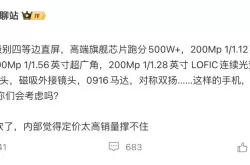
Not long ago, tech blogger @Digital Chat Station spilled the beans on the specs of an 'Ultra' flagship smartphone. This device boasts ultra-narrow 1mm bezels on all four sides, a benchmark score soaring past 5 million, symmetrical dual speakers, three cameras with large 200-megapixel sensors, and supports continuous optical zoom. Packed with top-notch features, it's rumored to be the Xiaomi 18 Ultra.
However, the blogger later revealed that the development of this phone had been shelved. The reason? Cost constraints. The 12GB+256GB version was priced at a hefty 9,999 yuan, deemed too steep internally and unlikely to maintain sales volume.
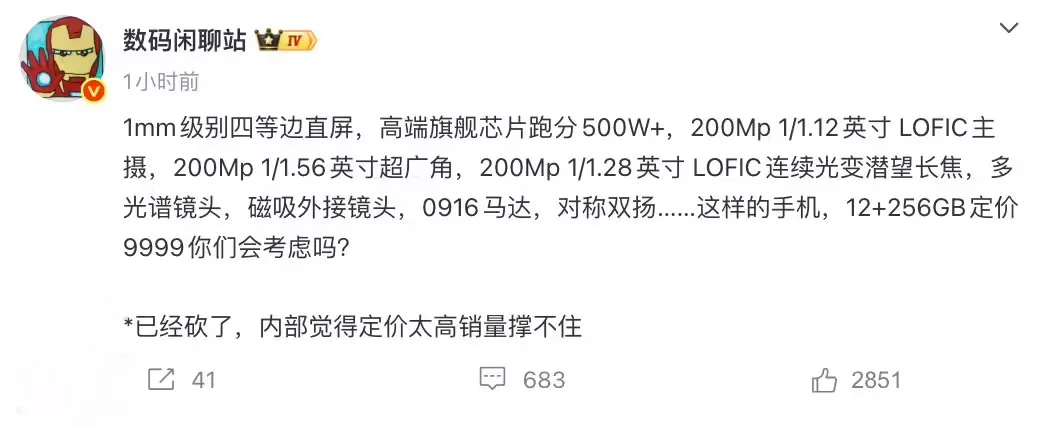
(Image source: Weibo screenshot)
In fact, Leitech discovered that as early as mid-August this year, X platform blogger @Kartikey Singh had already hinted that Xiaomi had axed the 18 Ultra. Furthermore, the next-generation Ultra flagships from OPPO and vivo would only hit the Chinese market, skipping global release.
Ultra models are being axed left and right, all thanks to the memory price hike.
Since the dawn of the smartphone era, phone suffixes have evolved multiple times. Eventually, 'Ultra' has emerged as the top-tier model, often dubbed the 'ultra-large cup'.
Traditionally, smartphone makers unveil the standard, Pro, and Pro Max versions of their new flagships in autumn or winter each year, followed by the Ultra version in spring of the following year. Netizens would then debate which phone reigns supreme as the new flagship king. However, the battle for the 2027 flagship crown might be over before it even begins.
Xiaomi isn't the first to ditch an Ultra model. The Huawei Pura 90 series, launched in April this year, was the first to forgo the Ultra version. At the time, many netizens questioned whether the Pura 90 series could still uphold its reputation as an 'imaging pioneer' without its 1-inch large sensor and dual periscope zoom.
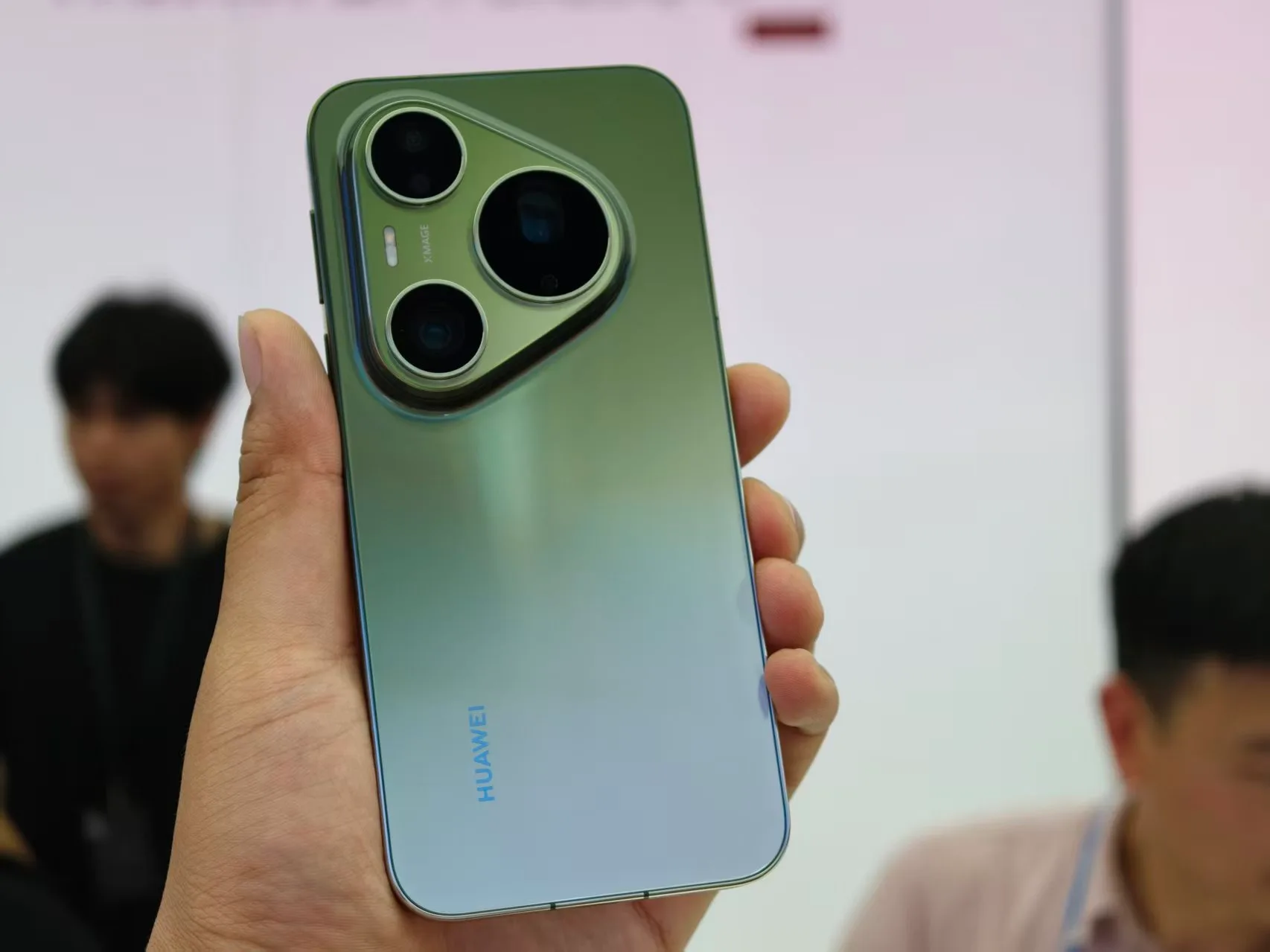
(Image source: Leitech)
In August this year, @Digital Chat Station disclosed that a smartphone targeting the offline market and photography enthusiasts would scrap its ultra-large cup version, suspected to be the Huawei nova 17 series.
As for OPPO and vivo's Ultra models, while configuration details keep leaking, cancellations are also widely reported. Whether they'll see the light of day remains uncertain. What is clear is that smartphone makers are streamlining their product lines.
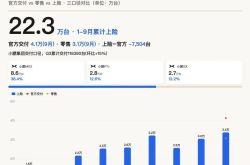
The primary culprit behind this trend? Flagship smartphones are genuinely struggling to sell. Data on flagship phone sales orders released by tech blogger @RD Observation shows that as of the 40th week of 2026 (September 28-October 4), the vivo X500 series sold approximately 143,800 units, the OPPO Find X10 series around 175,700 units, the Xiaomi 18 series about 284,600 units, and the Honor Magic 9 series roughly 209,400 units.
Compare that to the Xiaomi 17 series, which sold over a million units in just five days post-launch, and the sales of the Xiaomi 18 series look dismal. The first-week sales of OPPO and vivo's new flagships have also dipped compared to their predecessors.
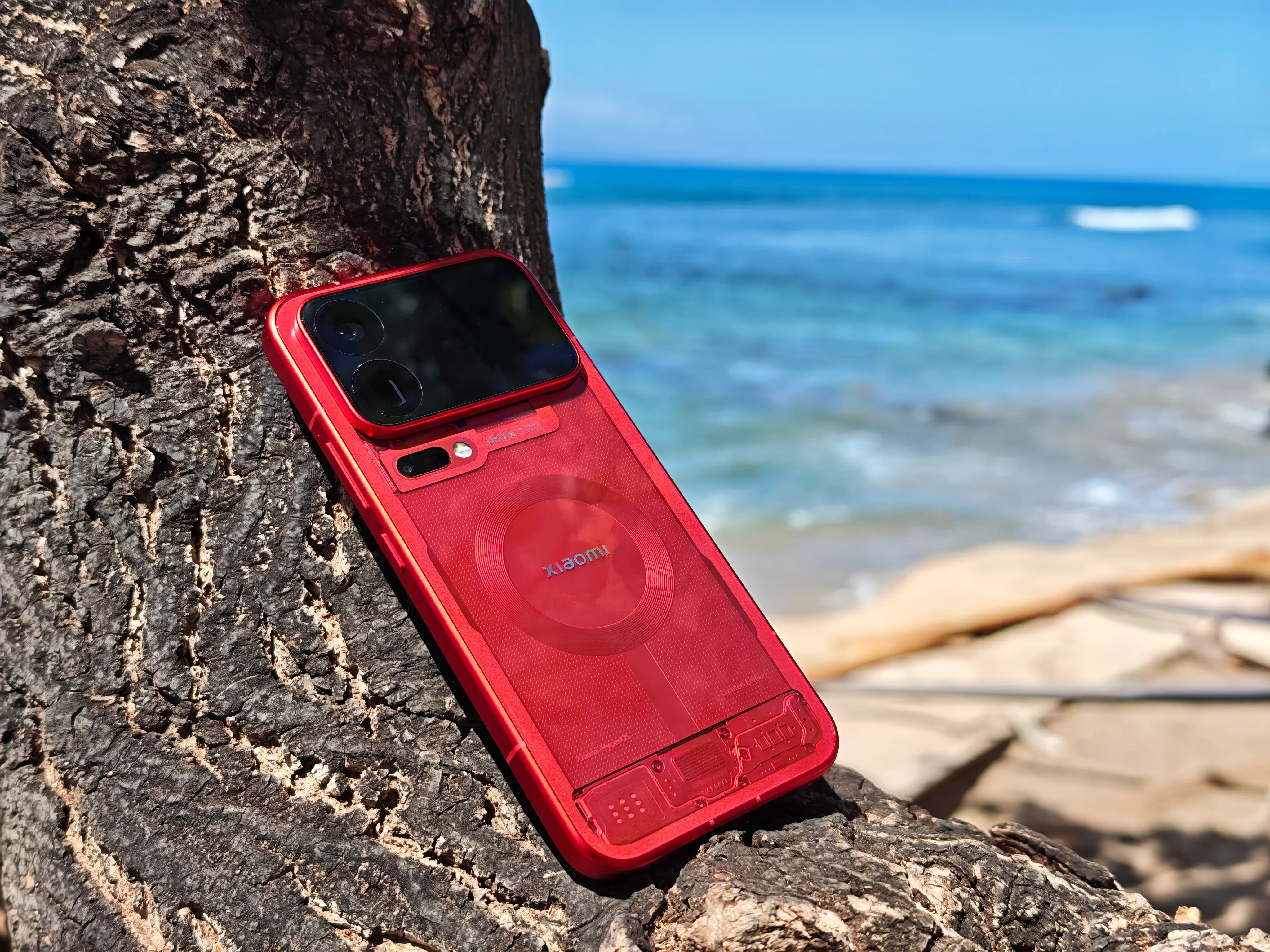
(Image source: Leitech)
The blame for soaring smartphone prices and sluggish sales lies with AI manufacturers. The high demand for memory chips for AI large model training and inference has prompted memory makers to hike prices drastically. The cost of a 12GB+256GB memory combo has surged from 500 yuan to 2,200 yuan, significantly inflating smartphone hardware costs.
Consequently, new products from mainstream global smartphone makers have generally seen price hikes to varying degrees. Even some models released earlier this year and last year have seen price increases ranging from several hundred to over a thousand yuan.
Just a few years ago, smartphone makers were vying to boost memory capacity. Brands like OnePlus, REDMI, Realme, RedMagic, Nubia, iQOO, and Honor successively released models with 24GB of memory. Now, 12GB has become the mainstream configuration, with few new models featuring 24GB of memory in the near future.
Against the backdrop of rising memory prices and generally increasing smartphone prices, only brands like Apple and Huawei, which have a strong foothold in the high-end market and whose products were originally priced higher than Android flagships, have been less affected by the price hikes and can maintain or even boost their sales.
What consumers are most concerned about is whether the prices of future flagship phones will drop and whether Xiaomi's Ultra models will make a comeback.
Is Xiaomi leading the charge towards the end of the smartphone Ultra model era?
In May this year, @Digital Chat Station revealed that among domestic manufacturers, only OPPO and vivo still offer traditional ultra-large cup Ultra flagships (excluding Honor RS models). At the time, some netizens questioned why Xiaomi, which sells more flagship phones, had scrapped its ultra-large cup model while OPPO and vivo retained theirs. The reason may be linked to Xiaomi's hefty investment in its automotive business, which has yet to turn a profit, making cost-cutting more crucial for Xiaomi than for OPPO and vivo.
Whether Xiaomi's Ultra models will return in the future and whether OPPO and vivo will follow suit depends largely on memory chip prices.
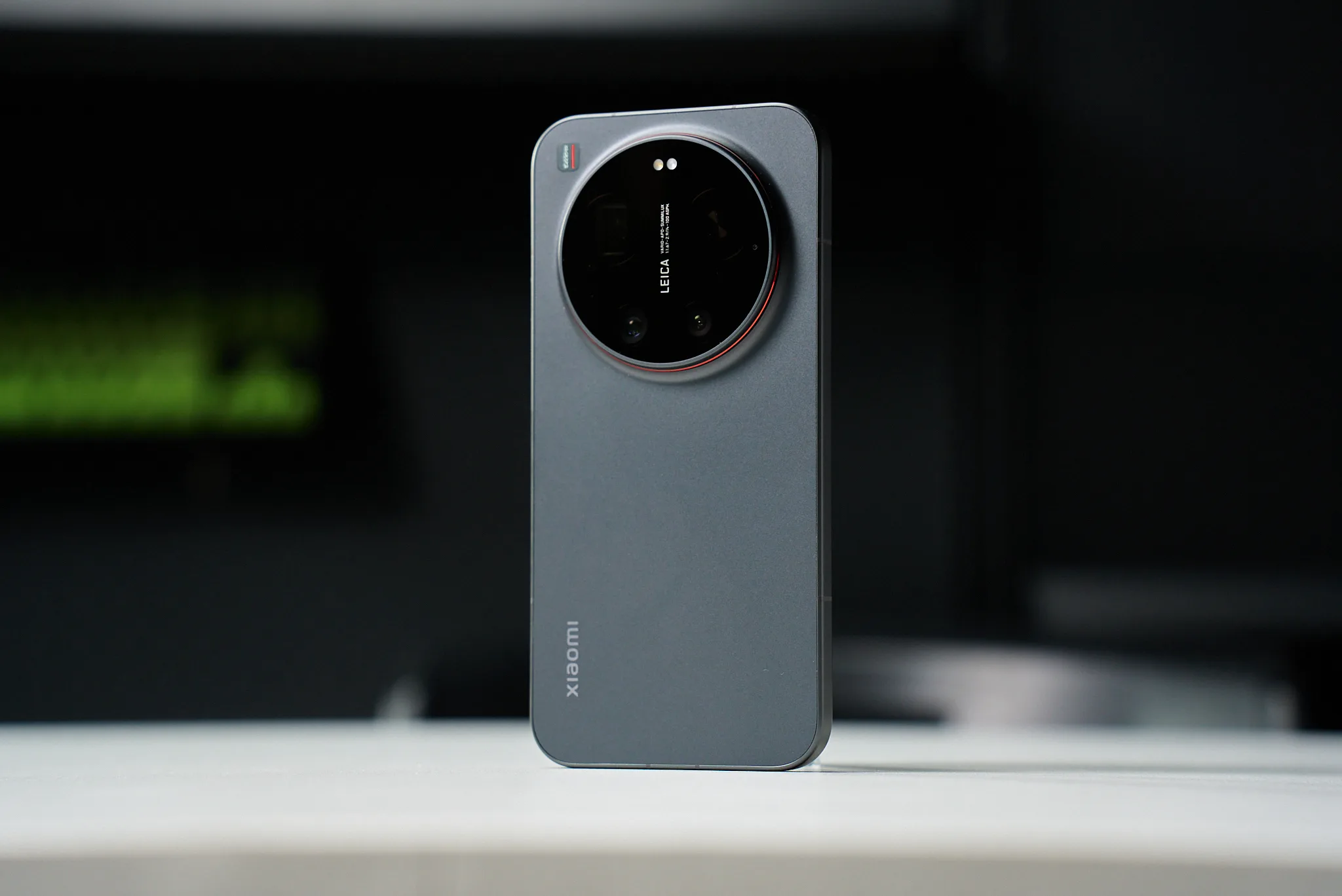
(Image source: Leitech)
According to industry research firm TrendForce, memory chips will remain in short supply in the fourth quarter of 2026. Conventional DRAM prices are expected to rise by 10%-15% quarter-over-quarter, mobile DRAM average selling prices by 0%-5% quarter-over-quarter, and NAND Flash prices by 15%-20% quarter-over-quarter.
Compared to the first half of this year, memory chip price increases have slowed but continue to climb. Leitech predicts that memory chip prices will remain high for the next two to three years. Based on this, the starting price of Ultra models will hover around 10,000 yuan, making it tough for manufacturers to recoup R&D and production costs.
If the industry remains in a high-cost state for an extended period, Xiaomi's Ultra models are unlikely to return anytime soon, and OPPO and vivo may also ditch theirs.
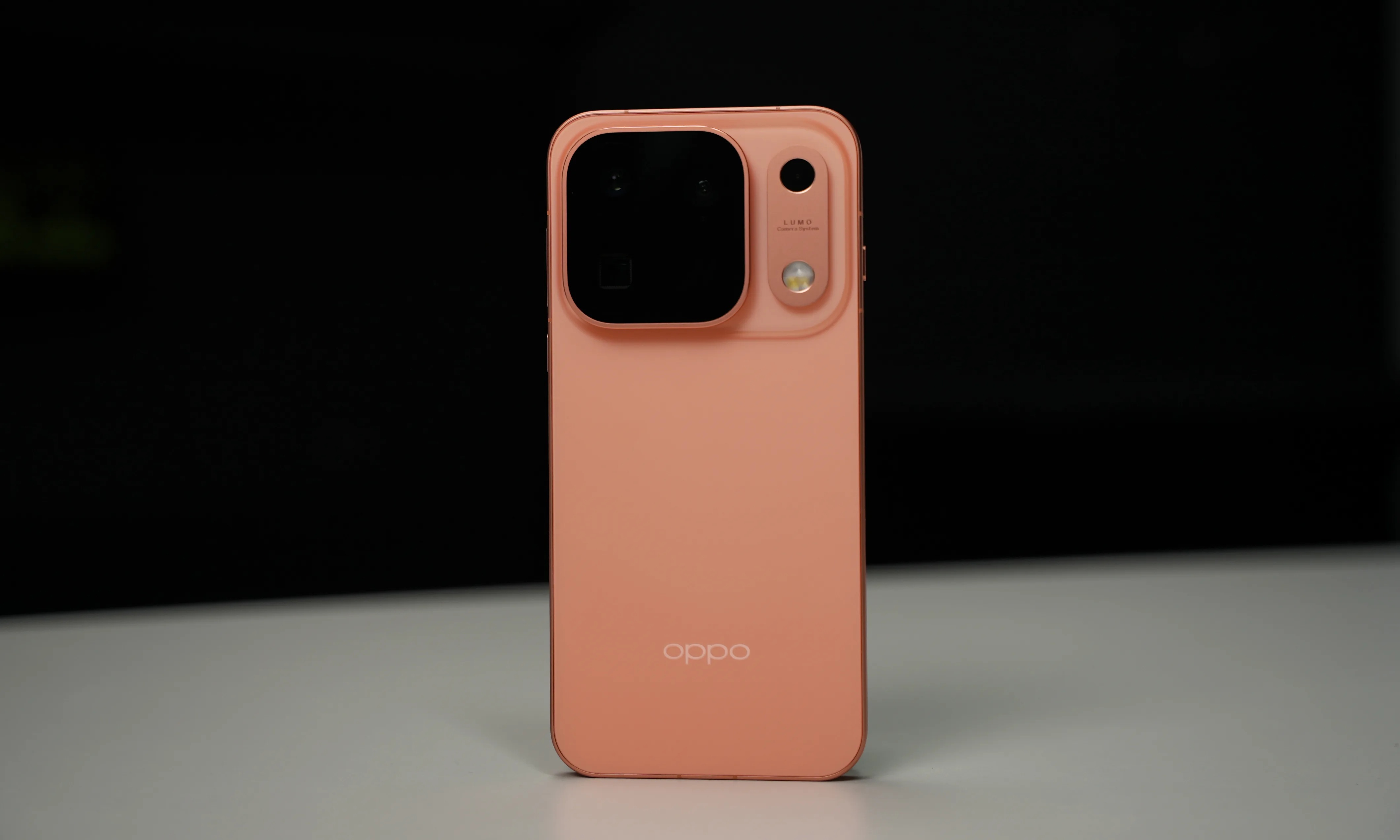
To counter consumer resistance to price hikes for flagship models, newly released models this year have generally been 'upgraded'. For instance, the OPPO Find X10 Pro Max features three 200-megapixel cameras, a second-generation Danxia restoration lens, and a LUMO light and shadow engine; the vivo X500 Pro Max retains the 200-megapixel periscope telephoto lens from the X300 Ultra and boasts a 2K 144Hz screen; the Xiaomi 18 Pro Max is equipped with a Leica main camera, dual 200-megapixel cameras, triple speakers, and a privacy screen.
(Image source: Leitech)
In terms of configurations, the new generation of Pro Max models from mainstream Android manufacturers is very close to Ultra models, with differences typically lying in screen resolution, main camera CMOS size, and optical zoom range. In other words, even without Ultra models, the experience of these Pro Max models will not be significantly inferior.
Of course, for smartphone makers, Ultra models are not just expensive phones; they represent a showcase of technical prowess and a benchmark. Even if they cannot recoup R&D and production costs, Xiaomi will likely reintroduce an Ultra flagship eventually.
Leitech has a brainwave: perhaps manufacturers will align Ultra models more closely with concept phones, producing them in limited quantities primarily for technological demonstration. This would significantly reduce investment during the production phase.
Ultra models are tough to produce, and the path to smartphone premiumization is arduous.
The cancellation of the Xiaomi 18 Ultra, ostensibly due to rising memory chip prices making cost recovery difficult, points to a deeper issue: OPPO, vivo, and Xiaomi have failed to establish themselves in the high-end market with ecosystems and brand value like Huawei and Apple.
According to data released by @RD Observation, as of the 40th week of 2026, iPhone 18 Pro series sales had reached 2.8909 million units, Huawei Pura X View sales reached 494,000 units, and Mate 90 series sales were 270,200 units.
Notably, the Mate 90 series was released on October 1, giving it about a week less sales time than Android flagships, yet its sales surpassed those of OPPO and vivo. The Pura X View, Huawei's first ultra-wide straight phone, introduced a new form factor, prompting numerous manufacturers to follow suit.
In the past, Android manufacturers attempted to establish a high-end image through self-developed chips and under-display camera technology. However, building brand value takes time and persistence. If the Xiaomi MIX series had continued, emulating Nubia and RedMagic by making under-display cameras a unique selling point, many Xiaomi fans would likely still support it today.
For consumers, there's no need to mourn the disappearance of Ultra models. With upgraded Pro Max versions offering an experience increasingly close to that of Ultra models at more competitive prices, there's little reason to splurge on Ultra models. Even if all major manufacturers retain traditional ultra-large cup models, Leitech does not recommend ordinary consumers with limited budgets to spend more on Ultra models; Pro Max versions are sufficient for most use cases.
Source: Leitech
Images in this article are from the 123RF licensed image library. Source: Leitech
-
![]()
Alibaba, ByteDance, and META Are Fully Committed! Personal Agents Are on the Rise, and Only Those with Robust Models Can Compete
-
![]()
Memory Price Hike Triggers Aftershocks: Ultra Models Axed One by One, Making Flagship Phones a Tougher Sell
-
![]()
Yiwu: Emerging as the Shenzhen of Yesteryears
-
![]()
China Scales Back Support: Chinese Automakers Embark on Global Journey, Tesla Feels the Heat
-
![]()
Qianwen GO: Beyond Just Being Alibaba’s Shopping Assistant
-
Lei Jun Faces Immense Pressure as Xiaomi Phones Witness Largest Sales Decline for Three Straight Quarters!
-
![]()
September Sales Rankings for Boxy Cars: Warship 700 Secures Tens of Thousands of Pre-orders! Shenlan G318 at 99 Units, Xiangjie G9 at 234 Units? | Mingjing Pro
-
![]()
XPENG Motors had 33,752 vehicles insured in September, with Mona L03 surpassing 12,700 and Mona M03 exceeding 7,000!