Yiwu: Emerging as the Shenzhen of Yesteryears
 10/14 2026
 530
530
Hey there, I'm Uncle Chen.
I've made several trips to Yiwu lately, and I've noticed something remarkable: it's no longer the small-commodity city we once knew. Yiwu now boasts a significantly stronger tech presence, leading me to believe that it's transforming into the Shenzhen of 15 years ago.
Let me share a few points that have completely revolutionized my perception of Yiwu.
1. China's Largest County-Level High-Speed Railway Station. Despite being a county-level city, Yiwu's high-speed railway station ranks as the second-largest in Zhejiang Province, even surpassing those in Ningbo and Wenzhou. After expansion, Yiwu Station now features 11 platforms and 27 tracks, making it the largest high-speed railway station among county-level cities in China.
2. China's Youngest 'Major City'. Yiwu's actual population, including migrants, exceeds 3.4 million, with approximately 1.2 million being youths, constituting more than half of the resident population. It truly deserves the title of the 'youngest major city.'
3. China's Second-Largest City for Express Delivery Volume. Yiwu's annual express delivery volume reached a staggering 21.553 billion pieces, ranking second in the country after Guangzhou. However, Guangzhou has a population of 19 million. In terms of per capita express delivery volume, Yiwu is far ahead.
4. Yiwu's Transformation from 'Capital of Small Commodities' to 'First Stop for Smart Hardware Going Global'. The newly built Global Digital Trade Center spans over 560 acres, with a building area exceeding 1.25 million square meters and a total investment of over 8.3 billion yuan. It has become the world's largest source of IP products and a distribution hub for drones, robots, and smart wearables, attracting companies like Unitree Robotics and BrainCo.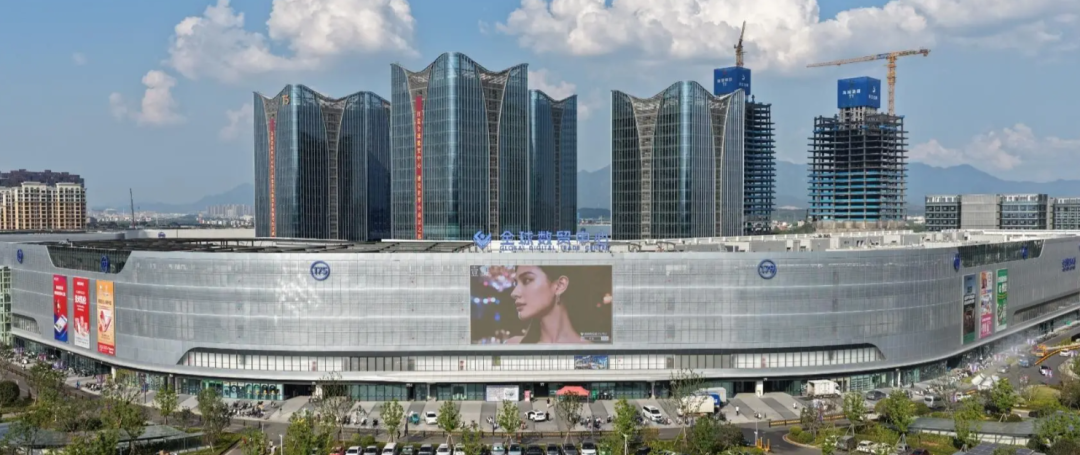
Yiwu's 'New Face': A Dazzling Array of Smart Hardware
Yiwu International Trade City, renowned as the world's largest small commodity distribution center, previously consisted of five districts, each with a distinct focus. This year, Yiwu has made substantial investments to establish District 6, a Global Digital Trade Center.
I primarily explored District 6 of Yiwu's Digital Trade City, a newer area dedicated to technology and smart hardware. As you walk inside, you'll discover numerous items that were once rare in Yiwu: drones, wearable devices, smart home hardware, AI toys, and desktop robots.
Many shops no longer merely sell products; they also engage in product displays, solution matching, and even small-batch customization.
The images below are just a glimpse of what's available. The place is enormous, with the entire 3rd and 4th floors dedicated to tech products like new consumer hardware.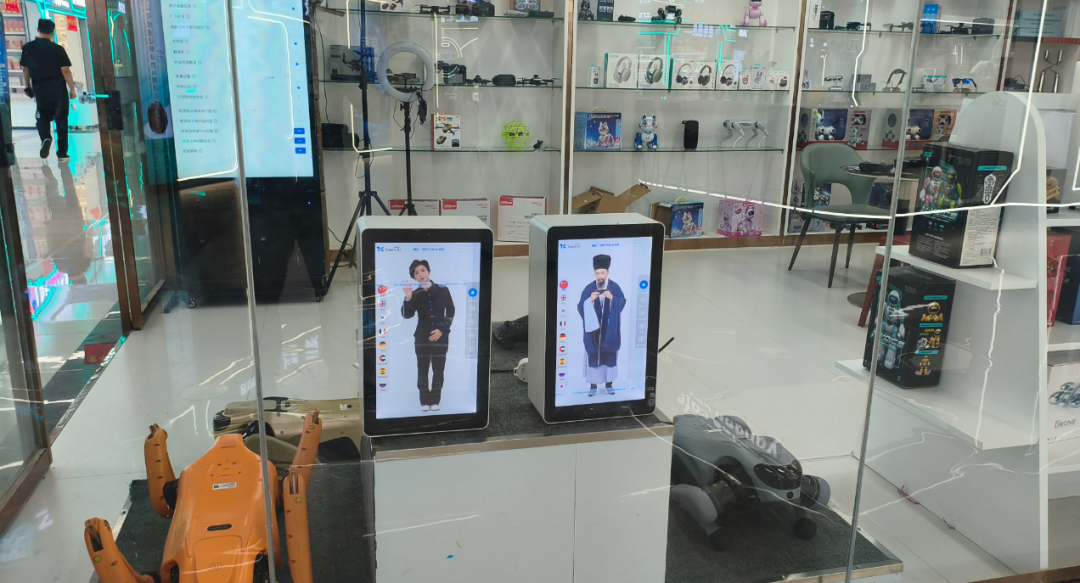
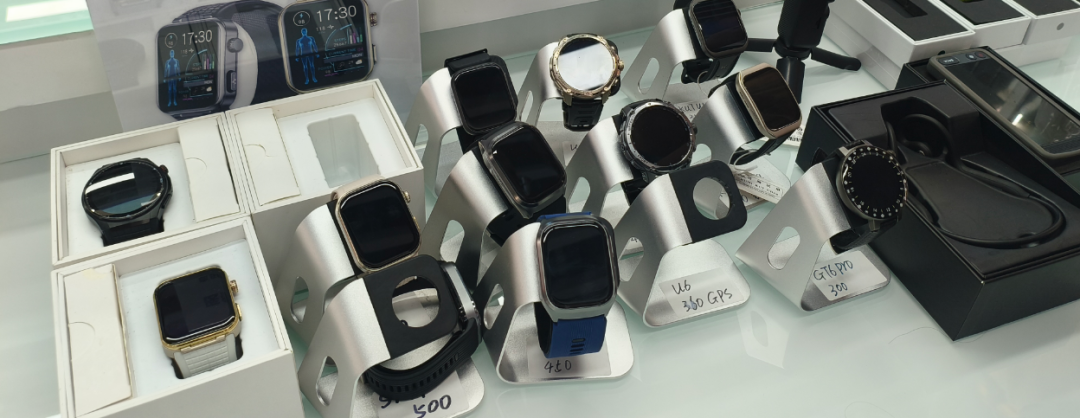
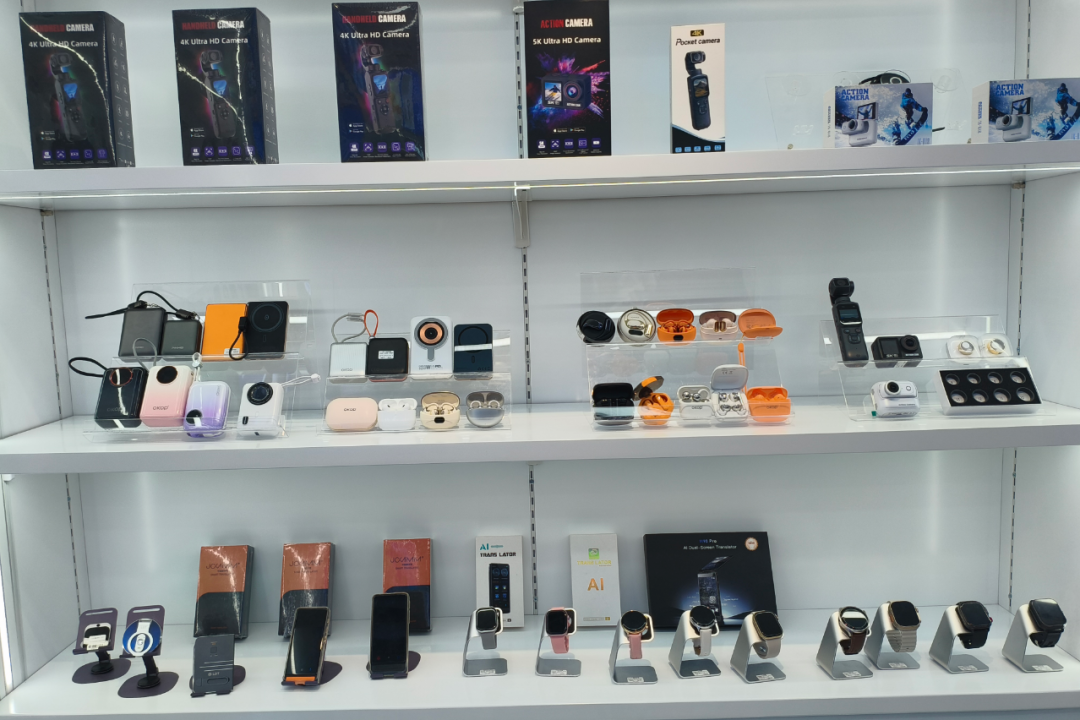
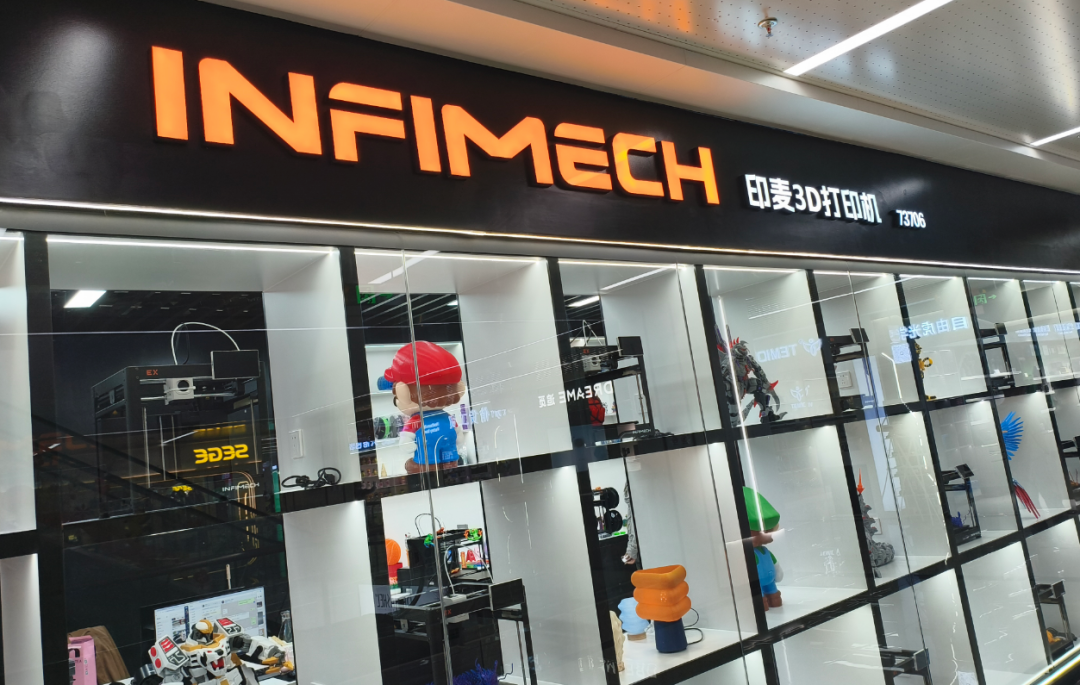
I chatted with several shop owners, including one whose store primarily sells wearable hardware products like smartwatches, smart earphones, and smart glasses. He mentioned that smart glasses are the most popular, with many foreign clients visiting specifically for them.
These smart glasses are not the branded AI glasses I've previously reported on; most are wholesale products priced between two to three hundred yuan, but sold in large quantities.
If Shenzhen is research-and-development-oriented and innovation-focused, then Yiwu serves as one of the best channels for bringing tech products to market.
Shenzhen is a paradise for hardware entrepreneurship, as referenced in my previous article 'Shenzhen Hardware: A Paradise for Entrepreneurs.' Yiwu, on the other hand, acts as a springboard for hardware going global.
Yiwu's Hardware Supply Chain: Stronger Than Many Imagine
During my visit, I also attended an offline hardware workshop themed 'Hardware for Good,' organized by BluRun Ventures' Social Value Investment Fund. The theme was 'From Idea to Product Launch.'
The organizers invited Yiwu's local Industrial Design Center and Mould Industry Association. I learned that Yiwu has its own dedicated Industrial Design Center and a large Mould City with numerous mature prototyping factories and small-batch production lines.
An idea can go from drawing to mold in just two weeks. While the time might be similar in Shenzhen, the cost could be higher.
Most hardware entrepreneurs I've met in Hangzhou and Shanghai immediately think of Shenzhen for mold production and small-batch prototyping, overlooking nearby Yiwu.
With the maturity of 3D printing, CNC, and other equipment, Yiwu now boasts super-flexible capabilities for rapid prototyping and small-batch production.
These speakers guided a group of entrepreneurs through product definition, industrial design, structural design, mold making, prototyping, and mass production.
The Industrial Design Center offers product definition, industrial design, structural design, packaging design, and even branding. If you have an idea, they help you turn it into drawings.
The Mould Industry Association handles mold making, injection molding, stamping, die-casting, and other processes, turning drawings into physical products quickly and cost-effectively.
Combined with Yiwu's strong foreign trade channels and small commodity supply chain, the path from idea to mass production to global sales is remarkably short.
Yiwu is transforming from a place that 'sells small commodities' to a place that 'makes small commodities,' especially hardware with a tech edge.
Yiwu's hardware infrastructure is stronger than many imagine.
Yiwu's supply chain is not like Huaqiangbei's 'electronic component market'; it's a full chain from design to mold to mass production to shipping. It's more down-to-earth and better suited for small-batch, multi-variety, rapidly iterating hardware products.
Shenzhen: Becoming Elite-Oriented, While Yiwu Still Offers Opportunities for Ordinary People
Saying Yiwu is like Shenzhen 15 years ago is because Shenzhen is no longer what it was 15 years ago.
Fifteen years ago, a one-meter counter in Huaqiangbei was sufficient to start a business. A few thousand yuan could get you mold making and prototyping. An ordinary engineer with a few colleagues could create a hardware product and sell it worldwide.
Back then, Shenzhen was a paradise for grassroots entrepreneurs.
What about Shenzhen now? Rent in Nanshan Tech Park might be ten times that of Yiwu. A hardware startup team renting a small office and hiring a few engineers could easily spend tens of thousands of yuan per month on labor costs, rent, and supply chain payments.
Over the past decade, Shenzhen has been striving to shed its reputation as the 'Shanzhai Capital' (counterfeit goods hub), and it has indeed produced global brands like DJI, Anker, Bambu Lab, and Insta360.
So, Shenzhen is increasingly attracting big companies, big capital, and high-tech talent. For ordinary young people, starting a hardware business from scratch in Shenzhen is becoming increasingly costly.
Shenzhen is becoming 'the Shenzhen of the elite,' needing PhDs, returnees, ex-big-company executives, and serial entrepreneurs. Opportunities for ordinary people are being squeezed out by high costs.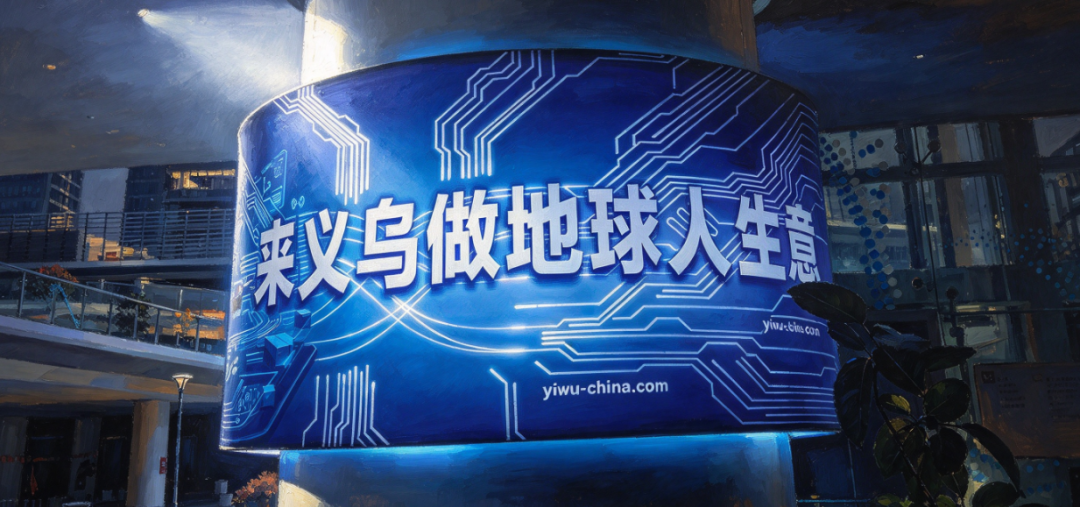
Uncle Chen's Final Thoughts:
Of course, I'm not blindly praising Yiwu. Can Yiwu become the next Shenzhen? I think it's hard to say for now because Shenzhen's DNA is 'technology' and 'innovation,' while Yiwu's is 'trade' and 'manufacturing.'
But Yiwu offers ordinary people a 'low-cost trial and error' opportunity. If you visit Yiwu next time and step out of the high-speed railway station, you'll see many pillars with a slogan: 'Once you're here, you're one of us.'
Doesn't that sound familiar? Yes, Yiwu is learning from Shenzhen in every way, both in appearance and substance.
Currently, Yiwu is cultivating an environment where ordinary people can also build hardware products from scratch.
-
![]()
Alibaba, ByteDance, and META Are Fully Committed! Personal Agents Are on the Rise, and Only Those with Robust Models Can Compete
-
![]()
Memory Price Hike Triggers Aftershocks: Ultra Models Axed One by One, Making Flagship Phones a Tougher Sell
-
![]()
Yiwu: Emerging as the Shenzhen of Yesteryears
-
![]()
China Scales Back Support: Chinese Automakers Embark on Global Journey, Tesla Feels the Heat
-
![]()
Qianwen GO: Beyond Just Being Alibaba’s Shopping Assistant
-
Lei Jun Faces Immense Pressure as Xiaomi Phones Witness Largest Sales Decline for Three Straight Quarters!
-
![]()
September Sales Rankings for Boxy Cars: Warship 700 Secures Tens of Thousands of Pre-orders! Shenlan G318 at 99 Units, Xiangjie G9 at 234 Units? | Mingjing Pro
-
![]()
XPENG Motors had 33,752 vehicles insured in September, with Mona L03 surpassing 12,700 and Mona M03 exceeding 7,000!