Apple Order Cuts or Not, Apple Supply Chain Inventory Demands Attention!
 10/15 2026
 402
402
My phone slipped out of my pocket, and the back cover cracked. When I went to a repair shop to inquire about the cost, I was told it would exceed 400 RMB for a replacement.
Xingkong Jun hesitated for a moment upon seeing the repair quote. This small piece of glass, which was just a fraction of the total cost when the phone left the factory, had seen its value skyrocket during the repair process.
Lens Technology has been a key player in the phone glass industry for nearly two decades. Starting with protective screens for the first-generation iPhone, its factories in Liuyang and Changsha have transformed glass substrates into essential components for phones, tablets, and watches. The company initially focused on watch glass pieces before evolving to shape 2D glass into 3D curved surfaces and straight-panel covers into flexible films for foldable screens.
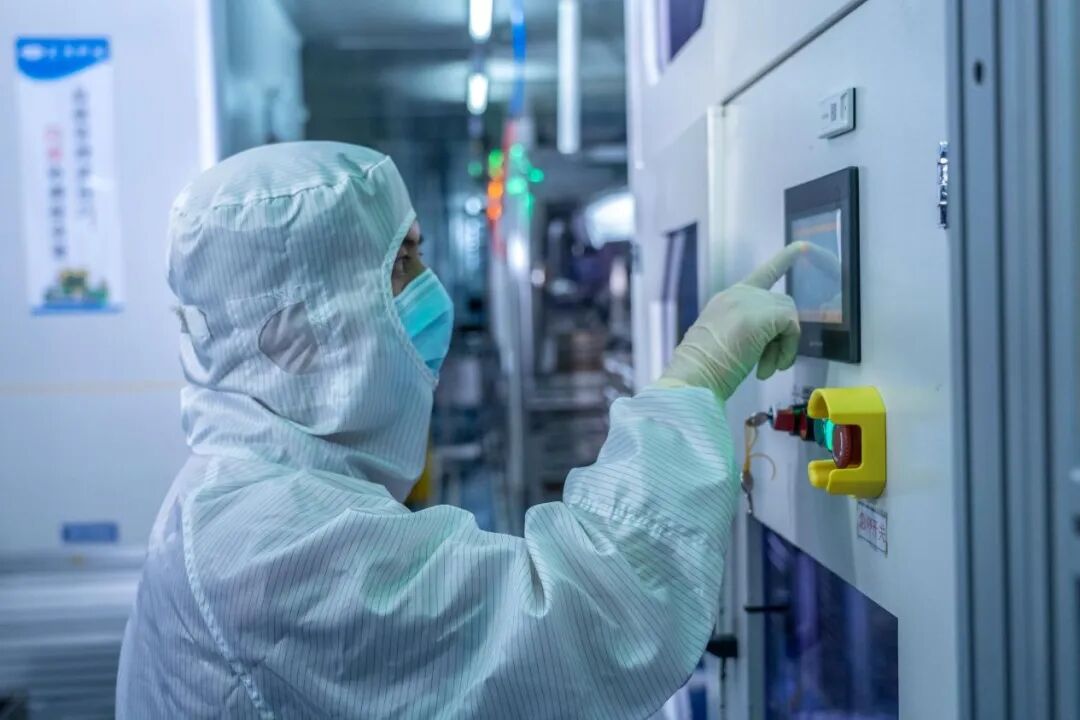
This is a classic example of a component business, characterized by heavy capital investment, low production yields, and a limited customer base. The upside is that once you secure a spot in the supply chain of leading brands, you can maintain that position for years. The downside, however, is that if your customers face difficulties, your situation deteriorates rapidly.
For component companies, success often hinges not solely on their own efforts but also on the sales performance of their major clients' products. This is an inherent industry trait, not a reflection of operational prowess.
1. 28.866 Billion RMB and 16.43% Growth
In the first half of 2026, Lens Technology reported total operating revenue of 28.866 billion RMB, a 12.42% year-on-year decrease. Net profit attributable to shareholders of the listed company was 577 million RMB, down 49.52% year-on-year. Net profit after deducting non-recurring items was 278 million RMB, a 70.45% year-on-year decline.
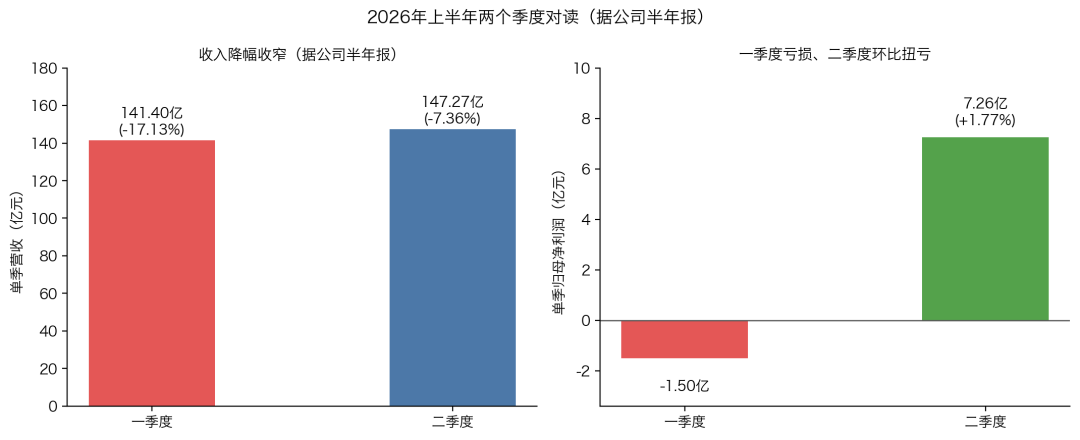 Data Source: ifind
By conventional standards, this financial report is underwhelming.
However, two other figures in the same report stand out: the overall gross margin was 16.43%, up 2.21 percentage points year-on-year. The gross margin for the second quarter alone was 18.2%, a 2.47 percentage point increase year-on-year.
While revenue is declining, gross margin is rising. The simultaneous occurrence of these two trends signals a shift in the company's product mix.
The revenue share from smartphone and computer businesses decreased from 82.48% in the same period last year to 77.54%, a nearly 5 percentage point drop, with automotive and head-mounted display businesses taking up some of the slack.
Breaking down the half-year revenue into two segments clarifies the situation: revenue from smartphone and computer businesses decreased by 4.8 billion RMB, while revenue from non-phone businesses increased by 700 million RMB. The net decrease was about 4.1 billion RMB, aligning with the overall revenue decline of 12.42%. The revenue drop is primarily attributable to the traditional businesses.
2. On the Assembly Line
Reports suggest that Apple has requested some suppliers to reduce component production for the iPhone 18 Pro and Pro Max, with October order volumes cut by 15% to 20% from the original plan. The reason is straightforward: soaring memory chip prices have driven up the overall device cost, dampening consumer purchasing willingness. Consequently, Apple has been gradually lowering its shipment expectations since early September.
Rising memory prices are not new to the phone industry. According to TrendForce's forecast for memory prices in the fourth quarter, conventional DRAM contract prices are expected to rise by 10% to 15% quarter-on-quarter, with overall DRAM prices, including HBM, increasing by 15% to 20%. NAND flash memory is also projected to rise by 15% to 20%. TechInsights calculations show that the cost of 12GB of RAM has more than doubled, while 256GB of flash memory has nearly tripled, with memory's share of the total bill of materials (BOM) rising from around 10% to nearly 30%.
As costs rise, so must prices. Several domestic mid-to-low-end models have seen price increases of 300 to 500 RMB (according to public reports), immediately impacting sales. IDC data reveals that global smartphone shipments in the first quarter of 2026 decreased by 4.1% year-on-year. For iPhone 18 production in the second half of the year, Citi lowered its forecast from 84 million units to 81 million units.
These figures form a clear causal chain when applied to Lens Technology's financial report.
In addition to cover glass, Lens also manufactures metal structural components and handles whole-device assembly. Assembly is the most capital-intensive part of the chain, with the value of a whole device measured in tens to hundreds of dollars, leaving only a slim margin for the processing stage.
The results are evident in the semi-annual report: revenue from smartphone and computer businesses was 22.382 billion RMB, a 17.67% year-on-year decrease, accounting for 77.54% of the company's total revenue. The company attributed the decline to terminal demand disturbances caused by the memory chip cycle and reduced assembly business revenue. Compared to 27.185 billion RMB in the first half of 2025, this segment saw a revenue decrease of 4.8 billion RMB.
Interestingly, the gross margin for this segment was 16.17%, up 2.99 percentage points year-on-year.
Viewing assembly and cover glass together can easily lead to misjudging the company's health. Assembly business revenue is calculated based on the whole device price, with the vast majority being the value of materials supplied by customers. Lens only earns money from the final processing step. Revenue from cover glass and structural components truly reflects processing capabilities. For the same phone, the revenue value and gross margin of these two businesses are not comparable.
As low-margin assembly revenue decreases, the segment's gross margin naturally rises. During the same period, the company expanded its domestic customer base, taking on assembly for products like action cameras. In the second quarter, despite a decline in assembly revenue, the segment's overall revenue still achieved quarter-on-quarter growth, with the gross margin further rising to 17.91%, a 3.78 percentage point increase year-on-year.
3. 513 Million RMB in Allowances within 8.4 Billion RMB of Inventory
Inventory is a key indicator of a manufacturing company's expectations. Rushed inventory preparations indicate confirmed orders, while hesitant preparations suggest customers are adopting a wait-and-see approach.
In the semi-annual report, Lens's inventory book balance was 8.446 billion RMB, up 14.36% from 7.384 billion RMB at the beginning of the year. After excluding 513 million RMB in impairment allowances, the book value was 7.933 billion RMB, a 14.43% year-on-year increase (as disclosed in the semi-annual report). With revenue declining and inventory rising, this combination warrants explanation.
Raw materials: 1.411 billion RMB, up about 44% from the beginning of the year. Turnover materials: 635 million RMB, up about 89% from the beginning of the year. Self-made semi-finished and in-process products: 2.583 billion RMB, up nearly 10%. Finished goods: 2.706 billion RMB, basically unchanged. Goods in transit: 1.018 billion RMB, the same as at the beginning of the year.
The significant increases in raw materials and turnover materials are for inventory preparations. These preparations are for new orders, betting that these orders will materialize. UTG glass for foldable screens, automotive glass, and structural components for AI glasses all require advance material preparations in the warehouse, as the cycle from material input to delivery is not short.
Inventory impairment allowances at the end of the period were 513 million RMB, with a provision ratio of 6.07%, compared to 6.12% at the beginning of the year. 431 million RMB was provisioned this period, while 370 million RMB was reversed or written off, equivalent to 81.7% of the allowance balance at the beginning of the year. The company explained this as the consumption or sale of inventory for which provisions had been made at the beginning of the period, with a recovery in net realizable value.
After these inflows and outflows, the impairment allowance only net increased by 61 million RMB. The expansion of inventory scale has not yet resulted in significant book losses.
Comparing it to revenue scale: the 7.933 billion RMB in inventory book value at the end of the half-year is approximately equivalent to 1.65 months of operating revenue. For a precision machining company, this level is not high, indicating that order expectations have not been stretched too far.
By detail, the highest provisions were for finished goods (169 million RMB) and self-made semi-finished and in-process products (190 million RMB), together accounting for over 80% of the provisions made this period. The most reversals or write-offs also occurred in these two categories. The company's handling of impairments for in-process and finished goods is quite consistent: reductions are made when necessary, and sales are written off.
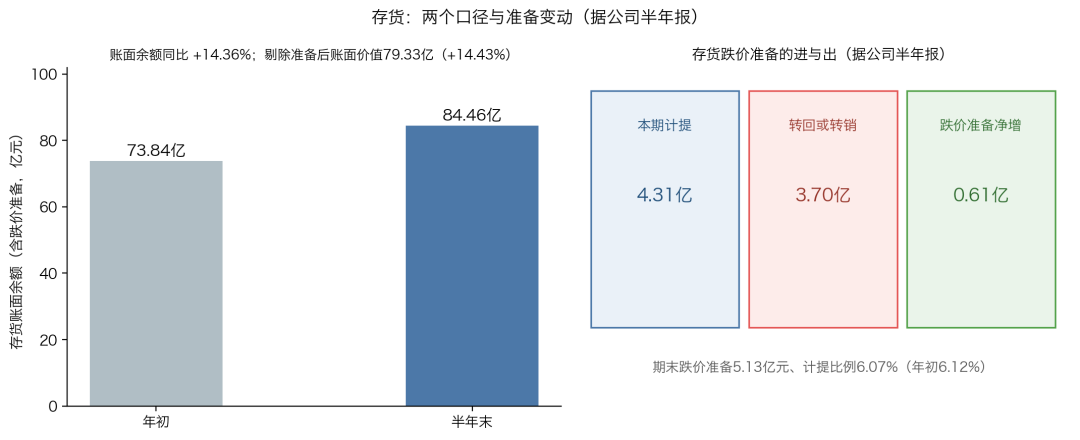
Data Source: ifind
For comparison, Luxshare Precision, also in the Apple supply chain, had an inventory book balance of 52.335 billion RMB at the end of the half-year, with a provision ratio of 3.76%. Lens's provision ratio is about 1.6 times higher. In the same order-cutting storm, the two companies have different attitudes toward inventory impairments, with Lens leaving a wider margin.
-END-
Disclaimer: This article is based on the public company attributes of listed companies and core analysis and research relying on information disclosed by listed companies in accordance with their legal obligations (including but not limited to interim announcements, periodic reports, and official interaction platforms). Shi Yu Xingkong strives for fairness in the content and viewpoints presented in the article but does not guarantee its accuracy, completeness, or timeliness. The information or opinions expressed in this article do not constitute any investment advice, and Shi Yu Xingkong is not responsible for any actions taken as a result of using this article.
Copyright Notice: The content of this article is original to Shi Yu Xingkong and may not be reproduced without authorization.
-
![]()
Apple Order Cuts or Not, Apple Supply Chain Inventory Demands Attention!
-
![]()
Toyota’s North-South Integration at a Pivotal Moment: Huang Jian Steps In to Steer Key Initiatives
-
![]()
Avatr Steers Away from Pioneering Aesthetics, Embracing a More Mainstream Appeal
-
![]()
How 79-Year-Old Lao Gan Ma Founder Tao Huabi Leveraged AI to Achieve 5.4 Billion Yuan in Revenue
-
![]()
Breaking News! Doubao Faces a Collective 'Ban' from Tencent, Alibaba, and Others for Attempting Mobile Phone Manipulation
-
![]()
How Robust Are China’s New Energy Vehicles? A Look at Eight Months of Global Market Sales
-
Competition in Ecosystems: AI’s Next Frontier
-
![]()
The cost per vehicle is 73,000 yuan higher in Europe than in China; European markets can't stop Chinese cars by any means