Toyota’s North-South Integration at a Pivotal Moment: Huang Jian Steps In to Steer Key Initiatives
 10/15 2026
 579
579
Media reports confirm that Huang Jian, former President of Trumpchi Business Unit (BU), has rejoined GAC Toyota as Executive Vice President and the highest-ranking Chinese executive, just half a month after Wen Dali’s departure. His appointment aligns closely with the launch of a major initiative to integrate Toyota’s northern and southern operations in China.
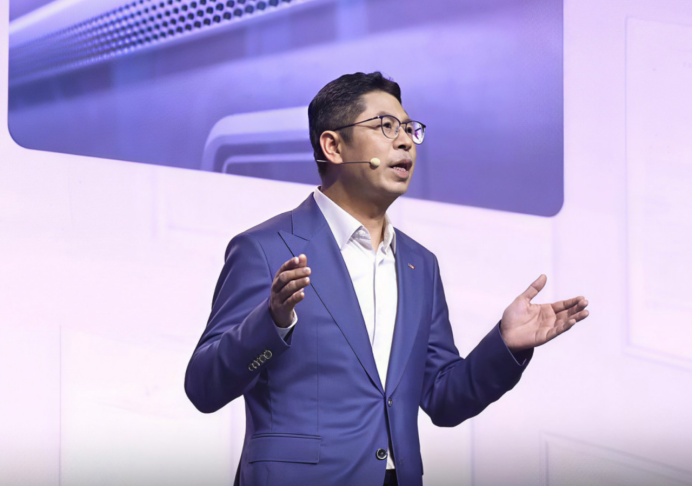
This move is far from routine. In 2026, amid challenging conditions for many joint venture automotive brands, GAC Toyota achieved counter-trend growth. Its semi-annual report reveals 356,000 vehicles sold in the first half of the year, a 3.29% year-on-year increase, with energy-saving and new energy vehicles comprising 69.40% of total sales. GAC Toyota remains a vital and dependable profit generator for GAC Group. By appointing Huang Jian, GAC Group aims to leverage his understanding of both Toyota’s systems and the dynamics of the Chinese market.
Huang Jian joined GAC in 1998 and oversaw procurement, finance, production, and digital transformation at GAC Toyota around 2020, including managing the localization of the bZ3X and bZ7 models. In January 2026, he became President of Trumpchi BU, where he led reforms to integrate research, production, and sales. Less than nine months later, he was recalled. Industry insiders note that his background is “ideally suited for cross-entity coordination during integration,” as he understands Toyota’s processes while also having experience with the faster pace required by an independent brand.
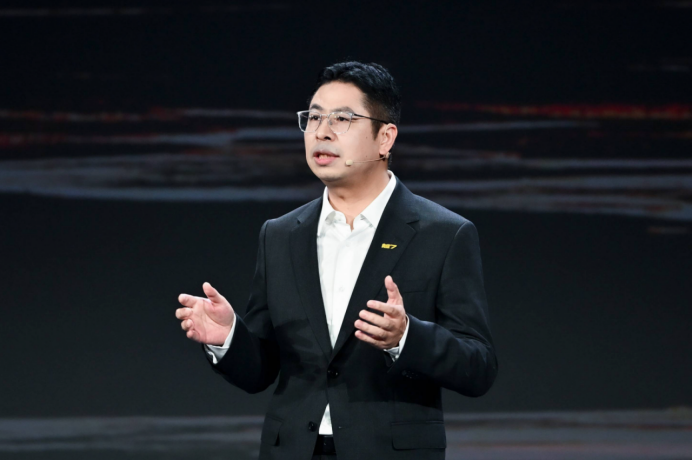
Huang Jian’s return comes at a crucial moment for integrating Toyota’s northern and southern operations in China.
On October 8, China FAW Group, Toyota Motor, and GAC Group signed a new strategic cooperation framework agreement. Under this agreement, GAC Group plans to acquire a 50% stake in FAW Toyota through share issuance. After the transaction, China FAW will become a key strategic shareholder of GAC Group, and GAC Group will emerge as the common Chinese shareholder for both northern and southern Toyota operations. The next phase will involve joint management of R&D, procurement, production, and sales functions by the two joint ventures.
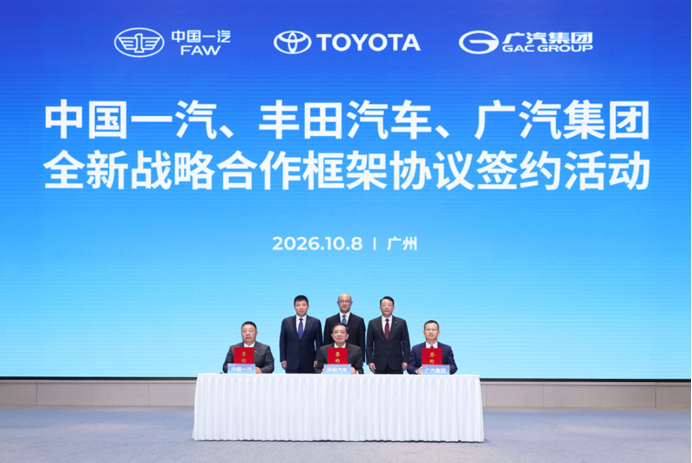
This marks the formal beginning of integrating Toyota’s “dual joint venture, dual system” structure in China, which has been in place for over two decades.
The benefits of this integration are clear. In 2025, combined sales of Toyota’s northern and southern operations accounted for 17.03% of joint venture passenger vehicle sales, ranking among the top in market share. However, the two independent R&D, procurement, and sales systems have led to significant redundant investments, with internal competition between sister models on the same platform continuously eroding profits. Industry estimates suggest that post-integration, joint procurement, model optimization, and channel synergy could reduce overall cost ratios by 2 to 3 percentage points.
The challenges, however, are substantial. The first issue involves deciding which sister models to retain: Corolla or Levin? Wildlander or RAV4? Camry or Avalon? Continuing to sell both would render integration meaningless; discontinuing one raises questions about production line allocation, capacity utilization, and personnel placement.
A more nuanced challenge lies in redefining divisional responsibilities. According to Securities Times, FAW Toyota—the entity GAC Group plans to acquire—handles vehicle production, while FAW Toyota Motor Sales Co., Ltd. (FTMS), an independent legal entity, manages sales. Future plans may see GAC Toyota primarily responsible for R&D and supply chain, while FAW Toyota focuses on marketing and channels. Although FAW Group will no longer directly hold shares in FAW Toyota, it will retain a 38% stake in FTMS, remaining within the system.
This “stepping back without fully exiting” arrangement means integration is not a simple merger but a delicate operation requiring precise dissection and gradual alignment.
Huang Jian faces two primary tasks. The first is integration coordination. He must balance Japanese adherence to standards with Chinese demands for speed, driving synergy in channels, product planning, and procurement between northern and southern Toyota operations. Reports indicate that FAW Toyota’s 4S dealerships can already provide after-sales maintenance for GAC Toyota models, marking the start of channel synergy exploration.
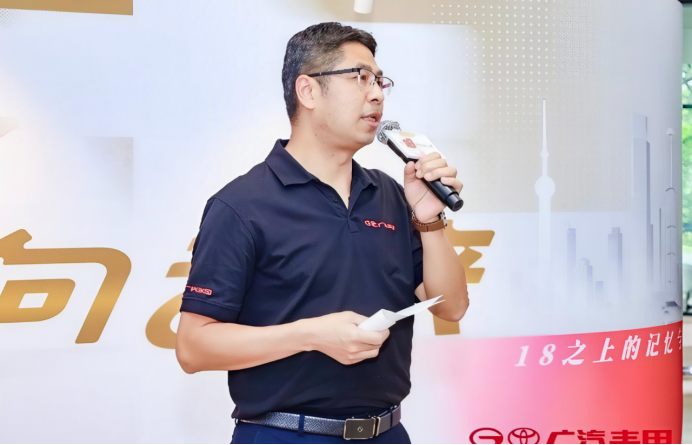
The second task, perhaps more urgent, is aligning GAC Toyota’s product development timeline with the Chinese market. GAC Toyota has been notably slow in electrification. The bZ3X is currently its only high-volume pure electric model, with the bZ7 only starting presales in March 2026—a mid-to-large pure electric sedan priced around RMB 200,000, integrating Huawei’s HarmonyOS cockpit 5 and Momenta’s intelligent driving solution. GAC Toyota officially describes this approach as a transition to a “new vehicle manufacturing system,” centered on “aligning all staff with user needs, responding agilely while adhering to principles,” “rejecting pseudo-innovation, and sparing no cost for high-frequency, essential demands.”
When promoting R&D, production, and sales integration at Trumpchi BU, Huang Jian faced a similar challenge: maintaining systemic capabilities while shortening decision chains to respond faster to the market. Whether this experience can be effectively transferred to a Sino-Japanese joint venture remains to be seen.
Industry consensus holds that Huang Jian’s return offers “clear benefits but real challenges.” GAC Toyota holds significant importance for GAC Group at present, and the integration period cannot afford major disruptions. Achieving deep synergy between northern and southern Toyota operations requires the Chinese executive to possess cross-system coordination capabilities and a willingness to navigate complex dynamics.
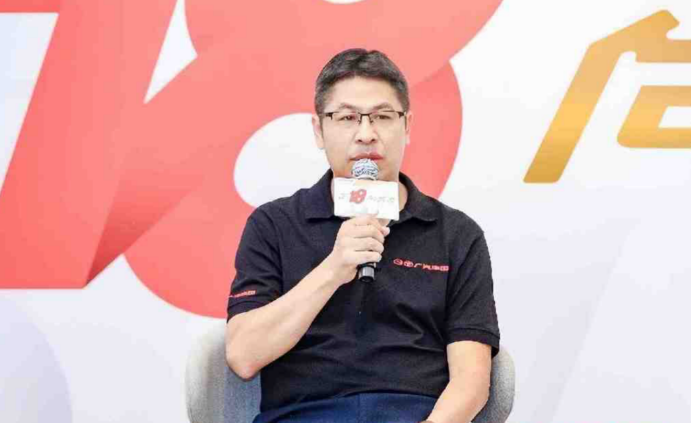
Huang Jian brings both joint venture management and independent brand operation experience, with a resume well-suited to the task. However, “suitability” does not guarantee “success.” He must address deep-seated differences in products, channels, and culture between two independently operated companies over two decades, the ongoing tension between Japanese global standards and Chinese market speed, and rigid profit expectations for GAC Toyota amid group losses.
GAC Toyota has not yet released more information on Huang Jian’s policy direction. However, the group’s decision to “urgently recall” him from Trumpchi BU sends a clear signal: this seasoned leader must keep operations running smoothly—and at a competitive pace.
(Image sources: Internet, removal upon infringement claim)
-
![]()
Apple Order Cuts or Not, Apple Supply Chain Inventory Demands Attention!
-
![]()
Toyota’s North-South Integration at a Pivotal Moment: Huang Jian Steps In to Steer Key Initiatives
-
![]()
Avatr Steers Away from Pioneering Aesthetics, Embracing a More Mainstream Appeal
-
![]()
How 79-Year-Old Lao Gan Ma Founder Tao Huabi Leveraged AI to Achieve 5.4 Billion Yuan in Revenue
-
![]()
Breaking News! Doubao Faces a Collective 'Ban' from Tencent, Alibaba, and Others for Attempting Mobile Phone Manipulation
-
![]()
How Robust Are China’s New Energy Vehicles? A Look at Eight Months of Global Market Sales
-
Competition in Ecosystems: AI’s Next Frontier
-
![]()
The cost per vehicle is 73,000 yuan higher in Europe than in China; European markets can't stop Chinese cars by any means