Is Apple Now Taking a Swipe at Xiaomi in the Smart Home Arena?
 10/16 2026
 506
506
On the evening of October 13th, Beijing time, Apple hosted a special event focused on smart home products, titled 'Welcome Home.' Unlike typical Apple events, this one did not showcase the usual lineup of consumer electronics like the iPhone or Mac. Instead, it was dedicated entirely to home-oriented hardware.
The unveiling of the 7-inch HomeView home hub, complete with a screen, immediately drew comparisons from netizens to Xiaomi's touchscreen central control systems, sparking online discussions: Is Apple, after years of relative inactivity in the smart home sector, now making a significant push into the market, following in Xiaomi's footsteps?
This article delves into the prospects, strengths, and weaknesses of Apple's increased emphasis on smart homes from three perspectives: the new products unveiled at the event, the differing approaches of the two companies, and Apple's future ecosystem strategy.
1. Apple Ramps Up Its Smart Home Game
This event marked a rare Apple launch centered around home IoT, introducing three core hardware products and officially announcing the Apple Home Collection, a series of smart home accessories developed in collaboration with LG and Schneider. This move addresses the long-standing hardware gap in the HomeKit ecosystem.
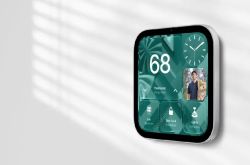
The most anticipated product was the HomeView home central control screen. It boasts a 7-inch Liquid Retina display, an A18 chip, a 12-megapixel camera with center-stage functionality, facial recognition support, and the ability to identify up to six family members.
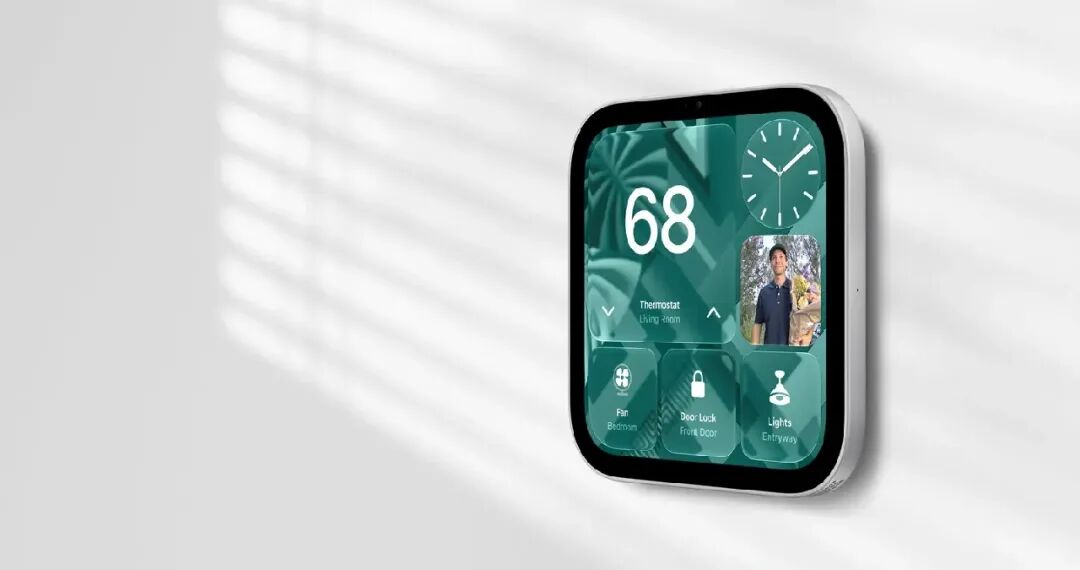
As different family members approach the screen, the system automatically switches to their respective personal permissions, safeguarding your calendar, messages, and other private information from unauthorized access. HomeView can simultaneously display up to nine surveillance feeds, supports FaceTime video calls, music playback, and digital photo frames, and serves as the central hub for all HomeKit devices in the home, compatible with Thread and Matter smart home protocols.
The product comes in desktop and wall-mounted versions. The desktop version features an adjustable-angle stand and a built-in complete acoustic system; the wall-mounted version omits some speakers and requires a separate stand purchase. Both versions are priced uniformly at $299 overseas and will go on sale in the U.S., U.K., and other overseas markets on November 13th, with no immediate plans for a mainland China release.
The second hardware product is the HomePod mini 2, the only new product from the event confirmed for a domestic release. It features an upgraded S10 chip, adds WiFi 6E support, introduces five new color options, and has a top light that pulses to the music. It gains environmental sound recognition capabilities, able to identify smoke and carbon monoxide alarms and automatically send alerts to the user's iPhone upon detection. It is priced at $149 overseas and ¥1,099 for the domestic version.
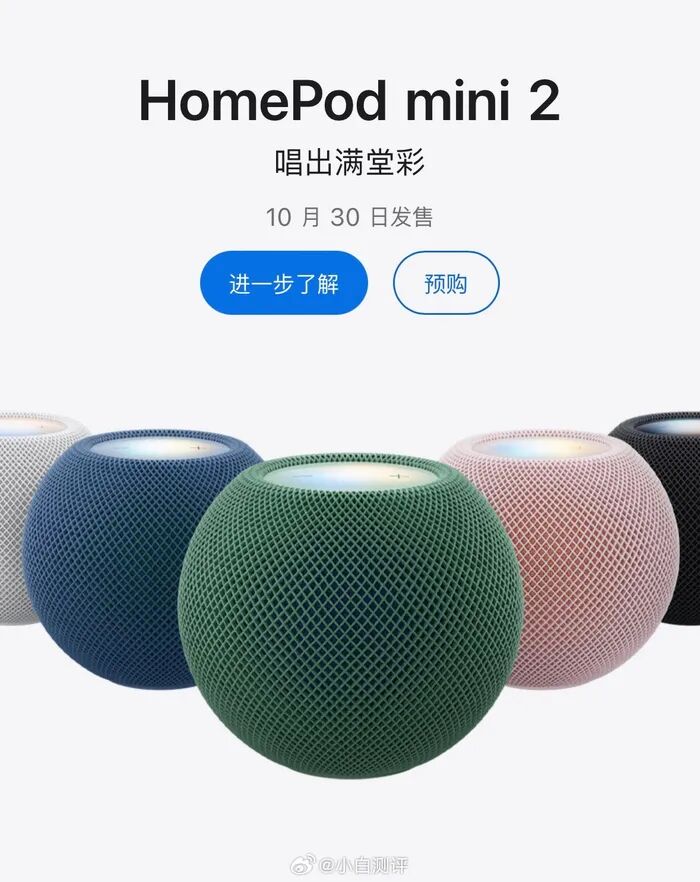
However, it should be noted that the new HomePod mini 2 cannot form a stereo pair with the first-generation HomePod mini, a limitation that may concern many users.
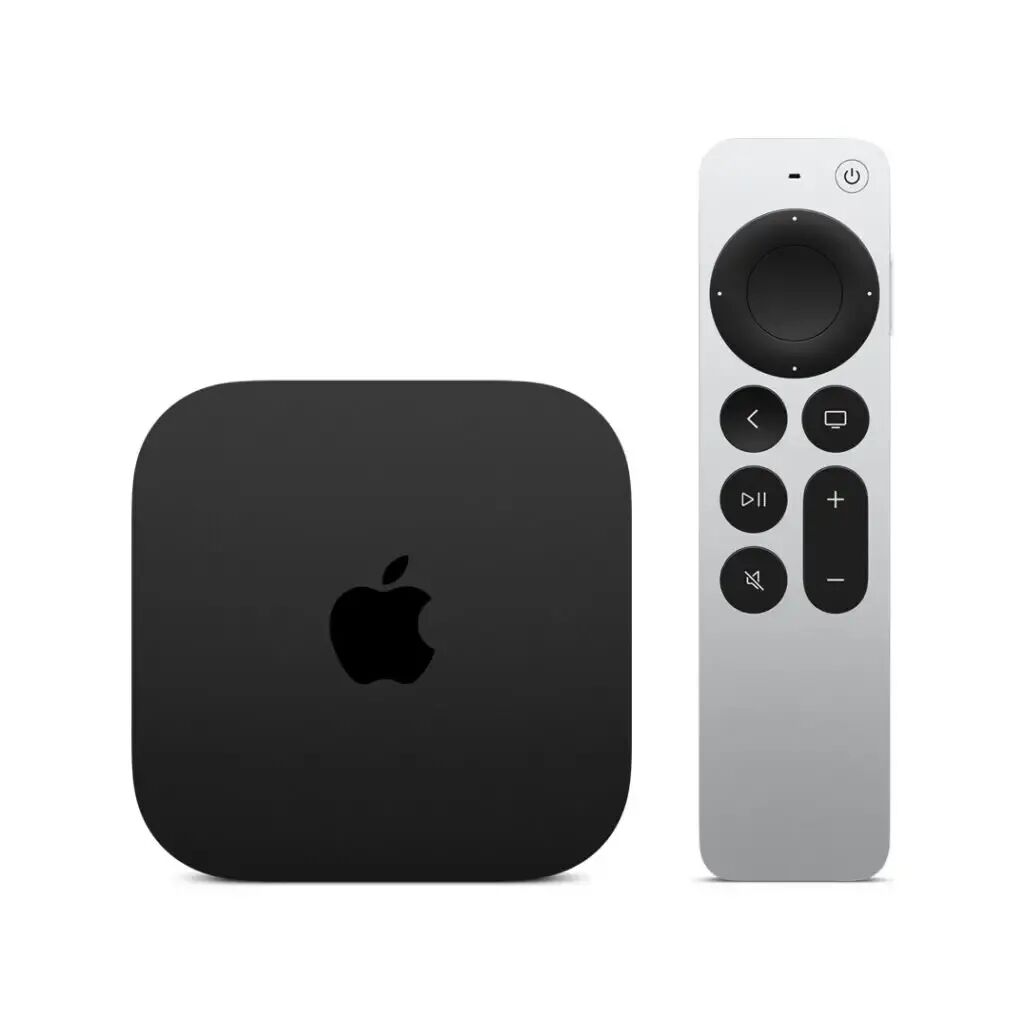
The third product is the fourth-generation Apple TV 4K, positioned as a home multimedia box, featuring upgraded processor performance and a remote with a new 'Find' function. If the remote is lost, users can verbally instruct it to emit a sound for easy location, priced at $299 overseas.
Additionally, Apple also released the Apple Home Collection series of accessories, including smart locks, doorbells, cameras, and thermostats. These products, however, are not manufactured by Apple but developed jointly with LG and Schneider Electric, certified by Apple, and natively compatible with HomeKit and the new Siri AI.
Compared to other central control products on the market, Apple's suite stands out primarily for its privacy-first approach and family member identification. While most ordinary smart central controls use a single set of permissions for the entire household, allowing everyone to see all surveillance feeds and personal schedules, HomeView relies on facial recognition to enable shared screen hardware use while keeping each person's data isolated.
Simultaneously, much of the device's computing is done locally, preventing family footage and sensor data from being arbitrarily uploaded to the cloud. Of course, the product's shortcomings are also evident: high pricing, the core HomeView not being available domestically, and the high cost of building the entire ecosystem.
2. Is Apple Following in Xiaomi's Footsteps?
Upon seeing Apple introduce a screen-equipped home central control, many people's first reaction was: Xiaomi has long been offering touchscreen speakers and whole-house central control screens, so is Apple now following suit?
The answer is straightforward: While the product forms may appear similar, the underlying business models are entirely different. Apple is not following Xiaomi's lead; the two are simply standing at the same industry crossroads but taking two completely opposite paths.
Let's briefly review Xiaomi's smart home development journey. As early as 2013, Xiaomi initiated its ecosystem chain investment plan. Lei Jun foresaw that the Internet of Everything would be a massive trend following smartphones and planned to invest in and incubate hundreds of hardware startups.
In 2016, Xiaomi officially launched the 'Mijia' brand, unifying its ecosystem hardware under the Mijia system. That same year, it introduced the Mijia Pressure IH Rice Cooker, officially establishing Mijia's reputation in home appliances.

Xiaomi's approach is straightforward: By investing in, supporting with supply chains, and providing design guidance, it incubates numerous ecosystem chain enterprises, branding everything from tens-of-yuan smart sockets and bulbs to air purifiers, robot vacuums, refrigerators, and washing machines under the Mijia brand. Leveraging high-cost-effectiveness hardware, it quickly penetrates ordinary households, using the Mijia APP as a unified central control, paired with Xiao Ai touchscreen speakers and whole-house gateways, enabling ordinary users to experience whole-house smarts at a low cost.
After more than a decade of development, the Mijia platform has surpassed hundreds of millions of connected devices, covering hundreds of product categories, with Mijia being the top choice for entry-level smart devices in many ordinary households. Xiaomi's success essentially lies in prioritizing hardware, first occupying home scenarios with massive amounts of affordable hardware, then retaining users through device interoperability and APP services.
Now, let's examine the similarities and differences between Apple and Xiaomi. The similarities are intuitive: Both are creating unified whole-house control entrances, both have voice assistants (Siri/Xiao Ai), and both hope to connect smart devices from different brands within the home to achieve automated scenario interoperability.
However, the differences in approach are fundamental. Xiaomi is willing to deeply participate in hardware manufacturing, incubating enterprises, directly branding many home appliances under Mijia, and relying on hardware volume to make smart hardware affordable for the vast majority of ordinary people.
From start to finish, Apple refuses to mass-produce large appliances like refrigerators and washing machines on a large scale. Apple's core role is to set interconnectivity standards like HomeKit and Matter, only making central entrance devices like HomeView and HomePod itself, while entrusting the production of locks, cameras, and thermostats to partners like LG and Schneider.
Apple does not profit from selling home appliances; hardware serves more as an entrance to the Apple device ecosystem, prioritizing privacy and security, with pricing targeting mid-to-high-end users rather than focusing on cost-effectiveness.
The competitive relationship between the two is more of a misalignment. In the domestic market, Mijia holds an absolute home-court advantage, with abundant products, affordable pricing, and an extremely wide range of device choices; Apple's HomeKit ecosystem has fewer devices, high price barriers, and with HomeView not even being released domestically, it is difficult to enter ordinary households.
In overseas markets, Apple's main competitors are Amazon Echo and Google Home. While Xiaomi's overseas IoT market is growing rapidly, its target user group does not entirely overlap with Apple's.
In summary, screen-equipped central controls are a common product form in the smart home industry, not an innovation exclusive to Xiaomi. Apple's introduction of HomeView simply fills the gap in its ecosystem for a visual central control hardware. While the product appearances may be similar, the business models, target users, and product philosophies are entirely different, so it cannot be said that Apple is learning from Xiaomi.
3. Where Will Apple's Ecosystem Extend?
Many may wonder, with HomeKit having been released in 2014 and Apple having been laying out the smart home space for over a decade, why did it take until 2026 for Apple to boldly introduce heavyweight home hardware like HomeView?
This is driven by both Apple's own growth pressures and a significant adjustment in its ecosystem strategic direction following the ascension of new CEO John Ternus.
Firstly, Apple's increased focus on smart homes is primarily due to the iPhone's growth ceiling becoming apparent.
The smartphone business has long been the foundation of Apple's revenue, but with the global smartphone market growth slowing and phone replacement cycles lengthening, Apple's 'Wearables, Home, and Accessories' business has become one of its few segments maintaining stable growth. In the latest quarter, this segment generated $7.88 billion in revenue, accounting for approximately 7% of Apple's total revenue, with smart homes seen as Apple's new growth avenue.
Over the past decade, the biggest shortcoming of Apple's HomeKit ecosystem has been the lack of a permanent screen-equipped central control hardware. Users could only control HomeKit devices temporarily using iPhones or iPads, lacking a fixed interaction entrance in living rooms or kitchens. Coupled with Siri's previously weak intelligence, the HomeKit ecosystem experience was never complete. The implementation of the new Siri AI gave Apple the confidence to introduce a complete suite of home hardware, filling the ecosystem gaps.
This event also marked the first major product launch since John Ternus took over as Apple CEO on September 1st. Ternus has a clear vision for Apple's ecosystem: The iPhone is the personal smart hub, while hardware like HomeView serves as the family smart hub.

Previously, Apple's ecosystem revolved entirely around personal devices: phones, watches, and computers. Now, Apple is extending its ecosystem boundaries from people's pockets to entire living spaces.
According to foreign media reports, Apple has multiple home hardware products in development, including a 9-inch movable screen central control and privacy-focused home environment sensors. These devices prioritize local sensing, minimizing video recording to place privacy protection first.
Simultaneously, Apple will continue collaborating with traditional home appliance giants, adhering to the approach of 'self-developed central hardware + third-party accessory partnerships' without mass self-developing white goods.
Of course, Apple's smart home future also faces prominent challenges. Product pricing is high, with the entire setup being expensive; domestically, HomeView is not yet released, and HomeKit-certified smart devices in China are scarce, with compatibility inferior to Mijia; usage threshold is higher, with entry costs deterring ordinary users.
Apple's goal has never been to profit from hardware price differentials by selling home appliances; its core aim is to enhance user stickiness within the Apple ecosystem. When a household's central control, cameras, and locks are all integrated into Apple HomeKit, and the entire family becomes accustomed to using Siri to interoperate devices, the likelihood of users switching to Android phones decreases significantly.
Smart homes, in essence, represent Apple's new battleground for consolidating its user moat.
In the long run, whole-house smarts are a definite trend, with Xiaomi choosing the affordable hardware route and Apple opting for the high-end privacy ecosystem route. Neither is copying the other; the two companies are simply making different choices based on their respective strengths.
Apple's entry into this space will not quickly seize Mijia's domestic mass-market foothold but will introduce new competitive variables in the high-end whole-house smart sector. In this long-distance race of smart homes, Apple has finally filled the most critical hardware gap but still has a long way to go before truly entering thousands of households.

-
![]()
Why Are New Automakers Focused on Creating a ‘Second Home’ in Cars, While Traditional Brands Bet on Boxy SUVs?
-
![]()
Chinese Automakers Make a Splash at Paris Auto Show, as EU Imposes 350,000-Unit Cap on Hybrid Vehicle Exports
-
![]()
September’s Top 10 Sedan Sales: Fuel-Powered Classics Still Holding Their Ground
-
![]()
Analysis Report on Reputation Index for Q3 2026
-
![]()
Is Apple Now Taking a Swipe at Xiaomi in the Smart Home Arena?
-
![]()
The Waning Influence of 'Golden September, Silver October'
-
![]()
Three Departments Launch Joint Probe into Zunjie Brake Issue; Yu Chengdong: Justice Will Prevail
-
![]()
After 100 days, Step's Agent Phone Still Only Half Released