FAW and GAC Strengthen Ties, Outlining Six Pivotal Cooperation Domains
 10/27 2026
 390
On October 22, Qiu Xiandong, Chairman of China FAW Group, made an appearance at the headquarters of Guangzhou Automobile Group (GAC), marking the launch event for the establishment of a joint working group.
The timeline has been swift: from the signing of a strategic cooperation framework agreement between Guangzhou Automobile Industry Group and China FAW Group on September 29, to the tripartite agreement between FAW, Toyota, and GAC on October 8, which finalized equity transaction arrangements for FAW Toyota, and culminating in the official formation of the joint working group on October 22. Excluding the National Day holiday, the actual implementation window spanned just over two weeks.
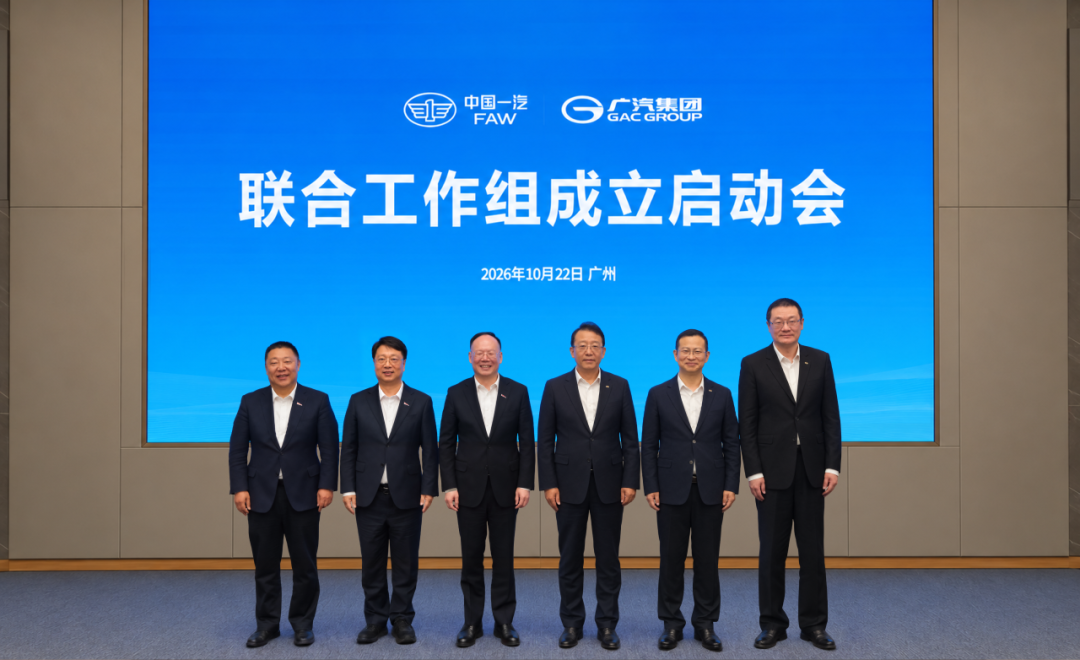
This strategic move, with FAW venturing south to GAC's headquarters, sends a clear message: both companies are committed to forging ahead with this round of cooperation, eschewing the traditional approach of 'signing agreements and taking it slow'.
Such rapid progress in the history of cooperation among Chinese automotive companies is unprecedented. What has spurred these two colossal state-owned enterprises, with distinct systems, into swift action, leaving them with 'no time to spare'?

'Speed' Is More Than Just a Show
Both FAW and GAC have a history of 'cooperative intent.' In recent years, strategic framework agreements among automotive companies have abounded, yet many have ended with mere signature ceremonies and photographs, resulting in 'ongoing dialogue' without substantive advancement.
This time, the difference lies in the industry's downward pressure, which no longer permits protracted negotiations. In the first half of 2026, the average profit margin of domestic vehicle manufacturing plummeted to 1.5%, the lowest in nearly a decade; in the third quarter, the capacity utilization rate of the automotive manufacturing industry stood at 66.2%, well below the healthy level of 75%.
After years of price wars, profits have been squeezed to the brink, and integration has shifted from a question of 'whether to proceed' to a survival imperative of 'who moves first and how.' A deeper driving force stems from the structural anxieties of both companies.
FAW's concerns lie on the capital front. Since its inception in 2011, FAW Co., Ltd. has been tasked with the overall listing of the vehicle business, incorporating the highest-quality joint venture assets of FAW-Volkswagen and FAW Toyota. However, after fifteen years, the IPO remains elusive.
By having GAC issue shares to acquire 50% of FAW Toyota's equity, FAW has exchanged a core asset that could not be independently capitalized for GAC's shares, becoming a significant strategic shareholder of the latter. This addresses FAW's 'liquidity' issue with its joint venture assets and GAC's asset expansion needs. It is a transaction structure that neither side has incentive to delay.
GAC's concerns lie on the operational front. In 2025, GAC Group reported a net profit loss of approximately RMB 8.78 billion, followed by an additional loss of RMB 4.467 billion in the first half of 2026, a year-on-year increase of nearly 76%. The profit decline in the joint venture segment has outpaced the growth of self-owned brands, leaving GAC in need of external collaboration to dilute R&D and procurement costs and stabilize its joint venture foundation.
Simultaneously, GAC's strengths in intelligence and electrification precisely address FAW's relatively weak areas in its transformation. The complementarity between the two sides is genuine.
The narrowing policy window provides a third impetus. The '15th Five-Year Plan' explicitly calls for 'increasing the intensity of mergers, reorganizations, and cross-regional integrations of automotive enterprises in accordance with the law,' with capacity warning and regulation entering the industry's five-year plan for the first time. The alignment of policy signals and industry cycles means that early movers gain a 'model' position, while latecomers face harsher integration conditions. Speed itself is a strategic choice.
Outlining Cooperation in Six Key Domains
The establishment of this joint working group is not a novel concept. Automotive companies frequently form special working groups or joint promotion teams, but most remain at the middle-management execution level, with limited resources and decision-making authority.
The key distinction this time is that the launch event was held at GAC's headquarters, with FAW Chairman Qiu Xiandong and GAC Chairman Feng Xingya in attendance, along with the leadership teams of both sides. This signifies a face-to-face confirmation of the execution path by the highest decision-making bodies of the two groups.
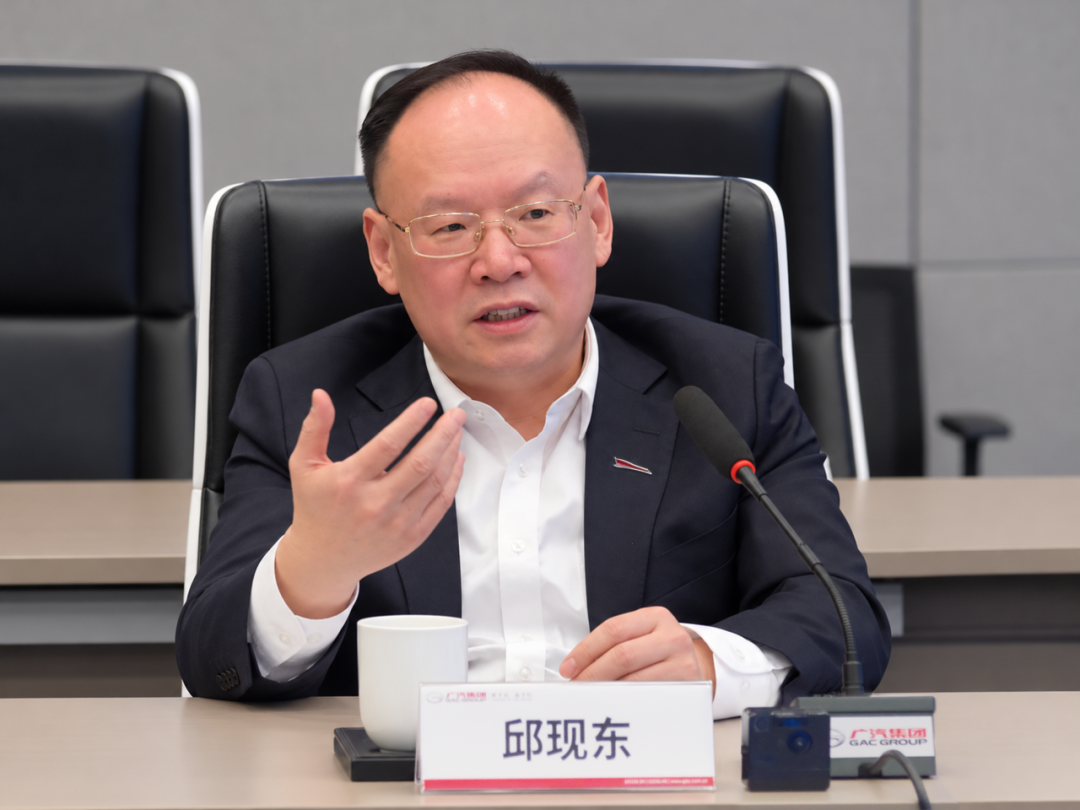
Qiu Xiandong's remarks during the meeting warrant close examination. He stated that both sides should 'swiftly advance in core areas such as passenger vehicles, commercial vehicles, batteries, electric drives, intelligence, and overseas markets' to achieve a '1+1>2' synergistic effect.
The six areas represent a substantive delineation of the cooperation boundaries: extending from vehicle products to core three-electric components, and from domestic operations to overseas markets, encompassing nearly all synergistic links between the two groups, except for independent brand operations.
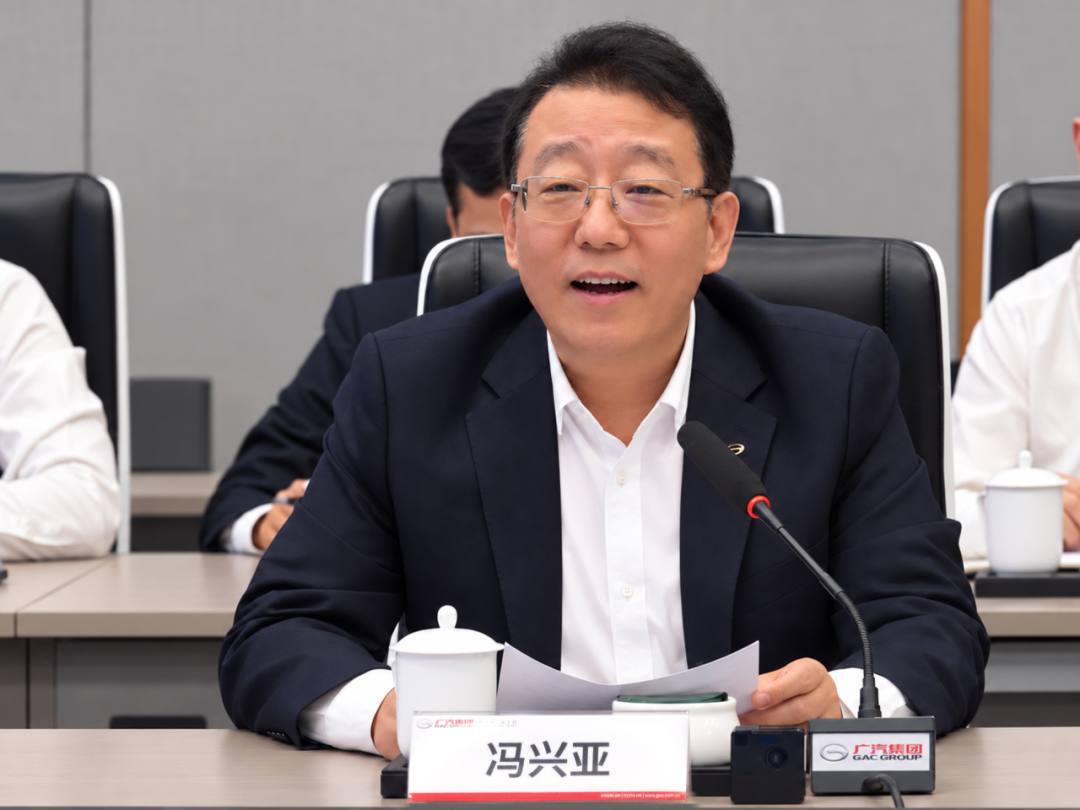
Feng Xingya characterized this launch event as a 'critical step in deepening the implementation of the strategic cooperation framework agreement,' emphasizing the need to 'refine plans and solidify timelines'.
Furthermore, the choice of Guangzhou as the launch site for the joint working group not only reflects FAW's position as GAC's second-largest shareholder but also signals to the outside world who will lead the project.
The Significance of 'Light Integration'
The rapid progress over more than 20 days has given this case of central-local collaboration a first-mover advantage in automotive enterprise restructuring. The market has received a clear signal: FAW and GAC's cooperation has entered the stage of 'drawing blueprints and setting schedules'.
This time, FAW and GAC have lowered the entry point from 'group merger' to 'joint venture asset swap + business collaboration,' without touching control rights, changing GAC's actual controller, or involving headquarters relocation. FAW has become a strategic shareholder rather than a controller through equity swap. This path design 'meets the current needs of both parties' and will provide inspiration for the integration and asset restructuring of other state-owned automotive enterprises.
A remark by GAC Chairman Feng Xingya at the launch event is noteworthy: 'Seeking efficiency through collaboration.' This is the core of FAW and GAC's cooperation and the task assigned to the joint working group. The six cooperation areas, while appearing as a list of directions, each correspond to a clear efficiency calculation that needs to be made.
What the joint working group truly needs to establish is not another communication mechanism but a set of accounting and judgment rules that ensure every synergistic benefit has a source, an owner, and a performance assessment.
-
![]()
Is the Inner Screen of the 16,000-Yuan iPhone Duo Cracking After Less Than 20 Folds?
-
![]()
Apple’s Priciest Model Fails to Impress
-
![]()
Foxconn Worker Claims Apple Eased iPhone Duo Quality Checks; Insider Denies Reduction in Yield Rate Standards
-
![]()
How can a company that lost $80 billion in six months justify a valuation of nearly $2 trillion?
-
![]()
FAW and GAC Strengthen Ties, Outlining Six Pivotal Cooperation Domains
-
[Insight] The airbag control unit (ACU) is a core component of automotive passive safety systems, with numerous market participants in China.
-
![]()
Grassroots Actors, the First Casualties of AI | Wave Trends
-
![]()
China’s Premier Provincial Capital, Guangzhou, Stages a Remarkable Comeback!