It's Official! Achieving These Will Make China a Global Automotive Powerhouse by 2030
 09/14 2026
 358
358
Lead-in
Introduction
Over the next four years, only the stronger enterprises and products will survive the intense market competition.
China's automotive industry has finally entered a clear 'roadmap to becoming a global powerhouse.'
On September 11, nine departments, including the Ministry of Industry and Information Technology, jointly issued the '15th Five-Year Plan for the Development of the Intelligent Connected New Energy Vehicle Industry.' For the first time, a national-level policy document has set the core goal for China to become a global automotive powerhouse by 2030. It also introduces a set of quantifiable, actionable, and assessable industry standards to end the old pattern of China being 'large but not strong' in the automotive sector.
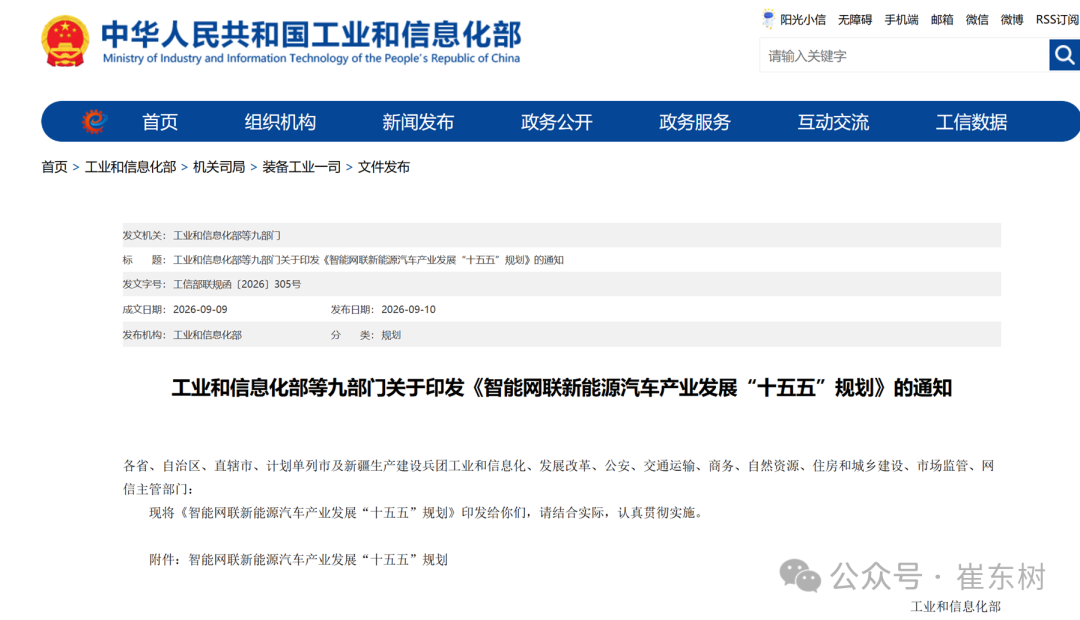
Unlike previous broad industry guidelines, this new plan adopts a '1+4' target system, strictly defining the path, metrics, and bottom lines for industry development over the next four years. Simply put, from 2026 to 2030, China's new energy vehicle (NEV) industry will no longer rely on unchecked growth and volume-driven strategies but will enter a phase of high-quality competition.
For ordinary consumers, automotive professionals, and industry investors, this plan is not just a blueprint but a 'compass' for the automotive market over the next four years.
01 Hardcore Metrics Are Here! Quantifiable Standards for a Global Powerhouse
For years, China has been known as the world's largest automotive producer and seller, as well as a leader in new energy vehicles. However, the concept of a 'global automotive powerhouse' has remained vague. The new plan changes that by introducing clear, actionable benchmarks without ambiguity.
In summary, the three core hard metrics that have drawn the most public attention directly address industry pain points:
First, clear penetration rate targets. By 2030, NEVs are expected to account for 70% of new passenger vehicle sales and 40% of new commercial vehicle sales, fundamentally reshaping the domestic market landscape between fuel-powered and electric vehicles.
Second, an upgraded safety baseline for intelligent driving. Autonomous vehicles will achieve large-scale commercialization, with overall safety performance surpassing that of human drivers. High-level intelligent driving will move beyond being a 'gimmick' to becoming a safety necessity.
Third, stricter energy efficiency standards. The energy consumption standard for battery electric passenger vehicles will be set at 11.5 kWh per 100 kilometers, using strict energy constraints to force automakers to abandon excessive material stacking and focus on core technologies.
China's automotive industry already boasts significant scale advantages, with domestic automotive production and sales, as well as exports, ranking first globally for years. The new energy sector has also achieved leapfrog growth. However, issues such as being 'large but not strong,' having quantity without quality, and being constrained in high-end technologies persist to varying degrees.
This new set of quantifiable standards for becoming a global powerhouse aims to address these deep-rooted industry problems: shifting the focus from competing on sales volume, price, and configuration to competing on technology, safety, and efficiency. This marks the industry's transition from the 'era of scale expansion' to the 'era of quality-driven success.'
Focusing on the NEV passenger vehicle segment, achieving a 70% penetration rate by 2030 seems highly feasible.
The latest data from the China Passenger Car Association shows that in August 2026, the retail penetration rate of domestic NEV passenger vehicles reached 65.2%, a new historical high. Even more impressive, in early September (1-6), the retail penetration rate of NEV passenger vehicles surged past 70% to 71.5%, while the wholesale penetration rate reached as high as 75.1%.
Looking back at the growth trajectory during the '14th Five-Year Plan' period, the penetration rate of new energy vehicles in China soared from 5.4% to 47.9%, nearly a ninefold increase in five years. With strong growth momentum, maintaining the current market pace makes achieving the 70% penetration rate target over the next four years highly achievable.
However, behind the booming passenger vehicle market, the NEV commercial vehicle segment remains an uncertain factor for the 2030 powerhouse goal.
The biggest challenge for commercial vehicle electrification is its heavy reliance on policies and lack of market-driven momentum, leading to highly unstable trends.
Data shows that from 2019 to 2021, the penetration rate of domestic NEV commercial vehicles remained at around 3%, showing little progress. It rose to 20% in 2024 and 29% in 2025. While these figures appear to show rapid growth, the reality is that this progress has been heavily supported by subsidies and government procurement.
Typical industry chaos is evident in the bus segment: previously, the penetration rate of new energy buses surged to 70%, but it plummeted to 36% after subsidies were reduced. This volatile trend highlights the industry's dilemma of being 'prone to regression and difficult to sustain' in commercial vehicle electrification.
This means that achieving the 40% penetration rate target for commercial vehicles by 2030 cannot rely solely on natural growth. It will require technological upgrades, real-world application scenarios, and innovative market-driven models to break free from policy dependence and establish a solid footing.
02 Real Challenges Abound: Heavyweight Regulations Reshape the Industry Landscape
Of course, the divergence in penetration rates is just a surface-level issue. The multiple structural pressures facing the automotive industry today are the core bottlenecks hindering the realization of the powerhouse goal and represent the thresholds the entire industry must overcome.
First, the market has entered a phase of Stock game (inventory competition), with shrinking growth opportunities.
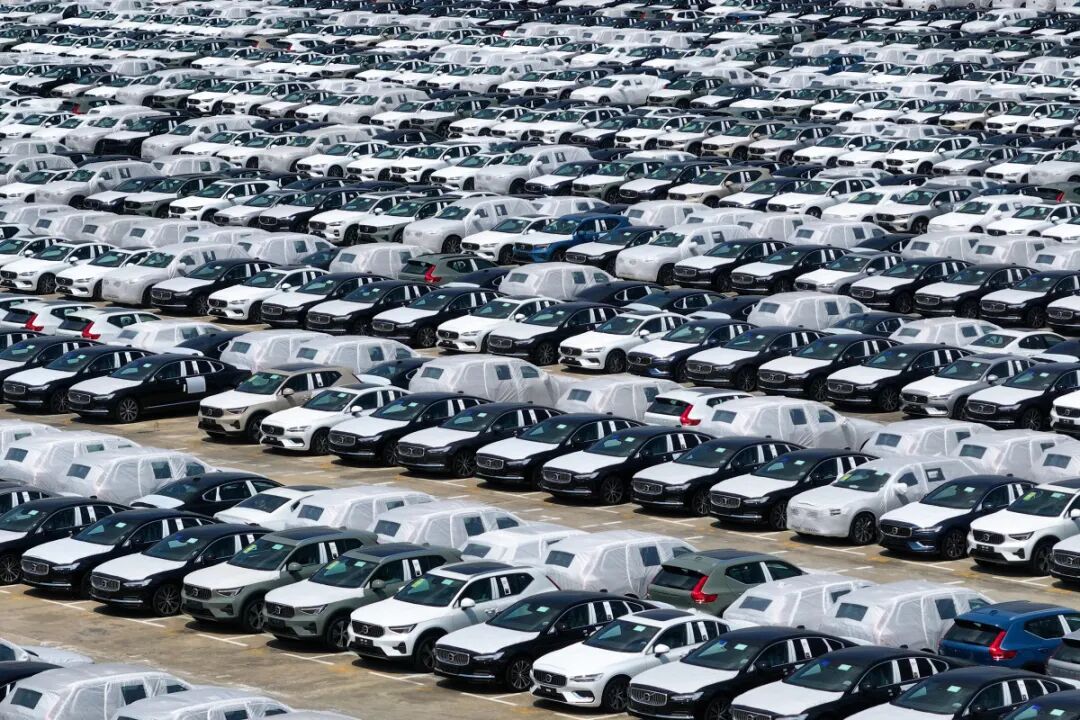
From January to August 2026, domestic passenger vehicle retail sales declined by 20.8% year-on-year. The automotive market has shifted from 'competing for growth' to 'competing for existing market share.' With the market pie no longer expanding, automakers are forced to engage in price wars and homogeneous competition, intensifying industry involution (overcompetition) and significantly increasing the difficulty of achieving profitability.
Second, industry profitability remains low, with revenue growth outpacing profit gains becoming the norm. Data shows that in the first half of 2026, the profit margin of China's automotive manufacturing industry was only 3.8%. Many automakers are trapped in a dilemma of 'selling more but earning less.' Persistent price wars, raw material price fluctuations, and high R&D investments continue to compress industry profit margins, while also drastically reducing the tolerance for technical innovation errors.
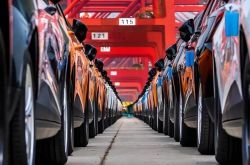
At the same time, internationalization faces increasing resistance. Although domestic automakers are accelerating their global expansion, with passenger vehicle exports expected to exceed 12 million units in 2026 and deepening presence in Southeast Asia, Latin America, and other Global South markets, overseas trade barriers continue to rise. Meanwhile, core hardware and software such as high-computing-power automotive-grade chips, vehicle operating systems, and intelligent computing infrastructure remain weak, with high-end technologies not yet fully independently controllable.
However, amid these challenges, favorable industry policies and new market opportunities are also being unleashed, providing support for the industry's breakthrough.
On the consumer side, policies such as trade-in programs for old vehicles, rural subsidies, and purchase tax incentives continue to be implemented, activating the market for replacing existing vehicles and stabilizing the domestic market. On the industrial side, the three major segments of intelligent driving, intelligent chassis, and intelligent cockpit are rising strongly, transforming automobiles from traditional mechanical products into intelligent, high-end durable consumer goods and opening up new growth space.
The most attention-grabbing core highlight of this '15th Five-Year Plan' is not just the quantifiable targets but also three groundbreaking new industry regulations that will end the era of unchecked growth and reshape the industry landscape over the next five years.
First, mandatory legislation for intelligent driving safety, prioritizing safety over experience.
For the first time, the plan explicitly requires that the comprehensive safety performance of high-level autonomous vehicles surpass that of human drivers, setting a rigid baseline for the commercialization of intelligent driving. Previously widespread issues in the industry, such as 'feature stacking while neglecting safety,' will be thoroughly addressed. Models relying on gimmicks and excessive sensor deployment will become obsolete, with true safety technology capabilities becoming the core competitive edge.
Second, establishing a Capacity warning mechanism (capacity early warning mechanism) to comprehensively eliminate outdated production capacity.
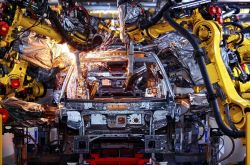
Currently, the capacity utilization rate of China's automotive industry is only 70%, with significant idle capacity and homogeneous automakers continuing to drain industry resources. The plan introduces bidirectional regulation: strictly controlling new independent automaker projects to prevent ineffective capacity expansion from the source; accelerating the elimination of weak brands and outdated capacity through mergers, acquisitions, and group-based qualification management to drive continuous improvement in industry concentration. Over the next five years, market share for leading automakers will continue to grow, while small and weak brands will accelerate their exit, pushing the industry into a phase of deep restructuring.
Third, implementing the 'Artificial Intelligence + Automotive' initiative to force technological iteration.
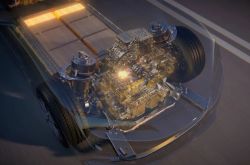
Paired with the stringent energy consumption standard of 11.5 kWh per 100 kilometers, this initiative precisely screens automakers' technological capabilities. For mid-to-large SUVs and high-end models, which naturally have higher body weight and aerodynamic drag, meeting this standard will require breakthroughs in optimizing the three-electric system (battery, motor, electronic control), lightweighting the vehicle body, and intelligent energy management algorithms, Say goodbye completely (completely abandoning) the extensive mode (extensive model) of 'stacking materials to build vehicles.'
Meanwhile, the 'equal rights for fuel and electric vehicles' policy continues to advance, with NEV purchase taxes halved in 2026 and various specialized subsidies gradually being phased out. This means the industry is saying goodbye to the era of policy-driven dividend and fully entering a market-driven competition era, where technology, cost, and user experience will become the sole foundations for automakers' survival.
03 Industry Competition Shifts from 'Hardware Battles' to 'Intelligence Battles'
With the implementation of the plan, the intelligent phase of the automotive industry has officially begun.
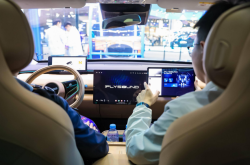
Currently, the penetration rate of L2 and higher-level intelligent driving models in China has surpassed 70%. After years of market validation, high-level intelligent driving has achieved large-scale industrial endorsement in terms of technological reliability and scenario adaptability. Today, industry competition has moved beyond 'whether intelligent driving exists' to 'how usable, affordable, and intelligent it is.'
Leveraging the reuse of AI large models, the release of core hardware production capacity, and the advantage of producing tens of millions of vehicles annually, the cost of intelligent driving continues to decline. High-level intelligent driving is no longer exclusive to high-end models priced at 200,000 yuan or above but is rapidly filtering down to mainstream models priced around 100,000 yuan. In the future, entry-level models priced below 100,000 yuan equipped with full-domain high-level intelligent driving will become the industry norm.
This has also completely rewritten the pricing logic of the automotive industry—where consumers once evaluated vehicles based on engines, configurations, and hardware, they will now focus on intelligent experiences, full-scenario services, and technological iteration capabilities. In an era of hardware homogenization, intelligent soft power will become the core differentiator for automakers.
From an industry-wide perspective, achieving the goal of becoming a global automotive powerhouse by 2030 represents not just surpassing others in sales volume or scale but a historic leap for China's automotive industry from following and keeping pace to leading.
Over the past decade, China's new energy vehicle sector has completed its industrial foundation through policy support and scale expansion. Over the next four years, the industry will rely on independent technological research, intelligent iteration, and market-driven breakthroughs to achieve a quality upgrade.
The rigid constraints across four dimensions—penetration rates, intelligent driving safety, energy consumption standards, and capacity regulation—may seem like industry pressures but are, in fact, the core drivers for industrial upgrading. They will force the entire industry to move away from internal friction and exhaustion toward a path of high-quality, high-value-added, and high-tech development.
Looking at today's automotive industry, it is at a critical juncture of painful transformation and restructuring. In the short term, inventory competition, profitability pressures, and technological challenges will remain the industry norm. However, in the long term, the trends of full industry chain autonomy, widespread intelligent adoption, and deep globalization are already set.
The goal of becoming a global automotive powerhouse by 2030 is not just a regulatory document but a new starting point for China's automotive industry to truly stand at the pinnacle of the global stage. Over the next four years, after the intense market competition, only the stronger enterprises and products will survive, and they will shoulder China's automotive industry's global influence.
Editor-in-Chief: Yang Jing Editor: He Zengrong

THE END
-
![]()
Cross-border Entry of Tech Companies: Partners or Disruptors? | Cover Story: 70 Years of Striving (Part Nine)
-
![]()
From Supporting Roles to Innovation Ecosystem: 70 Years of China's Auto Supply Chain | Cover Story: Seven Decades of Progress (X)
-
![]()
Apple Finally Releases Foldable iPhone: iPhone Duo Hits Market at $1,999, Seven Years Post Samsung and Huawei
-
![]()
Refusing Orders Worth 500 Million? Component Suppliers Seek to Escape the Automotive Black Hole
-
![]()
Is There Still a Need for Gasoline Vehicles When Everyone is Switching to Pure Electric Ones?
-
![]()
It's Official! Achieving These Will Make China a Global Automotive Powerhouse by 2030
-
![]()
Conventional Hybrid Cars: A Resurgence on the Horizon
-
![]()
Stellantis' Global Strategy Divided into Two Halves: Half North American Independence, Half Alliance with Leapmotor and Dongfeng