Cross-border Entry of Tech Companies: Partners or Disruptors? | Cover Story: 70 Years of Striving (Part Nine)
 09/14 2026
 490
490
Editor's Note
Since the rollout of New China's first domestically produced car, generations of automotive professionals have worked tirelessly, marking 70 years of resilience and progress in China's automotive industry. Looking back, the transformation is astonishing: starting from scratch, China has ranked first globally in annual automotive production and sales for 17 consecutive years, in new energy vehicle (NEV) production and sales for 11 consecutive years, and in automotive exports for three consecutive years as of last year. By seizing strategic opportunities in electrification, intelligence, and green development, China has shifted tracks and surged ahead, leading in core technologies, fostering the rise of independent brands, and entering a new phase of globalization. Standing at a new starting point, China embarks on a new journey to build a global automotive powerhouse.
To commemorate the 70th anniversary of New China's first domestically produced car,
As history moves forward, the automotive industry has witnessed milestone after milestone, yet the contributions of tech companies crossing over from telecommunications, AI, and consumer electronics remain largely unseen—even though they are equally instrumental in propelling China's automotive industry to leapfrog growth.
In July 1956, the first Jiefang CA10 truck rolled off the production line, marking the beginning of China's automotive industry narrative.
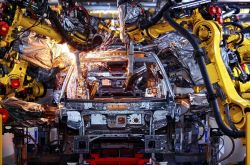
From the first generation of automotive professionals manually assembling the first screw of a vehicle to the long journey of comprehensive technology introduction, joint ventures, independent R&D, and new energy transformation, generations of automotive professionals have worked tirelessly over 70 years, propelling a nearly blank industry to the forefront of the global stage.
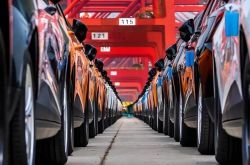
Latest data shows that by 2025, China's automotive production and sales have both exceeded 34 million units, ranking first globally for 17 consecutive years; vehicle exports reached 7.098 million units, maintaining the top spot in global automotive exports for three consecutive years. Many attribute this achievement to the decades-long dedication of traditional automakers or define it as a miracle achieved by new forces through perseverance. However, this overlooks another force hidden behind the industry—tech companies crossing over from telecommunications, artificial intelligence, consumer electronics, and the internet.
For a long time, these companies operated behind the scenes, lacking end products for ordinary consumers, avoiding the spotlight at automaker launches, and remaining unknown to most car owners. Yet, at every critical juncture of China's automotive industry transformation, these cross-border players quietly addressed the industry's most pressing technological gaps, laying a solid foundation for China's automotive rise.
Precision Filling of Cross-border Capabilities
The first turning point emerged around 2000 when private cars began entering ordinary households, yet the automotive industry lacked mature in-vehicle electronics capabilities. Core components such as in-vehicle audio systems, ECU electronic control units, and in-vehicle communication modules were nearly monopolized by overseas suppliers. Domestic automakers had little bargaining power, severely restricting the popularize (popularization) of independent brands.
Amid this industry bottleneck, a group of tech companies specializing in consumer electronics and telecommunications took the lead in crossing over, applying their mature electronic manufacturing and software-hardware R&D capabilities to the automotive sector, rapidly filling supply chain gaps through localized supply.
For instance, Desay SV entered the in-vehicle sector from home audio and consumer electronics in 2000, gradually breaking the long-term monopolies of overseas brands like Panasonic and Pioneer in in-vehicle audio and electronics, quickly becoming a core supplier for domestic independent passenger vehicles. Meanwhile, ZTE launched China's first factory-installed automotive-grade cellular communication module (3G) in 2008, also breaking overseas monopolies and becoming one of the earliest cross-border tech companies to localize automotive communication components.
With the entry of these tech companies, China's initial local automotive supply chain took shape, significantly reducing procurement costs for related components and enabling domestic brands to price their passenger vehicles below 100,000 yuan. Without the assistance of these cross-border electronic tech companies, the popularize (popularization) process of domestic independent brand vehicles would have faced greater resistance.
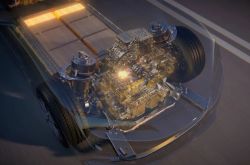
The second turning point occurred around 2015 when NEVs began transitioning from small-scale demonstration operations to large-scale promotion. However, the industry suddenly found that the traditional internal combustion engine vehicle supply chain could not meet the new requirements of the "three electric" systems (battery, motor, and electronic control). Core components of NEVs, such as battery management systems (BMS), motor controllers, and vehicle control units (VCU), lacked any technological accumulation in the traditional automotive supply chain.
At this stage, a group of tech companies crossing over from intelligent hardware, power electronics, and industrial AI control began to rapidly fill these gaps. Originally focused on sectors unrelated to traditional internal combustion engine vehicles, such as drone intelligent control, photovoltaic inverters, and high-power power supplies, these companies possessed mature underlying algorithms for power conversion and motion control, quickly addressing industry shortcomings.
DJI Innovations repurposed its long-accumulated underlying algorithms for high-precision flight control and dynamic servo control from drones to NEV motor control and vehicle power regulation scenarios, specifically addressing the technological gaps in domestic automakers' NEV electronic control software and providing mature intelligent electronic control solutions for multiple independent automakers. Sungrow Power, leveraging its core technologies in photovoltaic inverters and energy storage high-power power conversion, crossed over into the in-vehicle high-voltage electronic control sector, successively overcoming core challenges in NEVs such as on-board chargers and DC-DC high-voltage components, filling industry technological gaps.
By 2020, the localization rate of the "three electric" systems in domestic NEVs exceeded 90%, not only reducing costs to the lowest globally but also achieving complete self-developed and controllable (self-control) of core technologies, laying the strongest foundation for the subsequent explosive growth of NEVs.
The third turning point emerged after 2020 when intelligent connected vehicles (ICVs) became the industry mainstream. The traditional automotive industry suddenly found itself unable to meet the technological challenges posed by intelligent driving and intelligent cockpits. Traditional automakers' R&D systems lacked large-scale AI algorithm, operating system, and chip R&D teams—capabilities that are strengths of cross-border tech companies in the telecommunications and AI sectors.
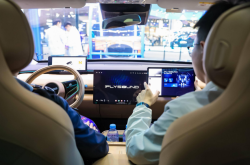
Thus, tech companies such as Huawei, Horizon Robotics, and Momenta quickly transferred their accumulated communications technology, AI chip technology, and autonomous driving technology to the automotive industry. In less than three years, they helped the entire industry implement intelligent driving and intelligent cockpit technologies. Relying solely on traditional automakers' R&D pace, China's NEVs would have struggled to establish a leading global position.
Restructuring the Talent Landscape
Meanwhile, over a century of automotive industry development has fostered an extremely closed talent system. From internal combustion engine R&D to chassis tuning, from supply chain management to vehicle manufacturing, nearly all core talent grew within traditional automakers' systems, with talent mobility strictly confined to the automotive industry. This system ensured stable industry development during the internal combustion engine era but also formed rigid talent barriers.
In the smart electric era, automotive talent must cover multiple new fields such as intelligent connected vehicles, NEV "three electric" systems, and new marketing. Industry surveys show that in 2023, the core talent gap in China's intelligent connected vehicle sector exceeded 200,000, with talent shortages in AI algorithms, autonomous driving, and in-vehicle operating systems accounting for over 70%. Traditional automotive industries had little involvement in these areas, making it impossible to fill these gaps through their own talent systems in a short time.
The emergence of cross-border tech companies directly broke this long-standing talent barrier. These talents, previously unrelated to the automotive industry, brought high-reliability technology standards and distributed system R&D experience from the telecommunications sector into the automotive field. Through joint R&D projects with automakers, they cultivated a large number of cross-disciplinary composite talents for the entire industry in practice, thoroughly restructuring the talent landscape of China's automotive industry.
Today, nearly all mainstream domestic automakers' intelligent R&D teams include cross-border talents from the telecommunications, AI, and internet sectors. These talents broke the traditional automotive industry's inertia (inertia) in thinking, introducing advanced experiences from other fields into automotive development, enabling China's automotive industry to possess, for the first time, a complete talent system covering mechanics, electronics, software, and telecommunications. This talent reserve represents China's automotive industry's most core competitiveness in the coming decades.
Furthermore, the involvement of tech companies has transformed traditional automotive R&D paradigms. Previously, nearly all traditional automakers' in-vehicle systems received little to no updates after vehicle mass production (mass production), with at most one minor version upgrade annually, resulting in functional experiences far behind contemporary smartphones. Today, nearly all intelligent vehicles can achieve monthly or even weekly OTA updates, allowing functions to continuously evolve and user experiences to improve over time. Behind this change lies a fundamental shift in innovation paradigms.
This reshaping of innovation paradigms has directly resulted in a significant reduction in innovation trial-and-error costs across the industry. Previously, traditional automakers needed to invest hundreds of millions or even billions in R&D costs to launch a new intelligent function, bearing high failure risks. Now, relying on the mature technology platforms provided by cross-border tech companies, automakers can develop and implement functions at lower costs and faster speeds, thoroughly stimulating industry innovation vitality.
Additionally, the iteration cycle for automotive intelligent systems has shortened from 1-2 years in the past to 3-6 months today. HarmonyOS Cockpit has undergone dozens of major version iterations since its release, adding thousands of user-requested functions; Horizon Robotics has enabled China's intelligent driving experience to reach global leadership in just a few years. A group of tech companies crossing over from the consumer electronics sector have also introduced rapid hardware iteration experiences into automotive development, accelerating the update cycle for core hardware such as in-vehicle chips and sensors from 5 years per generation to 2-3 years per generation.
Today, the innovation pace of China's intelligent vehicles far exceeds that of overseas traditional automakers. Nearly every month, we witness the implementation of new intelligent functions, and new car models are launched almost every few days. This gap in innovation efficiency has become the underlying reason for the widening gap between China's automotive industry and overseas brands.
Bridging the Final Mile of Globalization
China's automotive industry has pursued globalization for decades. During the internal combustion engine era, our go-global model was primitive: exporting domestically produced products to overseas markets and relying on cost-effectiveness to capture mid-to-low-end markets, making it difficult to enter mainstream global automotive market systems.
The bottlenecks of this model were evident: different countries have vastly different regulatory standards, communication protocols, data security rules, and user habits. Relying solely on product exports cannot adapt to the diverse needs of global markets. The emergence of cross-border tech companies has directly introduced their globalization capabilities accumulated in other fields into the automotive industry, bridging the final mile of China's automotive globalization and upgrading our go-global approach from single product exports to comprehensive technology, brand, and service exports.
Take cross-border tech companies from the telecommunications sector as an example. Over the past few decades, they have established presence in over 170 countries and regions globally, accumulating profound expertise in different countries' communication regulations, data security requirements, and localized service systems. Many domestic automakers' models previously required 1-2 years for intelligent connected vehicle-related compliance certifications to enter European markets. By transferring these capabilities to the automotive sector, they can help domestic automakers quickly adapt intelligent connected vehicle functions to different overseas markets, eliminating the need for compliance certifications from scratch in each market and significantly shortening the go-global adaptation cycle.
Cross-border tech companies in the AI sector can help automakers incorporate global road condition data accumulation and algorithm localization adaptation capabilities into the automotive go-global process, enabling domestic automakers' intelligent driving functions to quickly adapt to different countries' road scenarios. Previously, domestic intelligent driving algorithms were nearly unusable overseas, requiring significant manpower for data collection and algorithm retraining. Now, relying on the global data accumulation of cross-border tech companies, China's intelligent vehicles can directly enter global markets with leading intelligent driving capabilities, driving global user experience upgrades.
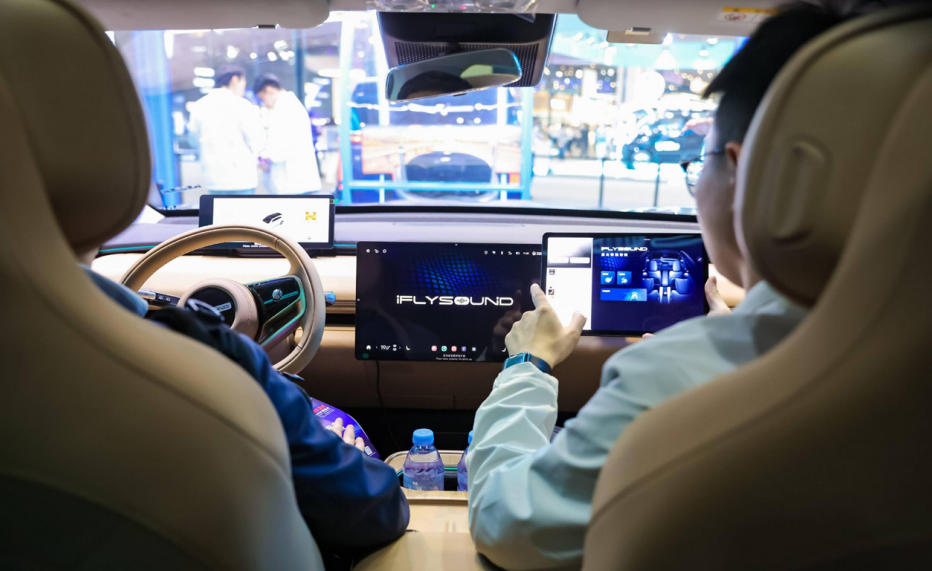
In the intelligent cockpit interaction—a core aspect directly determining user experience—domestic AI companies' globalization capabilities are playing a crucial role. Take iFLYTEK as an example: leveraging its Spark global large model as a technological foundation, its in-vehicle interaction system supports 23 major overseas languages, covering dozens of language varieties and adapting to over 60 countries and regions. Among the top ten domestic automotive go-global enterprises, eight have established deep cooperation with iFLYTEK, with related in-vehicle interaction solutions achieving mass production in hundreds of overseas star models, addressing core pain points such as language adaptation and local ecosystem integration for automakers going global.
From multi-language mixed recognition in Europe to adaptation of Southeast Asian minority language dialects, to compliance certifications and regulatory standard synchronization related to intelligent connected vehicles—these challenges that previously required automakers to invest years in tackling market by market can now be quickly addressed through the mature capabilities of cross-border tech companies.
In 2023, China's automotive exports ranked first globally for the first time, and this figure continues to grow in 2026. China's vehicles are now sold in over 200 countries and regions worldwide, not only dominating mid-to-low-end markets but also large-scale (massively) entering European high-end markets. This globalization breakthrough was never achieved by vehicle enterprises alone; the cross-border tech forces hidden behind the scenes were key to bridging the final mile.
Looking back at these three critical turning points from the 70-year perspective, a clear pattern emerges. Whenever the technological boundaries of the automotive industry expand, cross-border tech companies promptly appear, transferring mature technological capabilities from other fields at the lowest cost and fastest speed to address industry shortcomings. They never came to "disrupt the automotive industry" but to do what traditional automotive industries could not, did not do well, or did not have time to do—ultimately growing symbiotically with domestic automakers.
Note: This article was first published in the "Cover Story" column of the August 2026 issue of 
Image: Auto Review
Article: Auto Review
Layout: Auto Review
-
![]()
Cross-border Entry of Tech Companies: Partners or Disruptors? | Cover Story: 70 Years of Striving (Part Nine)
-
![]()
From Supporting Roles to Innovation Ecosystem: 70 Years of China's Auto Supply Chain | Cover Story: Seven Decades of Progress (X)
-
![]()
Apple Finally Releases Foldable iPhone: iPhone Duo Hits Market at $1,999, Seven Years Post Samsung and Huawei
-
![]()
Refusing Orders Worth 500 Million? Component Suppliers Seek to Escape the Automotive Black Hole
-
![]()
Is There Still a Need for Gasoline Vehicles When Everyone is Switching to Pure Electric Ones?
-
![]()
It's Official! Achieving These Will Make China a Global Automotive Powerhouse by 2030
-
![]()
Conventional Hybrid Cars: A Resurgence on the Horizon
-
![]()
Stellantis' Global Strategy Divided into Two Halves: Half North American Independence, Half Alliance with Leapmotor and Dongfeng