Why Is AITO’s Shift to a ‘Light Asset’ Model a Strategic Boon for Seres?
 09/16 2026
 508
508
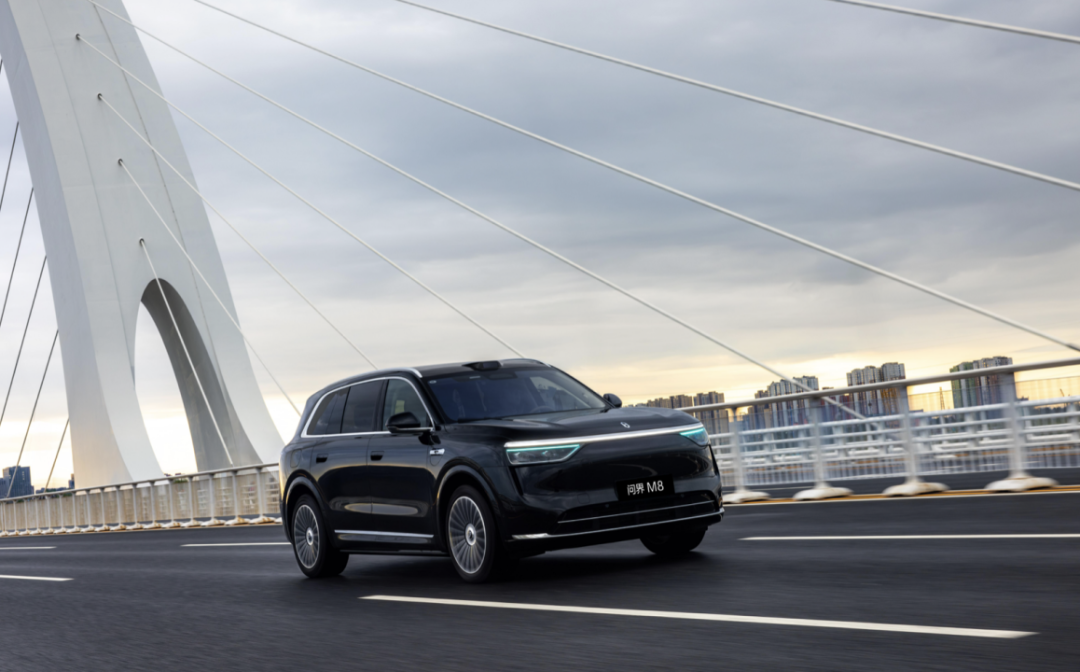
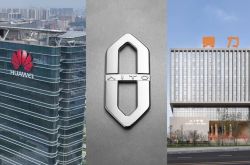
On September 15, the automotive industry was rocked by news: Huawei and Seres are transitioning their smart vehicle collaboration into an asset-light framework. Seres will now lead in product development, brand strategy, retail distribution, and after-sales services, while Huawei steps back into a supporting technical role.
The announcement triggered a 5.09% intraday fluctuation in stock prices, with initial market reactions leaning toward panic. Questions arose: Is Huawei relinquishing control of AITO? Will Seres falter without Huawei’s direct involvement? Can AITO sustain its service standards if the “Huawei halo” dims? However, critics overlooked a critical detail: for years, Huawei has retained a 10% cut from every AITO vehicle sold. With Seres’ 2025 revenue hitting RMB 165.054 billion, annual channel fees alone reached the billion-yuan threshold. Over four years, Seres paid RMB 111.335 billion to the Huawei ecosystem, while its non-recurring net profit stood at just RMB 1.482 billion during the same period.
Over seven years, Seres has evolved from a manufacturing partner to a brand with independent operational prowess. It now operates nearly 400 user centers, with the M9 capturing 70% of the RMB 500,000+ luxury segment and securing 11 consecutive months as the sales leader. These milestones underscore the maturity of Seres’ proprietary channels. Huawei’s strategic retreat, far from abandonment, signals AITO’s “graduation” into a new phase of autonomy.
Viewing this seven-year trajectory, a clearer pattern emerges: premium brands face inherent limitations when reliant on third-party distribution. While Huawei stores drive foot traffic, sharing showroom space with five brands—spanning price points from RMB 150,000 to over RMB 1 million—inevitably dilutes AITO’s visibility and attention. For any luxury brand to thrive, independent channel management is not optional but essential. AITO’s shift to a lighter model reflects not passive takeover by Seres but a deliberate move toward operational sovereignty.
Editor|Li Jiaqi
Image Source|Internet
1. Huawei Delegates Authority, but AITO Retains Its Identity
To grasp the timing of this shift, we must examine structural changes within the Harmony Intelligent Mobility Alliance ecosystem. From mid-2025 to mid-2026, the alliance expanded from the “Three Realms” (seven models) to the “Five Realms” (14 models), encompassing brands like AITO, Luxeed, STELATO, MAEXTRO, and SHINE across five automakers. While model offerings doubled, physical channel space remained finite.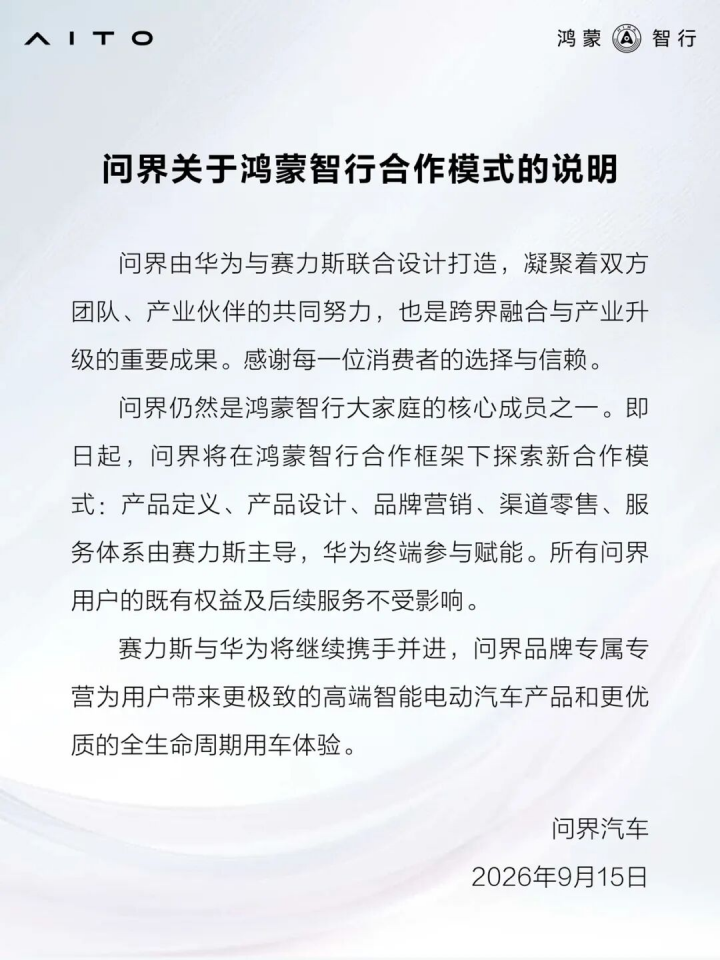
As of May 2026, the alliance operated 1,951 sales outlets and 957 service centers, with plans to expand to 2,459 and 1,459, respectively, by year-end. Yet nearly 2,500 stores will simultaneously showcase five brands and 14 models—from sedans to MPVs to SUVs—across price tiers. Every square foot of showroom space becomes a premium resource. Yu Chengdong, CEO of Huawei’s Consumer Business Group, admitted that the current model “lacks resources and manpower.”
Resource fragmentation poses a real challenge. Critically, sales composition is shifting: low-end models (below RMB 250,000) accounted for 16,870 units in August, while high-end models like the Luxeed V9 and AITO M9 combined for 18,410 units. While mid-to-low-end sales grow, mass-market expansion implies thinning profit margins—Yu previously noted that models under RMB 300,000 are generally unprofitable.
This creates a structural dilemma for Huawei: more brands and models demand greater resources, yet profits remain concentrated around AITO’s high-end offerings. Rather than letting five brands compete for limited channel space, granting AITO—a brand with proven independence—greater autonomy allows Huawei to focus on brand-building for the other four realms.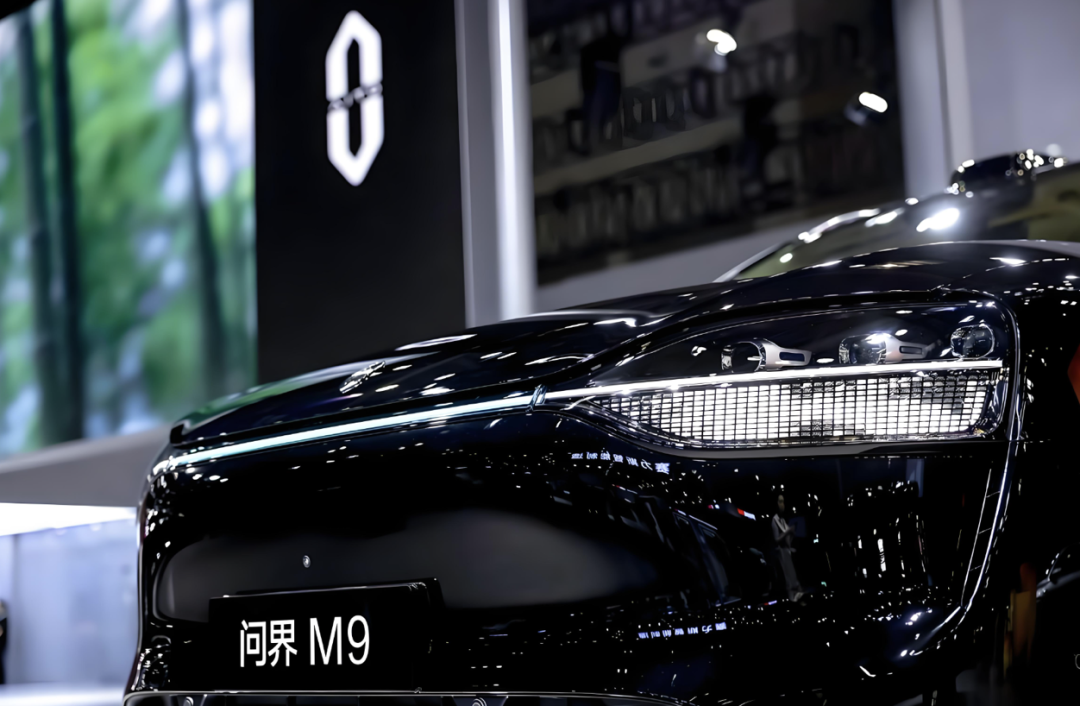
Seres has meticulously prepared for this transition. In July 2024, it acquired 919 AITO trademarks and 44 design patents from Huawei for RMB 2.5 billion. In August 2024, it invested RMB 11.5 billion to secure a 10% stake in Yinwang Intelligent, ensuring long-term technical supply. With brand ownership and technical infrastructure in place, operational leadership transfer becomes a logical next step.
Independent operations align with global industry trends. At an August analyst briefing, Seres stated that exclusive operations would deepen AITO’s high-end brand value, aligning with its positioning, product rhythm, and user needs to convey value more precisely. Internationally, premium brands like Audi and Bentley under Volkswagen Group have long thrived through exclusive strategies. For users, exclusive operations enhance perceived value by ensuring consistent standards across every touchpoint—from browsing to after-sales service. Deeper trust fosters willingness to pay premium prices, solidifying high-end positioning. With Seres’ strategic布局 (layout) and now-ripe conditions, this adjustment is a natural evolution.
2. Declining Share, Unwavering Influence: AITO Remains Harmony’s Cornerstone
Over the past year, as the Five Realms fully rolled out, Seres’ sales share within Huawei’s ecosystem shifted, but its structural importance remains undiminished. In August 2026, the Harmony Intelligent Mobility Alliance delivered 42,101 units across all brands, with Seres contributing 24,200 new energy vehicles. AITO accounted for 49% of ecosystem sales—nearly half, meaning one in every two Harmony vehicles sold originates from Seres. Within the new Five Realms landscape, Seres remains the alliance’s sales anchor.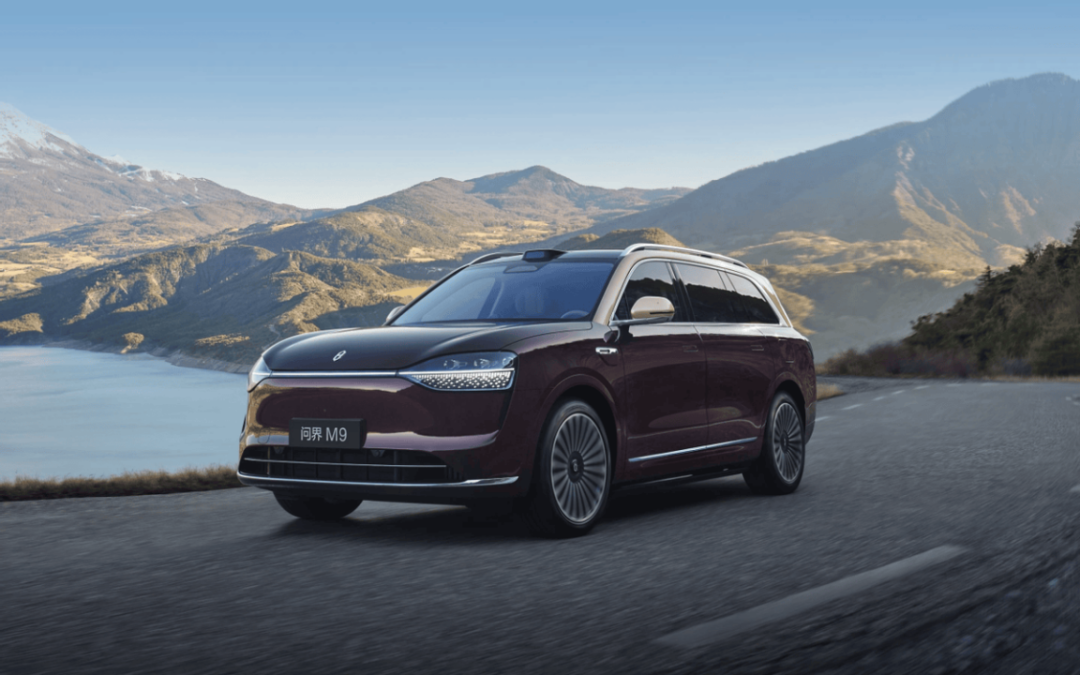
Beyond sales volume, Seres holds an irreplaceable position in the high-end segment. Newer brands like Luxeed, STELATO, and SHINE target mid-to-low-end markets (RMB 200,000–300,000), while the alliance’s profitability still hinges on premium models. In August 2026, the AITO M9 topped sales charts for models over RMB 500,000, securing three consecutive months as the segment leader.
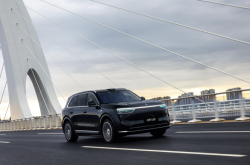
The AITO M9 averages around RMB 600,000 per transaction, with the Ultimate Leading Edition starting at RMB 649,800 and exceeding RMB 780,000 when fully optioned—making it AITO’s priciest mass-produced model to date. Selling over 10,000 units monthly of a model priced above RMB 500,000 would have been unthinkable in traditional luxury markets. Seres has pushed Chinese brands’ price ceilings to RMB 800,000, a feat unmatched among the alliance’s five brands.
Luxeed V9 drives over 90% of Luxeed’s sales, while SHINE H5’s monthly sales plummeted from 10,000 units post-launch. MAEXTRO delivered just a few hundred units in July—new brands need time to grow, whereas AITO has firmly entrenched itself in the luxury market.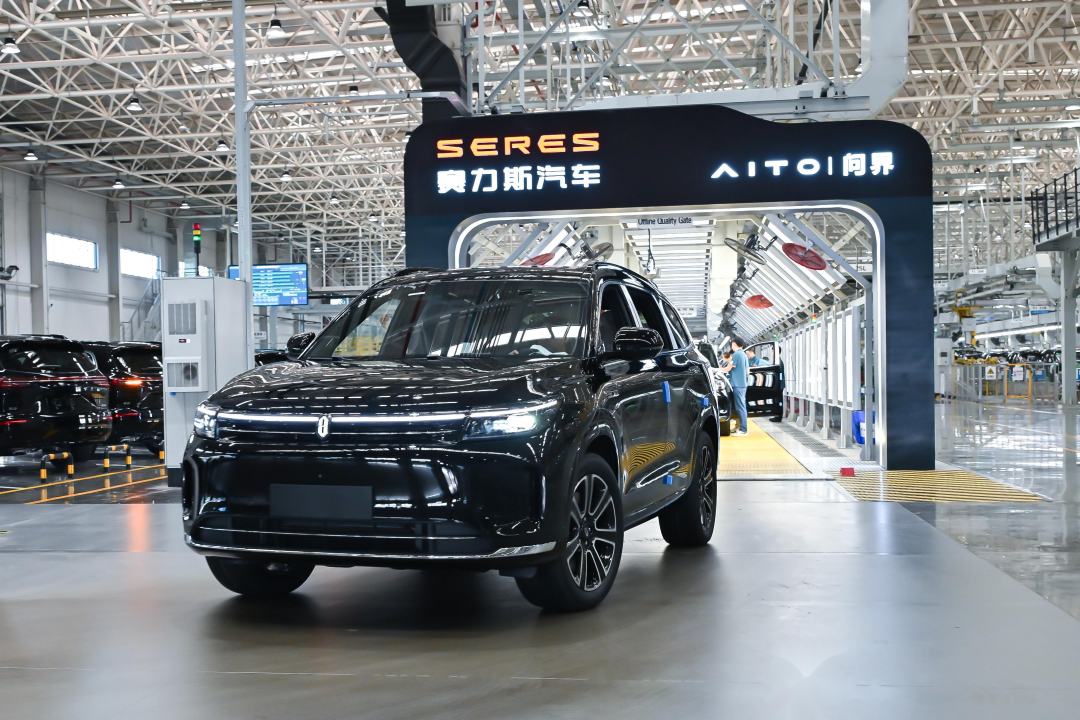
From a brand equity perspective, Yu Chengdong once summarized AITO’s strengths with “Four Number Ones”: highest average transaction price among new forces, top Net Promoter Score (NPS), highest residual value for Chinese plug-in hybrids, and top C-NCAP safety score. Since launch, the AITO M9 has delivered over 300,000 units, with the new-generation M9 surpassing 30,000 units in 12 weeks. Within the Harmony Intelligent Mobility Alliance, Seres leads in both sales scale and brand premium.
Even with multi-brand diversification, Seres remains Huawei’s most critical automotive asset and the premier showcase for Huawei’s high-end smart vehicle technologies.
3. ‘Quality Operations’ Remain Seres’ North Star
Post-transition, Seres’ priority is clear: elevate operational quality. In H1 2026, it reported RMB 57.493 billion in revenue but a net loss attributable to shareholders of RMB 1.717 billion. Profit pressures stemmed from three overlapping factors: main models undergoing product iteration, a 132% YoY surge in battery-grade lithium carbonate prices, structural chip shortages raising costs, and a one-time RMB 1.82 billion asset impairment charge.
Against this backdrop, improving operational quality becomes paramount. The asset-light model creates space for cost optimization. Under the original model, Seres paid Huawei three fees: hardware procurement, a 2% technology licensing fee based on vehicle price, and an 8% channel marketing service fee—totaling roughly 10% of the vehicle price.
Switching to the asset-light model means AITO will no longer rely primarily on Huawei stores for sales, eliminating Huawei’s inventory, traffic, and staffing costs. This opens room to reduce or eliminate the 8% channel fee. The 2% technology licensing fee will likely persist—Harmony Cockpit and Qiankun Intelligent Driving remain AITO’s core differentiators—but optimizing this fee alone can significantly improve profitability.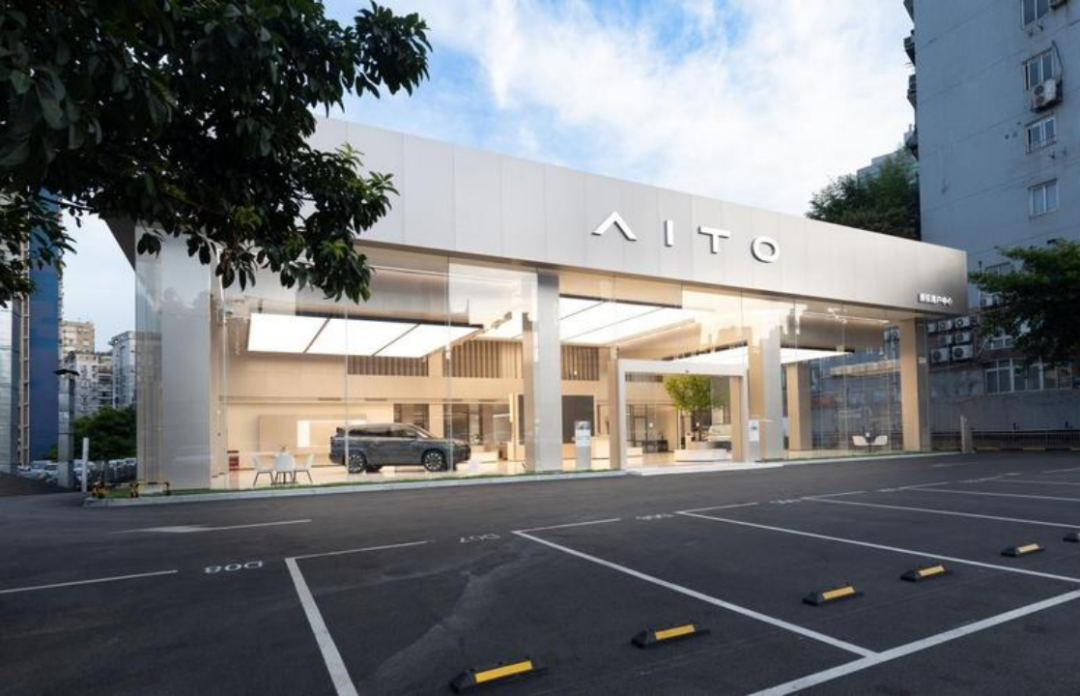
This shift also benefits Huawei. By exiting heavy-asset sales operations, Huawei transitions revenue streams to technology licensing and core component supply, evolving from a “co-operating partner” to a technology-enabling service provider. Seres, meanwhile, gains full control over AITO’s end-to-end operations, officially transforming from a manufacturing partner to an independently operated vehicle brand. Both sides shift from “bundled risk-sharing” to “leveraging respective strengths,” enhancing collaboration efficiency.
Critically, Seres’ development strategy remains unchanged post-transition. R&D investment stays above 12% of revenue, with H1 spending exceeding RMB 7 billion. Premium products like the AITO M9 Leading Edition proceed as planned. Through moves like divesting Seres Blue and forming a joint venture with Chongqing’s Shapingba District government, Seres has isolated risks and optimized asset structures, concentrating resources on the AITO high-end brand while adhering to market-driven operations.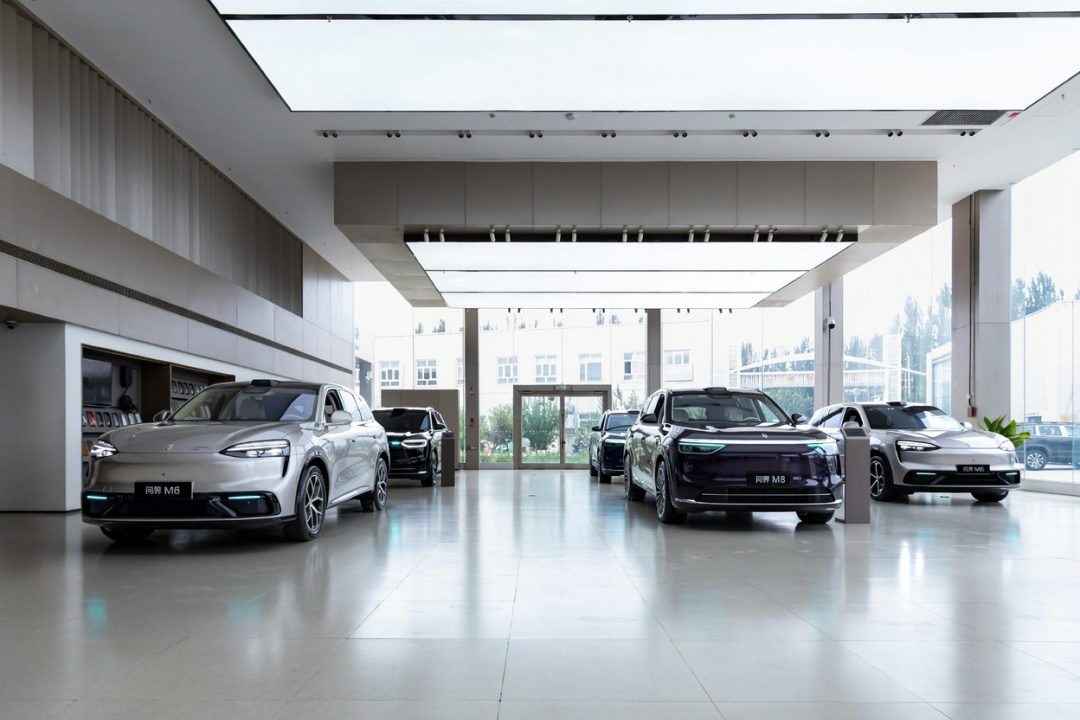
All signs point to one conclusion: the asset-light model is a strategic boon for Seres. After all, Huawei hasn’t let go—AITO remains part of the Five Realms. For a company no longer needing handholding, moderate independence is not just acceptable but desirable.
End
With Knowledge and Style, ‘Whoosh’—Let’s Go! ...
-
![]()
After a 200 Billion Yuan Loss, Seres Reclaims Its 'Soul,' But Will Yu Chengdong Continue to Back AITO?
-
![]()
Will you still buy AITO after its prefix changes from 'HIMON Auto' to 'Seres'?
-
![]()
Atlas Paves the Way with 3D Reconstruction, Ushering in a New Measurable Era for World Models
-
![]()
Why Is AITO’s Shift to a ‘Light Asset’ Model a Strategic Boon for Seres?
-
![]()
Doubao Mobile Phone Officially Launches: GUI as a Safety Net, AI Office as a Revenue Stream
-
![]()
Doubao Mobile Phone Officially Launches: GUI as a Fallback, AI Office as a Support
-
![]()
iFLYTEK Launches AStudio in a 'Desktop Gateway' War It Cannot Afford to Lose
-
![]()
BYD Executive’s Clear Stance: The Era of Fuel Vehicles Is Over