After a 200 Billion Yuan Loss, Seres Reclaims Its 'Soul,' But Will Yu Chengdong Continue to Back AITO?
 09/16 2026
 403
403
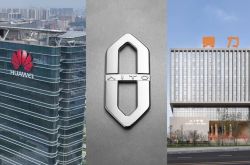
The other shoe has dropped—Huawei and Seres are indeed parting ways in their AITO venture.
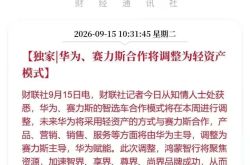
Cailian Press has reported that Huawei and Seres are set to revamp their smart vehicle collaboration model this week. Going forward, Huawei will adopt a more asset-light strategy, with Seres taking the lead in product development, marketing, sales, and service, while Huawei provides technological support.
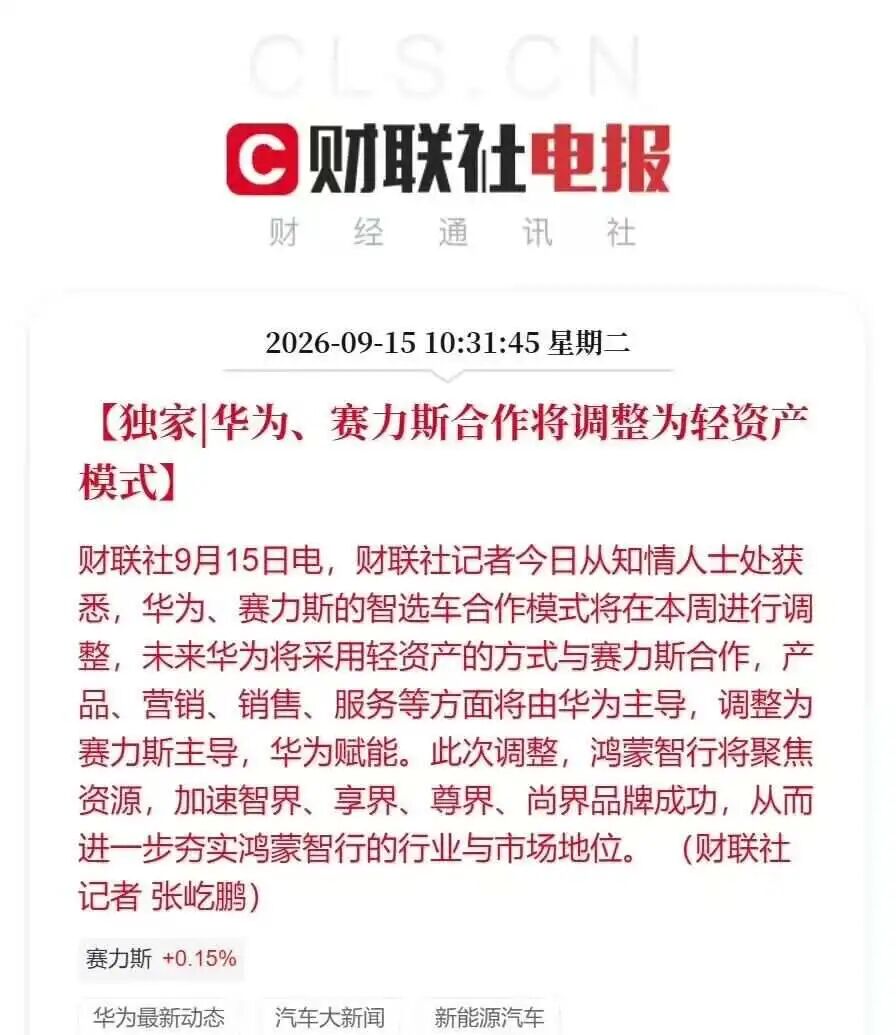
To put it simply: Huawei will now focus solely on providing technology, while brand operations, marketing, channels, and services will be fully managed by Seres, marking a significant shift in responsibilities.
As news of the split broke, netizens lamented, "It's over. AITO has gone from being Huawei's 'golden child' to a 'stepchild.' Now, Huawei is set to focus on its 'other four brands.' Is AITO about to be 'kicked out of the group chat?'"
Some bloggers also revealed that the AITO app now belongs to Seres, with Seres' programmers working overtime to develop the backend.
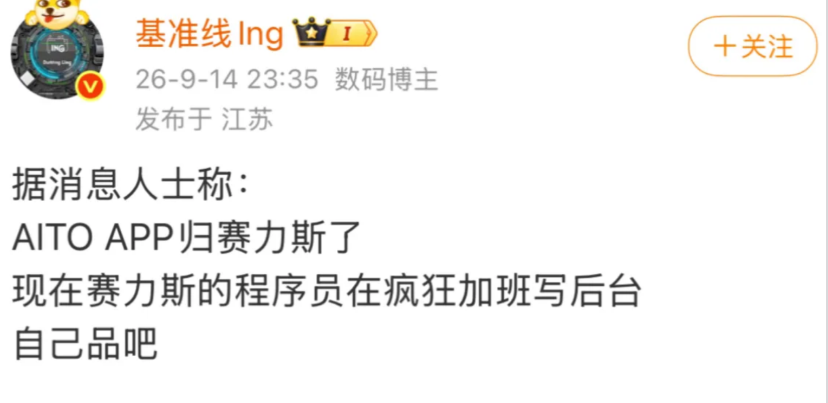
With the app already under Seres' control, the question on everyone's mind is:
Will Yu Chengdong still spearhead AITO's product launches in the future?
Without Yu Chengdong's backing, can AITO continue to flourish?
Will it still be considered the 'best car under 10 million'?
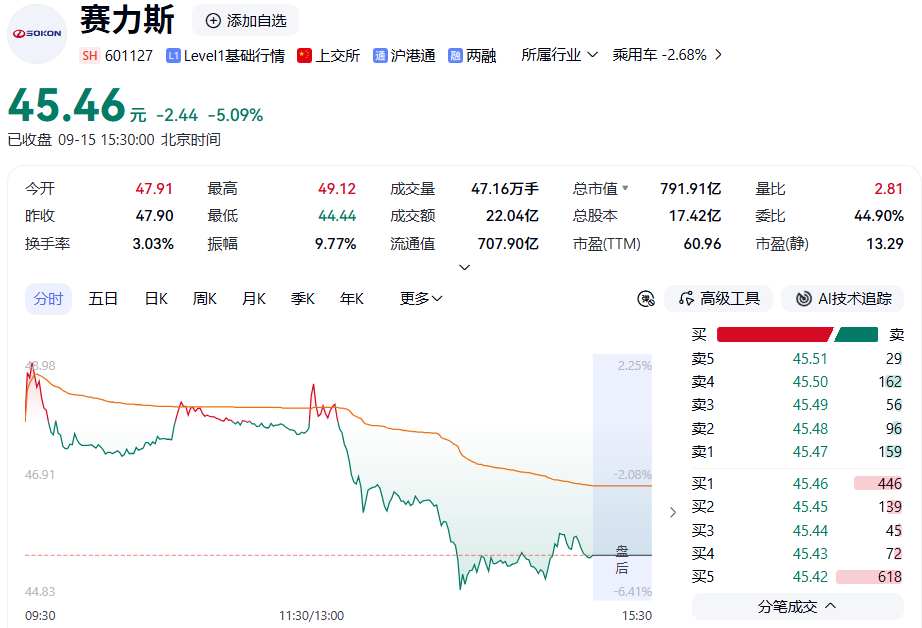
As soon as the news broke, Seres' stock price, which had initially opened higher, took a nosedive. After a brief rebound and turning positive in the morning, it continued to plummet in the afternoon, falling by more than 5%. Looking at the bigger picture, Seres' market value has shrunk by over 200 billion yuan since September last year.
01
Huawei Earned 110 Billion Yuan in Four Years, While Seres Made Less Than 1.5 Billion Yuan
The sudden announcement of an 'adjustment within this week' underscores the abruptness and urgency of this change.
But it's clearly not Huawei that's in a rush.
In the past, Huawei has dominated the partnership with Seres, dictating how products are developed, promoted, sold, and serviced, while Seres was relegated to merely manufacturing the vehicles.
As a result, Seres has faced criticism for 'lacking a soul' and being seen as just a contract manufacturer for Huawei.
Now, with Seres and Huawei going their separate ways, Seres will take the reins in product development, marketing, sales, and services. In essence, Seres will fully take over AITO.
However, the bigger rift between the two lies in their revenue structure.
Under the previous model, in addition to paying for hardware procurement, Seres paid Huawei a comprehensive service fee of 10% of the vehicle's selling price, including a 2% technology licensing fee and an 8% dealership channel service fee.
For Huawei, this was a steady and predictable revenue stream, ensuring profits regardless of whether the vehicles sold well or if the overall vehicle business was profitable.
Seres previously disclosed that over the past four years, it has paid Huawei over 110 billion yuan, accounting for nearly 30% of its revenue during the same period. However, Seres' combined net profit after non-recurring gains and losses over these four years was only 1.482 billion yuan.
In other words, for every 100 yuan Seres made in sales, nearly 30 yuan went to Huawei.
While Huawei reaped the lion's share, Seres only received a pittance and had to bear the brunt of manufacturing the vehicles.
In the first half of this year, Seres' revenue was 57.493 billion yuan, a year-on-year decrease of 7.87%; its net profit attributable to shareholders was a loss of 1.717 billion yuan.
In the same period last year, it still earned 2.941 billion yuan, but now it has directly incurred a loss of 1.717 billion yuan, a difference of 4.7 billion yuan. The losses were primarily due to new vehicle model transitions, unutilized old production capacity, and rising prices of raw materials such as memory chips, industrial metals, and lithium carbonate.
In June this year, Seres' Chairman Zhang Xinghai bluntly stated that the two biggest challenges currently facing automakers are: First, memory chips have seen a fivefold price increase, rising from 20 yuan per unit to nearly 100 yuan per unit; second, the price of lithium carbonate has increased from 80,000 yuan per ton in the same period last year to 180,000 yuan per ton.
He said that as a result, the average cost per vehicle for the AITO brand has increased by 15,000 to 20,000 yuan.
Based on AITO's sales volume of approximately 160,000 units in the first half of the year, the cost increase due to rising raw material prices alone amounts to 2.4 to 3.2 billion yuan.
Ultimately, Seres bears all these risks, while Huawei continues to enjoy steady profits regardless of market conditions.
More critically, after the expansion of Huawei's Harmony Intelligent Mobility Alliance, Seres can no longer exclusively enjoy the benefits, as Huawei's scarcity, as well as its dealership, marketing, and R&D resources, are now shared.
02
Without Huawei and Yu Chengdong, Will the Market Still Embrace AITO?
But objectively speaking, it was Huawei that rescued Seres. Before partnering with Huawei, Seres, then known as Sokon Automobile, lacked funds, technology, and brand recognition.
In just a few years, it rose rapidly, surpassing NIO, XPeng, and Li Auto, and even became the annual sales champion among new energy vehicle startups in 2024, transitioning from losses to full-year profitability—all thanks to Huawei.
Some netizens posed soul-searching questions: After the adjustment, doesn't this become the HI mode? Will the 'Five Brands' become the 'Four Brands'?
Huawei has three main cooperation models with automakers, ranging from shallow to deep: Component Supplier Mode, Huawei Inside Mode, and Harmony Intelligent Mobility Alliance Mode.
Previously, AITO was a prime example of the Harmony Intelligent Mobility Alliance Mode, under which Huawei was deeply involved in vehicle R&D, production, and provided sales channel support. Now, after the adjustment, it seems to have reverted to the HI mode, which provides intelligent automotive solutions.
With this adjustment, Seres seems to have regained the 'soul' of AITO, but the question remains: will consumers embrace it because of Seres?
As early as 2022, when the two first collaborated, many AITO M5 owners privately removed the 'Seres' badge and replaced it with Huawei's logo, stating, "Huawei has high brand value, while few people know Seres."
Now, four years later, Seres' brand value seems to have changed little in the eyes of netizens.
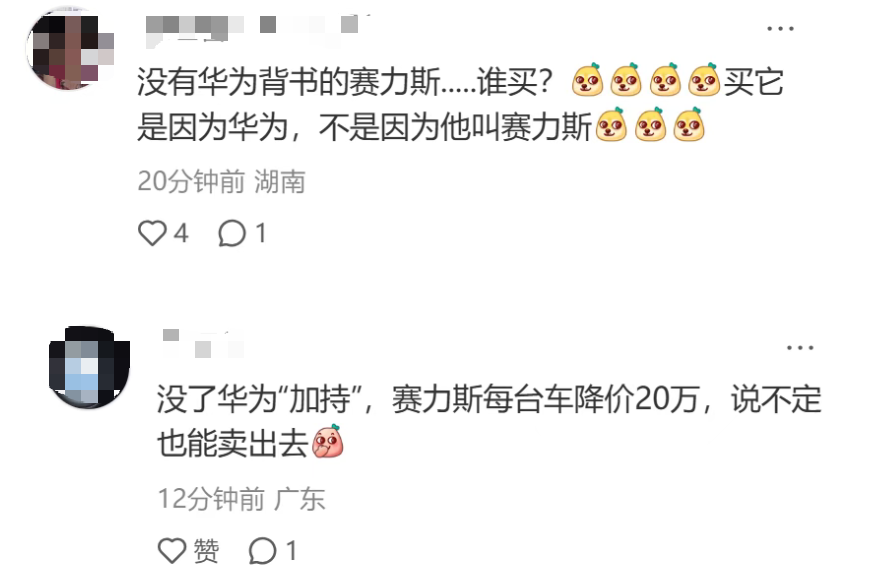
Some netizens began to complain sarcastically that without Huawei's endorsement, who would buy Seres? They bought it because of Huawei, not because it's called Seres.
Other netizens joked that without Huawei's 'blessing,' Seres could slash the price of each vehicle by 200,000 yuan and still struggle to sell them.
Furthermore, before AITO, brands like Avatr and Arcfox had already cooperated with Huawei through the HI mode, but their market response was far less enthusiastic than AITO under the Harmony Intelligent Mobility Alliance Mode.
Moreover, for brands cooperating under the HI mode, Huawei does not handle their product launches. In the past, Huawei was responsible for AITO's product launches, and Yu Chengdong had become AITO's strongest IP.
If, after the adjustment, Yu Chengdong no longer hosts AITO's product launches and no longer proclaims the classic line of 'the best car under 10 million,' will the market continue to embrace AITO?
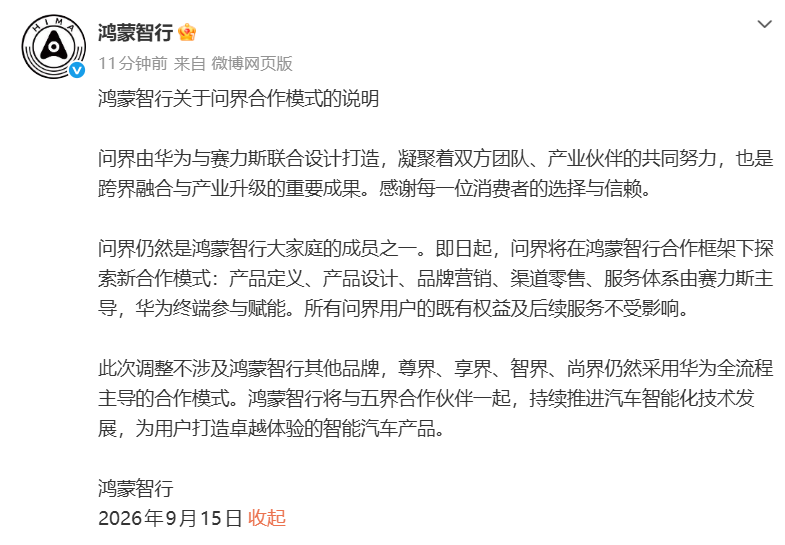
Although the official Weibo account of Harmony Intelligent Mobility Alliance stated that AITO still belongs to the 'Five Brands' and that the existing rights and subsequent services for all AITO users will not be affected, the official response did not address the core question of brand appeal in the market.
03
Huawei's Strategic Calculations
While Seres aims to stand on its own, Huawei also has a clear strategic vision: to allocate resources to its 'other four brands' and expand and strengthen the entire Harmony Intelligent Mobility Alliance.
The key point of the adjustment report also mentions: Harmony Intelligent Mobility Alliance will focus its resources on accelerating the success of the Luxeed, Enjoyz, MAEXTRO, and SHINE brands, thereby further solidifying its industry and market position.
Noticeably absent is AITO.
In recent years, while the lineup of Harmony Intelligent Mobility Alliance has been expanding, the other four brands have far less market presence compared to AITO.
From Huawei's strategic perspective, AITO has now basically proven successful, demonstrating the viability of Huawei's smart-selected vehicle mode. Now, Huawei needs to prove whether it can replicate AITO's success with the other 'Four Brands.'
By fully handing over AITO to Seres, Huawei can allocate more energy and marketing resources to the Luxeed, Enjoyz, MAEXTRO, and SHINE brands, expanding and strengthening the entire Harmony Intelligent Mobility Alliance.
Additionally, this 'loosening of control' serves as a demonstration to the industry and other cooperating automakers: Huawei adheres to its 'no car manufacturing' strategy; when a cooperating brand matures, Huawei will proactively hand back brand autonomy and clarify operational boundaries with the brand.
This adjustment is not a bitter breakup between the two sides but an inevitable result of the new energy vehicle industry's shift from rapid growth to market saturation competition.
One side seeks more autonomy, while the other aims to allocate more resources to expand the overall market.
However, after the adjustment is implemented, both sides will face new tests: Seres, operating independently, will have its brand operations and user service levels directly tested by the market; can Huawei successfully replicate AITO's success with Luxeed, Enjoyz, MAEXTRO, and SHINE?
The answers still need to be validated by the market and time.
·END·
For more exciting content,
welcome to follow the Nancai She Video Account
-
![]()
Returning AITO to Seres, Huawei Remains 'Cunning'
-
![]()
After a 200 Billion Yuan Loss, Seres Reclaims Its 'Soul,' But Will Yu Chengdong Continue to Back AITO?
-
![]()
Will you still buy AITO after its prefix changes from 'HIMON Auto' to 'Seres'?
-
![]()
Atlas Paves the Way with 3D Reconstruction, Ushering in a New Measurable Era for World Models
-
![]()
Why Is AITO’s Shift to a ‘Light Asset’ Model a Strategic Boon for Seres?
-
![]()
Doubao Mobile Phone Officially Launches: GUI as a Safety Net, AI Office as a Revenue Stream
-
![]()
Doubao Mobile Phone Officially Launches: GUI as a Fallback, AI Office as a Support
-
![]()
iFLYTEK Launches AStudio in a 'Desktop Gateway' War It Cannot Afford to Lose