Returning AITO to Seres, Huawei Remains 'Cunning'
 09/16 2026
 368
368
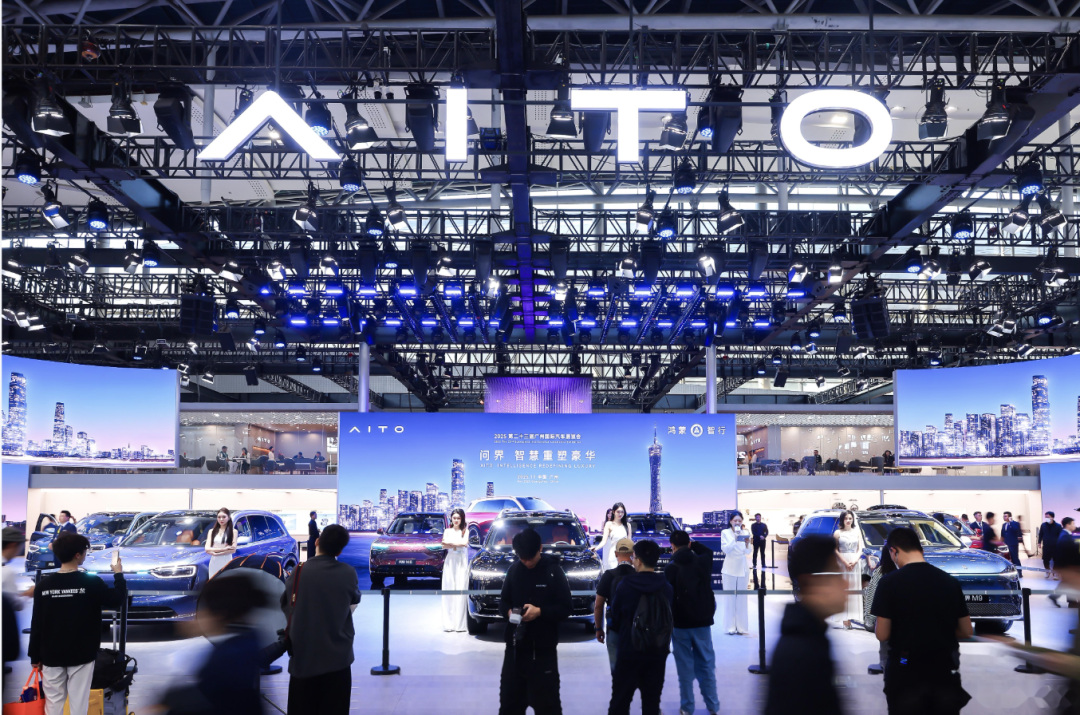
After seven years of cooperation, Huawei and Seres have also encountered the 'seven-year itch.'
When the two sides signed a comprehensive cooperation agreement in 2019, no one could have predicted that the relationship would reach this point today. What truly made this partnership memorable to the outside world was the birth of AITO in 2021. The brand, nurtured entirely by Huawei, has now reached its 'coming-of-age' moment five years later.
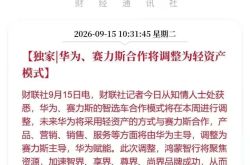
On September 15, 2026, HiMode and Seres simultaneously announced an official response to earlier rumors about adjustments to the AITO cooperation model.
The official statement was brief but packed with information: 'Effective immediately, AITO will explore a new cooperation model within the HiMode framework: product definition, design, brand marketing, channel retail, and service systems will be led by Seres, with Huawei Consumer Business Group providing support.'
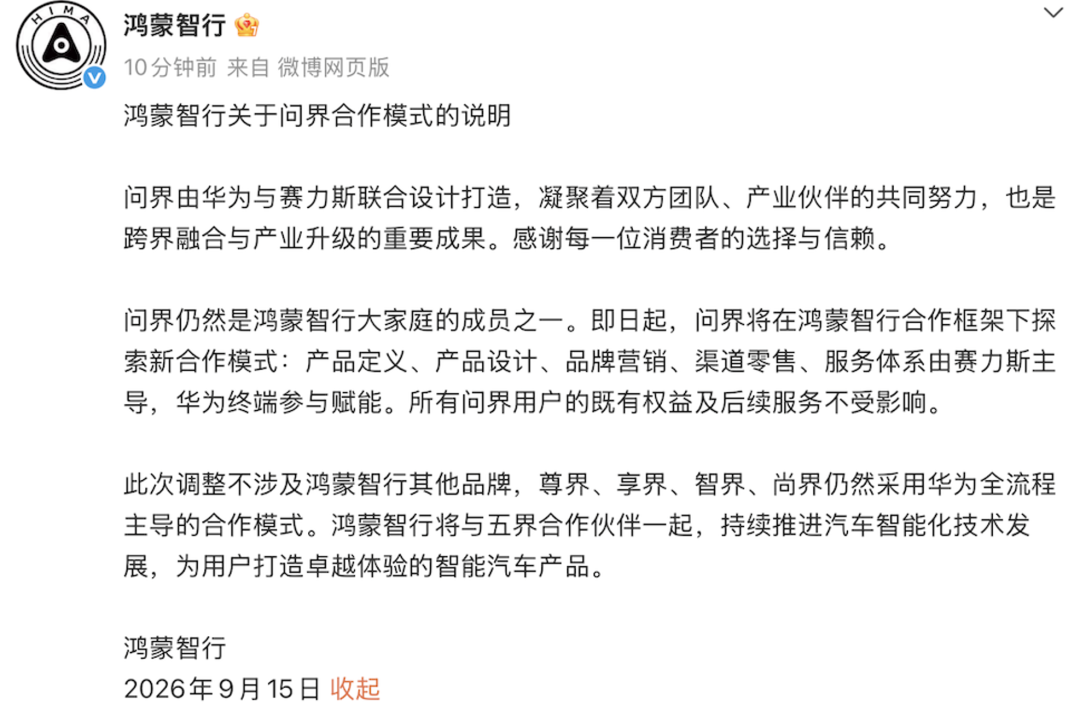
HiMode responds to adjustments in the AITO cooperation model
On the same day, HiMode emphasized that this adjustment does not involve other brands—MAEXTRO, STELATO, LUXEED, and SHANGJIE will continue to operate under Huawei's full-process-led cooperation model.
To translate: AITO, as of today, officially returns operational leadership to Seres. Huawei steps back into a 'supporting' role, freeing up limited resources to assist the other four brands still in their growth phases.
On the day the news broke, the capital markets reacted immediately. Seres' A-shares closed down more than 5%, while its Hong Kong shares fell over 6%. The market's concerns were clear.
The news itself was not entirely unexpected, but why did Huawei choose to relinquish control at this particular moment?
01 The Arrival of Five Brands, but Only One AITO
To answer this question, we must first examine how Huawei's automotive strategy has evolved step by step.
Huawei's involvement in the automotive sector began earlier than many realize. In 2009, the company started research and development in connected vehicle technologies, and by 2013, it had launched in-car communication modules, quietly entering the market as a Tier 1 supplier. During those years, Huawei's role was clear: sell components, not whole vehicles.
The turning point came in 2019. The establishment of the Intelligent Automotive Solutions BU coincided with the announcement of the slogan, 'Huawei doesn't build cars; it helps automakers build better cars.' But slogans are one thing; figuring out how to 'help' was another matter entirely.
The first approach was the HI (Huawei Inside) model, which packaged a full-stack intelligent automotive solution for automakers. ARCFOX and Avatr were among the first to adopt this model. However, the HI model faced an awkward reality: the technology was Huawei's, but the cars belonged to the automakers, and consumers were unimpressed. The ARCFOX Alpha S HI version received praise but failed to sell well, while Avatr remained lukewarm. Automakers worried about losing their 'soul,' and consumers were confused about who actually built the car.
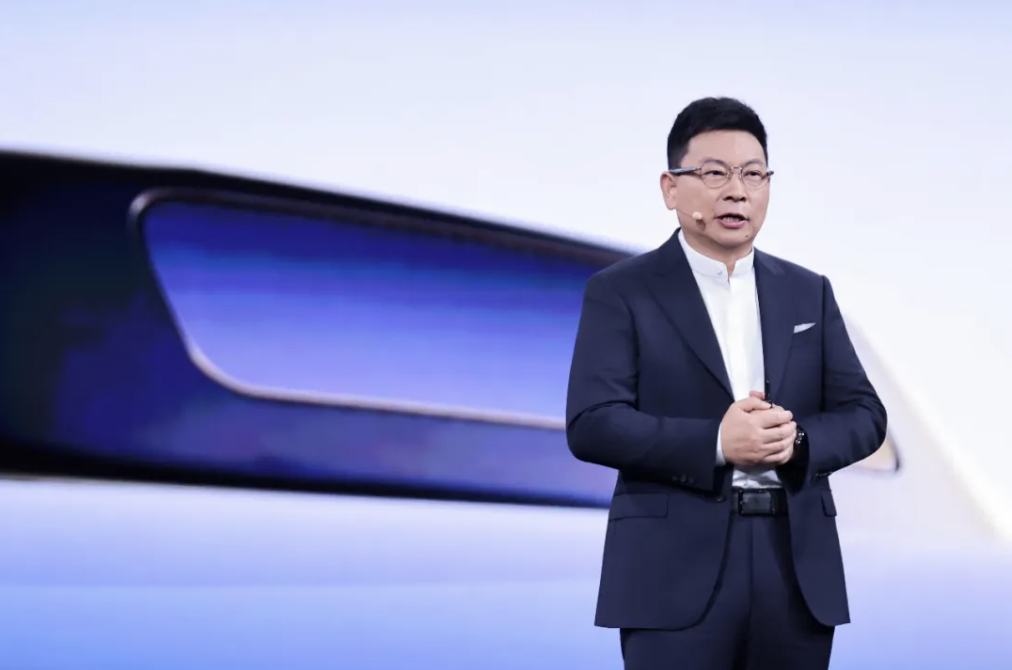 Yu Chengdong, Chairman of Huawei Terminal BG
In 2021, after Yu Chengdong took over the automotive BU, the strategy shifted dramatically. The 'Smart Selection' model emerged: Huawei not only provided technology but also handled product definition, design, marketing, and sales, with vehicles sold directly in Huawei stores. Seres became the first partner to adopt this model, and the AITO brand was born.
This approach was highly controversial at the time. Some accused Huawei of 'covertly building cars,' while others claimed Seres had been reduced to a mere contract manufacturer. However, the market provided the clearest feedback: the AITO M5 and M7 became instant hits, and the M9 solidified its position in the high-end market above 500,000 yuan. Huawei proved that consumers were buying 'Huawei,' not 'Seres.'
AITO's success convinced other automakers of the power of 'Huawei empowerment.' Chery, BAIC, JAC, and SAIC subsequently joined the fray. By the end of 2023, the HiMode ecosystem alliance had officially taken shape, featuring the 'Five Brands' matrix: AITO, LUXEED, STELATO, MAEXTRO, and SHANGJIE. In May 2025, the leaders of these five brands appeared together on stage for the first time, creating quite a spectacle.
However, the development of these five brands has been uneven.
Retail data from August 2026 shows that HiMode delivered a total of 42,101 vehicles, with the AITO series accounting for approximately 20,000 units, making it the absolute cornerstone of HiMode. Both SHANGJIE and LUXEED hover around 8,000 units, forming the second tier. STELATO sold just over 1,600 units, while MAEXTRO managed around 700.
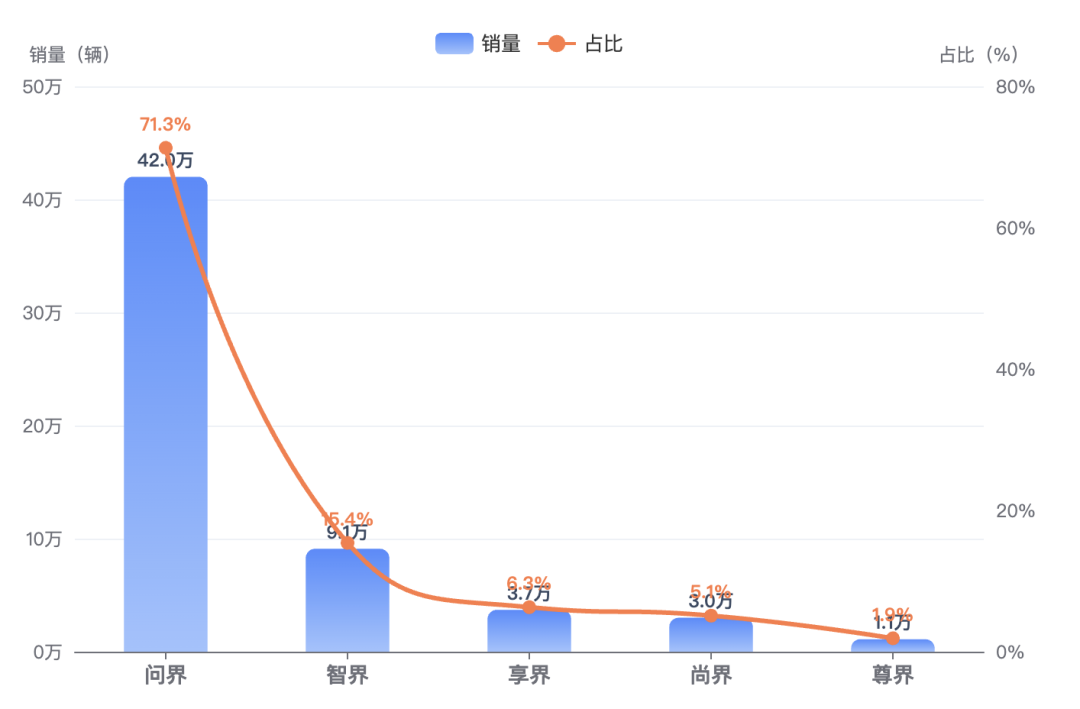 2025 HiMode brand sales (units)
More noteworthy is the structural shift. In 2025, AITO contributed 420,000 units, accounting for over 70% of HiMode's total sales, solidifying its position as the 'flagship.' However, by August 2026, AITO's share had dropped below 50%, with SHANGJIE and LUXEED beginning to take over.
The trend toward 'de-AITO-ization' in sales may have provided the impetus for this adjustment.
The HiMode model is officially defined as follows: Huawei leads the entire process, provides full-stack technological empowerment, and manages the entire lifecycle, covering product definition, design, core technologies, quality processes, brand marketing, channel retail, and service systems.
This model consumes vast resources. Each 'brand' requires significant investment from Huawei in terms of manpower, technology, and channel resources from product definition to channel deployment. Yu Chengdong himself once said, 'Managing five brands is extremely, extremely difficult.'
Huawei's store space is ultimately limited. When five brands compete for display space in the same showrooms, the exposure each new model receives is inevitably diluted.
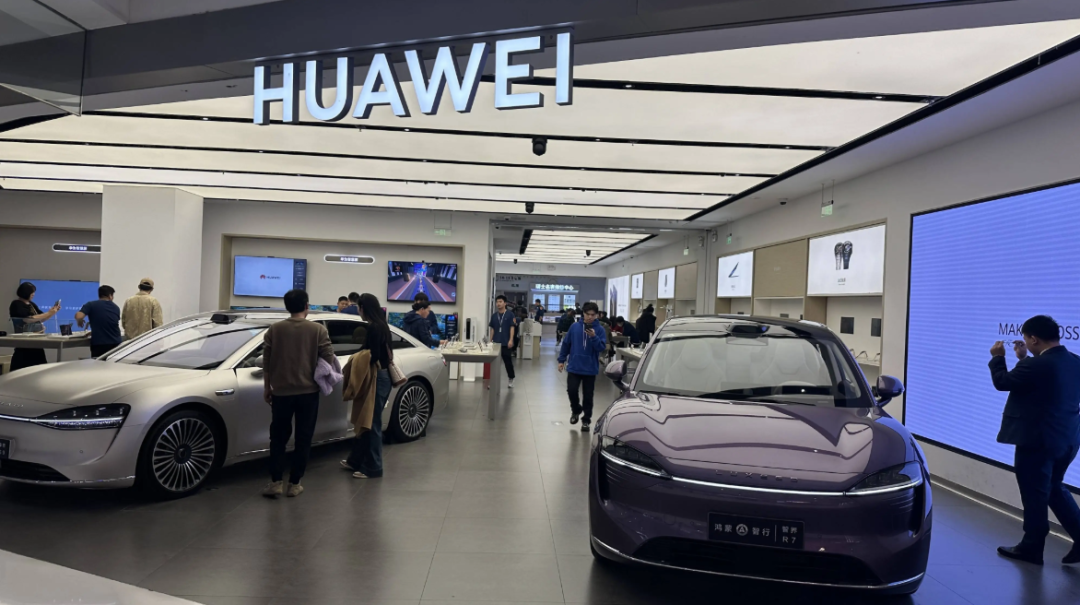
AITO has passed the stage where it most needed financial support. The M9 and M8 now form a dual structure of 'high-end positioning and mainstream volume,' with brand recognition firmly established. In contrast, LUXEED, STELATO, MAEXTRO, and SHANGJIE are still in their growth phases, each heavily reliant on Huawei's resources and momentum.
To some extent, Huawei is redirecting its limited resources away from 'an asset that is rapidly depreciating and offering diminishing marginal returns' and toward 'other brands that require resources to prove the sustainability of their models.'
02 Seres Can't Hold On, Seeking 'Greater Equality'
From Seres's perspective, this adjustment feels more like a forced 'coming-of-age.'
In the first half of 2026, Seres released a contradictory financial report: AITO sold 160,000 units, up 5.6% year-on-year, but net profit attributable to shareholders plunged to a loss of 1.717 billion yuan, compared to a profit of 2.941 billion yuan the previous year. From January to August, cumulative AITO sales reached approximately 201,900 units, down 14.07% year-on-year.
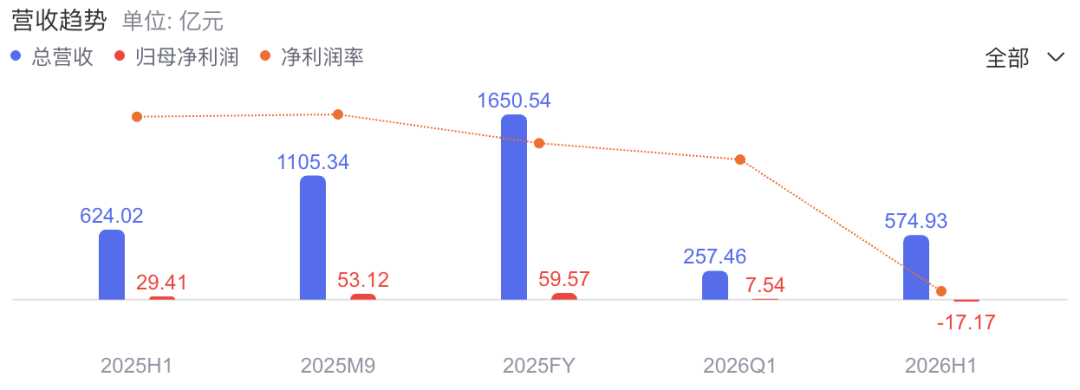 Changes in Seres's financial data
Where did the money go?
In 2025, Seres's procurement from Huawei-related entities reached 22.335 billion yuan, accounting for more than 30% of its total procurement.
The prospectus provides more detailed data: Seres must pay multiple fees to Huawei-related entities, including hardware procurement fees and a 2% technology licensing fee to HiNova Smart, an 8% channel service fee to Huawei Terminal BG, with all revenue from user value-added services also going to Terminal BG. Based on AITO's annual sales of 426,000 units, this amounts to approximately 52,400 yuan per vehicle.
Meanwhile, Seres's non-recurring net profit from 2022 to 2025 was less than 1.6 billion yuan.
Cost pressures are equally significant. Zhang Xinghai, Seres's chairman, publicly calculated in June 2026 that the unit price of memory chips had surged from 20 yuan to nearly 100 yuan, while lithium carbonate prices had risen from 80,000 yuan per ton to 180,000 yuan. Combined, these factors increased AITO's average manufacturing cost per vehicle by 15,000 to 20,000 yuan.
More critically, the risks Seres bears in this partnership have never aligned with its rewards. Upstream raw material costs, terminal price wars, and clearing inventory for older models—the pressure largely falls on Seres. Huawei, on the other hand, settles payments per order, collecting money for each car sold without bearing inventory or price fluctuation risks.
As HiMode expanded from 'one brand' to 'five brands,' AITO's unique position within the ecosystem began to dilute. Its product lineup was restricted to the SUV segment, and even the first-mover rights for core configurations like 896-line LiDAR were granted to other brands.
In September 2025, Seres duly paid Huawei 11.5 billion yuan to acquire a 10% stake in HiNova, sparing no expense. However, its voice within the HiMode ecosystem did not grow proportionately with this investment.
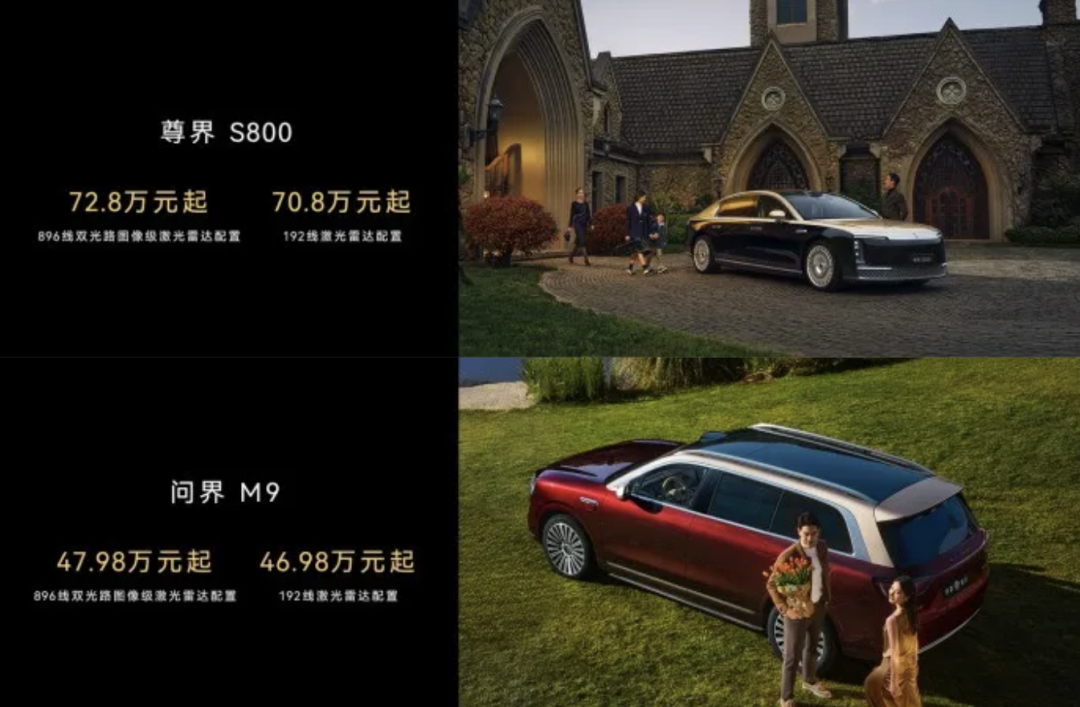 'Dual First Launch' of 896-line LiDAR
Taking over operational leadership of AITO presents both pressure and opportunity for Seres. The pressure lies in shouldering marketing, channel management, and user operations—tasks previously handled by Huawei. The opportunity is that only by truly 'owning' the brand can Seres tell its own story.
In fact, AITO's brand ownership legally already belonged to Seres: in 2024, Seres spent 2.5 billion yuan to acquire AITO's series trademarks and design patents from Huawei. By July of this year, all 919 trademarks had been fully transferred. In other words, brand ownership was never the core issue of this adjustment; what truly changed was 'who makes the decisions.'
Another noteworthy development is the quiet progress of Seres's new brand, AIVA. Based on disclosed supply chain choices, this vehicle will feature ByteDance's Doubao large model, intelligent driving solutions from Yuanrong Qixing, and batteries from CATL. Notably absent from this tech stack is Huawei.
This is no coincidence. Seres is reducing its dependence, while Huawei is lightening its asset load. Both sides are preparing for a more equal—but also looser—relationship.
AITO will not disappear; the HarmonyOS cockpit and ADS will remain, and its display space in Huawei stores will likely stay. However, the question of 'who calls the shots' has changed since September 2026.
03 Huawei's Calculation: From 'Showroom' to 'Ecosystem Rules'
From Huawei's perspective, this adjustment represents a strategic shift in its automotive business.
What was AITO's mission? To prove that 'Huawei empowerment' could succeed. In 2021, no automaker believed a communications company could help build smart vehicles. AITO's success became Huawei's most powerful 'showroom' for its automotive business. Now that this showroom has delivered over 1.2 million cumulative deliveries, its mission is complete.
Next, Huawei aims to transform 'Huawei empowerment' from a one-off success into a replicable ecosystem rule.
In 2026, Huawei Qiankun's 'JING' series is taking shape: the Qijing (in partnership with GAC) and Yijing (with Dongfeng) form a parallel pattern ('pattern') with the 'Five Brands.'
The cooperation model for Qijing and Yijing is called 'HI Plus.' Huawei dispatches teams to work on-site and opens its IPD development process, but brand ownership and sales channel dominance remain entirely with the automakers. In short, the 'JING' series represents Huawei's deep involvement without selling vehicles in Huawei stores, avoiding the channel capacity constraints faced by the 'Five Brands.'
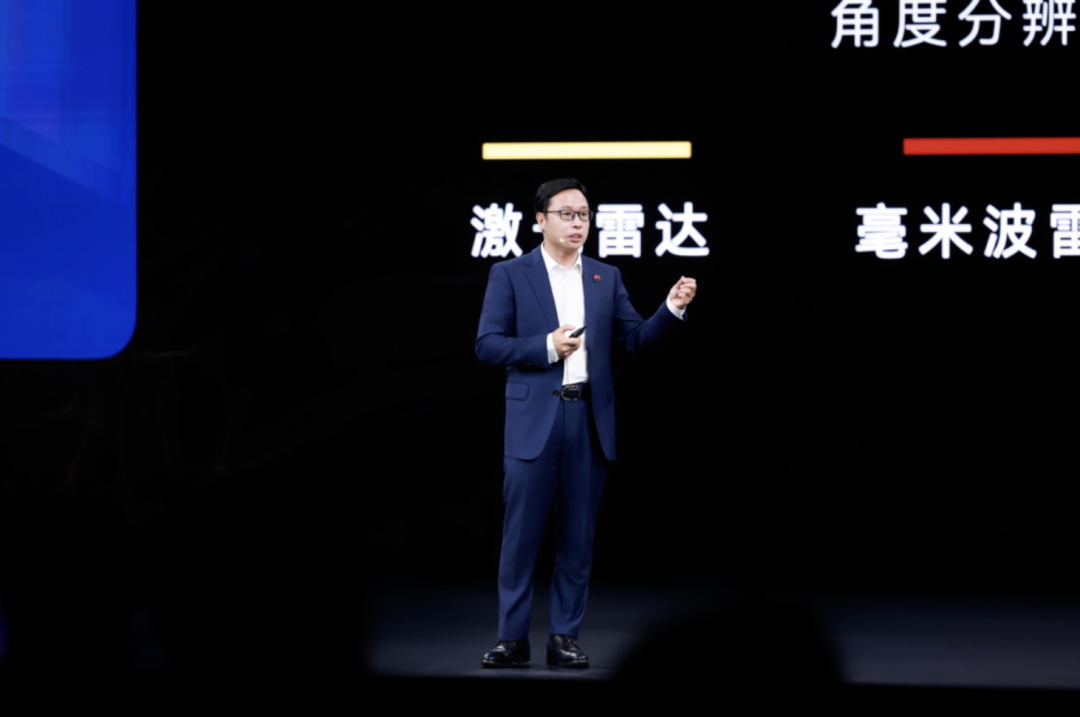 Jin Yuzhi, CEO of Huawei Automotive BU
Jin Yuzhi, CEO of Huawei Automotive BU, clearly positions Qiankun as an 'electronic screwdriver,' adhering to a non-manufacturing approach and focusing on technological empowerment. Currently, Huawei Qiankun's cooperation models are tiered into full-stack, 'Three Intelligences & Dual Intelligences,' and component-based approaches, with 25 partner brands and over 60 vehicle models. Huawei's goal is to extend 'Huawei empowerment' to as many automakers as possible, rather than operating as many brands as possible itself.
AITO's 'asset-light' transformation is a crucial step in this ecological strategy. By offloading AITO's operational burdens to Seres, Huawei frees up resources to continue supporting the Five Brands and Two JINGs with its technological foundation while expanding Qiankun's tech ecosystem further—a 'reallocation of HiMode resources.'
Reviewing Huawei's automotive journey, a clear pattern emerges: Huawei never does what is 'always right,' only what is 'most needed now.'
From Component suppliers ('component supplier') to HI mode, to Smart Selection, and now to asset-light empowerment and the 'JING-BOUNDARY dual track,' each adjustment reflects rapid responses to market feedback. AITO's success proved Huawei's capabilities; now, Huawei aims to upgrade these capabilities from 'building a benchmark' to 'establishing an ecosystem.'
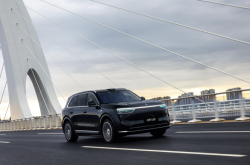
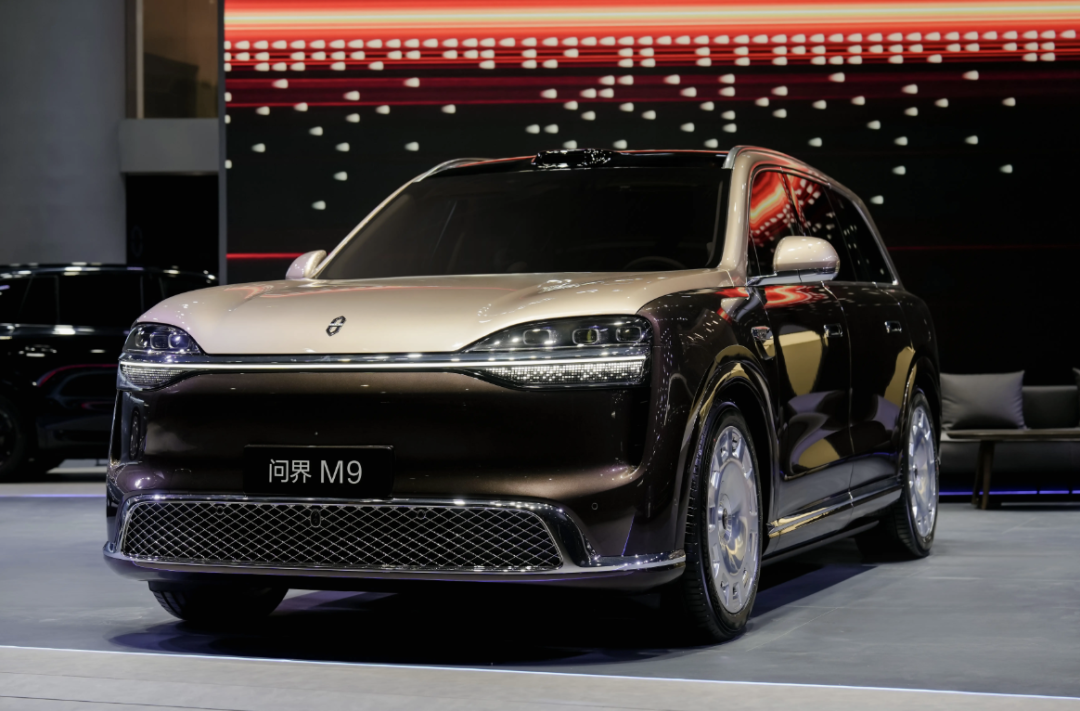 AITO M9
For Seres, this is both a 'coming-of-age' moment and a major test. AITO M9's reputation and product strength remain intact, but detached from Huawei's marketing system and terminal channels, Seres must prove its ability to independently operate a high-end brand. Whether the saved channel service fees translate into improved terminal efficiency will be the true test.
For Huawei, letting go of AITO does not mean giving up—it signifies greater ambition. When the 'Five Brands' and 'Two JINGs' can all thrive on Huawei's technological foundation, and when Qiankun's intelligent driving systems are installed in more and more automakers' vehicles, Huawei's promise to 'help automakers build better cars' will finally be fulfilled.
The story of AITO is far from over; it's just being told in a different way. And a new chapter in Huawei's automotive business has already begun.
-END-
-
![]()
Returning AITO to Seres, Huawei Remains 'Cunning'
-
![]()
After a 200 Billion Yuan Loss, Seres Reclaims Its 'Soul,' But Will Yu Chengdong Continue to Back AITO?
-
![]()
Will you still buy AITO after its prefix changes from 'HIMON Auto' to 'Seres'?
-
![]()
Atlas Paves the Way with 3D Reconstruction, Ushering in a New Measurable Era for World Models
-
![]()
Why Is AITO’s Shift to a ‘Light Asset’ Model a Strategic Boon for Seres?
-
![]()
Doubao Mobile Phone Officially Launches: GUI as a Safety Net, AI Office as a Revenue Stream
-
![]()
Doubao Mobile Phone Officially Launches: GUI as a Fallback, AI Office as a Support
-
![]()
iFLYTEK Launches AStudio in a 'Desktop Gateway' War It Cannot Afford to Lose