Is Hongmeng’s Five-Realm Strategy Shifting to Four? Are Seres and Huawei Going Separate Ways? Actually, It’s a Synergistic Evolution
 09/16 2026
 487
487
The automotive industry was abuzz yesterday with news of a strategic pivot in the collaboration model between Seres and Huawei.
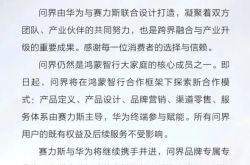
Media reports indicate that Huawei and Seres are transitioning their smart vehicle partnership towards a more asset-light framework. Under this new arrangement, Seres will spearhead product development, marketing, sales, and services, while Huawei will concentrate on providing technological support.
Previously, Huawei was heavily involved in the R&D, marketing, and sales of AITO vehicles, with Seres focusing primarily on manufacturing and after-sales services, while Huawei took the lead in other areas.
Why are both entities revising their partnership terms? From my perspective, it’s a response to the current landscape and can be viewed as a synergistic endeavor.
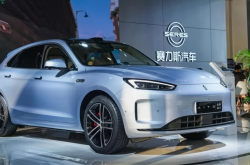
For Huawei, after five years of collaboration with Seres, it has successfully established the AITO brand and elevated Seres from a struggling entity to a premium domestic automaker.
Huawei has demonstrated its prowess and set a precedent with AITO, proving that its technological empowerment is effective, and the AITO model has been a resounding success.
Currently, Huawei is engaged with numerous automotive companies. Beyond AITO, there are four other brands and three additional models, making it challenging for Huawei to dedicate all its resources to AITO. It needs to reallocate resources to brands like Luxeed, Enjoyment, Excellence, and Shangjie to forge more success stories, which will offer higher marginal returns.
For Seres, this year has also posed significant challenges. Transitioning from substantial profits in the past to current losses, it necessitates a model adjustment.
Data reveals that Seres’ revenue in the first half of the year was 57.493 billion yuan, a year-on-year decline of 7.87%; its net profit attributable to shareholders was a loss of 1.717 billion yuan, compared to a profit of 2.941 billion yuan in the same period last year, a stark difference of nearly 4.7 billion yuan.
Why is Seres incurring losses? On one hand, costs have surged, such as increases in chip and lithium battery prices. On the other hand, its collaboration with Huawei entails substantial payments to the tech giant.
According to media reports, in addition to hardware procurement costs for motors and chips, Seres pays Huawei a 2% technology licensing fee based on the vehicle price and an 8% channel service fee. All revenue from in-vehicle value-added services accrues to Huawei.
Apart from hardware procurement costs, Seres pays a fixed 10% commission on each vehicle sold, irrespective of profitability. It must remit 10% for every vehicle sold.
Data indicates that over the past four years, Seres has cumulatively transferred 111.335 billion yuan to Huawei, representing 29.29% of its total revenue during the same period, while Seres’ own net profit attributable to shareholders was only 1.482 billion yuan.
When profits were still flowing, it wasn’t an issue, as all parties were reaping benefits. Now that Seres is incurring losses, it’s time for a reassessment. Seres believes that continuing this path will lead to further hardships.
Therefore, by regaining control, Seres will significantly curtail costs paid to Huawei in the future, at least eliminating the 8% sales commission and some marketing expenses for product launches.
In this context, the adjustment of the cooperation model aligns with the needs of both parties. After proving its capabilities, Huawei will allocate more resources to the other four brands and three models, no longer concentrating solely on AITO, making the adjustment inevitable.
Under operational pressure, Seres also needs to adapt to improve its financial standing. Both parties are pursuing a win-win scenario. Whether they can realize their expectations post-cooperation adjustment remains to be seen over time.
-
![]()
Restructuring of FAW and GAC: Not Just Merging North and South Toyota with 20 Billion Yuan
-
![]()
AITO Model Adjustment: Seres' Strategic Shift to Reclaim Profit Control
-
![]()
Annual Production of 7 Million Optical Waveguides: Can the AR Glasses Market Absorb This Surge?
-
![]()
When a Decade-Old Feishu Meets a Newborn Doubao Work: What’s the Outcome?
-
![]()
Seres Faces Pressure to Mature, as New Energy Vehicle Sector Braces for Major Realignment
-
![]()
Can Feishu Lead the Way? Will Qianwen and WorkBuddy Seal the Deals?
-
After shouting 'transfer to human agent' more than ten times, why is it still saying, 'Dear customer, I understand how you feel?'
-
Is Hongmeng’s Five-Realm Strategy Shifting to Four? Are Seres and Huawei Going Separate Ways? Actually, It’s a Synergistic Evolution