Restructuring of FAW and GAC: Not Just Merging North and South Toyota with 20 Billion Yuan
 09/16 2026
 360
360
The era of true large-scale consolidation in China's automotive industry has arrived.
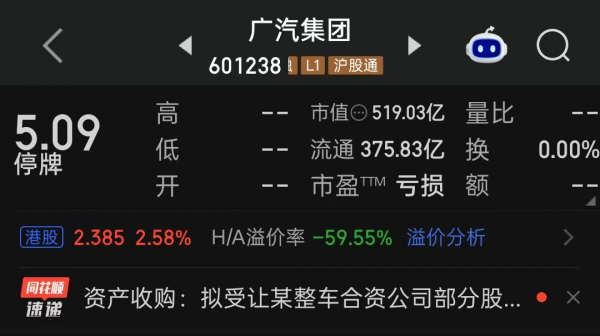
On September 14, GAC Group's A-shares were temporarily suspended from trading, followed by an announcement stating that the company was signing an 'Intent Agreement' with China FAW Co., Ltd. to plan the purchase of a portion of equity in a vehicle joint venture company held by FAW through the issuance of shares, along with raising matching funds (matching funds).
The announcement did not directly disclose the specific target, but the market quickly turned its attention to FAW Toyota. According to current market estimates, GAC may acquire approximately 25% of FAW Toyota's equity, with a transaction value of around 20 billion yuan. After the transaction, FAW is expected to become the second-largest shareholder of GAC by holding GAC shares, with a stake close to 30%. Of course, these figures are currently market estimates, and the final transaction plan will be subject to the officially disclosed documents.
If this transaction is ultimately finalized, the most direct outcome would be the potential integration of North and South Toyota. However, viewing it as a simple '20 billion yuan purchase of FAW Toyota' would underestimate the significance of this restructuring. For FAW and GAC, FAW Toyota is merely an entry point; what truly needs to be rearranged are the brand, technology, channel, manufacturing, and supply chain resources held by the two automotive groups. China's automotive market has entered a phase of stock competition (inventory competition), where problems previously masked by scale-based growth are beginning to surface collectively. Duplicate research and development, redundant factory construction, homogeneous products, and internal price wars are all eroding corporate profits. If FAW and GAC can recombine their resources through capital relationships, the significance of this transaction will extend far beyond adding a few million units in sales.
Will North and South Toyota Finally End Internal Competition?
The story of North and South Toyota has persisted for over two decades. During the period of rapid growth in China's automotive market, FAW Toyota and GAC Toyota each established their own factories, conducted independent research and development, and operated separate sales networks. These two systems helped Toyota quickly expand its market share in China and allowed both FAW and GAC to secure stable joint venture profits. However, as China's automotive market enters the new energy era, these former advantages are beginning to transform into burdens.
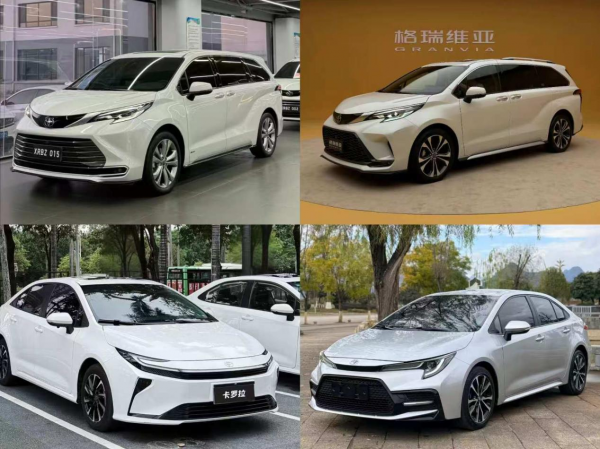
The most typical (typical) example is the Sienna and Granvia. Both originate from the Toyota system, with highly similar product positioning and targeting a largely overlapping consumer base. In the past, when market growth was sufficient, there was no significant issue with both companies selling independently. Now, with a limited pool of consumers, the dealers of both companies are still competing for sales. If one reduces prices, the other must follow suit; if one offers discounts, the other struggles to maintain price stability. The ultimate result is internal competition within North and South Toyota, compressed dealer profits, declining profitability of the joint ventures, and a increasingly difficult-to-maintain price system for the Toyota brand.
Therefore, if GAC ultimately acquires a portion of FAW Toyota's equity, further unifying the sales systems of North and South Toyota may become the most visible outcome of this transaction. According to the current market-circulated plan, a unified sales company may be established in the future, with Toyota holding 50%, and FAW and GAC each holding 25%. There is also hope for further integration of their channels. If the past model of separate sales and maintenance by FAW Toyota and GAC Toyota transforms into a unified channel, it will reduce a lot of internal friction for both consumers and dealers.
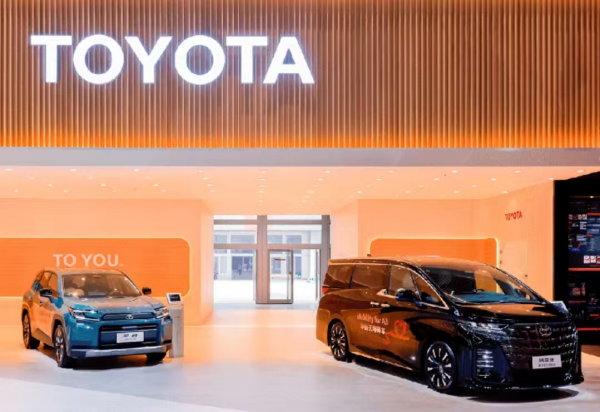
For Toyota, this is also a proactive adjustment. China's automotive market has shifted from the past approach of 'building one more channel to sell one more batch of cars' to 'duplicating one more channel to consume one more portion of profits.' If North and South Toyota can reduce internal competition and further unify procurement, channels, and product planning, the profits that were previously consumed by price wars will have the opportunity to return to the corporate and dealer systems. For FAW and GAC, this is also an opportunity to revitalize their joint venture assets.
GAC Needs FAW, and FAW Needs GAC
Focusing solely on North and South Toyota makes it difficult to explain why FAW and GAC would bind at the capital level. The true reasons lie in the operational pressures faced by both groups.
In recent years, GAC has been a representative of traditional automakers transitioning to new energy vehicles. GAC Aion's sales were approximately 120,000 units in 2021, increased to 270,000 units in 2022, and further surged to 480,000 units in 2023. During those years, Aion was once considered the most promising to establish a second growth curve for traditional automakers in the new energy sector. However, as companies like BYD, Geely, and Leapmotor rapidly expand their market shares and new energy competition intensifies, GAC's technological reserves have not fully translated into market advantages. Aion needs to continue seeking new growth spaces, Hyper's premiumization requires stronger brand recognition, and Trumpchi must continue its new energy transition.
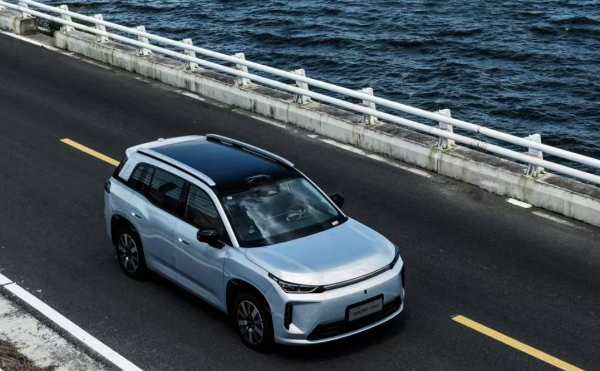
GAC's issue is not a lack of technology. Technologies such as the Magazine Battery, Inpower Battery, Giga Battery, and intelligent driving have already accumulated to a certain extent. The real challenge is how to integrate these resources into a larger product system. Looking at FAW, it also possesses abundant resources. Hongqi has decades of brand accumulation, FAW Jiefang has a strong industrial foundation in the commercial vehicle sector, FAW-Volkswagen and FAW Toyota remain important joint venture assets, along with a vast manufacturing and supply chain system. However, FAW also faces pressure in new energy products, market-oriented operations, and rapid iteration.
This creates a clear complementary relationship between the two companies. GAC more in need of (more needs) FAW's brand, manufacturing, and industrial resources, while FAW can leverage GAC's accumulations in three-electric (battery, electric drive, and electrifcation) and new energy products to reduce redundant investments. For example, if GAC's battery and electric drive technologies, which have already been applied on a large scale, can further integrate into FAW's product system, it will reduce the cost for FAW to rebuild its technological roadmap. Conversely, if mature brands like Hongqi can obtain stronger new energy technical support, it will also facilitate FAW's continued electrification efforts.
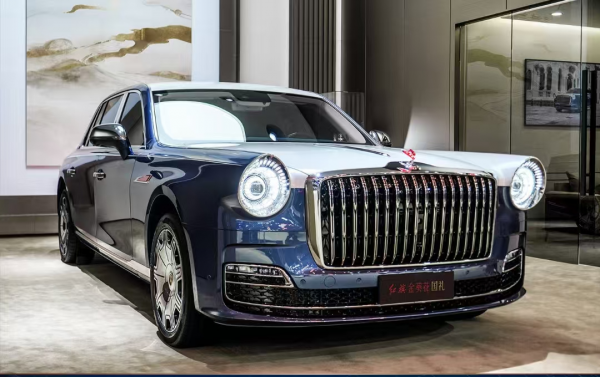
Therefore, after FAW acquires a stake in GAC, what matters more than the equity ratio between the two companies is whether they will share the resources that were previously independently used.
5 Million Units Are Just Numbers; Resource Integration Is the Key
Based on sales figures from the past few years, the combined sales of FAW and GAC have long hovered around 5 million units. In 2020, their combined sales exceeded 5.75 million units, reached approximately 5.87 million units in 2023, and remained above 5 million units in 2024 and 2025. If the two groups further integrate, they have a significant opportunity to become one of China's largest automotive groups in terms of scale.
However, today's automotive industry has proven that sales volume alone cannot solve all problems.
BYD's true advantage lies not just in reaching millions of units in sales but in the fact that its massive sales volume can dilute battery, electric drive, chip, platform, and R&D costs. Scale ultimately needs to penetrate the industrial chain to transform into cost and product advantages. If FAW and GAC merely add the sales volumes of the two groups together, they will only obtain a pretty number. Only if they can truly generate synergies in procurement, R&D, platforms, manufacturing, and supply chains will the 5 million units generate greater value.
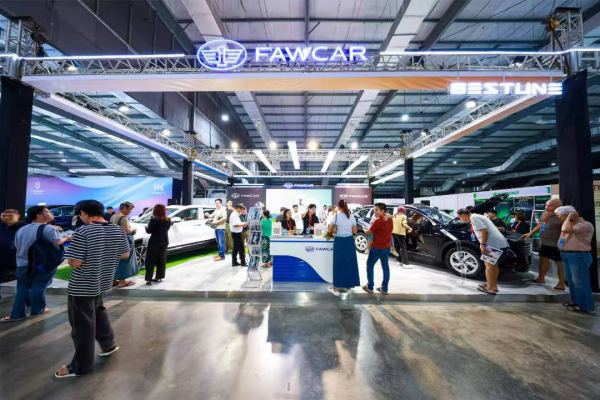
Both companies currently possess substantial resources, but these resources were previously dispersed across different systems, even leading to redundant construction. If they can reduce duplicate R&D, centralize procurement, replan some manufacturing bases, and streamline their brands and products in the future, their efficiency may improve.
This aligns precisely with the ongoing changes in the current automotive industry.
In the past few years, China's automotive industry has continuously added new elements: new brands, new factories, new platforms, and new models have emerged endlessly. When the market was growing rapidly, much of the redundant construction could be absorbed by sales volume. However, as the industry enters a phase of price wars, companies are beginning to realize that possessing more assets does not necessarily mean stronger competitiveness. Capacity utilization, R&D investment-to-output ratio, per-unit profit, and cash flow have become more important than mere sales rankings.
How Much More Integration Will There Be in the Automotive Industry After FAW and GAC?
The partnership between FAW and GAC also holds a broader significance: it may serve as a new model for restructuring in the automotive industry.
Past integrations in the automotive industry have primarily involved equity transactions between companies. However, the focus may now shift towards resource reallocation. Who will be responsible for operations? Who will control the channels? Who possesses the technology? Who will output the technology? Who owns the brand? Who will be responsible for brand operations? Shareholders will share the benefits of integration through capital relationships.
A similar approach was previously adopted in the cooperation between Dongfeng and Seres. Seres was responsible for operations, while Dongfeng retained its interests through equity relationships, and both parties continued to cooperate at the technological and supply chain levels. The scale of FAW and GAC is significantly larger, and they respectively belong to central and local state-owned enterprises, with more complex industrial systems and interest relationships behind them. Therefore, implementing this approach will be much more challenging.
This is also why it is premature to interpret the 'FAW-GAC restructuring' as a completed transaction. GAC's announcement currently confirms that both parties are planning related transactions, and specific targets, transaction prices, equity ratios, and governance structures still require further clarification in subsequent documents. Even if the integration of North and South Toyota is ultimately realized, deep synergies between their R&D, procurement, manufacturing, and brands will take a long time.
However, the direction is becoming increasingly clear.
China's automotive industry previously needed more participants; now, it needs more efficient participants. The dilemmas caused by redundant efforts and internal price wars can no longer be concealed by market growth. For automotive groups like FAW and GAC, which possess vast industrial assets, the focus of competition in the next stage will shift from 'how many resources they have' to 'whether they can truly utilize these resources.'
In Conclusion
If FAW's stake acquisition in GAC is ultimately realized, the merger of North and South Toyota may only be the first change to occur.
GAC gains FAW Toyota, FAW obtains GAC shares, and Toyota reduces internal friction between its North and South channels. All three parties have their own practical demands. Beyond that lies the truly noteworthy aspect of this restructuring: whether FAW's brand and manufacturing system and GAC's new energy technology and market-oriented capabilities can truly form synergies; whether their combined sales of 5 million units can translate into procurement, R&D, and supply chain advantages; and whether the resources previously built independently can reduce costs through integration.
The automotive industry has reached a stage where it needs to streamline. In the past, the focus was on who could expand the fastest; now, the focus may shift to who can integrate better. The partnership between FAW and GAC may be just the beginning.
-
![]()
Chengfeng Technology Shines at CIOE 2026: Bolstering the ‘Chinese Core’ of AI Optical Interconnection with Cutting-Edge Nanoscale Optical Inspection
-
![]()
Lens Revenue Rockets 42%! What’s Behind Artini Optical’s HK$13.38 Million Loss?
-
![]()
Can Seres Reclaim AITO’s Leadership? Will the ¥1.7 Billion Loss Be Reversed?
-
![]()
3 Billion Yuan: Can Neta Cars Stage a Remarkable Comeback?
-
Huawei and Seres 'Part Ways'? Seres Takes the Lead in Five Key Areas, Huawei Steps into a Supportive Role
-
![]()
Snatching Half-Yuan Electricity at Midnight, Complaining About Service Fees by Day: Who Exactly is Profiting from New Energy Charging Stations?
-
![]()
Restructuring of FAW and GAC: Not Just Merging North and South Toyota with 20 Billion Yuan
-
![]()
AITO Model Adjustment: Seres' Strategic Shift to Reclaim Profit Control