3 Billion Yuan: Can Neta Cars Stage a Remarkable Comeback?
 09/16 2026
 395
395
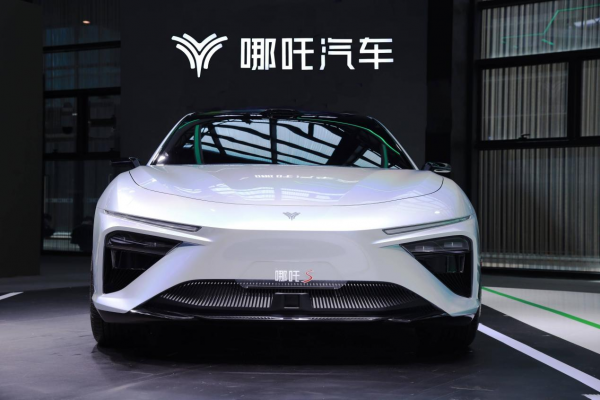
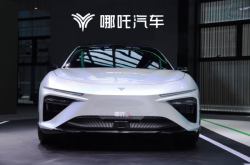
If the past decade of China's new energy vehicle (NEV) development were to be chronicled as a 'Feng Shen Bang' (a timeless Chinese mythological epic), Neta Cars would undoubtedly embody the quintessential tale of 'rising from the ashes'.
On September 11, the fourth creditors' meeting for the bankruptcy reorganization of Hozon New Energy Automobile Co., Ltd., Neta Cars' parent company, took place online, officially unveiling the previously enigmatic restructuring investor—Zhejiang Taiyi Shenglian Enterprise Management Partnership (Limited Partnership).
According to the blueprint, Taiyi Shenglian plans to inject 3 billion yuan in cash to acquire approximately 70.62% of Hozon New Energy's equity, assuming the role of the new controlling shareholder. Of this sum, 1.167 billion yuan will be earmarked for settling claims linked to the assets to be retained and bankruptcy expenses, while the remaining 1.833 billion yuan will bolster working capital to facilitate production resumption, supply chain revival, and daily operations. The reorganization plan still necessitates approval from creditors and a court ruling, so, strictly speaking, Neta Cars cannot yet be deemed 'revived.' Nevertheless, this former champion of new-force sales has at least secured a definitive proposed restructuring investor.
The most captivating aspect of this scenario is the moniker 'Taiyi Shenglian.' The encounter between Neta Cars and Taiyi Shenglian closely mirrors a plot from 'Feng Shen Yan Yi,' where Taiyi Zhenren (a celestial being) employs lotus flowers and leaves to reconstruct a physical body for Nezha. In reality, 'Taiyi Shenglian' will not literally use lotus roots to craft a body for Neta Cars; its mission is far more intricate: reintegrating a car company ensnared in severe debt, prolonged production halts, and disrupted supply chains and user systems into a functional commercial entity.
From Zhidou to Nezha: Taiyi Zhenren's Automotive Aspirations
Taiyi Shenglian is not a seasoned automotive enterprise; it was specifically established for this reorganization. Business registration data reveals that Taiyi Shenglian was founded in April 2026 by Zhejiang Shanzhi Holding Co., Ltd. and Zhejiang Shanzhi Yuxu Technology Co., Ltd. The former's de facto controller is Ye Ji, chairman of Shanzhi Hi-Tech, while the latter's is Yu Shuxin, head of Shanzhi Hi-Tech's board office.
Publicly available information associates Taiyi Shenglian with Shanzhi Hi-Tech's controlling shareholder and chairman, Ye Ji, but it is crucial to differentiate between the listed company and the controlling shareholder's ecosystem. On September 15, Shanzhi Hi-Tech issued a clarification stating that it has no equity control relationship with Taiyi Shenglian and has not directly or indirectly participated in Neta Cars' bankruptcy reorganization investment through controlled entities. The company's controlling shareholder intends to participate in the reorganization through its controlled entities, but this remains at the intentional stage.
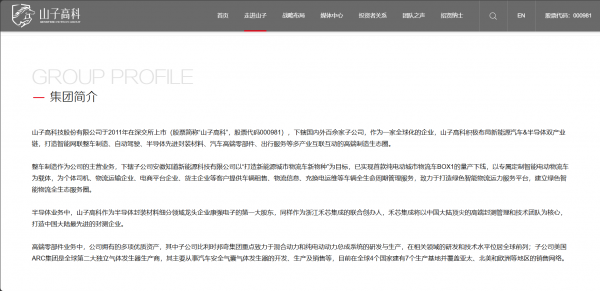
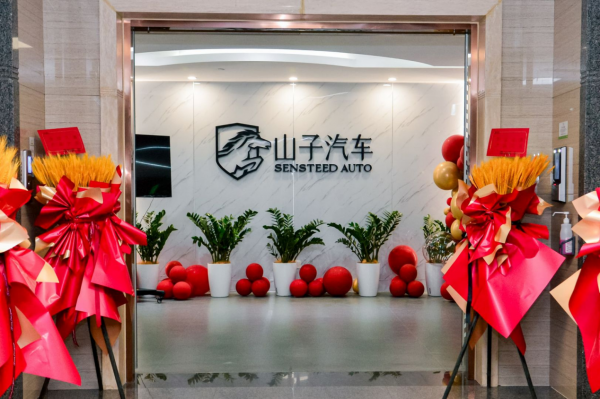
This implies that Neta Cars is not contending with a completely inexperienced 'mysterious capital' player. Although Taiyi Shenglian is a newly established investment vehicle for this reorganization, Ye Ji and his associated capital ecosystem have been active in the automotive industry for several years. Shanzhi Hi-Tech, formerly known as Yinyi Co., Ltd., has gradually divested from old businesses like real estate after reorganization and pivoted towards automotive components, high-end manufacturing, and complete vehicle operations. Today, Shanzhi Hi-Tech boasts an automotive components business and has been striving to enter the complete vehicle manufacturing sector.
Ye Ji is no stranger to entering the automotive industry through reorganization or industrial integration.
In 2022, Shanzhi Hi-Tech planned to invest no more than 400 million yuan in Zhidou Auto's reorganization, but the deal did not materialize. Subsequently, Shanzhi Hi-Tech acquired a 90% stake in Xingtai Longgang Investment for 107 million yuan through its subsidiary Zhidao New Energy Technology, indirectly gaining control of Hongxing Auto. Longgang Investment's core asset is Hebei Hongxing Automobile Manufacturing Co., Ltd., which possesses complete vehicle manufacturing capabilities and production qualifications. In December 2023, Hongxing Auto's new energy urban logistics vehicle, BOX1, officially commenced mass production, marking Shanzhi Hi-Tech's inaugural mass production project in new energy vehicle manufacturing.
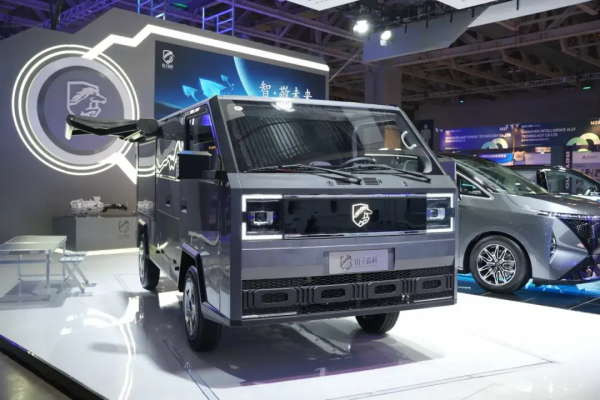
Later, Shanzhi Hi-Tech attempted to leverage Harbin's established automotive industry resources to develop an export-oriented complete vehicle project, with Yunfeng Auto being one such exploration. Simultaneously, the company has been advancing its self-developed passenger vehicle projects. Before the disclosure of Neta's reorganization plan, Ye Ji and his associated industrial ecosystem had already made multiple attempts in complete vehicle manufacturing.
Therefore, this Neta reorganization can be viewed as an escalation following Ye Ji and his associated capital ecosystem's previous forays into complete vehicle manufacturing. It is important to underscore that Shanzhi Hi-Tech, the listed company, has explicitly clarified that it has not directly or indirectly participated in this reorganization investment. For Taiyi Shenglian, it is more pragmatic to take over an existing NEV company with a brand, products, production systems, overseas channels, and consumer recognition than to start from scratch.
For an industrial capital player, this choice is understandable. After all, Neta once boasted a complete vehicle manufacturing system and even clinched the title of annual sales champion among new forces.
Can 1.833 Billion Yuan Resurrect Neta from the Brink?
According to the reorganization plan, out of the 3 billion yuan, 1.167 billion yuan will be utilized to settle claims corresponding to the assets to be retained and bankruptcy expenses, leaving 1.833 billion yuan as operational funds for the company post-reorganization. In essence, these 3 billion yuan must not only aid Neta in 'reconstructing its physical form' but also settle its 'debts from a bygone era.'
For the automotive industry, 1.833 billion yuan is not particularly lavish.
Developing a new vehicle from R&D to mass production necessitates substantial funds, and restoring the supply chain also demands capital. More critically, once production resumes, car companies enter a continuous cash-burning phase: purchasing components, organizing production, building inventory, paying channel fees, marketing, and after-sales support—every link requires cash flow. For Neta to transform 1.833 billion yuan into a kickstart fund rather than the 'final sum' for another round of losses is an arduous task.
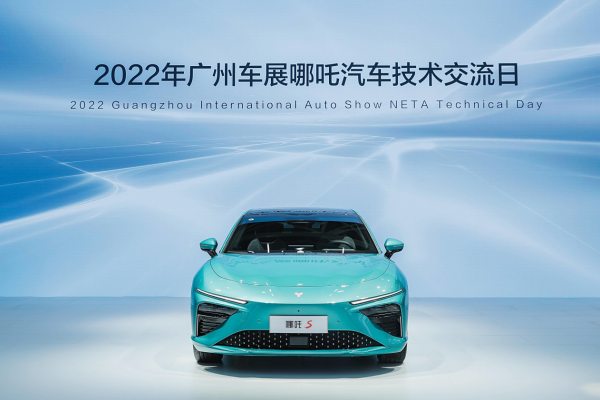
This is why the initial goal post-reorganization is set relatively conservatively: resume production of the Neta X, primarily targeting overseas markets, with an annual sales target of 10,000 units, while restoring the after-sales maintenance system and existing service network. What Neta lacks most now is not a grand product launch but a functional industrial chain that can commence operation again.
The Neta X was once a linchpin in Neta's globalization strategy, and the reorganization plan designates it as the core model for production resumption in the initial phase. Today's Chinese automotive market, particularly the 80,000-150,000 yuan segment, is one of the most fiercely competitive battlegrounds, already dominated by BYD, Geely, and Leapmotor. For a brand that has experienced production halts, returning to direct competition in the Chinese market immediately after resuming production would entail significant marketing, channel, and pricing pressures.
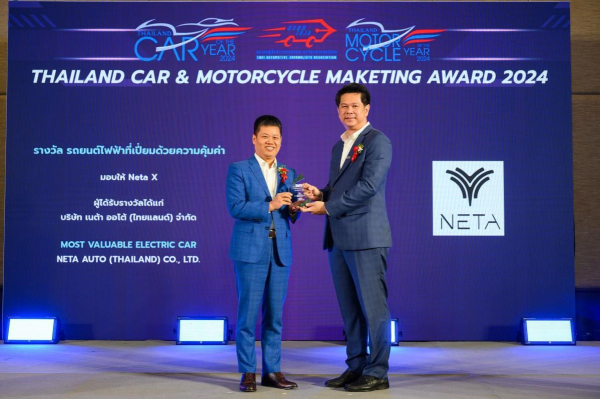
In contrast, overseas markets offer another avenue. Neta has already established a certain overseas sales foundation, particularly in Southeast Asia, with brand recognition and channel accumulation. The initial goal of the reorganization plan is merely 10,000 annual sales—a negligible figure in China's NEV market but sufficient to signify resurrection for a company just recovering from a production halt.
First, produce; first, sell; first, reassure suppliers that the company can pay; first, reassure overseas dealers that it can provide components; first, restore after-sales services for existing Neta car owners—only then can subsequent actions become feasible. Neta, aiming for a second life, is being pragmatic.
How Far Can Taiyi Zhenren's Automotive Dreams Extend This Time?
The narrative of Neta's resurrection is captivating, but stepping back, Ye Ji and his associated capital ecosystem behind Taiyi Shenglian are the true protagonists.
Viewing Shanzhi Hi-Tech as a public window into Ye Ji's automotive industry layout, its financial status provides some context but cannot directly equate to the financial strength of Taiyi Shenglian or its backers. In the first half of 2026, Shanzhi Hi-Tech reported revenue of 1.371 billion yuan, down 20.87% year-on-year, with a net profit attributable to shareholders of only 30.83 million yuan, down 85.69% year-on-year. Net cash generated from operating activities was negative 147 million yuan, with cash and cash equivalents at the end of the period around 307 million yuan.
These figures serve only as contextual background and cannot directly determine whether Taiyi Shenglian can complete the 3 billion yuan investment. The actual funding arrangements, sources, and financing methods remain subject to subsequent disclosures. However, for Neta itself, regardless of where the funds ultimately originate, what it requires in the future will not be merely a one-time 3 billion yuan infusion. If Neta can resume production with 1.833 billion yuan in working capital and swiftly achieve self-sufficiency, then the 3 billion yuan could genuinely serve as 'kickstart funds.' If production resumption still hinges on continuous shareholder support, then 3 billion yuan is merely a drop in the bucket for China's NEV sector today.
Now, let's revisit the three-phase goals outlined in Neta's reorganization plan:
Phase 1: Resume production of the Neta X, targeting 10,000 annual sales overseas.
Phase 2: Launch products for Asia, Africa, and Latin America, aiming for 300,000 annual production.
Phase 3: Develop global smart car models, targeting an annual output value of 40 billion yuan and initiating IPO preparations.
This roadmap represents an absolute gamble for Taiyi Shenglian and its backers. A single misstep could eliminate all room for maneuver at the table.
Epilogue
From the name 'Taiyi Shenglian,' custom-made for Neta, we can at least discern the deliberate echo established between the reorganization investor and the Neta brand. However, building cars is an arduous task; reality is not a myth. For Neta, the best-case scenario is to resume production of the Neta X, establish cash flow through overseas markets, gradually restore the supply chain and after-sales system, and then enter more markets with new products. If successful, Neta could become the first truly 'resurrected from the dead' automotive brand in China's NEV industry.
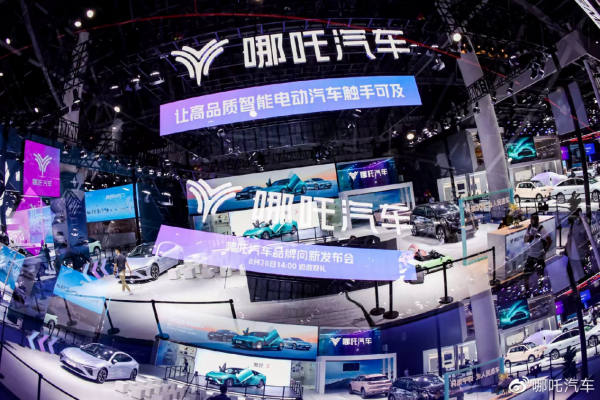
On the other hand, the automotive industry will not reduce its competitive intensity just because a company has undergone bankruptcy reorganization. The Chinese market will not wait for Neta, suppliers will not extend credit out of sentimentality, and consumers will not pay hard cash for a good story alone.
-
![]()
Industry-Academia Synergy! Hongshi Intelligent Partners with Tsinghua University to Overcome Key Hurdles in MicroLED Optics
-
![]()
Chengfeng Technology Shines at CIOE 2026: Bolstering the ‘Chinese Core’ of AI Optical Interconnection with Cutting-Edge Nanoscale Optical Inspection
-
![]()
Lens Revenue Rockets 42%! What’s Behind Artini Optical’s HK$13.38 Million Loss?
-
![]()
Can Seres Reclaim AITO’s Leadership? Will the ¥1.7 Billion Loss Be Reversed?
-
![]()
3 Billion Yuan: Can Neta Cars Stage a Remarkable Comeback?
-
Huawei and Seres 'Part Ways'? Seres Takes the Lead in Five Key Areas, Huawei Steps into a Supportive Role
-
![]()
Snatching Half-Yuan Electricity at Midnight, Complaining About Service Fees by Day: Who Exactly is Profiting from New Energy Charging Stations?
-
![]()
Restructuring of FAW and GAC: Not Just Merging North and South Toyota with 20 Billion Yuan