Can Seres Reclaim AITO’s Leadership? Will the ¥1.7 Billion Loss Be Reversed?
 09/16 2026
 409
409

Latest Update: Huawei and Seres are set to revise their partnership model this week. Huawei will transition from its current hands-on involvement in marketing, sales, and product planning to a more streamlined, asset-light collaboration. Seres is poised to reassume leadership over AITO. The question remains: Can it overcome its substantial financial setbacks?
170,000 Vehicles Sold, Yet a ¥1.7 Billion Loss Reported.
Less than a month after the semi-annual financial results were published, reports surfaced indicating Huawei’s intention to relinquish control of AITO to Seres.
This development raises a fundamental, often-overlooked question: What exactly are consumers purchasing when they buy an AITO vehicle?
According to a recent survey of AITO M9 owners conducted by automotive market research firm JL&F, the primary drivers behind purchase decisions are clear. Huawei’s intelligent driving assistance system was the top factor, cited by 52.4% of respondents. Brand reputation and intelligent cockpit features—both closely linked to Huawei’s technological prowess—were also significant. Notably, 58% of M9 owners were already Huawei smartphone users.
In essence, consumers are choosing AITO largely because they are already part of Huawei’s ecosystem.
Now, Huawei is taking a step back from the limelight.
The critical question arises: When “Huawei” is no longer the focal point of marketing efforts, how many consumers will still opt for a “Seres AITO”?
With Seres regaining control, can it finally put its financial losses behind it?
01 How Did the ¥1.7 Billion Loss Occur?
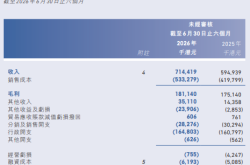
To understand this, we must examine Seres’ semi-annual report and identify the root causes of the ¥1.7 billion loss.
Three key factors contributed to this financial downturn.
First, ¥1.82 billion in “one-time write-offs.”
In the second quarter, as the older M5 and M7 models entered a transitional phase, their specialized molds and outdated intelligent driving hardware became obsolete. Seres wrote off these assets entirely, directly contributing to a ¥2.471 billion loss in Q2 alone. This was a one-time clearance of historical burdens—a “painful but necessary reset” that will not recur annually.
Second, a “gross margin squeeze” from both supply and demand sides.
Seres’ gross margin stood at just 23.30% in the first half of the year, a 5.63 percentage point decline year-on-year. In Q2, the margin dropped further to 20.92%. While upstream costs for automotive-grade chips and other hardware surged, intense price competition in the terminal market prevented Seres from passing these costs onto consumers. This squeeze significantly eroded profit margins.
Third—and most challenging—the unavoidable “Huawei cost factor.”
According to Seres’ Hong Kong IPO prospectus, for every vehicle sold, Seres pays hardware procurement fees and a 2% technology licensing fee to HiNova, as well as an 8% channel service fee to Huawei Consumer BG. Combined, this results in a fixed 10% deduction. In the first half of the year alone, Seres spent ¥9.84 billion on procurement from HiNova.
The cumulative impact is staggering: Over the past four years, ¥111.335 billion has flowed into the Huawei ecosystem, accounting for nearly 30% of Seres’ total revenue during this period. Meanwhile, Seres’ net profit after non-recurring items stood at just ¥1.482 billion.
Among these three factors, the first is a one-time event, the second reflects broader industry challenges, and only the third represents a unique structural cost for Seres.
02 Does Seres Have the Capacity to Lead?
Huawei’s decision to “step back” appears to be a strategic reallocation of resources within the Harmony Intelligent Mobility Alliance.
With AITO now established, Huawei aims to redirect its focus to brands like Luxeed and Enjoy, which are still in their growth phases. This marks a trial shift from “Huawei-led” to “automaker-led, Huawei-enabled” operations.
For Seres, regaining leadership entails three key opportunities:
- Greater control over marketing and channel costs. Previously, Huawei Consumer BG managed channel operations with an 8% service fee as a fixed expense. By handling channels in-house, Seres could theoretically optimize its cost structure.
- More flexibility in product planning. Previously tied to Huawei’s technology iteration cycles, Seres can now set its own product replacement rhythms.
However, the core dependency remains. Seres must still procure intelligent driving hardware and cockpit systems from HiNova, and Huawei’s rigid costs persist. The transition pertains to “how to sell,” not “what technology to use.”
The more fundamental question is: Does Seres have the organizational capability to exercise this leadership?
On channels and sales, Seres has limited independent operational experience with AITO; Huawei’s stores and sales network have been the primary drivers. Taking over this system may incur short-term transition costs and efficiency losses, likely reflected in delivery figures over the coming months.
On product definition, while Seres has accumulated expertise with its Magic Cube technology platform and range-extender systems, the pacing of intelligent driving and cockpit technologies remains dictated by Huawei’s ADS and HarmonyOS.
Previously, Huawei handled sales while Seres focused on manufacturing. Now, Seres must manage both “building” and “selling.” “Leadership handover tests not just willingness but organizational capability. If channels falter or product rhythms misalign, ‘leadership’ becomes a mere label.”
Even more challenging than organizational hurdles is the question of brand identity. Previously, AITO’s appeal lay largely in Huawei’s halo effect. If Huawei recedes and the halo fades, what brand premium can “Seres” command?
03 The Real Test Lies in Sales Volume
To fully grasp the implications of today’s news, we must analyze not just loss figures but sales trends.
While first-half sales saw slight growth, July and August brought abrupt declines. August sales plunged 49.68% year-on-year to 20,652 units, nearly halving. July also fell 47%. If this were merely a “model transition phase,” it should have ended by June; the continued decline suggests deeper issues.
Institutional expectations are also falling. BOCOM International cut its 2026 AITO sales forecast by 24.7% to 403,000 units; CLSA projects Seres’ full-year deliveries at 422,500 units, down 18% year-on-year.
What does this mean? Even if the “one-time shock” of write-offs passes, persistent low sales will prevent economies of scale, making margin recovery elusive.
Seres isn’t without cards to play. On September 12, the AITO M9 Ultimate Extended Edition began deliveries, priced from ¥649,800. The all-new M9 has surpassed 30,000 deliveries in 12 weeks, topping the ¥500,000+ segment for three consecutive months from June to August.
The M9 sustains brand prestige, but the true volume driver will be the M6. Priced in the ¥250,000 segment, it is critical for Seres to rebound this year.
If high-end models’ sales share rises, per-unit profits could improve.
04 The Answer Lies Beyond the Headlines
Returning to the original question: Can the massive losses end after regaining leadership?
The short-term answer is clear: The “one-time landmine” of ¥1.82 billion in write-offs is unlikely to detonate again. This was a concentrated clearance of historical burdens.
Medium-term profitability hinges on three simultaneous achievements: halting sales declines, restoring gross margins to healthier levels, and diluting Huawei’s rigid cost share through sufficiently high sales volume. These factors are interlocked and indispensable.
Long-term, the leadership handover alters “operational efficiency boundaries” but not “business model structure.” Seres remains a Huawei-tech-dependent automaker, still paying Huawei’s rigid costs and planning products around Huawei’s technology cycles. What it regains is autonomy in selling, not building, vehicles.
Seres’ turning point won’t be seen in today’s cooperation adjustment news but in the coming months’ actual monthly delivery volumes and margin trajectories. Whether the M9 Ultimate can sustain the premium market and the M6 can achieve volume will determine if 2026 brings continued losses or a return to break-even.
Leadership is a key, but what lies beyond the door depends on Seres’ own steps.
-
![]()
Industry-Academia Synergy! Hongshi Intelligent Partners with Tsinghua University to Overcome Key Hurdles in MicroLED Optics
-
![]()
Chengfeng Technology Shines at CIOE 2026: Bolstering the ‘Chinese Core’ of AI Optical Interconnection with Cutting-Edge Nanoscale Optical Inspection
-
![]()
Lens Revenue Rockets 42%! What’s Behind Artini Optical’s HK$13.38 Million Loss?
-
![]()
Can Seres Reclaim AITO’s Leadership? Will the ¥1.7 Billion Loss Be Reversed?
-
![]()
3 Billion Yuan: Can Neta Cars Stage a Remarkable Comeback?
-
Huawei and Seres 'Part Ways'? Seres Takes the Lead in Five Key Areas, Huawei Steps into a Supportive Role
-
![]()
Snatching Half-Yuan Electricity at Midnight, Complaining About Service Fees by Day: Who Exactly is Profiting from New Energy Charging Stations?
-
![]()
Restructuring of FAW and GAC: Not Just Merging North and South Toyota with 20 Billion Yuan