Snatching Half-Yuan Electricity at Midnight, Complaining About Service Fees by Day: Who Exactly is Profiting from New Energy Charging Stations?
 09/16 2026
 539
539
Produced by: #MarketValueFinance
Many electric vehicle owners regret their purchase, staying up late to charge their cars to save money. Electricity costs over one yuan per kWh during the day are too expensive, but only half a yuan at midnight.
One of the most misunderstood aspects of the charging station industry: with constant traffic and significant revenue flow, it seems like a business that can generate easy profits.
However, the reality is that the charging station business is far less profitable than it appears.
PART 01: Why Do Owners Rush to Charge at Midnight, and Who Takes the Money?
01
High daytime electricity prices do not stem from operator profiteering but from the peak-valley time-of-use pricing mechanism: electricity demand peaks during the day and evening, straining supply; overnight, when grid load decreases, prices drop to encourage off-peak EV charging.
The majority of the charging fees paid by owners goes to the grid for electricity. Recent tests by Phoenix Reviews on 18 occasions across brands like Teld, Starcharge, Yunkuai, Kaimai, and Xiaoju Charging showed that electricity costs account for an average of 61% of total charging fees, with the remaining 39% being service fees for charging operators.
While electricity costs are relatively transparent, service fees are often criticized by owners as "hidden assassins." These fees cover upfront station construction costs, site rentals, R&D, power distribution upgrades, and daily operational expenses. During periods when EV ownership and single-station utilization rates are not yet fully optimized, losses among charging operators are almost the norm during industry expansion.
Take Teld, the operator with the largest number of charging terminals in China, as an example: On September 7, Teld surpassed 1 million charging terminals, becoming the industry leader in scale, yet this has not translated into stable profits.
In 2019, Teld's revenue was 2.129 billion yuan; by 2022, it had increased to 4.570 billion yuan, but this growth followed a prolonged period of losses. According to consolidated figures, Teld reported a net loss of approximately 51.3208 million yuan in 2021 and about 26 million yuan in 2022. It turned a profit in 2023 with a net income of 172 million yuan, followed by 291 million yuan in 2024. In 2025, it achieved revenue of 4.976 billion yuan and net profit attributable to shareholders of 299 million yuan, with a net profit margin of around 6.0%. This shows that while Teld has reached a profitability turning point, the charging network business remains highly sensitive to utilization rates, service fees, and operational costs.
This 6% net profit margin reflects the combined results of Teld's equipment production and charging operation businesses. According to Teld's parent company, Tgood's financial reports, in 2025, Tgood's total revenue was 15.786 billion yuan, including approximately 1.6 billion yuan from charging network operation services and about 3.4 billion yuan from charging equipment sales. Since Tgood's EV-related businesses are primarily handled by Teld, it is clear that Teld's main revenue source at this stage still comes from "selling charging equipment."
PART 02: A Million Terminals Can't Support an Independent IPO
02
High investment and slow returns have directly impacted Teld's independent IPO plans. In December 2020, Tgood initiated Tutoring registration (listing Tutoring registration ) for Teld's spin-off and IPO; in March 2022, it disclosed a complete plan for a spin-off and listing on the STAR Market. However, both attempts failed to materialize, likely due to unstable profitability.
Guosen Securities analyzed that for a 60kW DC charging pile, including power distribution and installation, the fixed cost per pile is approximately 65,000 yuan. Assuming an 8% utilization rate and a service fee of 0.50 yuan/kWh, the annual net cash flow per pile is about 10,300 yuan, resulting in a static payback period of approximately 6.28 years.
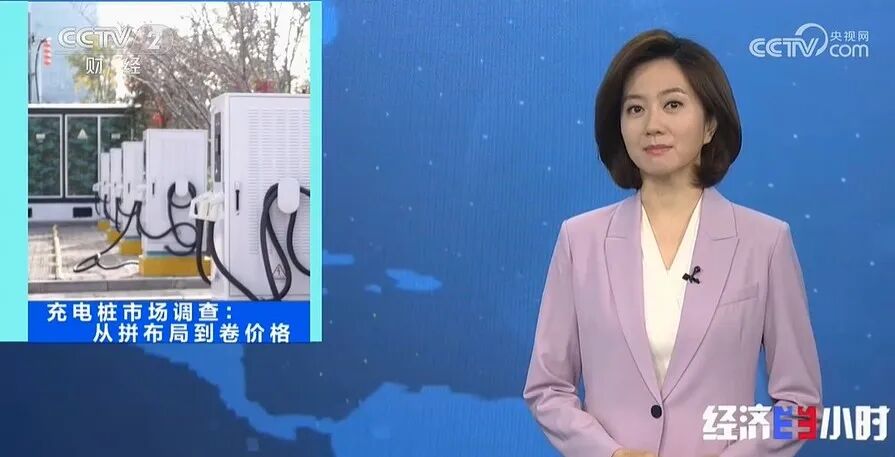
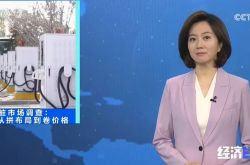
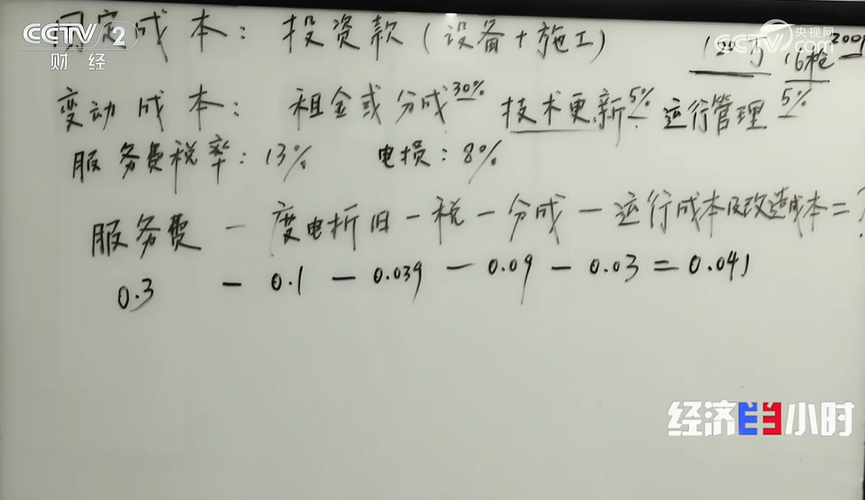
However, idealized calculations differ greatly from real-world market conditions, which are even more severe: In September 2026, CCTV's "Economic Half-Hour" investigation found that some stations offered service fees below 0.1 yuan/kWh after discounts, and some even waived service fees to attract users. An industry leader calculated that for a station with a 1.2 million yuan investment and 16 fast-charging guns, at a service fee of 0.3 yuan/kWh, the profit per kWh after depreciation, taxes, and other costs was only about 4 cents.
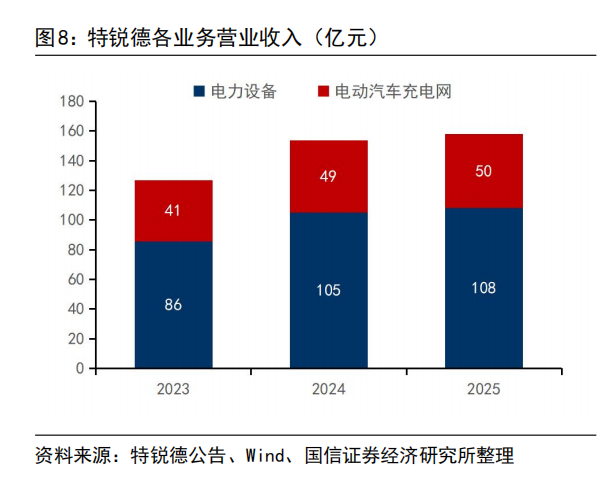
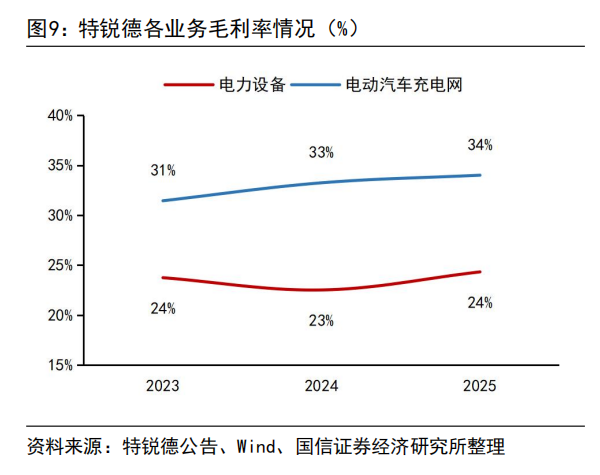
Against this backdrop, Tgood adjusted its capital strategy, choosing to pursue a Hong Kong IPO as the parent company, bundling power equipment manufacturing and charging network businesses in its prospectus. In 2025, Tgood achieved revenue of 15.786 billion yuan and net profit attributable to shareholders of 1.243 billion yuan. Among this, the power equipment industry contributed 10.821 billion yuan in revenue with a gross profit margin of 24.32%, while the EV charging industry contributed 4.966 billion yuan in revenue with a gross profit margin of 34.00%. The charging business accounted for about 31% of the group's revenue and 39% of its gross profit.
Financial pressure ultimately affected shareholders. Before submitting its prospectus, Tgood's controlling shareholder, Derui Investment, pledged approximately 131 million shares and had about 2.917 million shares judicially frozen, totaling approximately 134 million shares. This represented about 40.22% of Derui Investment's stake and approximately 12.70% of Tgood's total share capital, with related pledged financing of about 1.1 billion yuan.
PART 03: Leaving the "Slow Business" Outside the Door
03
Starcharge, another competitor in the charging station market, has more directly exposed the valuation challenges faced by charging operators through its IPO journey.
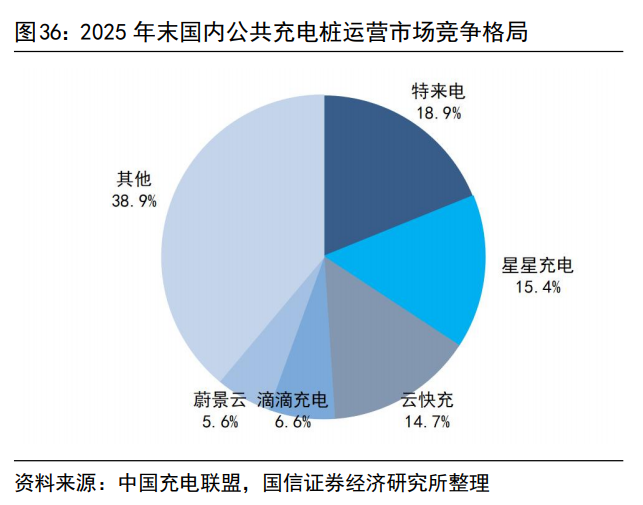
Starcharge's parent company, Wanbang Digital Energy, has been pursuing an IPO for nearly six years: its first A-share IPO attempt in 2020 was terminated in 2023; it restarted A-share Tutoring registration (listing Tutoring registration ) in October 2024, only to terminate it again in November 2025; it then shifted focus to a Hong Kong IPO, submitting its prospectus in January 2026.
However, before submitting its Hong Kong prospectus, Wanbang Digital Energy made a significant decision. In September 2025, it transferred its most well-known charging operation brand, "Starcharge," along with ten new energy operation companies, to an affiliated party, Wanbang Taiyi, for 47.4 million yuan. Wanbang Digital Energy disclosed in its prospectus that energy operation revenue accounted for no more than one-fifth of the group's total revenue in 2023 and 2024.
Wanbang's capital strategy can be summarized as: keeping "slow-return station operations" within the actual controller's system while taking "lighter, more profitable, and export-oriented equipment manufacturing" public. High revenue but thin profits lie at the heart of the difficulties in financing for charging station operations through public listings. While scale can create a compelling narrative, only profitability determines whether a company can reach the IPO stage.
END
Disclaimer
MarketValueFinance hereby states that all information and content provided are objectively compiled and analyzed based on publicly available data, but we cannot guarantee their absolute accuracy, completeness, or timeliness. Any opinions, analyses, or conclusions contained herein represent the independent views of MarketValueFinance at a specific point in time and do not constitute investment advice or strategies. Financial markets carry risks, and investors assume full responsibility for any decisions made based on this content. If you have any questions or find any omissions in our content, please contact us directly through our official channels, and we will verify and address them promptly.
-
![]()
Chengfeng Technology Shines at CIOE 2026: Bolstering the ‘Chinese Core’ of AI Optical Interconnection with Cutting-Edge Nanoscale Optical Inspection
-
![]()
Lens Revenue Rockets 42%! What’s Behind Artini Optical’s HK$13.38 Million Loss?
-
![]()
Can Seres Reclaim AITO’s Leadership? Will the ¥1.7 Billion Loss Be Reversed?
-
![]()
3 Billion Yuan: Can Neta Cars Stage a Remarkable Comeback?
-
Huawei and Seres 'Part Ways'? Seres Takes the Lead in Five Key Areas, Huawei Steps into a Supportive Role
-
![]()
Snatching Half-Yuan Electricity at Midnight, Complaining About Service Fees by Day: Who Exactly is Profiting from New Energy Charging Stations?
-
![]()
Restructuring of FAW and GAC: Not Just Merging North and South Toyota with 20 Billion Yuan
-
![]()
AITO Model Adjustment: Seres' Strategic Shift to Reclaim Profit Control