FAW and GAC Restructuring: Forging Ahead with Integration, Enhancing Efficiency through Synergy
 09/18 2026
 409
409
Lead
Introduction
This endeavor is not about one company acquiring another, nor is it about one entity overpowering the other. It is about channeling resources to their most effective destinations.
On the evening of September 14, GAC Group issued a suspension announcement, igniting the year's most significant industry buzz.
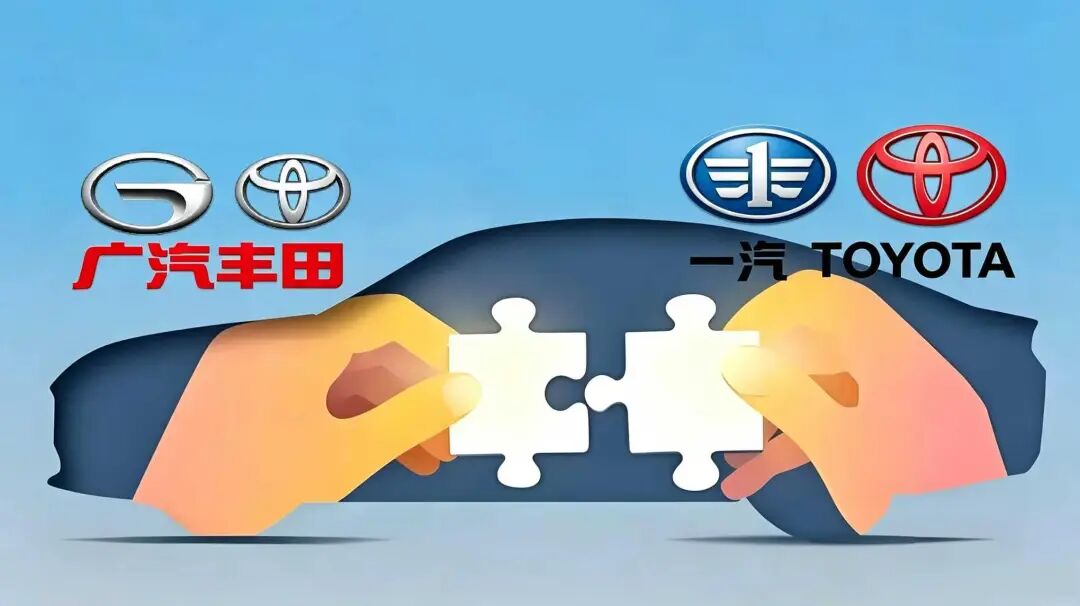
Without unnecessary delay, GAC got straight to the point: It signed a Letter of Intent with FAW Co., Ltd., outlining plans to acquire a portion of the equity in a joint-venture vehicle company held by FAW Co., Ltd. through share issuance and to raise supporting funds.
Upon completion of the transaction, FAW Co., Ltd. is set to become GAC's second-largest shareholder with strategic influence. This move does not entail a change in the actual controller, nor does it constitute a restructuring listing.
The announcement is concise yet packed with information. The market swiftly shifted its focus to identifying the 'joint-venture vehicle company' and began calculating the equity and financial implications.
While these discussions continue, the qualitative aspects of the announcement warrant deeper consideration.
01 The Bedrock of Integration: Mutual Benefit
"Promoting the optimal integration of industrial resources between local and central state-owned enterprises." Positioned at the forefront of the announcement, this statement sets the tone.
FAW is a central state-owned enterprise, whereas GAC is a local state-owned enterprise. Resource integration between these two types of enterprises has occurred before, but mostly at the level of project cooperation or administrative allocation. Few have reached the stage of cross-shareholding and governance synergy.
By juxtaposing 'local and central state-owned enterprises,' GAC's announcement signals that this transaction is not merely a financial investment but a strategic reallocation of industrial resources.
"Enhancing the operational efficiency of listed companies." This is GAC's obligation as a listed entity and the market foundation for advancing the transaction. If the restructuring fails to boost operational efficiency, shareholders will withhold their approval, and regulators will deny clearance. This implies that the transaction design must withstand market scrutiny and yield genuine operational synergies.
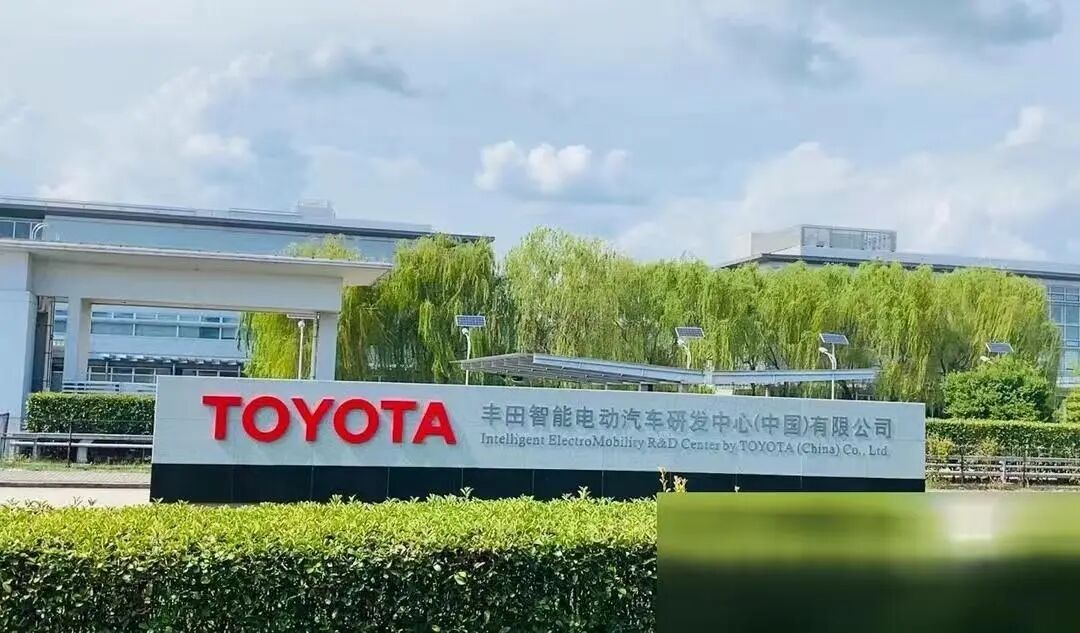
"FAW Co., Ltd. will become the company's second-largest shareholder with strategic influence." Note the emphasis on 'strategic influence.' This denotes an active shareholder with a voice and connections at the corporate governance and industrial synergy levels.
This signifies that the restructuring is not a one-off deal but the commencement of a long-term, intertwined relationship.
"This does not constitute a change in the company's actual controller, nor does it constitute a restructuring listing." These reassurances calm the market. GAC's controlling shareholder remains Guangzhou Automobile Industry Group, and FAW will not gain control of GAC through this transaction. The restructuring is incremental, not disruptive.
Linking these signals, the transaction logic becomes evident: FAW exchanges a portion of the equity in its joint-venture vehicle business for GAC's shares, becoming a strategic shareholder of GAC; GAC, in turn, uses shares as payment to acquire a portion of the equity in the joint-venture vehicle business, further integrating related business systems.
The two sides establish cross-shareholding at the equity level, synergy at the business level, and checks and balances at the governance level.
This is not about one company acquiring another, nor is it about one entity overpowering the other. It is about channeling resources to their most effective destinations. The positive signals conveyed by the announcement are unmistakable: the purpose of integration is to enhance efficiency, not to create monopolies; it is about expanding the increment, not dividing the existing stock.
02 Complementarity Fuels Synergy, Resources Require Reallocation
Why can FAW and GAC unite? The answer lies in their complementarity.
FAW, a central state-owned enterprise directly managed by the SASAC and headquartered in Changchun, boasts the brand heritage of Hongqi, a comprehensive R&D and manufacturing system, and a historical status that is unparalleled. However, FAW's shortcomings are also apparent: insufficient rapid iteration capabilities for market-oriented products, inadequate speed in implementing electrification technologies, and a relatively long reaction chain in the C-end market.
GAC, a provincial state-owned enterprise in Guangdong with its headquarters in Guangzhou, is situated in South China's most densely populated region for the new energy vehicle industry. It has accumulated rich experience in electrification, three-electric technologies (battery, electric drive, and electronic control), and a deep understanding of the C-end market. GAC's accumulations in batteries, electric drives, and vehicle platforms are technological assets that have already been implemented or are in the process of implementation. However, GAC also faces its own limitations: difficult brand upward breakthroughs and a lack of true establishment of recognition in the high-end market.
FAW possesses the brand, while GAC holds the technology. FAW has the system, while GAC commands the market. FAW needs more flexible paths for implementing electrification technologies, while GAC requires stronger brand endorsements and system resources.
This complementarity is not merely theoretical speculation but a tangible market feedback after both enterprises encountered bottlenecks. Besturn needs technological infusion, while Aion requires brand empowerment. If the resources of both sides can be interconnected, many problems do not need to be solved from scratch.
Integration is not about merely adding two enterprises together. The true value lies in maximizing each other's strengths and compensating for each other's weaknesses. FAW's strengths lie in its system, manufacturing, and brand assets, while its weaknesses lie in the rapid iteration of market-oriented products. GAC's strengths lie in the density of the supply chain in South China, the speed of implementing three-electric technologies, and its C-end market acumen, while its weaknesses lie in the ceiling of brand upward breakthroughs. After integration, resources can flow to more efficient places.
"New quality productive forces" is not just a slogan. It necessitates the reallocation of resources, the adjustment of production relations, and the release of elements occupied inefficiently. The biggest issue currently facing the Chinese automotive industry is not insufficient total volume but resource misallocation.
Within the same price band, multiple state-owned enterprises operate multiple R&D platforms and brand systems, consuming each other's resources. Under the same sales base, the R&D costs and procurement costs amortized per vehicle remain high. This is not market competition but redundant construction. The National Development and Reform Commission's statement about "avoiding homogeneous competition in product design and technological R&D" refers to this very issue.
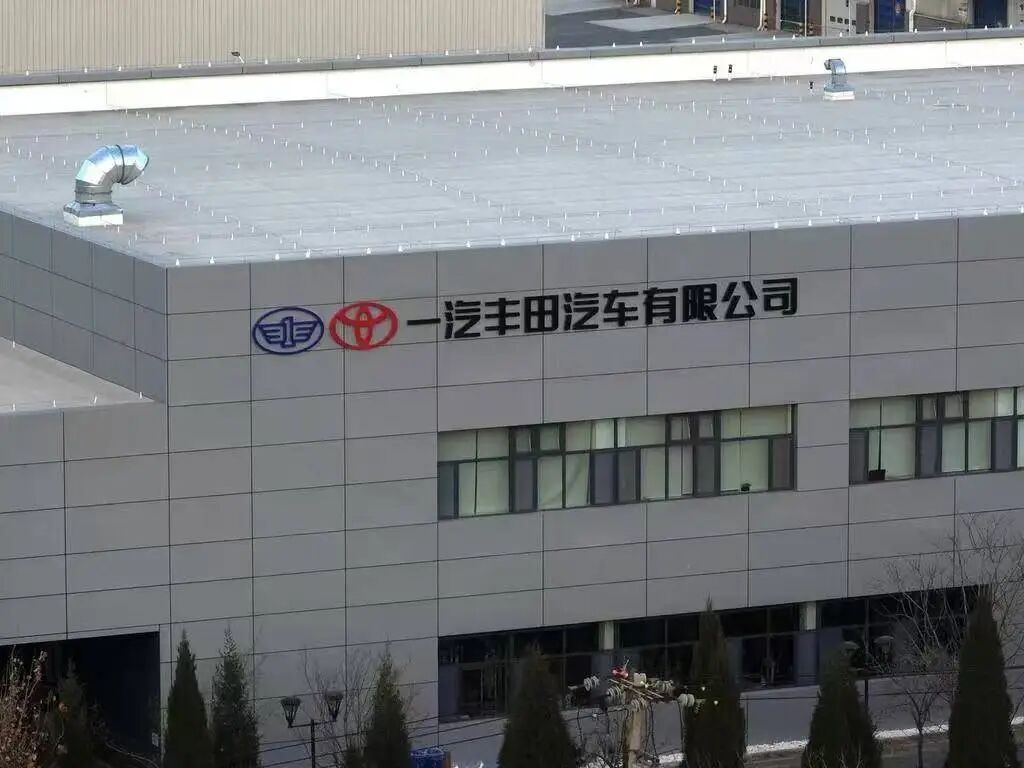
If FAW and GAC's restructuring can achieve platform unification and centralized procurement in the backend, the R&D costs and procurement costs amortized per vehicle can significantly decrease under the same sales base. If the commercial vehicle chassis of FAW, the high-end positioning of Hongqi, the electrification platform of GAC, and the hybrid system of joint-venture partners can be streamlined, the value of this scale becomes evident.
After integration, sales synergy in related business systems is also expected to advance, and the pressure of terminal price wars will be alleviated. This is not about depriving consumers but repairing the entire value chain.
Over the past few years, price wars have pressed dealers' gross profit per vehicle to the floor, thinned out OEMs' profits, and damaged brand premiums. Consumers may seem to benefit from lower prices, but they actually face quality declines under cost-cutting pressure and shrinking residual values due to continuously plunging new car prices.
A vehicle bought back three years ago may depreciate much faster than expected. Consumers will eventually calculate this account.
Reducing price war pressure and stabilizing terminal prices support dealers' operational confidence, provide OEMs with the confidence for sustained investment, and offer consumers residual value guarantees and sustainability in quality investment.
This is the deeper meaning of resource integration and the specific implementation of new quality productive forces in the automotive industry.
03 A Mutual Benefit Scenario Sets a New Industry Benchmark
Where does the mutual benefit manifest if this transaction is completed?
For FAW, obtaining GAC's shares and becoming a strategic shareholder allows more direct access to GAC's market-oriented mechanisms and electrification technologies. FAW's independent sector, especially Besturn, is expected to gain more market-oriented technical support and supply chain synergy.
For GAC, acquiring a portion of the equity in the joint-venture vehicle business and further integrating related business systems can reduce internal competition and enhance operational efficiency. At the same time, with FAW as a strategic shareholder, GAC gains stronger support in connecting with central state-owned enterprise resources, expanding into the northern market, and synergizing with commercial vehicles.
For joint-venture partners, the alignment of Chinese shareholders leads to more unified decision-making and clearer market strategies. In the past, the two joint-venture systems in the north and south operated independently, leading to product internal friction, channel internal friction, and price internal friction, ultimately harming the entire brand.
After integration, the sales system is expected to be more unified, the product lineup clearer, channel synergy smoother, internal competition reduced, and the pricing system more rational.
For dealers, reducing price war pressure and stabilizing profit expectations are tangible benefits. For consumers, the residual value guarantees brought by stable prices and sustainable investment in quality by OEMs are more valuable than short-term price reductions.
For the industry, FAW and GAC's exploration provides a new paradigm for resource integration among large state-owned enterprises. It's not a zero-sum game but a hierarchical design of operational authority, profit distribution, and technology sharing. Whoever understands operations better gets operational authority; whoever provides resources maintains connections at the profit and technology ends. Property rights and operational authority are separated, and each party gets what it needs.
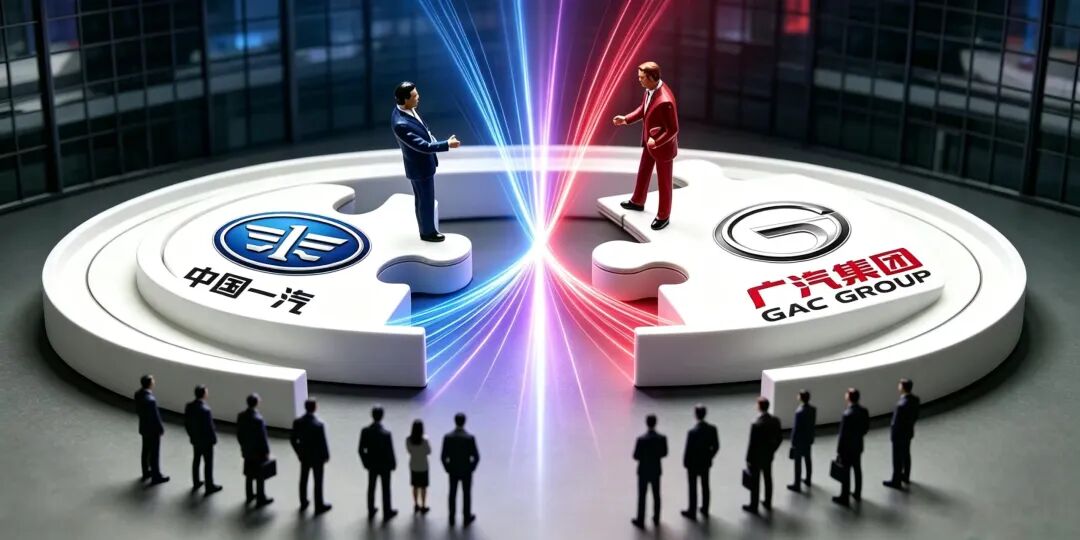
Integrating state-owned enterprises is challenging due to complex interest structures. FAW is a central state-owned enterprise, while GAC is a local state-owned enterprise, each with a vast asset system, personnel structure, and local interests behind them.
The transfer of equity in the joint-venture vehicle business from FAW to GAC involves not just a financial transaction but also the affiliation of management teams, the repositioning of profit contributions from the joint-venture sector, and the coordination of industrial layouts between Jilin Province and Guangdong Province. None of these items are trivial.
However, precisely because of this, the demonstration significance of this transaction is profound if it is completed.
It proves not that "state-owned enterprises can integrate with private enterprises" but that "two large state-owned enterprises can also complete resource reallocation under the framework of separating operational authority and ownership." If this path is successful, more will follow.
The integration of China's automotive industry is shifting from a zero-sum mindset to a hierarchical design of operational authority, profit distribution, and technology sharing.
The transaction between FAW and GAC is an important attempt at this hierarchical design among large state-owned enterprises. The four words "preliminary estimates" in the announcement leave room for flexibility, and specific considerations, shareholding ratios, and governance arrangements are subject to formal disclosure. But the direction is clear.
Redundant construction and resource waste, along with extremely fierce internal competition, have made the entire industry urgently need consolidation.
FAW and GAC have provided a possible answer with a single announcement. This answer is not perfect, and its implementation will not be smooth sailing. But it at least proves one thing: in the era of stock competition, there is not just one path for state-owned enterprises—integration can also create a win-win situation.
The direction is clear; the rest is up to time.
Editor-in-Chief: Li Sijia Editor: He Zengrong

THE END
-
![]()
Seres Regains Autonomy: AITO's Front-End Operations Shift Back to Automaker, Huawei Returns to Supplier Role
-
![]()
Can the XPENG G9L, Touted as Unrivaled Globally, Become a Blockbuster?
-
![]()
27-Day Price Reduction of 40,000 Yuan: Fangchengbao Skirts Direct Rivalry with Xiaomi
-
![]()
Has the Savior of Traditional Fuel Vehicles Finally Made Its Appearance?
-
![]()
FAW and GAC Restructuring: Forging Ahead with Integration, Enhancing Efficiency through Synergy
-
![]()
Under the Wave of Restructuring, Are the Struggling Neta and Zotye Making a Comeback?
-
![]()
Bumper Bookings! BAIC Unveils New Car, Securing Over 30,000 Reservations in Just One Hour!
-
![]()
Li Auto i9 Priced at 369,800 Yuan 'Shakes Up the Market': Is NIO ES8's 'Sales Dominance' Under Threat?