GAC Group 'Swaps' Stakes with FAW Toyota, Anticipates Annual Earnings of 4.2 Billion Amid North-South Toyota Integration
 09/30 2026
 330
330
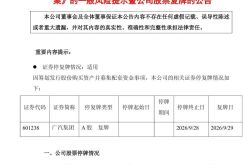
On the evening of September 28, GAC Group, which had halted trading for a full two weeks, unveiled 16 announcements simultaneously. The long-awaited "other shoe" has finally dropped.
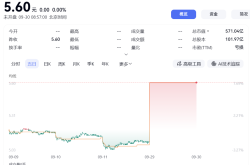
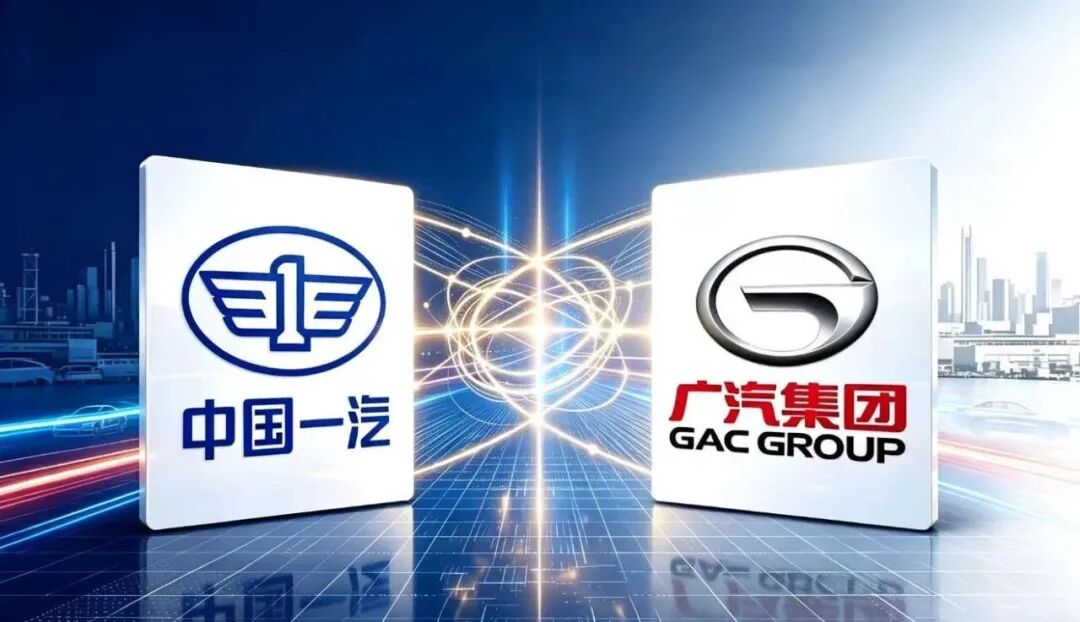
GAC Group intends to acquire a 50% stake in FAW Toyota Motor Co., Ltd., currently held by China FAW Co., Ltd., through the issuance of shares at a fixed price of 5.75 yuan per share. Trading of the stock resumed today with a price limit increase.
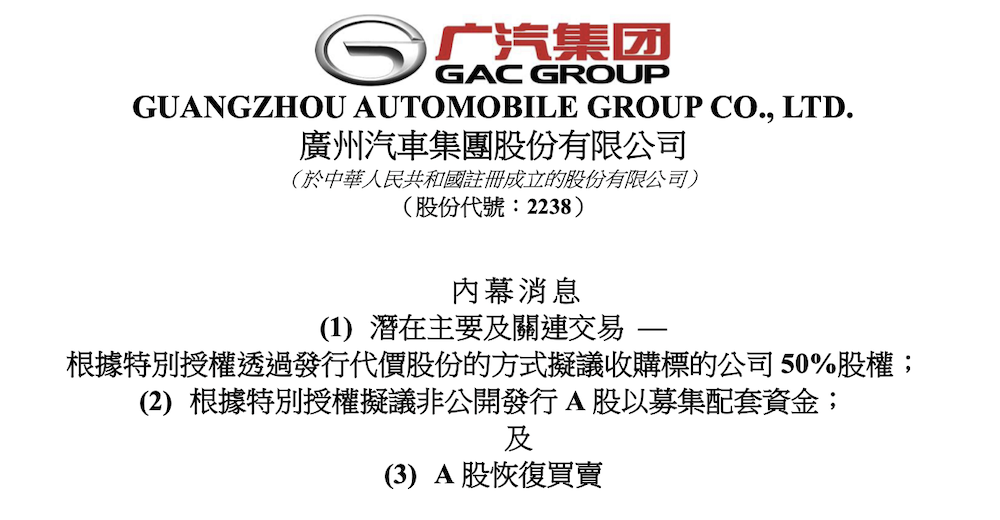
All previous speculations have finally reached a conclusion. FAW Co., Ltd. has now become the second-largest shareholder of GAC Group, while GAC has successfully integrated both the North and South Toyota joint ventures into its portfolio.

Acquisition Achieved Without Cash Outlay, Through 'Share-for-Share Exchange'
According to the restructuring plan, GAC Group will issue A-shares to FAW Co., Ltd. to purchase a 50% stake in FAW Toyota at 5.75 yuan per share. FAW Co., Ltd. will receive GAC Group's shares instead of cash. The total funds raised will not exceed 100% of the transaction price for purchasing assets through share issuance and will be utilized for FAW Toyota project construction, supplementary working capital, debt repayment, etc.
As of the plan's signing date, the audit and appraisal of the target assets are incomplete, and the transaction price remains undetermined. However, the issuance price of 5.75 yuan represents a premium of approximately 13% over the pre-suspension closing price of 5.09 yuan, which the market interprets as recognition of FAW Toyota's asset quality.
Upon completion of the transaction, FAW Toyota's equity structure will shift to: GAC Group 50%, Toyota Motor 45.77%, Toyota China 4.23%, establishing an equal shareholding pattern between GAC and Toyota. FAW Toyota will have no controlling shareholder or actual controller and will remain a Sino-foreign joint venture. GAC's controlling shareholder will still be GAC Industrial Group, holding 54.02%, with the actual controller remaining the Guangzhou State-owned Assets Supervision and Administration Commission, not constituting a restructuring listing.
How Many GAC Shares Will FAW Receive?
This question is at the forefront of the market's curiosity. What proportion of GAC Group's shares will FAW Co., Ltd. acquire in exchange for its 50% stake in FAW Toyota?
Previously, the China Automotive Policy Research Center estimated that FAW Co., Ltd.'s shareholding in GAC Group might range from 10% to 20%. This estimate is not arbitrary. Considering FAW Toyota's estimated profit of approximately 7.35 billion yuan in 2025 and the valuation practices of Toyota joint ventures in primary and secondary markets, the value corresponding to a 50% stake is roughly in the hundreds of billions of yuan.
However, sources familiar with the matter suggest that FAW Co., Ltd. may hold approximately 30% of GAC Group's shares post-transaction. If accurate, FAW will become a strategic shareholder with significant influence, far exceeding the basic threshold of 'constituting a related party with a stake of over 5%'.
Regardless of whether the final stake is 10% or 30%, FAW's shareholding will significantly alter GAC's shareholder landscape. Currently, among GAC's top ten shareholders, except for the controlling shareholder GAC Industrial Group, no other shareholder holds more than 4% of the shares. FAW will directly become the second-largest shareholder, with a shareholding magnitude significantly larger than other institutional shareholders.
Mei Songlin, a senior automotive industry analyst, stated that there are multiple possibilities for complementarity between GAC Group and China FAW, two central state-owned enterprises. This complementarity is the underlying logic behind FAW's willingness to exchange equity for a stake in FAW Toyota. FAW can not only receive dividends from FAW Toyota but also, through GAC's listed platform, share in the investment returns from GAC Toyota, GAC Honda, and even GAC's entire independent and energy ecosystem.
What Does GAC Gain?
The answer is straightforward: a 'cash cow' generating 4.2 billion yuan annually.
According to the unaudited financial data disclosed in the plan, FAW Toyota's operating revenues for 2024, 2025, and the first half of 2026 were 106.57 billion yuan, 108.624 billion yuan, and 40.725 billion yuan, respectively, with net profits of 4.717 billion yuan, 4.234 billion yuan, and 1.009 billion yuan, respectively. In 2025, FAW Toyota's annual sales volume reached 805,500 units, marking three consecutive years of positive growth and outstanding performance among mainstream joint venture brands.
However, GAC's own financial situation is less optimistic. In 2025, GAC Group's net profit attributable to shareholders turned from profit to loss, amounting to a loss of 8.784 billion yuan; in the first half of 2026, the loss continued to widen to 4.467 billion yuan, compared to 2.538 billion yuan in the same period last year. Faced with pressure on joint venture brand operations, declining terminal sales, increased sales investment, and rising raw material costs, GAC urgently needs new profit sources.
The injection of FAW Toyota will directly boost GAC's investment income and net profit. GAC explicitly stated in the announcement, 'After the completion of this transaction, it is expected to positively contribute to the financial indicators of the listed company, such as investment income and net profit, and help further consolidate the company's sustainable operation capabilities.'
However, there is another side to the story: FAW Toyota is not without concerns. In the first half of 2026, FAW Toyota's domestic sales volume was 273,700 units, a year-on-year decline of 27%, selling over 100,000 fewer units compared to the same period last year. During the same period, GAC Toyota's sales volume was approximately 341,100 units, leading FAW Toyota by nearly 70,000 units. In just half a year, the sales gap between North and South Toyota has reversed.
Synergy Between North and South Toyota: Cost Reduction Potential and Channel Challenges
'The core value of this transaction does not lie in who acquires whom, but in whether North and South Toyota can truly achieve synergy,' said an automotive industry analyst. 'If it's merely a share transfer without industrial-level synergy, the improvement in GAC's profits will only be a one-time event.'
From an industrial perspective, there is indeed potential for synergy. The product lineups of North and South Toyota are highly overlapping, with 'sister models' such as the Corolla and Levin, the RAV4 and Wildlander, each undergoing independent R&D, channel deployment, and marketing. In a growing market, this is a means to expand coverage, but in a stage of market saturation competition, it becomes a waste of resources.
According to relevant agency estimates, the integration of North and South Toyota can create a unified platform with an annual production capacity of approximately 1.2 million to 1.3 million units. Through model rationalization, joint procurement, and dealership network integration, it is expected to save approximately 2 to 3 percentage points in sales costs and 1 to 2 percentage points in sales and administrative expenses. Based on FAW Toyota's estimated operating revenue of approximately 108.6 billion yuan in 2025, a rough estimate suggests that the annualized cost reduction potential from sales cost savings alone exceeds 2 billion yuan.
Toyota China's potential for cost reduction through supply chain integration is even more significant. According to internal estimates, Toyota China can save approximately 1.3 billion yuan in costs annually through supply chain integration alone. The proportion of local suppliers for GAC Toyota's bZ3X has already reached 65%, covering more than 100 supply chain enterprises, providing tangible support for cost reduction potential after integration.
However, integrating the channel end is far more complex than integrating the procurement end. Cui Dongshu, Secretary-General of the China Passenger Car Association, said, 'Integrating the channels of North and South Toyota is challenging, and it is difficult to achieve a nationwide network integration in one step. The biggest bottleneck is the historical investment and profit distribution of thousands of existing dealers.' He further explained that FAW Toyota and GAC Toyota dealers initially obtained independent authorizations and built their stores. After network integration, the interest conflicts between same-city dealerships are significant.
In fact, Toyota has already initiated pilot programs for integrated sales in some lower-tier cities. The pilot programs started in lower-tier cities because there is only one Toyota store in these areas, so there is no issue of who integrates with whom. However, the dealer interest landscape in first- and second-tier cities is completely different, with real conflicts between the two stores in the same city. For Toyota to achieve a nationwide network integration, it needs to devise a compensation plan that is acceptable to dealers on both sides, which will require time and patience.
With GAC Group's A-shares resuming trading and hitting the limit-up on September 29, the market has cast its first vote of confidence with real money. However, the limit-up is just the beginning of the story. There are still many hurdles to overcome in the future. A true assessment of the effectiveness may take two to three years.
-
![]()
GAC Group Secures 50% Stake in FAW Toyota
-
![]()
Entering a Low-Profit Era, the Auto Industry Starts to 'Squeeze Efficiency'
-
![]()
FAW and GAC Sign Agreement, Ushering in a New Era of Cooperation in China’s Auto Industry
-
![]()
Automakers Dazzle with Spectacular Stunts to Boost Car Sales
-
![]()
Doubao Sets Its Sights on the Travel and Hospitality Sectors
-
![]()
Weekly Report on New Energy Vehicles: Hainan's New Energy Vehicle Penetration Rate Exceeds 66%
-
![]()
Deng Chenghao and Chen Zhuo Spearhead Top-Tier AD Department: Unveiling the Profound Implications of Avatr-Shenlan Integration
-
![]()
GAC Group 'Swaps' Stakes with FAW Toyota, Anticipates Annual Earnings of 4.2 Billion Amid North-South Toyota Integration