Automakers Dazzle with Spectacular Stunts to Boost Car Sales
 09/30 2026
 362
362
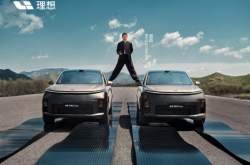
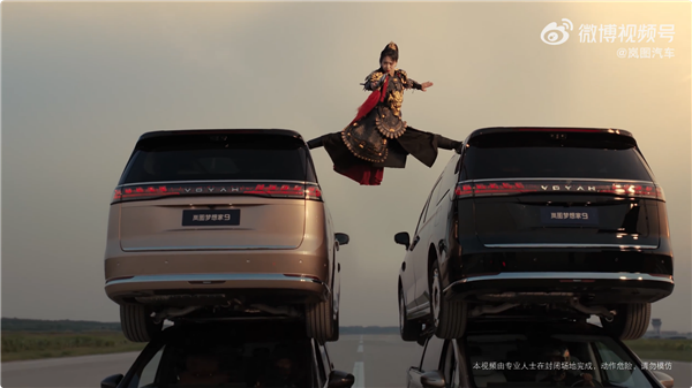
Recently, the automotive industry has witnessed the emergence of two highly visually striking marketing campaigns, capturing the attention of professionals and enthusiasts alike. In one video, Li Auto enlisted martial arts actor Xie Miao to perform Tai Chi on the side mirrors of two moving Li Auto L9 Livis cars as they navigated a winding road. In another, the VOYAH Dreamer 9 showcased a 'double-decker four-car stack,' with an actor executing a mid-air split on the vehicle's roof as it slowly traversed speed bumps. These videos quickly ignited widespread discussion upon their release.
Netizens have expressed mixed reactions. Some argue that these stunts provide a vivid demonstration of the vehicles' stability and chassis performance, with one remarking, "VOYAH's double-decker split really highlights the benefits of its air suspension." However, skeptics have voiced doubts, stating, "This kind of performance is pointless; anyone could do it. Don't resort to such marketing tactics next time." Another netizen commented, "The two extra cars stacked on VOYAH don't prove anything; they just make it harder for consumers to see the vehicle's genuine advantages."
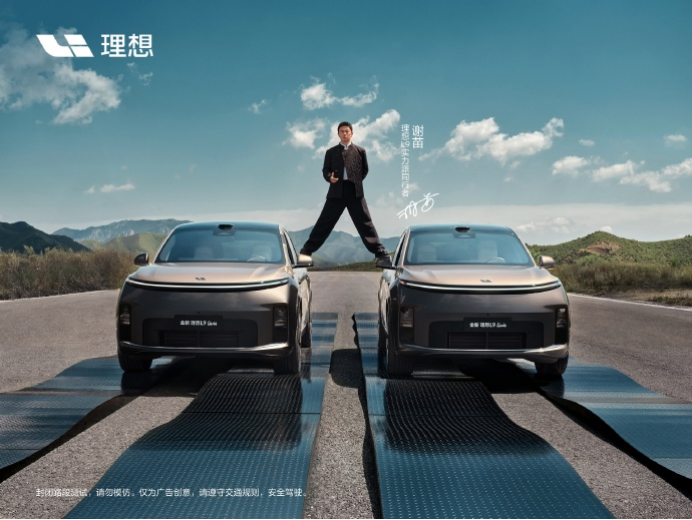
In fact, using extreme scenarios and powerful visual effects for marketing is not a novelty in the automotive industry. In recent years, automakers have continuously raised the bar to capture consumer interest, with hardcore challenges like 360° tunnel loops, stair climbing, and collisions with heavy trucks, as well as gimmicky stunts like eating hot pot or making dumplings inside vehicles. The strategies are becoming increasingly varied. Ultimately, automakers aim to create buzz through these high-impact visuals to help consumers remember their products more swiftly.
So, why are these extreme marketing tactics increasingly favored by automakers? The reasons are straightforward.
Today, competition in the domestic automotive market is fierce, with new models launching frequently and consumer choices expanding continuously. In the first half of this year, over 600 new models were introduced in China, averaging about three new models entering the market each day. With an increasingly diverse range of models, competition among automakers has intensified. The days when advantages could be established through price and configuration alone are fading, and simply stacking parameters is no longer enough to make a product stand out quickly. Therefore, automakers need more impactful ways to create lasting impressions, making extreme marketing a viable option.
Meanwhile, the rapid technological advancements in the new energy era have also posed new challenges for automotive marketing. Emerging technologies and concepts such as active suspension, 2000 MPa hot-formed steel, end-to-end systems, and intelligent driving continue to surface, but these technical terms are not easily comprehensible to the average consumer. Wei Jianjun, Chairman of Great Wall Motors, once publicly stated, "I can't understand many of the current product launches." This illustrates that while automakers talk extensively about technology, consumers may not truly grasp the value it brings. Compared to repeatedly explaining parameters, an intuitive scenario demonstration is easier to understand. Instead of describing how robust the suspension is, it's more effective to directly showcase the vehicle's performance when navigating complex road conditions, allowing consumers to see the results at a glance.
Furthermore, the era of online traffic has amplified the dissemination effect of such marketing tactics. Compared to ordinary content, extreme and visualized scenes are more likely to capture user attention. Additionally, debates like "Is it special effects?" or "Is it necessary?" further fuel discussion and secondary spread. For automakers, a successful extreme marketing campaign not only showcases product features but also gains more exposure. Simply put, extreme marketing is a way for automakers to find marketing breakthroughs amid fierce competition. When parameters and configurations fail to quickly impress consumers, an intuitive and impactful scene is more likely to be remembered.
There is no denying that such marketing tactics hold certain value. They can transform abstract technologies and parameters into concrete scenarios, making it easier for consumers to remember vehicle characteristics. At the same time, they help brands quickly gain attention.
However, the problems are equally evident. The extreme scenarios depicted in advertisements represent the upper limits of product capabilities rather than the norms of daily consumer use. Closed venues, professional teams, and repeated adjustments are entirely different from real-world conditions like potholes and speed bumps. A vehicle's ability to complete a difficult challenge does not necessarily mean it will be comfortable and reliable in daily driving; a suspension that can stabilize a stunt does not guarantee comfort during regular use.
Ultimately, extreme marketing is just a way for automakers to vie for attention in a fiercely competitive environment. While it can generate temporary buzz and help consumers understand products more intuitively, such demonstrations primarily highlight one aspect of the vehicle's capabilities and do not fully represent the real driving experience.
For consumers, marketing tells a story, but product strength is the ultimate answer. When buying a car, one should not only focus on the highlight moments in automakers' promotions but also consider the vehicle's performance in real-world driving scenarios.
(Image sourced from the internet; removal upon infringement claim)
-
![]()
GAC Group Secures 50% Stake in FAW Toyota
-
![]()
Entering a Low-Profit Era, the Auto Industry Starts to 'Squeeze Efficiency'
-
![]()
FAW and GAC Sign Agreement, Ushering in a New Era of Cooperation in China’s Auto Industry
-
![]()
Automakers Dazzle with Spectacular Stunts to Boost Car Sales
-
![]()
Doubao Sets Its Sights on the Travel and Hospitality Sectors
-
![]()
Weekly Report on New Energy Vehicles: Hainan's New Energy Vehicle Penetration Rate Exceeds 66%
-
![]()
Deng Chenghao and Chen Zhuo Spearhead Top-Tier AD Department: Unveiling the Profound Implications of Avatr-Shenlan Integration
-
![]()
GAC Group 'Swaps' Stakes with FAW Toyota, Anticipates Annual Earnings of 4.2 Billion Amid North-South Toyota Integration