What Should Chinese Automakers Do as Europe 'Halves' Hybrid Vehicle Imports?
 10/10 2026
 364
364
Lead
Introduction
When adversity comes, meet it head-on. Europe's delaying tactics cannot halt the trend of automotive electrification, nor can they stop Chinese automakers from going global.
The EU and China held two days of talks in Beijing, resulting in an agreement: Chinese hybrid vehicle exports to Europe will be cut by more than half within four years.
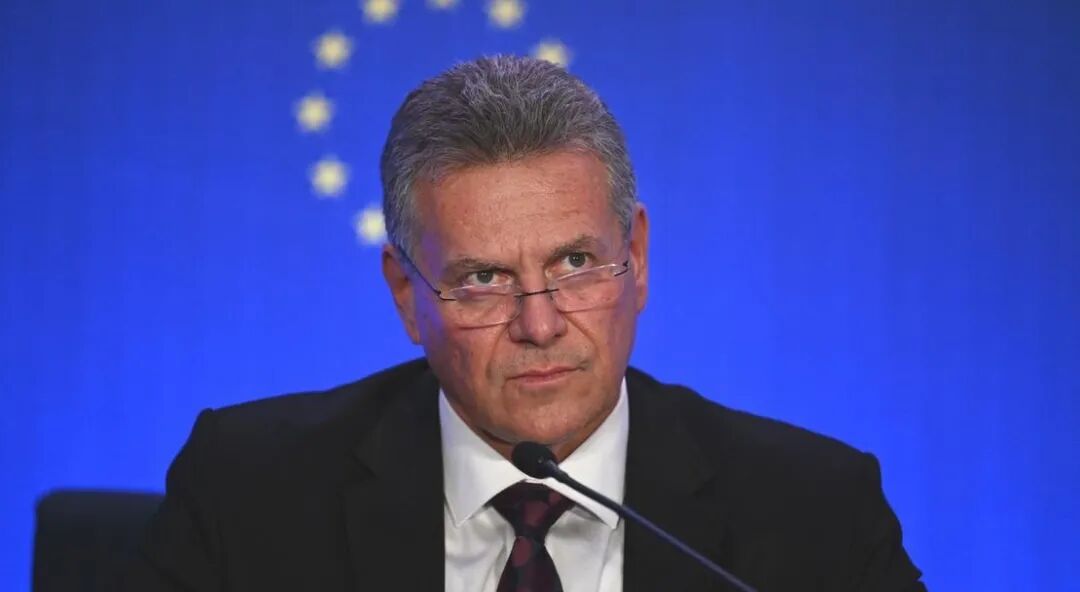
"We have reached a mutual understanding on moderately reducing China's exports of hybrid and plug-in hybrid vehicles to the EU," EU Trade Commissioner Maros Sefcovic told reporters in Beijing on October 9. "This makes it possible to reduce Chinese exports by more than half."
Sefcovic called this a "crucial first step." But behind this step lies the unstoppable Chinese hybrid offensive.
01 Halving Chinese Hybrid Vehicle Imports Within Four Years
Four years, millions of vehicles. These are the figures given by Sefcovic.
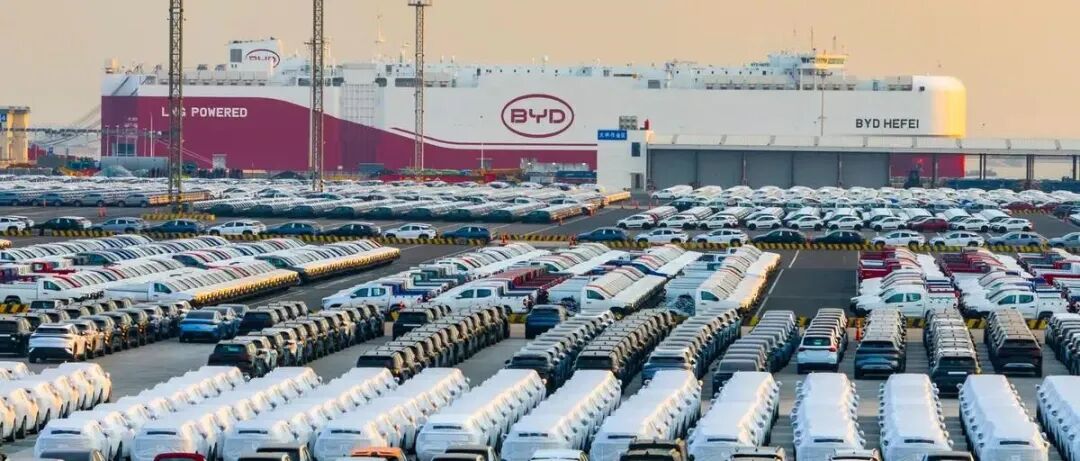
His exact words were: "With this step, we are effectively preventing millions of Chinese vehicles from being exported to the EU." This calculation is based on a four-year forecast, covering Chinese-made plug-in hybrid and conventional hybrid vehicles.
Sefcovic said this is the first time China has accepted moderate export controls without going through a prior phase of trade tensions. Previously, trade restrictions required investigation, negotiation, and then measures—a process that took at least a year or two. This time, it was direct talks.
He called this agreement the "first of its kind," the result of "intensive" negotiations since June.
The agreement is framed as a 16-point document. The core is export controls on hybrids and plug-in hybrids, aiming to cut exports to Europe by more than half.
Additionally, China will reduce import tariffs on €4 billion (US$4.5 billion) worth of EU exports, including automotive parts, olive oil, and footwear. China will also streamline export licensing for rare earths and permanent magnets, continuing to facilitate the EU.
Both sides also agreed to continue negotiations on automotive and rare earth export restrictions, as well as greater market access for EU food and beverages in China.
The Chinese Ministry of Commerce left room in its statement: Both sides will adhere to a "price undertaking procedure" for hybrid vehicles.
In plain terms, one way to limit sales could be to set higher minimum prices for Chinese vehicles sold in Europe. Both sides also "reaffirmed their commitment to properly handle disputes within the WTO framework and continue to stabilize and balance bilateral trade and economic relations."
Sefcovic's assessment of the agreement: "This is far from the endpoint. This is a crucial first step, but only the first step." He also made a more interesting remark: "Once a trade war is declared, it is very difficult to stop." The intended audience of this statement is self-evident.
How do Europeans see it?
The European Automobile Manufacturers' Association (ACEA) welcomed the agreement, stating that the "sudden and rapid rise" in plug-in and hybrid imports had disrupted the European market.
But the German Association of the Automotive Industry (VDA) took a more nuanced stance: welcoming but reserved. VDA President Hildegard Müller said a final assessment of the agreement could only be made after understanding the specific details, framework conditions, and impact on the automotive industry. The key is whether these outcomes "contribute to fair competition, create planning certainty, and strengthen open and rules-based trade."
In translation: European automakers want protection on one hand but cannot do without the Chinese market on the other. The VDA itself admits that China is not only an important sales and procurement market for the German automotive industry but also an "important innovation base."
The agreement still requires approval from all 27 EU national leaders, who will discuss the outcome at the start of the Brussels summit on Thursday.
Sefcovic will brief EU diplomats on Sunday. European Commission President Ursula von der Leyen warned lawmakers in the European Parliament last month that the trade gap had reached a critical point and the EU would use all available tools to rebalance the relationship.
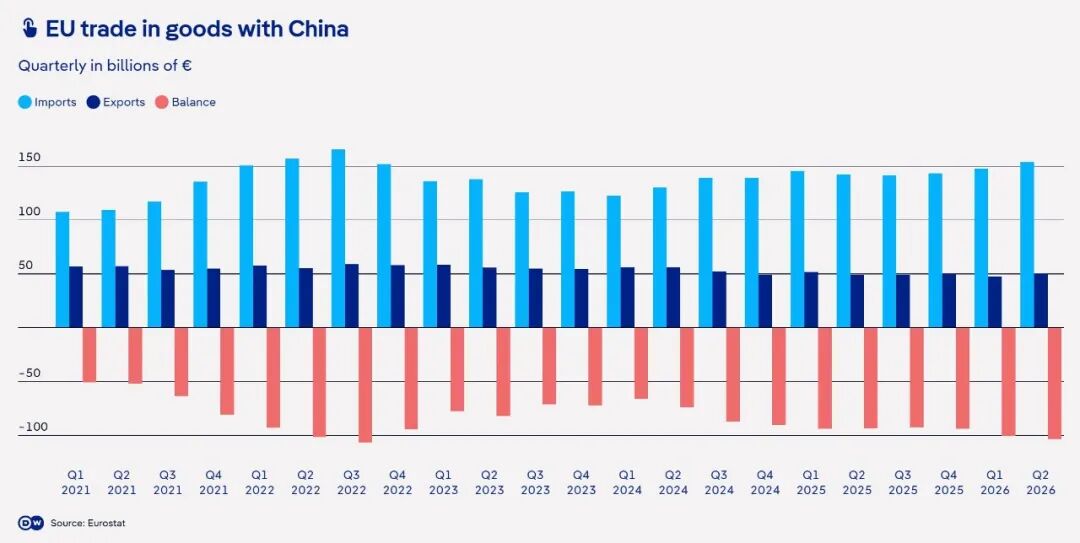
Sefcovic said in Beijing that the EU's trade deficit with China exceeds €1 billion per day, representing "a mountain of challenges." "I came here with a clear purpose: to begin rebalancing EU-China trade relations."
02 Why Is Europe in a Hurry? Chinese Hybrid Vehicles Are Selling Like Hotcakes
The numbers speak for themselves.
Automotive commune published a market analysis this year titled "Chinese Automakers Popularize Plug-In Hybrids in the European Market." As the birthplace of the automobile, Europe has long been seen as a teacher and model for the Chinese automotive industry. However, automotive electrification has reversed this "teacher-student" relationship.
In October 2024, the EU imposed tariffs of up to 45.3% on Chinese pure electric vehicles (BEVs), blocking that route. Chinese automakers promptly pivoted to hybrids and plug-in hybrids. Customs data shows that in 2025, China's plug-in hybrid exports to Europe grew by 155% year-on-year, while BEV export growth was only 12%. By 2026, plug-in hybrid exports took off.
In the first four months of 2026, the total value of hybrid vehicles imported by the EU from China reached €3.176 billion, surpassing BEVs (€2.808 billion) for the first time. In July, EU imports of Chinese plug-in hybrids surged to 50,408 units, up 163.2% year-on-year.
The Financial Times provided a more intuitive (visual) curve: In October 2024, the EU imported about 3,800 hybrid vehicles from China per month; by July 2026, this number had risen to 50,000. In less than two years, it had increased more than tenfold.
Even conventional hybrids, a strong suit of Japanese automakers, are being overtaken by Chinese brands. The Guardian reported in late September that in 2022, only 659 full hybrids (conventional hybrids) were sold in Europe, but from January to July 2026, sales reached 160,662 units. In four years, Chinese conventional hybrid sales grew more than 240-fold.
Market share is even more striking. Dataforce data shows that in June 2026, Chinese brands accounted for 34% of plug-in hybrid deliveries in Europe, a record high; in August, this share dipped slightly to 29% for plug-in hybrids and 15% for conventional hybrids, but both were higher than the 11% and 7% recorded in the same period last year.
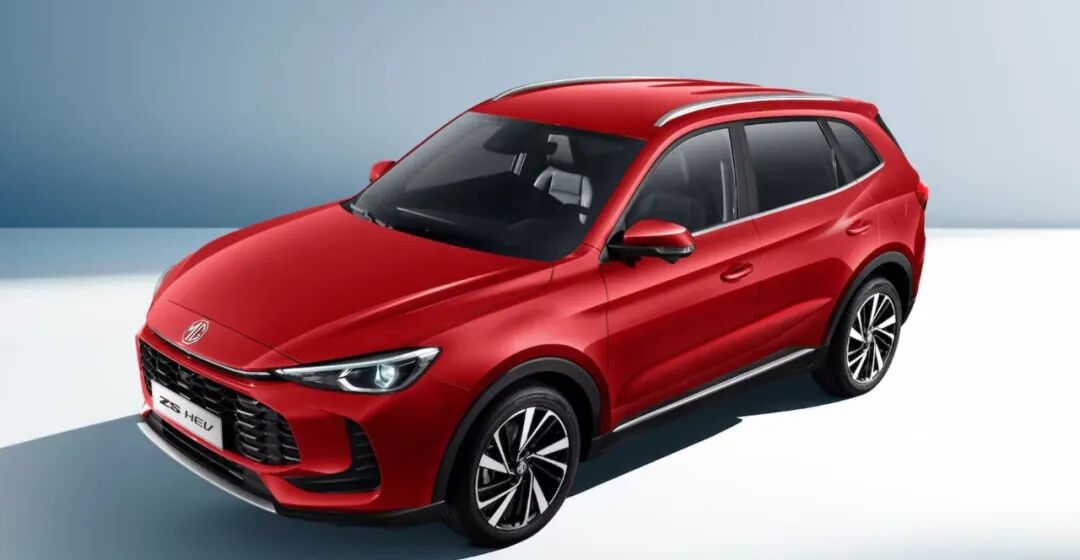
The MG ZS, including its conventional hybrid version, became the best-selling Chinese model in Europe by August, with 81,316 registrations.
This means that for every three plug-in hybrids sold in Europe today, one is a Chinese vehicle. In the overall hybrid market, Chinese brands account for nearly a quarter.
Hybrid vehicles have significantly boosted overall Chinese brand passenger car sales in Europe.
In the first eight months of 2026, Chinese brands led by SAIC MG and BYD doubled their sales in Europe to 913,703 units, capturing a 9.9% market share. In August alone, Chinese brands reached a new high of 12% of European passenger car registrations, compared to just 6% for the entire year of 2025.
UBS's latest assessment suggests that if current trends continue, Chinese brands could reach an annualized market share of around 20% in Europe this year.
Europeans view plug-in hybrids as a "transitional solution" to BEVs, but China has turned this transitional solution into a main offensive direction. The Japanese saw conventional hybrids as their ace in the hole in the U.S. market, but Chinese vehicles have adapted this approach to conquer Europe.
Sefcovic said China has recognized the political pressure building in each member state. With cheap Chinese imports flooding many industries, including chemicals and textiles, Europe could face "thousands of job losses."
He said EU leaders "clearly expect" the European Commission to "act very swiftly," and China recognizes this. "I am glad to say that our Chinese partners understood this very strong political rationale, and therefore, we could move forward with a negotiated solution."
Earlier this week, senior EU officials said they had traveled to Beijing to seek a so-called "proof of concept" or a pilot program in one industry, which they hoped to later expand to other areas under pressure from Chinese competition. Hybrid vehicles were that pilot.
03 What Should Chinese Automakers Do?
The agreement is one thing; implementation is another.
Sefcovic himself said the details have not been finalized. Moreover, the agreement still requires approval from all 27 EU national leaders. The Chinese Ministry of Commerce also left room in its statement: Both sides agreed to continue advancing procedures related to price undertakings and reviews in the electric vehicle anti-subsidy case.
A "price undertaking" means, in plain terms, that Chinese vehicles will sell at higher prices in Europe, using higher minimum prices to avoid a hard cut in export volumes.
But Chinese automakers have already begun preparing for both scenarios, with the core solution being "local production."
BYD's factory in Szeged, Hungary, is progressing, with an annual capacity of 300,000 units and plans to start assembly in the fourth quarter. Leapmotor plans to begin production this year at Stellantis's Spanish factory. Geely has also reached an agreement with Ford to jointly build a factory in Spain.
If exports are cut by half, then produce locally. This logic is already well-practiced by Chinese automakers in overseas markets.
From BEVs to plug-in hybrids, from whole-vehicle exports to local assembly, Chinese automakers' European strategy is shifting from "selling cars" to "building cars." The EU wants to build walls with tariffs and "price undertakings," but Chinese automakers are using local factories to climb over them. As the walls grow higher, the methods of climbing over them multiply.
Sefcovic said in Beijing that the EU's trade deficit with China exceeds €1 billion per day, representing "a mountain of challenges." He came to Beijing with this mountain and left with an agreement. The Chinese Ministry of Commerce said both sides "reaffirmed their commitment to properly handle disputes within the WTO framework." This is diplomatic language; the real meaning is: Negotiations are fine, but they must follow the rules.
Chinese hybrid exports to Europe have been halved, which sounds like a win for Europeans. But Chinese automakers are already building factories in Hungary, Spain, and Austria.
Export numbers can be cut, but production capacity cannot be stopped. Sefcovic called this a "crucial first step," but the key question is: Can Europeans stop the second and third steps?
One notable clause in the agreement: China will simplify export licensing for EU rare earths and permanent magnets. Rare earths are critical materials for electric vehicle motors, and European automakers cannot do without them. China holds leverage in this area. On the negotiating table, everyone knows who holds the cards.
Halving exports within four years is a figure on paper. The real competition is in factories, in markets, and in every hybrid and plug-in hybrid vehicle rolling off the production line.
Yes, local production will leave direct jobs and output value in Europe, but the growth of enterprises and industries will empower China's economy in the long run.
Europeans want to buy time with a piece of paper; Chinese automakers are buying space with factories. Time favors whom, space favors whom—the answer will become clear in a few years, but it is already self-evident.
Editor-in-Chief: Shi Jie Editor: He Zengrong

THE END
-
![]()
Dongchedi Tests Zunjie V800: Brake Pedal Fractures in Three Cars—Is This a Design Flaw?
-
![]()
DeepSeek Reportedly Raises 80 Billion in Latest Funding Round, Preparing for IPO
-
![]()
Global AI Consumption Survey: Only 1% of Super Users Are Supporting the AI Ecosystem
-
![]()
Does Meeting Standards Equal Safety? Is the Baseline the Upper Limit? Does Passing Inspection Mean Peace of Mind?丨When Brakes Fail Even While Speeding
-
![]()
AI Home Appliances Shine During Golden Week
-
![]()
Muse Goes Viral: Who Will Be China's Version of Muse?
-
![]()
PE Giant with Hundreds of Billions Excels in Aviation Investment This Year
-
![]()
Brake Pedal Bracket Fractures: Not Isolated Incidents—A Comprehensive Review of Global Recalls by Ford, Porsche, and GM