In the Pure Electric Vehicle Era, Authenticity Matters—Don’t Just Boast Without Substance
 10/10 2026
 558
558
Lead
Introduction
Electric vehicles (EVs) are no longer a novelty, but those who persevere can still reap significant rewards.
The best time to plant a tree was ten years ago; the second-best time is now. However, the automotive industry operates differently. Amidst fierce internal competition, price wars, and marketing chaos, even seasoned players in China’s rapidly evolving new energy vehicle (NEV) market are beginning to hesitate.
Of course, the hesitation is not about whether to build EVs, but rather about what kind of EVs to build to remain competitive.
The National Day holiday has just passed, leaving only the last three months of 2026. Yet, no one in the automotive industry could have predicted that in the first nine months of this year, automakers would launch over a thousand new models, with more than 600 making their market debut.
An even more alarming fact is that many companies are going public not because they have "created a great product," but because their competitors are doing so, compelling them to reluctantly "join the fray."
For instance, large six-seaters, large five-seaters, sporty coupes, sporty SUVs, and various quick-to-market models inspired by Porsche and Land Rover are being "eagerly" launched.
The capacity and quality of China’s NEV market are being tested, and the overall environment has induced considerable anxiety. However, it is precisely during such times that the strategic resolve of automakers is truly put to the test.
There is no denying that the rapid development of the NEV industry has made EVs no longer a novelty. Another fact is that amidst the declining fuel vehicle market, the market dividends of pure EVs are standing out against the trend.
01 A Promising Future in the Pure Electric Era, But With "Prerequisites"
Since 2026, both domestic and international markets have positively affirmed the pure EV market. In the domestic market, cumulative sales of NEVs in the first half of the year reached 7.446 million units, with pure EVs accounting for 67%, becoming the core pillar of the NEV market.
The electrification trend in the European market is also accelerating. In the first half of the year, pure EV sales in Germany, France, and Italy surged by 48%, 62.8%, and 77.7% year-on-year, respectively. The penetration rate of pure EVs in major EU countries has steadily increased.
Globally, according to Mobility Global statistics, global sales of pure EVs in the first half of 2026 reached 6.87 million units, a 12% year-on-year increase. Simply put, the expansion of the pure EV market is faster, broader, and more sustained than imagined.
So, the question arises: If everything is looking up, why discuss "breaking through in the pure EV market"?
The answer is simple. Besides the continuously rising sales figures, the greatest support for a promising future in the pure EV era lies in another point—profitability.
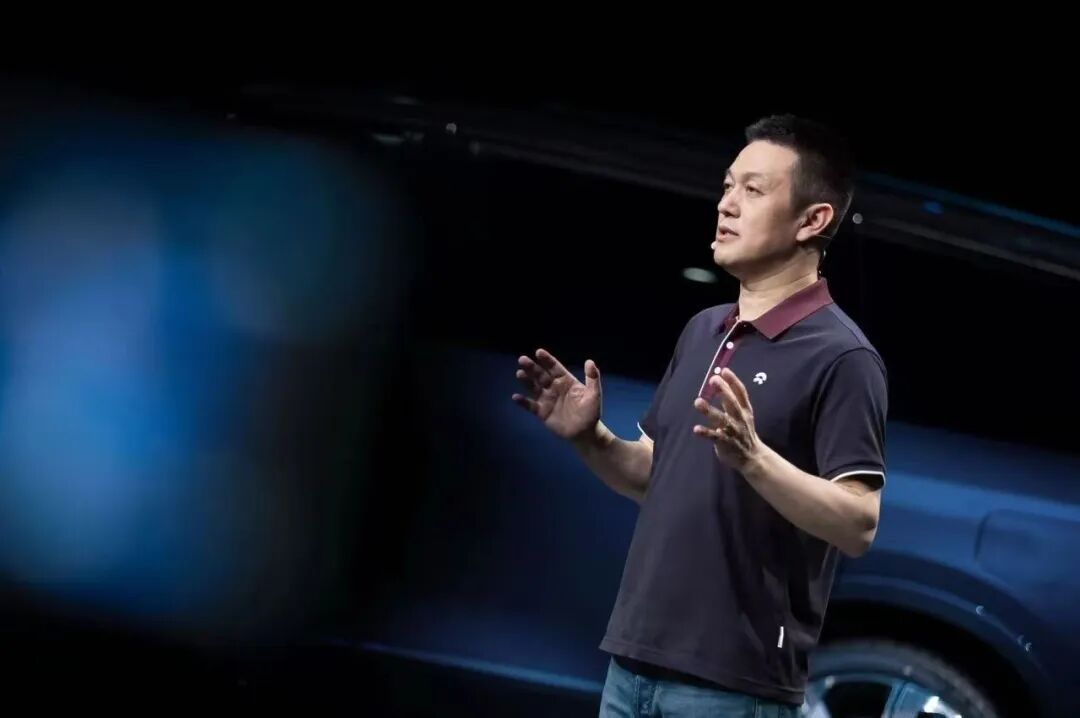
Lei Jun admitted that many pure EV sedans are losing tens of thousands of yuan per unit; Li Bin stated that rapid model iterations have made it commonplace for a single model to lose hundreds of millions of yuan; Zhao Fei from Changan even said that it is difficult for automakers to be profitable just by selling cars.
"Pure EVs are the future, but pure EVs don’t make money." This industry consensus is becoming increasingly ingrained.
The reason is that while the pie of the pure EV market is indeed growing, cutthroat internal competition is swallowing up most of the profits. As more and more automakers worry about both sales volume and profitability, it further leads to "distorted actions" and hesitation.
Should we lay off employees if others do? Should we find celebrity endorsements if others do? Should we conduct long-distance range tests if others do? Should we add secondary suppliers if others do?
"Latecomers" traditional fuel vehicle automakers really find it difficult to keep pace with the development rhythm of the pure EV market. Great Wall has been struggling with itself, Chery focuses on going global, and major joint ventures, whether Japanese or German, have barely stepped into the door of pure EVs.
Returning to the issue itself, true "promise" never comes from blindly stacking volume, mindless marketing, or sacrificing quality to reduce costs, but from finding one’s own path—niche markets.
02 Creating New Demands, Not Clinging to Old Rules
In the era of fuel vehicles, the logic for dividing niche markets was simple, relying basically on wheelbase, displacement, and body size to classify vehicles into A, B, C, and D classes. A-class family sedans, B-class business sedans, compact SUVs, and mid-size SUVs had clear-cut boundaries.
When automakers developed products, the core was to compete on power, chassis, and quality control within fixed classes, with models of the same class vying for the same piece of the pie.
This classification system has persisted for decades, and whoever could hold onto mainstream segments like A-class sedans and mid-size SUVs could secure sales volume. Therefore, in the past Chinese automotive market, joint ventures were the dominant force.
However, in the era of pure EVs, this long-standing classification system is gradually losing its effectiveness. The native platforms for batteries, motors, and electric controls have eliminated many of the limitations imposed by size.
A nominally A-class pure EV can achieve the wheelbase and interior space of a traditional B-class vehicle. There are also vehicles with a small body but capable of accommodating large five-seater or three-row seating layouts.
Clearly, traditional class labels can no longer define a vehicle. The entire NEV market is no longer simply divided by wheelbase but is shifting towards scenarios, user needs, and usage patterns to carve out niche segments.
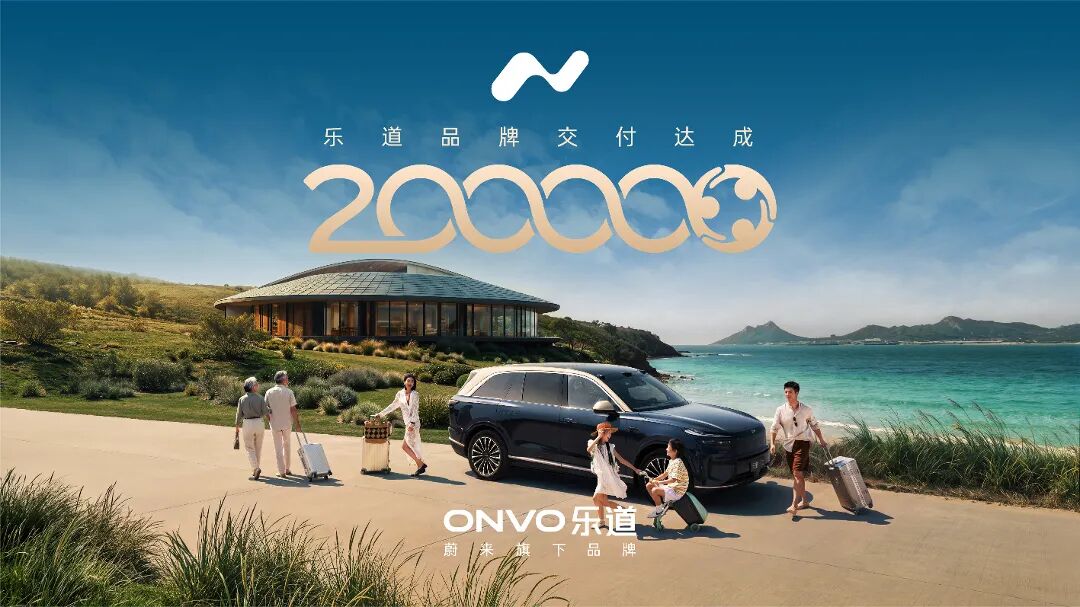
More new technologies and products are stimulating new demands, thereby giving rise to new brands. Whether it's Tesla, BYD, or Leado, a new force in car-making under NIO, they have all ridden the wave and benefited from it.
Just recently, on October 8th, Leado Auto delivered its 200,000th vehicle. Since the delivery of its first Leado L60 in 2024, Leado has taken two years to reach this milestone, ranking among the top three new force brands in terms of delivery speed.
It is no exaggeration to say that the market for family cars priced around 200,000 yuan is now extremely crowded. According to incomplete statistics, there are nearly 60 independent car models on sale with bare car transaction prices falling between 170,000 and 220,000 yuan; there are three to four dozen mainstream models with stable sales that can actually get a piece of the pie.
But under such circumstances, how has Leado, a new brand, been able to reap the rewards of the pure EV market?
The answer to this question may not be difficult to find.
Because while many automakers are still using the fuel-era mindset to develop products, with similar sizes and configurations, only able to compete on price reductions and engage in cutthroat competition, Leado has jumped out of this framework from the beginning—not hard-fighting for existing class markets but exploring new scenario demands.
With the philosophy of "Technology for Home," Leado has positioned its three products, the L60, L80, and L90, as value flagships in their respective niche markets.
Here, the niche markets do not simply refer to the mid-size and large SUV segments but are built around the concept of "family," leveraging NIO's over-a-decade of technological accumulation, battery swap service system, and pure EV market experience to construct a native pure EV family car barrier.
Similar examples include Leapmotor's "value-for-money quality," XPENG's "intelligent driving," and Xiaomi Pengcheng's "third space"... Their commonality lies in opening up a less competitive blue ocean and forging their own unique paths.
03 Competing on Value Is More "Valuable" Than Competing on Price
Of course, finding a blue ocean is just the beginning. Whether it can be defended still depends on product value. Taking Leado as an example, in terms of "defending the blue ocean," Leado's choice is clear—compete on value, not price.
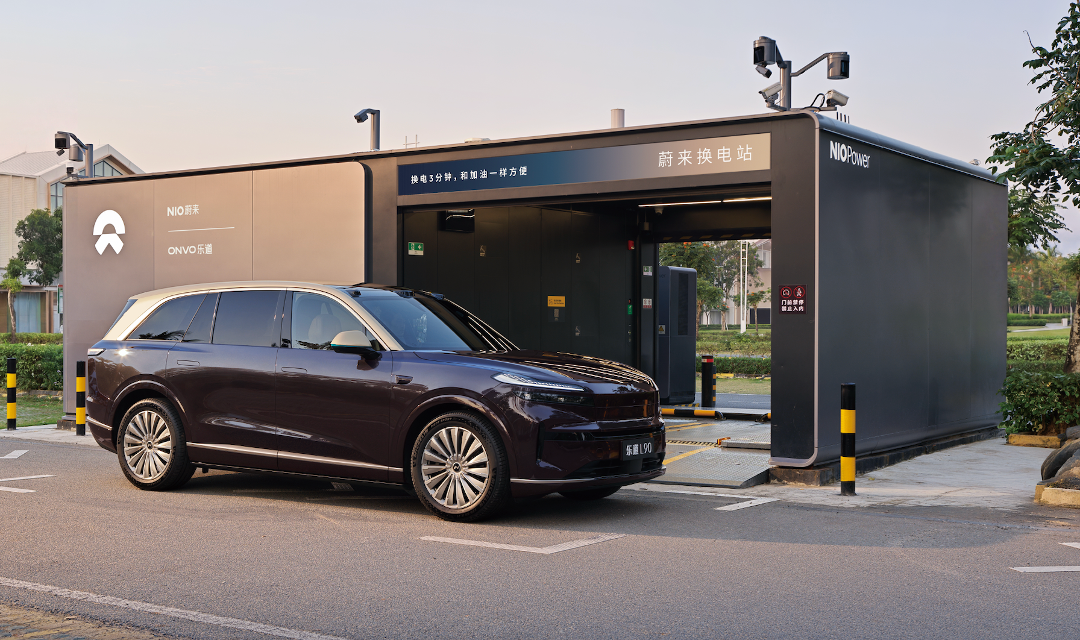
From the L60 to the L80 and L90, in terms of products, Leado continues to add value based on the real needs of family users: space, comfort, safety, energy replenishment, and intelligence, aiming for a "six-sided" approach.
Many are doing this, but few have become "leaders" like Leado. The sales of 200,000 units in two years is one proof, and the average price of 234,000 yuan, surpassing some traditional luxury brands, is another.
Undoubtedly, for a new brand with a short history, sales volume is important, but price is equally important.
If scale is achieved through price reductions, it will only lead to increasing losses; if users can be continuously acquired under a relatively stable price system, it indicates that the product itself has value.
What the NEV market lacks most now is precisely this kind of competition "beyond price."
Over the past few years, the industry has become too accustomed to solving problems with price reductions. If one brand reduces prices by 20,000 yuan, competitors immediately follow suit; if one configuration is devolved, the entire market quickly follows. Consumers get lower prices, but the quality risks significantly increase, and automakers' profit margins are compressed by round after round of price wars.
Smart people never actively drag their products into low-price competition but continuously increase the value density of their products.
In the short term, this path may not be as exciting as price wars, but in the long term, being able to simultaneously maintain sales volume, price, and user reputation is truly healthy growth.
As the NEV market transitions from an incremental market to a mature market, consumers are no longer lacking a "drivable EV." What truly makes a difference is whether a vehicle can solve more problems and whether users feel that their money is well spent.
Low prices can certainly "touch the heartstrings," but when all automakers are crowded in the same bloody sea competing on price, the truly valuable competition lies in creating value that others cannot easily replicate.
As for the desired breakthrough in the pure EV market, competing on price can only win for a while; competing on value is more likely to win for longer.
Editor-in-Chief: Shi Jie Editor: He Zengrong

THE END
-
![]()
Dongchedi Tests Zunjie V800: Brake Pedal Fractures in Three Cars—Is This a Design Flaw?
-
![]()
DeepSeek Reportedly Raises 80 Billion in Latest Funding Round, Preparing for IPO
-
![]()
Global AI Consumption Survey: Only 1% of Super Users Are Supporting the AI Ecosystem
-
![]()
Does Meeting Standards Equal Safety? Is the Baseline the Upper Limit? Does Passing Inspection Mean Peace of Mind?丨When Brakes Fail Even While Speeding
-
![]()
AI Home Appliances Shine During Golden Week
-
![]()
Muse Goes Viral: Who Will Be China's Version of Muse?
-
![]()
PE Giant with Hundreds of Billions Excels in Aviation Investment This Year
-
![]()
Brake Pedal Bracket Fractures: Not Isolated Incidents—A Comprehensive Review of Global Recalls by Ford, Porsche, and GM