Shocking! Is DCD Auto Really Set to Rake in 24.5 Billion Yuan with a 69% Gross Profit Margin in 2025?
 10/15 2026
 468
468
An unverified figure has sent ripples of excitement—and concern—throughout the automotive sector.
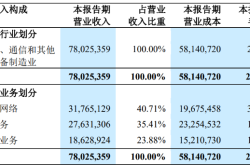
Online chatter is abuzz with speculation: DCD Auto is rumored to be on track for 24.5 billion yuan in revenue and 5.8 billion yuan in net profit in 2025, boasting a gross profit margin of nearly 69%. Given that DCD Auto is privately held and not obligated to publish financial statements, the company has refrained from either confirming or denying these numbers. This data is merely an estimate circulating within the industry, and its accuracy remains uncertain.
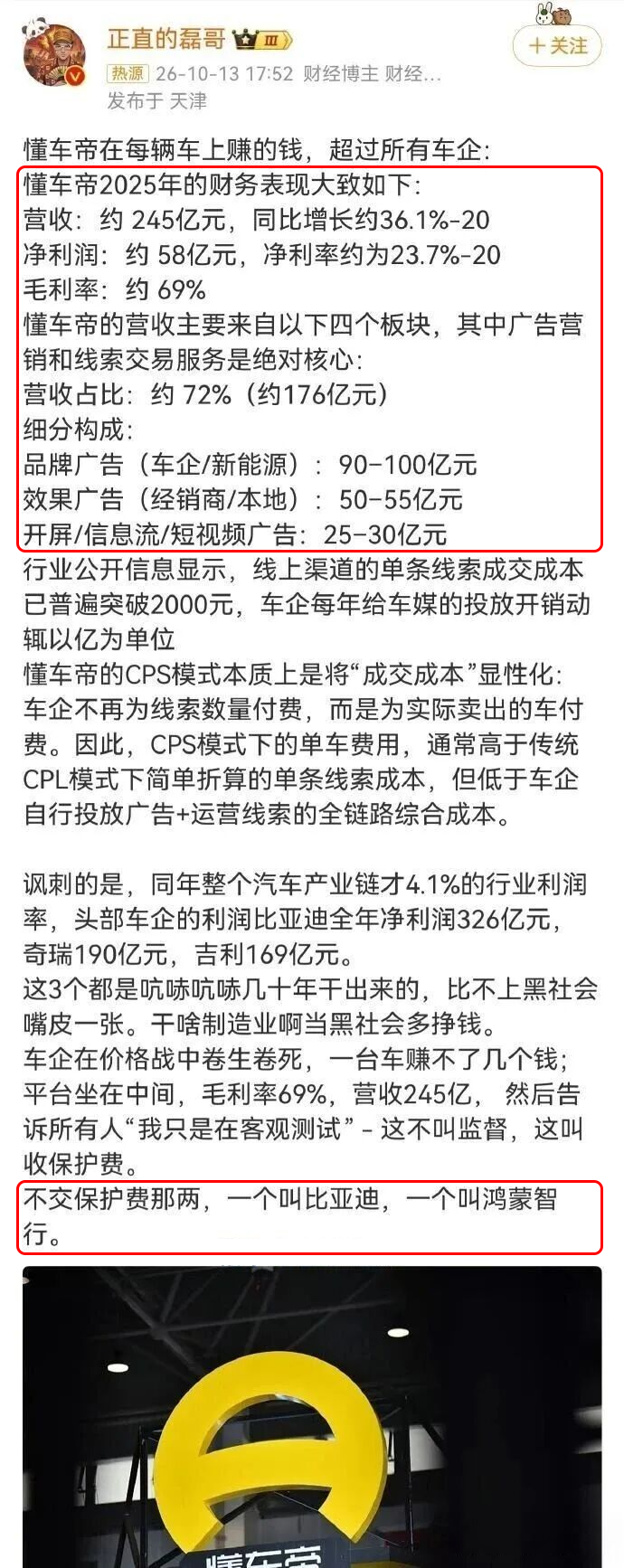 Image Source: Weibo
What’s particularly intriguing is the timing of this news—it surfaced just days after DCD Auto and Zunjie V800 became embroiled in a heated dispute over a brake pedal test.
On October 8, DCD Auto released a closed-course test video showing three brand-new Zunjie V800 vehicles coming to a complete halt from 100 km/h using emergency braking. In all three cases, the brake pedal brackets snapped cleanly, with fracture locations and crack patterns appearing nearly identical. Given that the brake pedal is a critical safety component, the shocking footage immediately sparked outrage online.
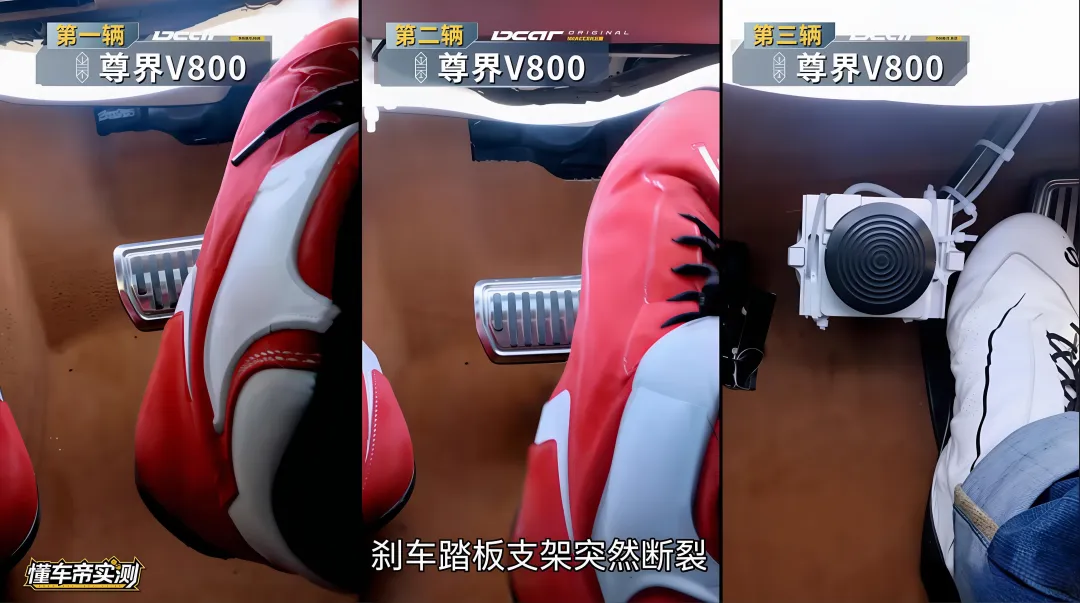 Image Source: Weibo
Zunjie responded swiftly that same night, stating that their braking standards already exceed both national and industry benchmarks and that no real-world owners had reported similar failures since delivery. However, they pledged to optimize component design and offer free upgrades to owners who had already taken delivery. A few days later, a test report from China Automotive Research reached owners: When tested under a 1,500-newton standard, pedal displacement was only 2.61 millimeters—below the 5-millimeter threshold. When the standard was increased to 3,000 newtons, none of the 14 pedal assemblies cracked.
Both sides presented seemingly credible evidence, but the most fundamental question lingering in the minds of the general public remains unanswered: Can these pedals withstand regular driving conditions and emergency braking?
Just as this verbal showdown reached a stalemate, the 24.5 billion yuan rumor suddenly went viral. Public sentiment shifted instantly—people stopped debating whether the pedals would break and instead began questioning a more troubling proposition: Do evaluation platforms have the authority to act as impartial referees in the automotive industry?
How Profitable the Traffic Business Really Is: Automakers Struggle While Lead Sellers Reap Huge Profits
DCD Auto’s business model is straightforward. It generates traffic through evaluation content, converts that traffic into car-buying leads, and then sells those leads to automakers and 4S dealerships, earning commissions on customer transactions. Advertising and lead generation services account for over 70% of its revenue.
In essence, the platform positions itself as an objective and neutral referee, yet its paying clients are precisely the automakers it evaluates. Automakers are both competitors and sponsors, as the popularity and evaluation of a video directly influence whether automakers will invest—and how much—in the following year.
Conflicts, controversies, and mishap footage naturally attract traffic. Boring conventional comparative reviews get little attention, but once a video captures a shocking scene like a “component fracture,” viewership soars. Previously, a screenshot circulating online claimed that “a supplementary critical video costs 5,000 yuan,” which many found plausible—not because the evidence was irrefutable, but because it aligned perfectly with public perceptions of this business model.
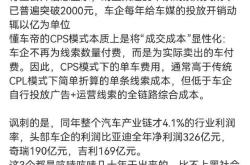
The profit contrast is striking. The domestic automotive manufacturing industry typically operates at a profit margin of around 4%. Building a car is capital-intensive, requiring factories, supply chains, and tens of thousands of employees. After a year of hard work, profit per vehicle is razor-thin. In 2025, Geely’s profit per vehicle was 6,389 yuan, BYD’s was 5,770 yuan, Great Wall’s was 4,281 yuan, while Changan and Leapmotor earned only a few hundred yuan per vehicle, with many automakers operating at a loss.
In stark contrast, the rumored DCD Auto boasts a gross profit margin of 69%. Breaking down its 24.5 billion yuan revenue: Advertising and lead transactions account for 17.6 billion yuan, or 72% of total revenue, with automaker brand advertising alone contributing 9 to 10 billion yuan. A simple calculation: In 2025, domestic car sales reached 27.3 million units, meaning automakers spent 330 to 366 yuan per vehicle sold on DCD Auto’s brand advertising alone (the actual figure is likely much higher). Some influential voices revealed that currently, only two domestic “automakers” refuse to pay “protection money”: BYD and HiMode Auto.
The conflict arises here: Automakers spend on advertising, while the platform holds the power of evaluation. While the platform claims that evaluations and commercial advertising are separate business lines, ordinary people find it hard to view them independently.
 Image Source: DCD Auto APP
Comparing it to its rival, Autohome, makes the contrast even clearer. In 2025, Autohome’s revenue was only 7.12 billion yuan and declining; meanwhile, DCD Auto, valued at 3 billion USD, is rushing toward an IPO and could become ByteDance’s first independently listed subsidiary. One rises while the other falls, marking the transition between old and new eras.
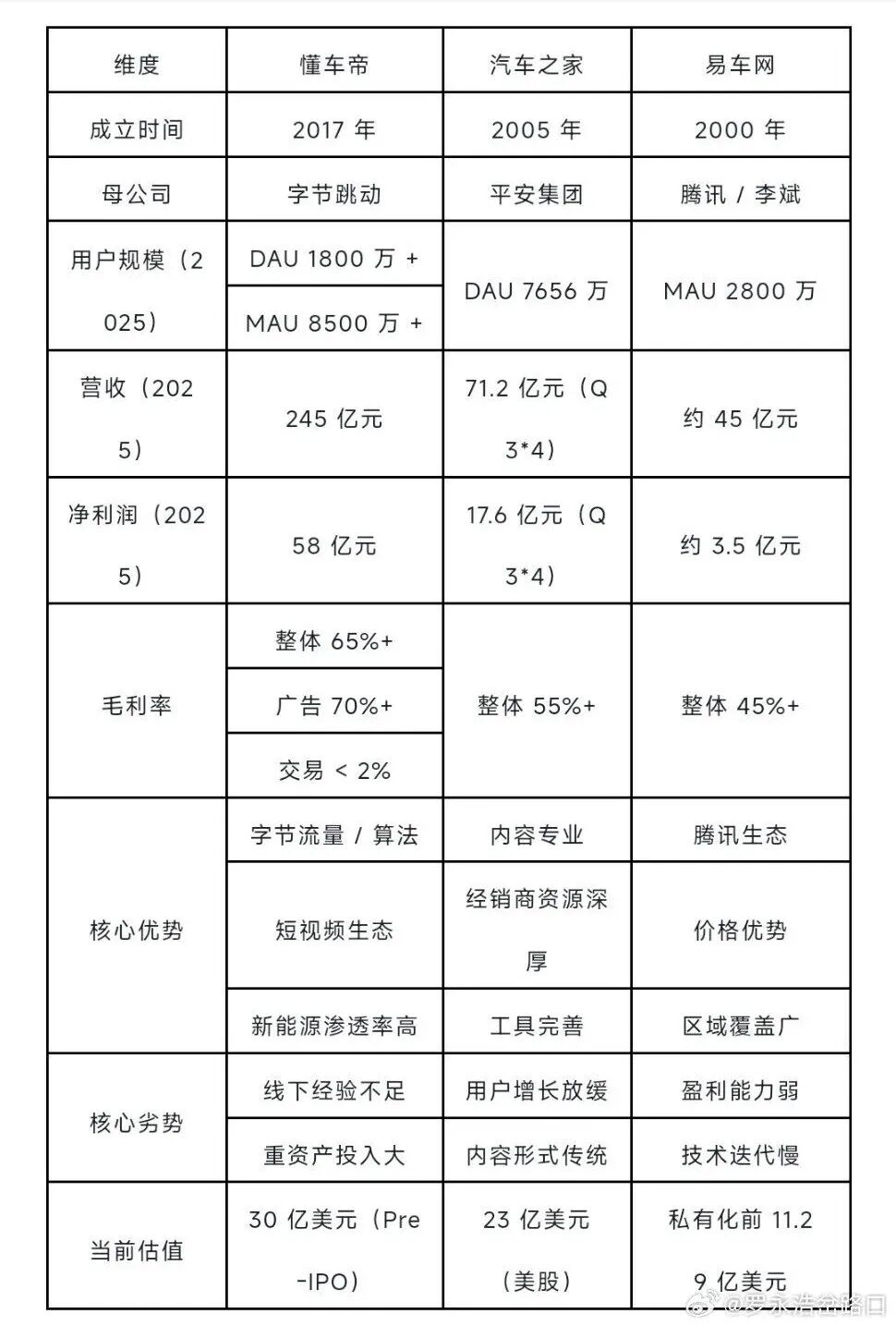 Image Source: Weibo
This is the harsh reality of platform economics: Automakers toil in factories while traffic platforms collect “tolls” at the entrance. Automakers engage in price wars to cut costs, while platforms, without touching factories or production lines, simply control traffic entry points and siphon off a large share of profits. Much like early e-commerce, where merchants competed fiercely and sold at a loss, platforms steadily earned money through traffic and commissions.
What’s even more alarming is the overlapping roles: Platforms not only conduct evaluations but also sell new and used cars directly. Dealers pay annual fees to join, while the platforms open direct sales stores to compete for customers; high-quality leads and vehicle sources are prioritized for their own stores; vehicle inspections and evaluations are entirely in their hands. The referee and the player become the same entity.
No Winners in This Controversy
After the Zunjie pedal controversy fermented, capital markets reacted first: JAC Motors’ stock plummeted for two consecutive trading days, wiping out over 10 billion yuan in market value.
In this debate, no one emerged victorious. Zunjie presented test-bench reports to prove product compliance but struggled to dispel consumer doubts; DCD Auto did replicate three pedal fractures, but small-sample extreme testing cannot equate to mass-produced vehicles having defects, nor can it replace regulatory conclusions. The most distressed are ordinary car buyers, whose questions remain unanswered.
People’s Daily drew a clear line: Automobile brake pedals must never fracture while driving. This statement does not take sides but establishes a safety red line that everyone should acknowledge.
Many netizens’ doubts hit the nail on the head: Can evaluations remain entirely objective when the platform’s primary revenue comes from automaker advertising? Rational voices also exist: Automakers have marketing needs, and advertising investments are separate from evaluations, so they cannot be directly equated. However, credibility becomes compromised once financial ties are involved. Over the years, DCD Auto has publicly clashed with automakers multiple times, from winter range tests to intelligent driving evaluations—interestingly, each fierce argument brought the platform massive traffic, with controversy itself becoming its most valuable asset.
Another pragmatic view online: Brands like Tesla, Xiaomi, and Zunjie, which generate their own traffic, advertise minimally on automotive media, making negative publicity easier to amplify. The same recall can be framed as the automaker taking responsibility and being conscientious or as poor quality control and hidden dangers. Without third-party supervision, the narrative’s flexibility is vast.
This raises a soul-searching question: Who supervises the evaluation platforms themselves?
The Industry Lacks a Universally Accepted Standard
Regardless of whether the 24.5 billion yuan figure is true, the issues it raises are far more important than financial numbers.
China’s automotive industry has reached a point where pricing, configurations, and computing power have all been pushed to their limits, yet safety verification and third-party evaluations remain fragmented.
Platforms can purchase vehicles, set their own testing conditions, edit videos, and release them to the public; automakers provide test-bench reports of submitted samples to prove compliance. Both sides present evidence, but mutual verification is lacking, leaving only netizens to take sides and argue.
What people truly want is simple: A widely recognized review mechanism—where qualified authoritative institutions randomly sample mass-produced vehicles, testing standards are publicly disclosed, vehicle sources, environmental parameters, and raw data are fully documented and accessible for review and replication. Automakers wouldn’t need to exhaust themselves proving innocence, and platforms wouldn’t rely on small-sample tests to draw conclusions.
Thin manufacturing profits cannot justify safety issues; platforms earning money through traffic does not mean their evaluation conclusions are inherently correct. Automobile manufacturing deserves respect, and media supervision holds value, but neither can bypass objective, verifiable testing rules.
More than 24.5 billion yuan in revenue or a 69% gross profit margin, what the automotive industry lacks most is a universally trusted standard. Without unified evaluation standards, verifiable processes, and traceable results, every future incident will repeat the current pattern: heated debates on trending topics, stock price fluctuations, and confused consumers.
How to divide industry profits and determine channel shares is worth careful consideration across the entire sector. Constraining traffic influence and rebuilding evaluation credibility are not just DCD Auto’s concerns but unavoidable questions for the entire automotive media and consumer market.
Interactive Discussion: How can automotive evaluation platforms establish a trustworthy review mechanism? Can automakers bypass major traffic platforms and directly reach potential customers? Share your thoughts in the comments.
Disclaimer: This article is solely a financial commentary on major companies and does not constitute investment advice. All corporate data and regulatory events mentioned are from public information and are for reference only; official announcements shall prevail. Image sources are from the internet; if copyright issues exist, please contact us for removal.
-
![]()
Tax Rebate Cuts: SAIC Motor Emerges as Potential 'Weakest Link' in China's Auto Export Resilience Framework
-
![]()
ZTE: H1 Net Profit Plummets Over 40%, Computing Power Business Struggles to Escape Low-Profit Quagmire
-
![]()
Seven Key Statements Hit Headlines on the Same Day! Europe's Strategic Maneuver Puts Chinese Automakers in a 'Subtle Stranglehold'
-
![]()
Shocking! Is DCD Auto Really Set to Rake in 24.5 Billion Yuan with a 69% Gross Profit Margin in 2025?
-
![]()
Ren Zhengfei Once Playfully 'Teased' Yu Chengdong: Initially, All Family Members Used iPhones! Now, Yu Chengdong Laughs: They’ve All Made the Switch to Huawei!
-
![]()
Yu Chengdong Faces Scrutiny: Zhijie RX Logs Just 379 Units in Its Debut Month—Can It Still Challenge the YU7?
-
![]()
Why Do Intelligent Driving Vehicles Always Give Way During Cut-ins?
-
![]()
Apple Hits $5 Trillion Market Cap Threshold