Fuel-Powered Vehicles: Shifting to a 'Niche' Role
 10/21 2026
 557
The essence of competition lies not in staging a comeback but in sustaining competitiveness within the existing market landscape.
On one hand, it's premature to dismiss the internal combustion engine just yet.
On the other hand, with fuel-powered vehicles now accounting for less than one-third of total sales, an era is swiftly drawing to a close.
Both observations converge on a single point: the fuel-powered vehicle market is once again contracting, edging closer to its 'final act'.
The market has made its stance clear through consumer choices.
Elon Musk once remarked on social media that driving a non-autonomous fuel-powered vehicle is as antiquated as 'using a flip phone while mounted on horseback.' He predicted the gradual phasing out of fuel-powered vehicles.
Lately, he's sensing this transformation even more acutely.
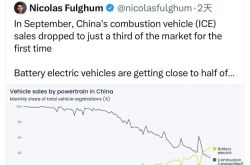
Data from the China Passenger Car Association substantiates this trend. In September 2026, fuel-powered vehicles' sales share in the Chinese market dipped below one-third for the first time, while new energy vehicles' overall penetration rate soared to a record 67%.
This signifies an accelerating 'oil-to-electric' transition. Although fuel-powered vehicles may not vanish overnight, the outlook is far from rosy. Some argue that the decline of fuel-powered vehicles doesn't hinge on a revolutionary battery technology breakthrough—the market has already cast its vote.
Frontline dealership staff note that the real turning point arrived when plug-in hybrid and extended-range models flooded the market. 'These models addressed the shortcomings of pure electric vehicles, easing consumer concerns about vehicle usability, and began to significantly erode the market share of traditional fuel-powered vehicles.'
Indeed.
Once-coveted fuel-powered models, commanding premium prices and long waiting lists, witnessed sales plummet by over 40%. Some have already bowed out, consigned to the annals of history.
Iconic fuel-powered models like the Nissan GT-R, Ford Focus, Mazda 6, and Mercedes-Benz A-Class have reluctantly halted production. These models, once radiant in the internal combustion engine era, can only bid farewell with a tinge of melancholy under the relentless onslaught of electrification.

Directly affected brands include joint ventures like Volkswagen, Toyota, and Honda, with some seeing capacity utilization rates plummet below 50%. The situation is dire. 'Currently, fuel-powered vehicle production, sales, and profitability have all sharply declined, with significant idle capacity, facing a major existential threat. Some companies have already ceased production or declared bankruptcy.'
'In China, I believe fuel-powered vehicles have no future—this is crystal clear,' stated BYD. NIO has expressed its commitment to fully replacing fuel-powered vehicles, noting that extended-range technology effectively mitigates range anxiety and high costs associated with new energy vehicles.
The trend is irrefutable.
Globally, the shift from fuel to electric is a monumental, irreversible trend. Data reveals that in the first half of 2026, pure gasoline models accounted for 49% of global new vehicle sales, marking the first time their share fell below 50% and a significant 24% drop from 73% in 2021.
The shrinking global market share of fuel-powered vehicles has sounded alarm bells among industry stakeholders in Europe and North America.
Not long ago in Detroit, Akio Toyoda, the visionary who propelled internal combustion engine vehicles to global prominence, stood at the Automotive Hall of Fame, reflecting on the gradual eclipse of fuel-powered vehicles' glory at the industry's crossroads.
Disaggregated data reveals that the global average for electrification is primarily propelled by the Chinese and European markets. Chinese gasoline vehicle sales plummeted by 26%, more than double the global average decline, while the European market also saw a 13% drop.
In essence, fuel is exiting first-tier Chinese and developed European markets.
The core proposition of competition: Not the endgame.
William Li, founder, chairman, and CEO of NIO, once remarked that fuel-powered and new energy vehicles cannot 'coexist on equal terms,' and that fuel-powered vehicles now lack the competitive edge against electric vehicles.
With the share of pure fuel-powered new vehicles falling below 50%, the conclusion that 'the era of fuel-powered vehicles is over' was swiftly drawn. However, some straightforward data contradicts this.
As of late 2025, the national fleet of fuel-powered vehicles still stood at a staggering 322 million, accounting for nearly 90% of the total 366 million vehicles. While electrification is advancing rapidly, the endgame is not an 'instant wipeout'—the natural liquidation of existing assets is a protracted industrial process.
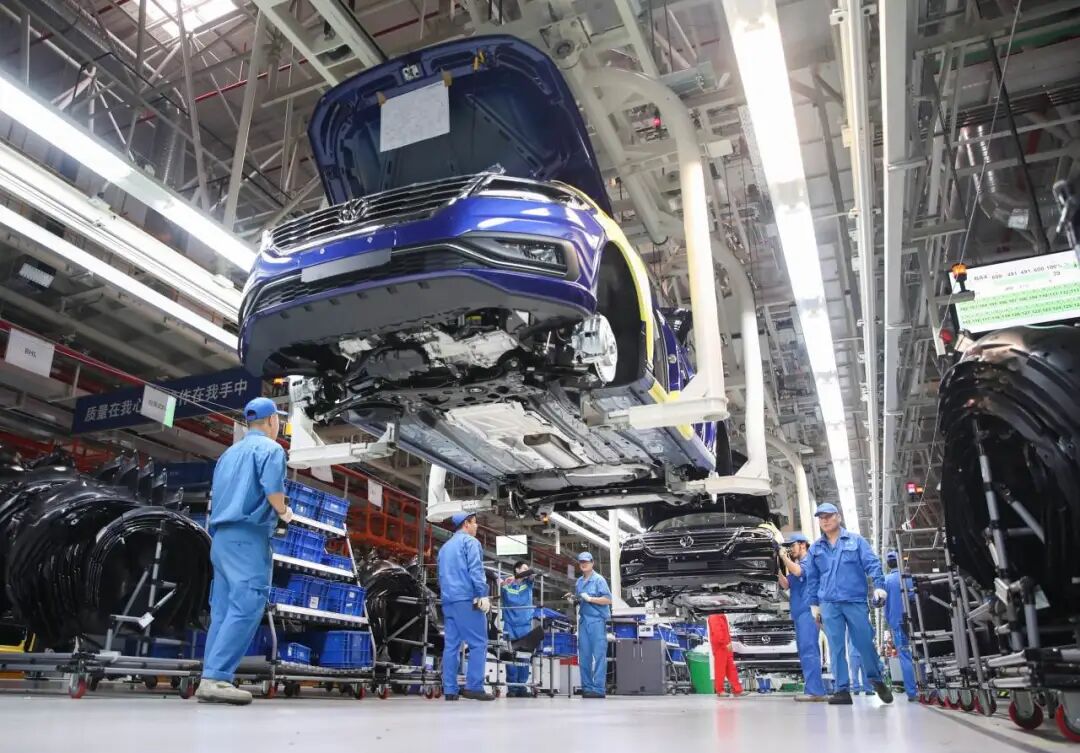
After all, fuel-powered vehicles are supported by an industrial chain too extensive to overlook. It spans petroleum refining and steel metallurgy upstream to maintenance services and parts manufacturing downstream, directly linking millions of jobs and trillions in annual output value.
Though the entire industrial ecosystem built during the fuel-powered vehicle era—dealer networks, after-sales maintenance systems, and talent structures—is undergoing a painful restructuring under the impact of the times, fuel-powered vehicles are not mired in outdated technology but are continuously evolving.
In 2026, amid sustained pressure on the fuel-powered vehicle market, Geely invested over 1 billion yuan and three years of R&D to develop the i-HEV intelligent hybrid technology from scratch, using it as the cornerstone to create its PLUS series luxury flagship products. This reflects Geely's reassessment of the fuel-powered vehicle market's fundamentals.
At the critical juncture of fuel-electric coexistence, Chery has chosen to focus on users' real needs, continuously investing in the iterative upgrading of fuel-powered vehicle technologies to infuse them with new vitality in the new era.
Last year, Chery unveiled its 'China's New Fuel' strategy, reshaping the value landscape of fuel-powered vehicles around four key pillars: 'new technology, new intelligence, new safety, and new structure.' 'Fuel-powered vehicles will always have a place, especially in overseas markets where electrification is slower, so Chery must maintain super competitiveness in the fuel-powered vehicle sector.'
Toyota, long hesitant about electrification, is fully transitioning its GR performance lineup to 2.0T hybrid systems, aiming to balance high performance and low emissions through electrification technology.
As mainstream automakers like Volkswagen, Toyota, Geely, and Chery comprehensively promote the intelligence of fuel-powered vehicles, mid-to-high-level intelligent driving will proliferate at an exponential rate.
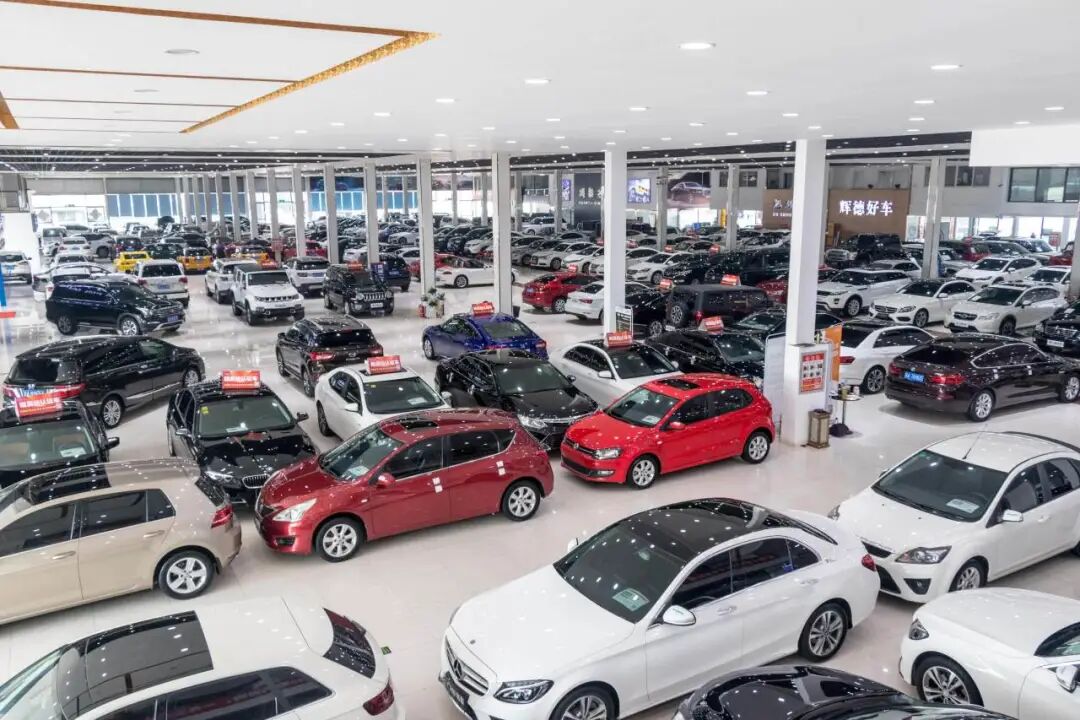
Moreover, for some automakers, fuel-powered vehicles remain a crucial option. For instance, Porsche recently explicitly returned to fuel-powered vehicles to bolster profitability. Detroit giants are also scaling back their electric vehicle strategies due to financial constraints.
Furthermore, global market policies are no longer adopting a 'one-size-fits-all ban on fuel vehicles,' instead opting for flexible and differentiated exit timelines.
From automakers' strategic layouts and national industrial policies, the future of fuel-powered vehicles is not rapid extinction but a profound structural transformation, technological iteration, and market restructuring.
Industry authority forecasts indicate that by 2030, the domestic auto market will stabilize into a structure of 40% pure electric, 40% hybrid, and 20% fuel-powered vehicles, with fuel-powered vehicles fully exiting the mainstream.
In the future, the fuel-powered vehicle market may adopt a 'dumbbell' structure, with economic fuel-powered vehicles remaining a staple for consumers in developing countries with scarce charging infrastructure and in domestic lower-tier markets.
Future competition will witness intense battles among leading brands like Volkswagen, Toyota, and Geely, while small and medium-sized brands accelerate their exit. However, the core proposition of competition remains not about staging a comeback but about sustaining competitiveness within the existing market.
Note: Images sourced from the internet. Contact us for removal if infringement occurs.
-END-
-
![]()
Apple, the 'Latecomer,' Initiates Limited AI Rollout
-
![]()
Yutong Bus: Selling 2,600 Fewer Units Yet Boosting Gross Profit by 600 Million Yuan, with Overseas Sales Fueling Profit Surge
-
![]()
GM's Q3 2026: Pickup Trucks Mint Money, Buybacks Provide Support, EVs on Pause
-
![]()
Fuel-Powered Vehicles: Shifting to a 'Niche' Role
-
![]()
Pure Electric Vehicles Dominate the RMB100,000 Market, and the Shift from Fuel to Electric is Unstoppable
-
![]()
September's Top 10 MPV Sales: Joint Venture MPV Regains Leadership
-
![]()
MIIT Unveils New Car Lineup: Multiple Series 9 Models Make Their Grand Entrance
-
![]()
Zhu Huarong Steps Down, Zhao Fei Takes the Helm: Changan Automobile Unveils Its 'Two-Phase' Governance Strategy