Has NIO’s Battery Swap Strategy Suddenly Gained Broad Acceptance?
 10/26 2026
 393
Produced by Zhineng Technology
This year, battery swapping has surged in popularity, with NIO investing over 20 billion yuan and gaining widespread recognition for this approach.
Many have criticized NIO for its steadfast commitment to the battery swap model, citing the substantial investment required for station construction, the weight of battery assets, and the enduring operational costs. However, by 2026, a growing number of major players in the automotive industry are entering the battery swap arena.
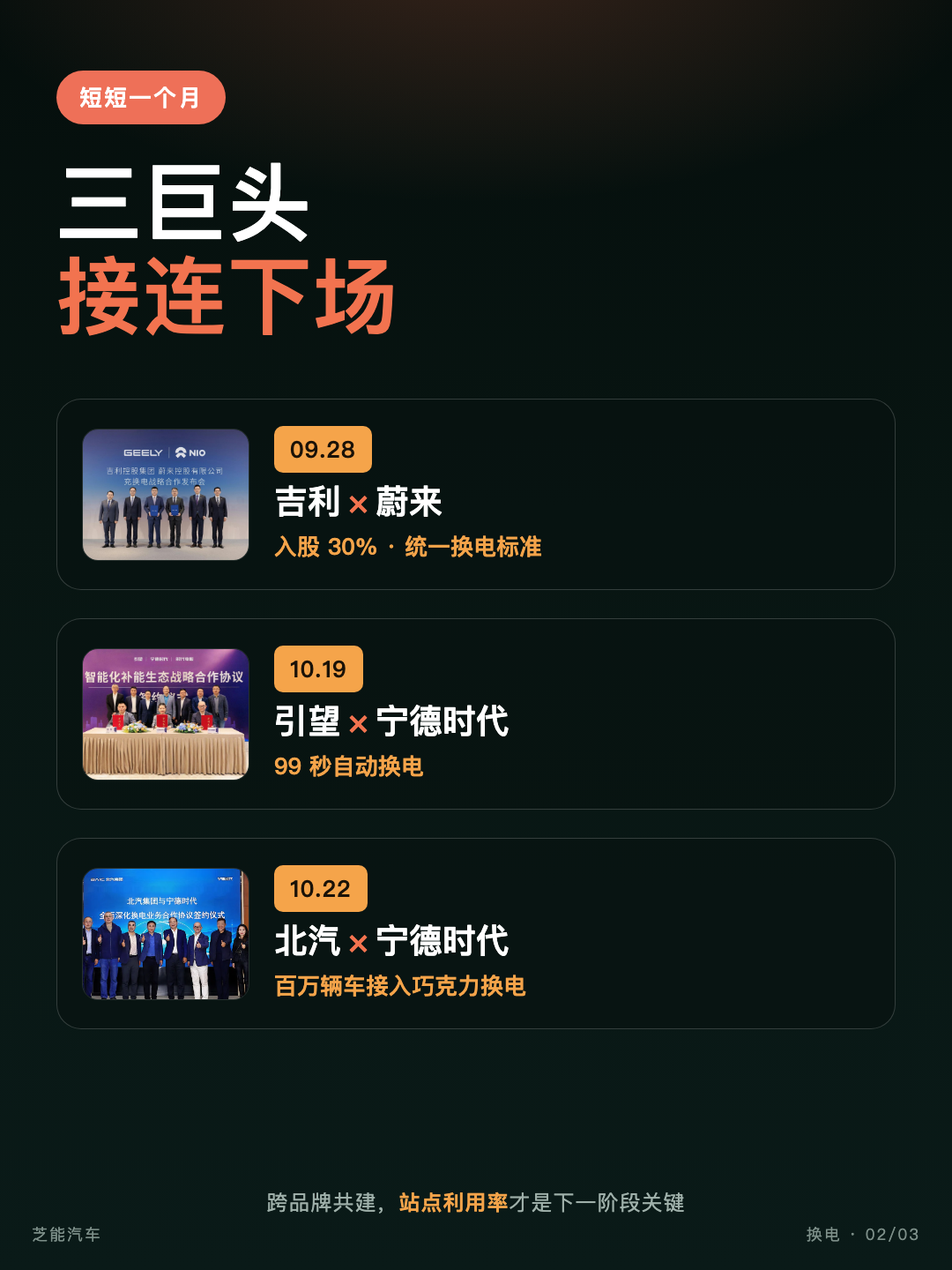
In just one month:
◎ On September 28, Geely acquired a 30% stake in NIO Power by transferring 100% of the equity in Yiyi Interconnection and contributing 640 million yuan in cash. Following the transaction, both parties will also harmonize battery swap technologies and standards for private users.
◎ On October 19, Huawei Yinwang partnered with CATL and Contemporary Amperex Technology Service to foster synergy between intelligent driving and battery swap networks, unveiling a comprehensive solution for autonomous station discovery, automatic docking, and swift 99-second battery swaps.
◎ On October 22, BAIC inked a strategic cooperation agreement with CATL for one million battery swaps, aiming to integrate multiple brand models into the Chocolate battery swap network.
NIO has tirelessly demonstrated the viability of battery swapping, and now, more companies are following suit. What's driving this shift?
◎ While the speed of energy replenishment for electric vehicles is accelerating, users also crave a stable, convenient, and predictable energy replenishment experience. Particularly for commercial vehicles, long-distance travelers, and users without access to fixed charging facilities, the ability to swap batteries in minutes is highly appealing.
◎ Vehicle-battery separation transforms batteries into independently manageable assets. They can be centrally charged, inspected, maintained, and dispatched, paving the way for battery upgrades, cascading utilization, and participation in grid regulation.
◎ The value of a battery swap station is intricately linked to the number of vehicles it serves. There's a stark contrast in asset utilization efficiency between a station handling 30 vehicles and one managing 150 vehicles daily.
Previously, battery swap networks primarily catered to a single brand, limiting their scale expansion due to model sales constraints. However, with the rise in cross-brand collaborations, stations now have the potential to secure more consistent customer traffic.
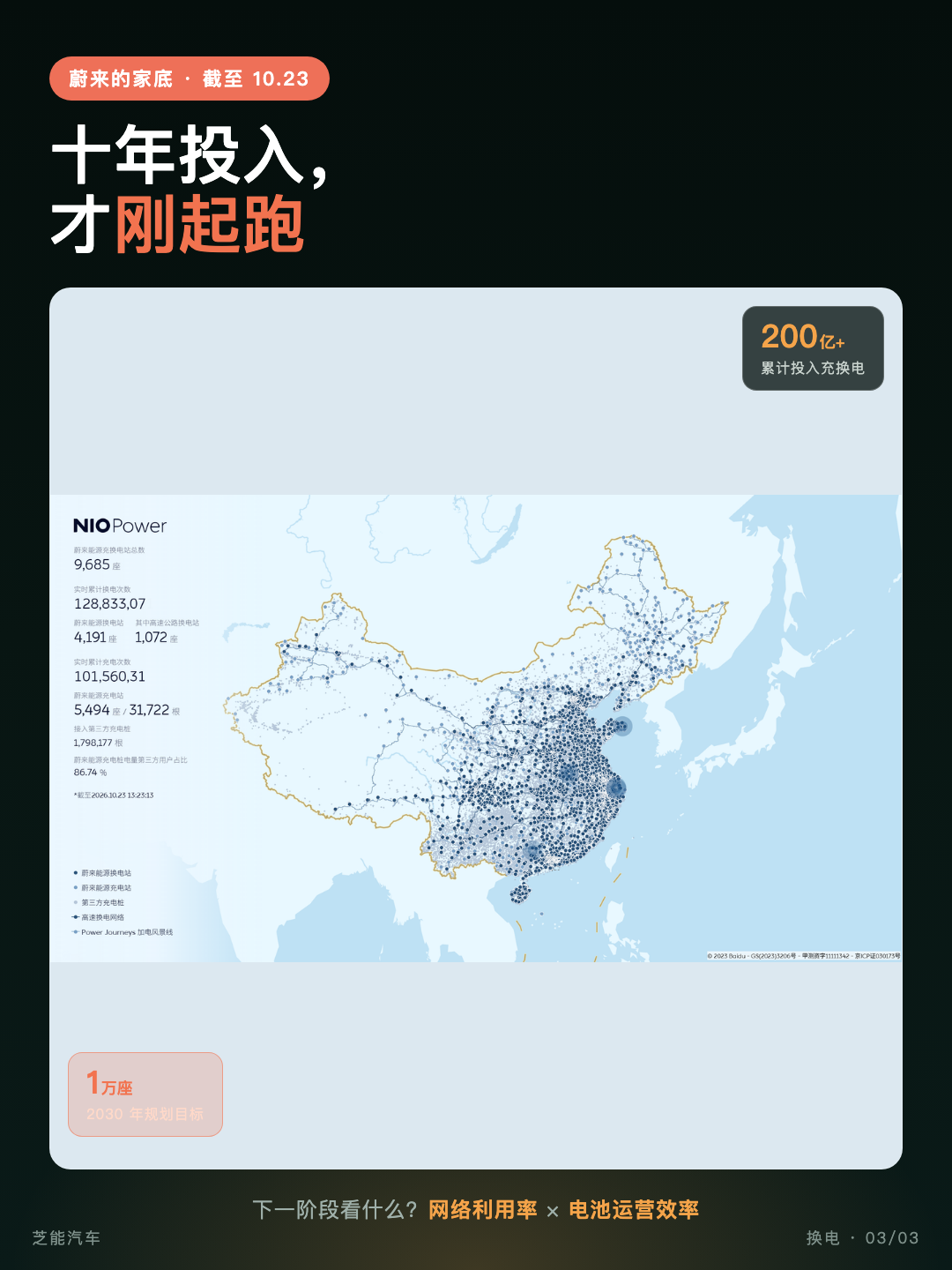
NIO has been dedicated to this path for over a decade. It's truly a remarkable feat!
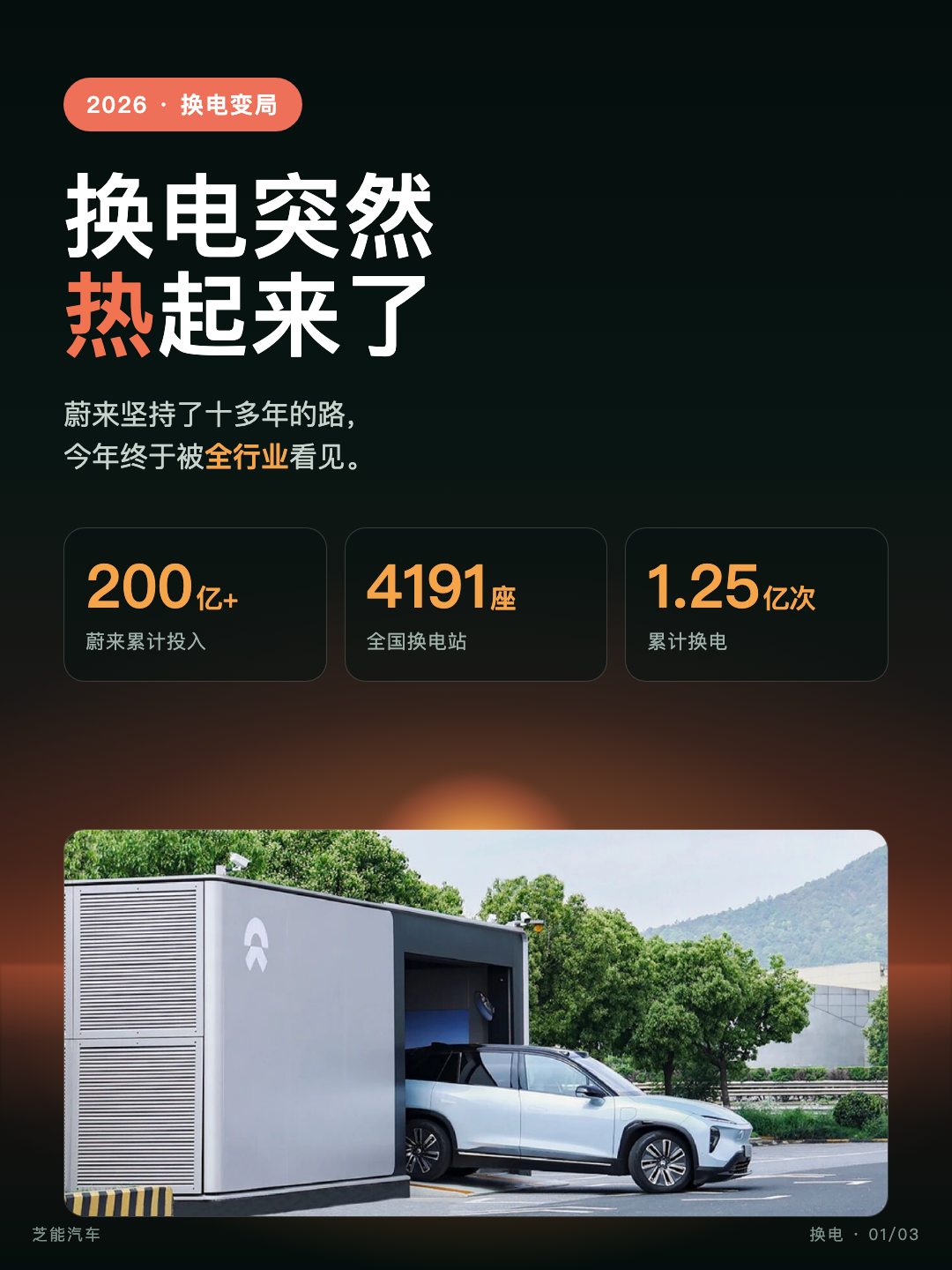
As of October 23, NIO has invested over 20 billion yuan in charging and battery swap technologies and infrastructure, boasting 4,191 battery swap stations nationwide and over 125 million battery swap services completed.
The fifth-generation battery swap stations now support three brands: NIO, Ledo, and Firefly, with the battery swap network gradually encompassing products of varying sizes and positions.
From constructing individual stations to managing thousands of stations and tens of thousands of batteries, and then delivering hundreds of millions of battery swap services, the accumulated expertise in equipment reliability, battery health management, operational scheduling, and user service demands both time and substantial funding.
According to the plan, NIO Power aims to have a cumulative total of 10,000 battery swap stations by 2030. As the number of cooperative models grows, network utilization and battery asset operational efficiency will emerge as key indicators to monitor in the next phase.
For consumers, when purchasing a new energy vehicle in the future, beyond range and charging power, it's also prudent to scrutinize the battery swap network coverage, vehicle-battery separation solutions, and long-term usage costs.
-
![]()
Tesla Roadster: Soaring Beyond Gravity—A Call for Automakers to Rise Above Price Wars
-
![]()
Exclusive: iPhone Duo 2 Details Unveiled
-
![]()
Qualcomm Reports $2 Billion Quarterly Net Profit Amidst Plans for Global Layoffs: 61% Surge in Automotive Chips Fails to Offset Smartphone Sales Decline
-
![]()
Has NIO’s Battery Swap Strategy Suddenly Gained Broad Acceptance?
-
![]()
Why Should Car Owners Be Held Accountable When the Self-Parking System Fails?
-
![]()
The Second Half of Intelligent Driving: Automakers Must Prove Safety and Then Get Users to Pay
-
![]()
The ultimate intelligence of a car is to ensure the safety of its occupants.
-
![]()
Post-2000s Beauty Product Manager Issues Apology; He Xiaopeng Embraces Being Labeled an 'Old Fogey.' Should Car Buyers Purchase MONA to Prove Their Youth?