Leapmotor's Secret, Written on the Roads of County Towns
 11/10 2026
 562
Digging into the financial reports reveals that in the first half of this year, Leapmotor's net profit came to 210 million yuan across 356,000 vehicles—less than 600 yuan per car. Should the price war drag on, this razor-thin margin could be wiped out at any moment.
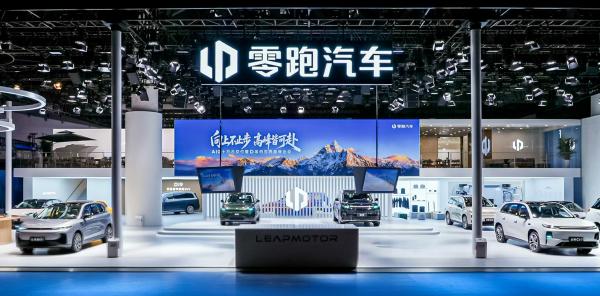
If you live in Beijing's Guomao or Shanghai's Jing'an, Leapmotor probably rings no bell for you. The roads there are crowded with NIO's battery-swapping cars, Li Auto's family haulers, and Xiaomi's SU7, yet that unobtrusive green logo is a rare sight.
But look at September's sales rankings, and Leapmotor sits at number one, delivering 105,000 vehicles in a single month—more than double the runner-up. That marks its third consecutive month above 100,000 cars. Cast the net wider, and in 2025 Leapmotor sold nearly 600,000 vehicles, topping the new-force sales chart and, as a bonus, turning a full-year profit—only Li Auto had pulled off that feat among Chinese new forces before it.
A brand that is virtually "invisible" in first- and second-tier cities has emerged as the player thriving best in this round of elimination. So what exactly did Leapmotor get right?
01 An engineer's disastrous start
Leapmotor founder Zhu Jiangming was born in 1967 in Yiwu—7 years before Li Bin and 14 before Li Xiang. In an era when new-force founders routinely wax lyrical about ideals and user operations, he is the odd one out: back in 1993, he and his friend Fu Liquan co-founded Dahua Technology, starting from video surveillance equipment and building it into the world's second-largest security company. By the time he decided to build cars in 2015, he was already 48.
The start was nothing short of a disaster. Leapmotor's first car, the S01 launched in 2019, was a niche two-door coupe with deeply divisive styling, and the market simply wouldn't bite. At its worst, Leapmotor could deliver only 879 cars a month. The company missed payroll several times, and Zhu Jiangming and Fu Liquan dipped into their own pockets pro rata, wiring money into the company account to keep it afloat.
But his engineer's background gave him a judgment completely at odds with everyone else's. Zhu Jiangming determined early on that 70% of electric vehicle technology lies in electronics and electronic control—"these are all a blank sheet, and latecomers have every chance to build an advantage." He even believed Moore's Law still holds in the auto industry: the cost of batteries, electric drives, and electronic architectures will keep falling, and whoever pushes cost to the extreme will survive to the end.
02 Calculating accounts down to the bone
Put into execution, this line of thinking became Leapmotor's most famous "full-domain in-house R&D."
To this day, core components accounting for 65% of vehicle cost are developed and manufactured in-house—the three electric systems, smart cockpit, intelligent driving algorithms, and even the audio system are not spared. Zhu Jiangming did the math: making the audio in-house saves one or two hundred yuan per car compared with buying from suppliers. Saving one or two hundred per car, across hundreds of thousands of cars a year, adds up to tens of millions in profit.
Another calculation is platformization. Leapmotor's C10, C11, and C16 come from the same platform, with parts-sharing rates of over 80% at the highest, and the B series even aiming for 88%. The higher the parts commonality, the larger the procurement scale, the thinner the mold amortization, and the lower the cost—this is the plainest business wisdom of the Yiwu small commodities market, transplanted verbatim by Zhu Jiangming into the auto industry.
Where did the saved money go? All of it was poured into the feature list. So a peculiar phenomenon appeared in the market: the Leapmotor C series, at the 150,000 to 200,000 yuan price point, offers space, refrigerators, TVs, big sofas, and smart cockpits at the level of Li Auto's L series, earning it the nickname "half-price Li Auto"; when the B01 launched, it directly targeted the Model 3, locking over 10,000 orders in 72 hours. An executive hurried to clarify that "we are not half-price Li Auto," which only pushed the topic onto trending searches—but for consumers in third- and fourth-tier cities, this label is the best advertisement.
03 County towns are the main battlefield
This precisely answers the question at the beginning: why is Leapmotor invisible in first-tier cities?
Because Leapmotor never intended to fight in first-tier cities. First-tier cities have scarce license plates, and consumers there buy not just a means of transportation but also identity recognition; brand narrative and emotional value are essential there. In Leapmotor's sales channels, over 90% are dealer stores, and these stores are largely opened in places like Linyi, Luoyang, Xiangyang, and Zunyi—the true hinterland of China's auto market, where the 100,000 to 200,000 yuan family car market is the largest and also the most brutal, with BYD, Geely, and Changan all fighting hand-to-hand here.
Consumers here don't talk about ideals, they just do the math: is the space enough for the family, is the range solid, are the features worth the price. Leapmotor's answer is simple and blunt—for the same money, I give you more. In an era when consumers are clutching their wallets, this is the hardest reason to refute.
04 Two fates of going overseas
Worth mentioning is going overseas. In the past two years, going overseas has almost become the lifesaver for all Chinese automakers, but a lifesaver can also drown people.
Neta Auto is the most painful example. In 2022 it was still the new forces sales champion, selling 152,000 vehicles a year, and then in the Thai market it once captured over 11% of the pure electric share, at the height of its glory. But after domestic sales collapsed, a broken capital chain dragged everything down: Thai dealers shrank from a dozen-plus to 3, owners couldn't get parts for repairs, insurers refused coverage, and old models were halved in price with no takers. In May 2025, Neta's parent company was filed for bankruptcy review. Going overseas didn't save it, because going overseas has never tested only whether cars can be sold, but also whether capital, channels, and after-sales systems can hold up.
Leapmotor took a completely different path. In 2023, it sold about 20% of its shares to Stellantis, the world's fourth-largest automotive group, and the two sides established the joint venture Leapmotor International, with Stellantis holding 51% and responsible for global markets outside Greater China. Simply put, Leapmotor provides cars and technology, Stellantis provides money and channels—selling its own cars through others' existing stores, with almost no expansion cost.
The results are stunning. In less than two years, Leapmotor has built over 1,000 outlets across Europe, covering 36 countries. In Italy, this May, one out of every three pure electric vehicles sold was a Leapmotor. In 2025 overseas sales were 70,000 vehicles, and in the first three quarters of this year it reached nearly 150,000. More critically, the gross margin on overseas car sales is close to 20%, far higher than domestic—this business not only works but also makes money. Neta died from "shipping cars abroad," while Leapmotor won by "letting locals sell cars for it."
05 Leapmotor's secret is that there is no secret
Of course, it's too early to say Leapmotor has won for sure.
Digging into the financial reports reveals that in the first half of this year, Leapmotor's net profit came to 210 million yuan across 356,000 vehicles—less than 600 yuan per car. Should the price war drag on, this razor-thin margin could be wiped out at any moment. Moving upward, the D series above 200,000 yuan will face users who truly care about brand, and the "cost-effectiveness" card may become a burden in the high-end market; looking long-term, the arms race in intelligent driving and software experience has only just begun. Zhu Jiangming himself knows this, and his words are: without annual sales of a million, it's hard to survive.
But looking back, Leapmotor's ten-year story is actually simple to the point of being dull: no chasing trends, no talk of disruption, no fan operations, spending money on parts, selling cars to people who actually pay, and calculating every cent of cost down to the bone. While peers were crushing BBA on launch stages, it was delivering cars one by one in county town stores.
In the second half of China's new energy vehicle game, the one who rolls to the end may not be the brand best at telling stories, but the one best at doing the math. Leapmotor's secret has never been in the display windows of first-tier cities; it is written on the curbs of county towns—where there is no applause, but someone is placing orders with real money.
06 Behind the bills, multiple hidden concerns
The more dazzling the numbers, the less they withstand scrutiny. Leapmotor wears the halo of sales champion, but opening the 2026 financial reports, every line is tense.
The first tension is profit as thin as a cicada's wing. In the first half of this year, Leapmotor's net profit per vehicle was 589 yuan—selling a car worth over 100,000 yuan earns less than a phone. In the first quarter it even swung from profit to loss, with a net loss of 390 million yuan, gross margin falling from 14.9% to 9.4%, and the full-year net profit target quietly lowered from 5 billion to 3 billion. The reason is straightforward: raw materials like lithium carbonate are rising in price, and it dare not raise prices. BYD's gross margin in the same period was 18.8%, while Leapmotor's was only 11.7%; if the price war cuts again, who bleeds out first is obvious. "Cost-effectiveness" is Leapmotor's moat and also its ceiling—for others, cutting prices is a tactic; for it, cutting prices is life itself.
The second is that the money saved has not become ammunition for R&D. In the first half of this year Leapmotor's R&D investment was 2.32 billion yuan, less than half of Xpeng's. Intelligent driving is its generally recognized shortest plank: the slogan of "joining the first tier" has been shouted for two years, but the reality is that C10 owners are still waiting in community groups for an OTA that missed the entire third quarter, and complaints about highway navigation drifting off and unexplained sudden braking are everywhere. Stacking hardware can win orders but not hearts—the louder "half-price Li Auto" is shouted, the deeper the word "cheap" is carved into its forehead.
The third is the one-way street of the brand. The D19 wants to charge toward 300,000 yuan, but how can a brand built on "cheap and big portions" make users willingly pay double? Li Auto attacked downward from 400,000 with overwhelming momentum; Leapmotor attacks upward from 100,000 with caution at every step. Price bands are like this: going down is easy, going up is hard.
The fourth is that the lifeline of going overseas is not in its own hands. Stellantis holds 51% of Leapmotor International, and channels, tariffs, and after-sales all rely on this European shipowner. Right now the wind is favorable, borrowing a ship to go to sea; but the EU's anti-subsidy tariff has been imposed for five years, local content thresholds are being built higher and higher, and what if one day the shipowner can't protect itself, or wants to swap a batch of cargo onto the ship? Borrowed channels never truly belong to oneself.
The last and most hidden one: 90% of sales rely on dealers. When sales declined in 2023, Leapmotor pushed inventory so hard that dealers publicly complained; now with monthly sales of 100,000, the temptation to push inventory will only grow. Dealers are the cheapest way to expand, and often the first string to snap—Neta's Thai dealers went from a dozen-plus to only three in just two years. Will the county town bosses waving flags for Leapmotor today be the first to jump ship tomorrow? No one dares guarantee it.
-
![]()
Real Vehicles Take Center Stage at CIIE — and Finally, a Way Out of Involution
-
![]()
Musk Suddenly Exposes Masayoshi Son's Shocking Secret — SoftBank Stock Plunges 10%
-
The Viral "Big Fat Fish" Reminds Me of the Liveliest Era of the Internet
-
![]()
Lei Jun Takes Personal Charge as Xiaomi Establishes New Department to Storm Porsche's Home Turf
-
![]()
February Rakes In 12 Billion Views! A 54-Year-Old Uncle from Henan Teaches Himself AI and Creates the Hit Short Drama "Armed Into Song"
-
![]()
15 Years, 10 Leaders: Beijing Hyundai Couldn't Hold On to Its First Chinese General Manager
-
![]()
There Are Already Tens of Thousands of Satellites in the Sky—Who Will Stop Them from Colliding?
-
![]()
BMW 330 Bare Car Price Drops to 210,000 Yuan, Volvo EM90 Cut in Half! Car Dealers: Prices Will Fall Another 20% by Year-End