Hesai "Crossing the Bridge"
 11/13 2026
 371
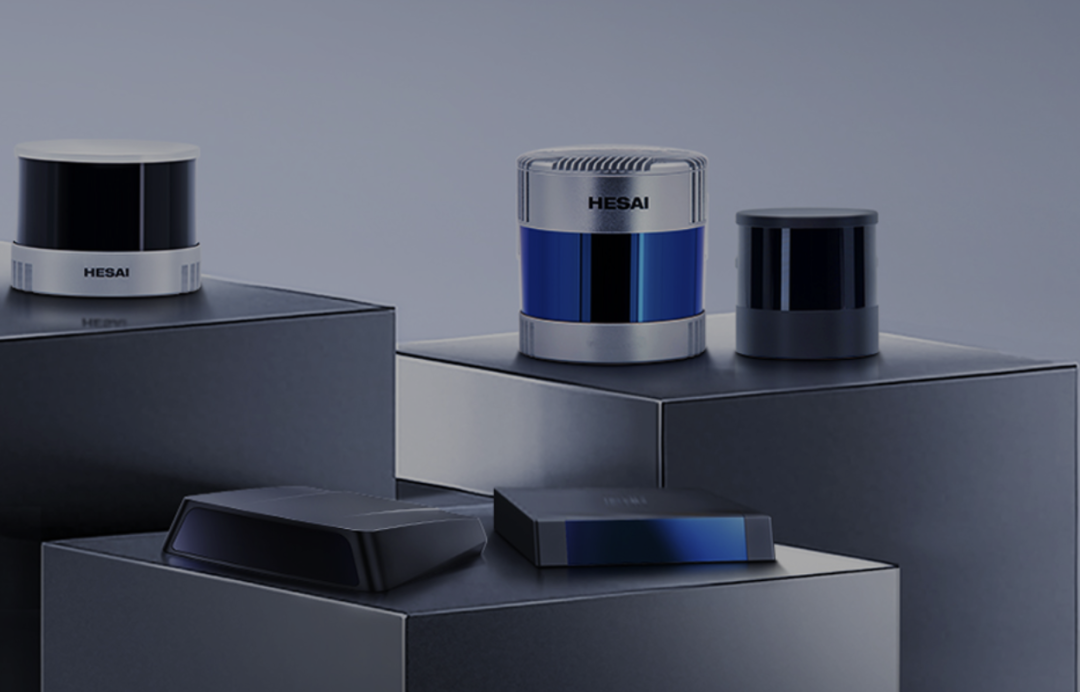
Half its revenue comes from robotics; half its profit stays in automotive.
/
By Zheng Jiuyu | Edited by Yang Xiaoruo
On November 10, Hesai Technology released its Q3 2026 financial results.
The numbers: net revenue of RMB 1.068 billion, up 34.3% year-on-year; LiDAR shipments of 729,700 units, up 65.3% year-on-year; GAAP net profit of RMB 80.8 million, down 68.5% year-on-year; and cash reserves of RMB 6.977 billion as of the end of September.
Read together, these figures tell a layered story: a still-formidable growth rate, a missed guidance target, a sharp rise in core-business profit, a sharp fall in group net profit, a doubling of second-curve revenue, and widening operating losses—all at once.
01 A Miss on Volume
This is the first time in recent quarters that Hesai has fallen short of its own guidance. Management had projected Q3 LiDAR shipments of 800,000 to 850,000 units and revenue of RMB 1.1 billion to 1.15 billion; actual deliveries of 729,700 units and RMB 1.068 billion both came in below the low end. Earlier, in March, Hesai had set a full-year target of 3 million to 3.5 million LiDAR units; by the end of Q3, cumulative shipments stood at 1.83 million. On the November 10 earnings call, management trimmed its full-year guidance to just "consolidated gross margin close to 40%" and "SGI revenue of RMB 200 million to 300 million"—and the 3-million-unit figure was no longer mentioned.
There are two explanations.
The first is the auto market. Hesai CFO Fan Peng said on the call that the overall automotive market is weaker than we expected at the start of the year, and several automaker customers cut their full-year sales targets, causing procurement of ADAS LiDAR to contract accordingly.
Data from the China Passenger Car Association shows that in October, national passenger vehicle retail sales fell 27.1% year-on-year, and cumulative sales for the first ten months fell 22.3%.
The second is a single-customer event. Robotics LiDAR shipments in Q3 were 91,600 units, up 51.1% year-on-year but down about 36% quarter-on-quarter. A lawn-mower robotics customer that buys low-priced JT-series LiDAR sharply cut procurement due to its own operational problems.
But the broader auto market hardly accounts for all of it.
In the same third quarter, RoboSense delivered about 595,600 LiDAR units and Innovusion about 268,900—both peers growing more than 200% year-on-year. Data from Gasgoo Automotive Research Institute shows that in September, Hesai's share of China's in-vehicle main LiDAR market was 43%, ranking first for 20 consecutive months, but down 12 percentage points from its March peak of 55%.
Unit prices moved in the same direction. Dividing LiDAR segment revenue by shipments puts the Q3 average unit price at about RMB 1,340, down roughly a quarter from about RMB 1,800 a year earlier—a sign that the incremental volume skewed toward lower-priced products.
So far the volume story is clear. The broader market is contracting, the company's position is shifting, and fluctuations from a single customer are enough to distort the curve of an entire business line.
02 In Defense of Profit
On the profit side, the picture looks different. Net profit fell 68.5% year-on-year—but first, the base needs adjusting: in the same period of 2025, Hesai recognized about RMB 185 million in one-time gains from disposal of equity investments and transfer of intellectual property. Excluding that one-time item, Fan Peng said on the call, Q3 net profit actually grew about 14% year-on-year—a figure that can be cross-checked against the two periods' financial statements.
Changes in earnings quality may be more telling.
In Q3, the core LiDAR segment's operating profit was RMB 145 million, up 88% year-on-year, and its segment operating margin rose from about 9.7% a year earlier to 14.9%. Consolidated gross margin was 41%, down slightly by 1.1 percentage points year-on-year but up for two consecutive quarters sequentially. Profit growing faster than shipments points to improvement in both the cost curve and the product mix.
Price is another main thread. The average unit price rebounded about 3% from roughly RMB 1,300 in Q2, driven by mix: shipments of Robotaxi and humanoid robotics LiDAR—priced at about RMB 5,300 with higher gross margins—came in better than expected, while low-priced lawn-mower LiDAR sold less.
Data from Yole Group shows that Hesai ranked first in the 2025 global Robotaxi LiDAR market with a 62% share—more than the combined share of all other suppliers.
The price war itself is also being redefined. Fan Peng said on the call that after years of in-house chip development and cost reduction of core components, the room to keep significantly lowering hardware costs through technological progress is relatively limited, and continuing to cut prices at all costs may harm product quality and reliability; "we are unwilling to make such a trade-off." He disclosed that, under signed 2027 contracts, prices and margins for the main high-volume ATX series will further stabilize, and next year's margin is expected to be flat with this year's.
The order book tells yet another version of the story. The ultra-high-line flagship ETX newly won design wins from five global automakers, including a top European automaker and Cadillac, with orders in hand exceeding 1 million units; the FTX blind-spot LiDAR won design wins from Leapmotor and a European automaker; and the AT series won a design win from Wuling, entering high-volume mass-market models.
On the Li L9, L8, and MEGA, each vehicle already comes standard with four Hesai LiDAR units. At CES 2026, Hesai was selected by NVIDIA as the LiDAR partner for its DRIVE AGX Hyperion 10 platform; in May, it became a strategic LiDAR partner for Mercedes-Benz L3, and its Thailand plant is about to begin production.
Shipments are slowing, design wins are accelerating, prices are rebounding sequentially, and management is explicitly refusing to keep trading price for volume. The profit line and the volume line are not moving in the same direction.
03 The Other End of the Curve
The fastest-growing number in this report appears outside LiDAR.
In Q3, Hesai's strategic growth initiative (SGI) revenue was RMB 90.51 million, up 101.4% quarter-on-quarter; cumulative revenue for the first three quarters was RMB 135 million, already exceeding the full-year target of RMB 100 million set at the start of the year. Robot power modules delivered 23,400 units, up 96.8% quarter-on-quarter, with monthly capacity climbing to 10,000 units and cumulative shipments of 35,300 units.
Management's roadmap: full-year 2026 SGI revenue of RMB 200 million to 300 million, about $100 million (roughly RMB 700 million) in 2027, and a push for break-even in the segment. In the same period, robotics-related businesses—robotics LiDAR, the Kosmo data engine, and power modules—together contributed more than 50% of operating revenue.
Alongside doubled revenue come widening losses. The SGI segment's Q3 operating loss was RMB 82.89 million, compared with RMB 64.04 million in the previous quarter; group operating expenses grew 46% year-on-year, and R&D expenses grew 27.8% year-on-year to RMB 254 million. Management said almost all of the increase went into SGI. The RMB 145 million in operating profit from the core LiDAR business offsets SGI's losses on the same income statement.
Customer structure is another dimension for understanding this curve. Based on the company's interim and Q3 disclosures, SGI revenue overlaps heavily with related-party revenue: in the first half, SGI revenue was RMB 44.94 million, of which RMB 44.90 million came from sales of power modules and manufacturing services to related parties; in Q3, SGI revenue was RMB 90.51 million, and related-party revenue in the quarter was RMB 90.32 million. The related party is robotics company Sharpa, co-founded in 2024 outside the listed company by Hesai CEO Li Yifan, CTO Xiang Shaoqing, and Chief Scientist Sun Kai.
According to public disclosures, Hesai acquired about 10% of Sharpa's equity for RMB 100 million in 2025 and transferred all of it out for RMB 276 million the same year; in August this year, Sharpa announced cumulative financing of RMB 4.5 billion, with a post-investment valuation exceeding RMB 22 billion. Because the three founders still indirectly hold a majority of voting rights in Sharpa, transactions between the two companies are classified as related-party transactions under financial reporting standards.
Beyond related parties, this business line is building its own customer list. The Kosmo 3D world data engine, officially released in October, has won orders from Pixar RenderMan, Galaxy General Robotics, and Amap; in September, Hesai reached a strategic cooperation with JD.com, which plans to procure 3 million robots and 1 million unmanned vehicles over five years. In Q3's revenue mix, however, the share contributed by these names is still small.
Conclusion
Fittingly, the capital market's reaction is as awkward as the financial report itself.
A week before the report, Morgan Stanley cut Hesai's 2026–2028 profit forecasts by 40%, 34%, and 26% respectively, lowered its target price from $27 to $22, and maintained its overweight rating; after the report, Hong Kong shares rose nearly 12% at one point the next day. During the year, Hesai's US shares fell from a January high of $29.35 to $12 in late October, then climbed back above $14 this week.
A company repriced repeatedly within a single year generally signals to the industry that the market has yet to settle on a suitable framework for it. By revenue mix, robotics-related business already accounts for half of Hesai. By profit mix, it is still an auto parts company. The valuations these two frameworks imply differ not by magnitude but by order of magnitude.
What happens next won't be answered by narrative but by three materials that can be tracked quarterly. Gasgoo's monthly share data will show whether 43% holds or keeps sliding. Related-party disclosures in the financials will show how the share of third-party customers in SGI revenue changes. And execution on the 2027 contracts will test whether ATX's price and margin can deliver on the promise of "stabilization."
Hesai has placed itself on a bridge. At one end is the LiDAR main business—profitable for six consecutive quarters at a 41% gross margin. At the other is a robotics business with doubled revenue, widening losses, and a customer list that is shifting from one name into two.
Which side this bridge leads to, the financial report this time next year will answer—for the market and for everyone else. [End]
-
![]()
Shenzhen Adds Another 177 Billionaires: Fortunes Above 5 Billion Yuan
-
![]()
Revenue Under Pressure and a Quarterly Loss: Can AI Transformation Help Supcon Technology Turn Things Around?
-
![]()
3.182 Billion Yuan! Changan Lists 10% Avatr Stake for Transfer, Potentially Bringing in a New External Shareholder
-
![]()
Hesai "Crossing the Bridge"
-
Apple Doesn't Want to Keep "Winning by Lying Flat"
-
![]()
Apple's AI Glasses: Confirmed by a Supplier Slip-Up
-
![]()
Does a Higher Megapixel Count Mean Better Photos?
-
![]()
Storage Costs Soar! Even DJI Feels the Pinch: Some Products to See Price Hikes Starting November 18